
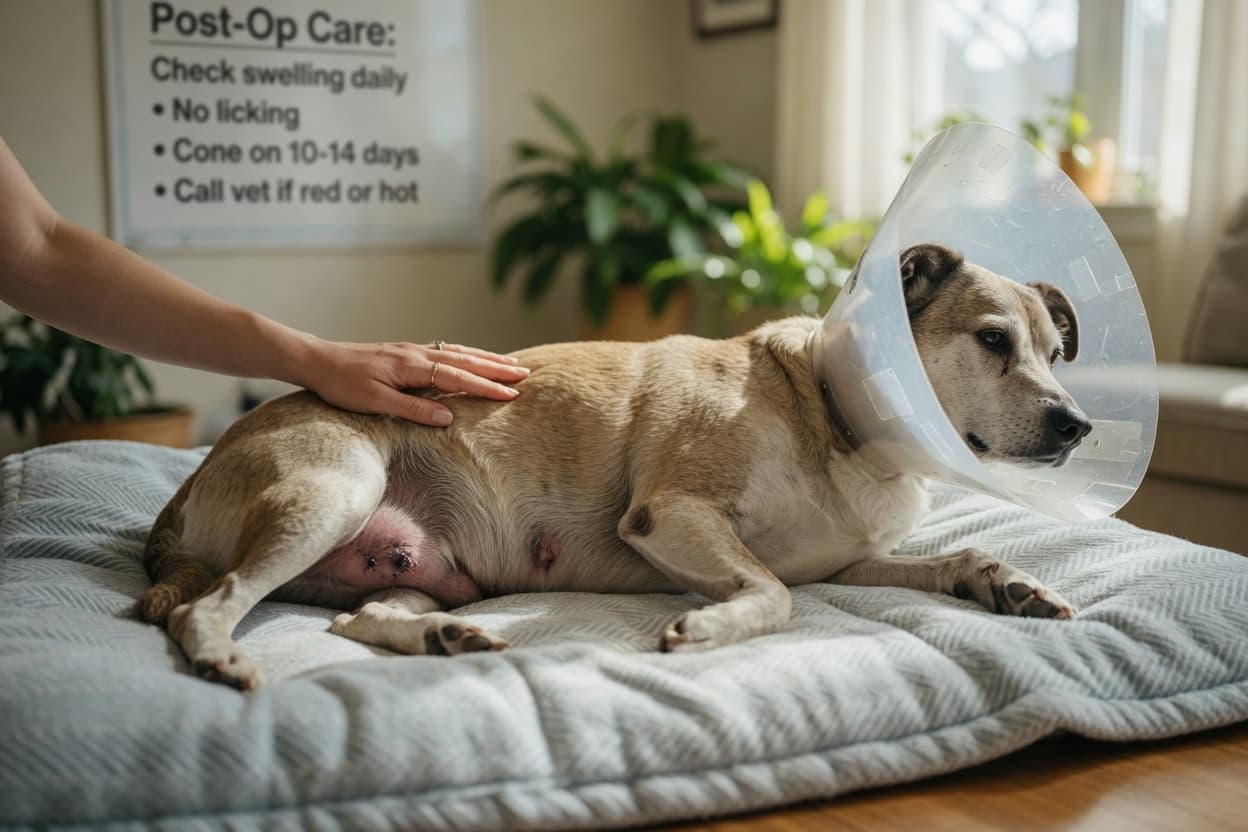
Neutering Is Routine — Recovery Still Needs Respect
Castration is one of the most commonly performed surgical procedures in veterinary practice, and its routine nature can lull owners into underestimating the aftercare involved. Yet scrotal swelling concerns, premature return to activity, and wound interference remain among the top reasons dogs revisit their clinic in the days following the operation. Understanding the healing timeline removes the guesswork.
What Happens During the Procedure
In a standard castration, both testicles are removed through a pre-scrotal incision. The scrotal sac itself is typically left in place and shrinks over the following weeks. Some vets perform a scrotal ablation — removing the sac entirely — particularly in older dogs or those with existing scrotal issues. Your vet will advise which approach was used, as this affects what you observe during healing.
The First 24 to 48 Hours at Home
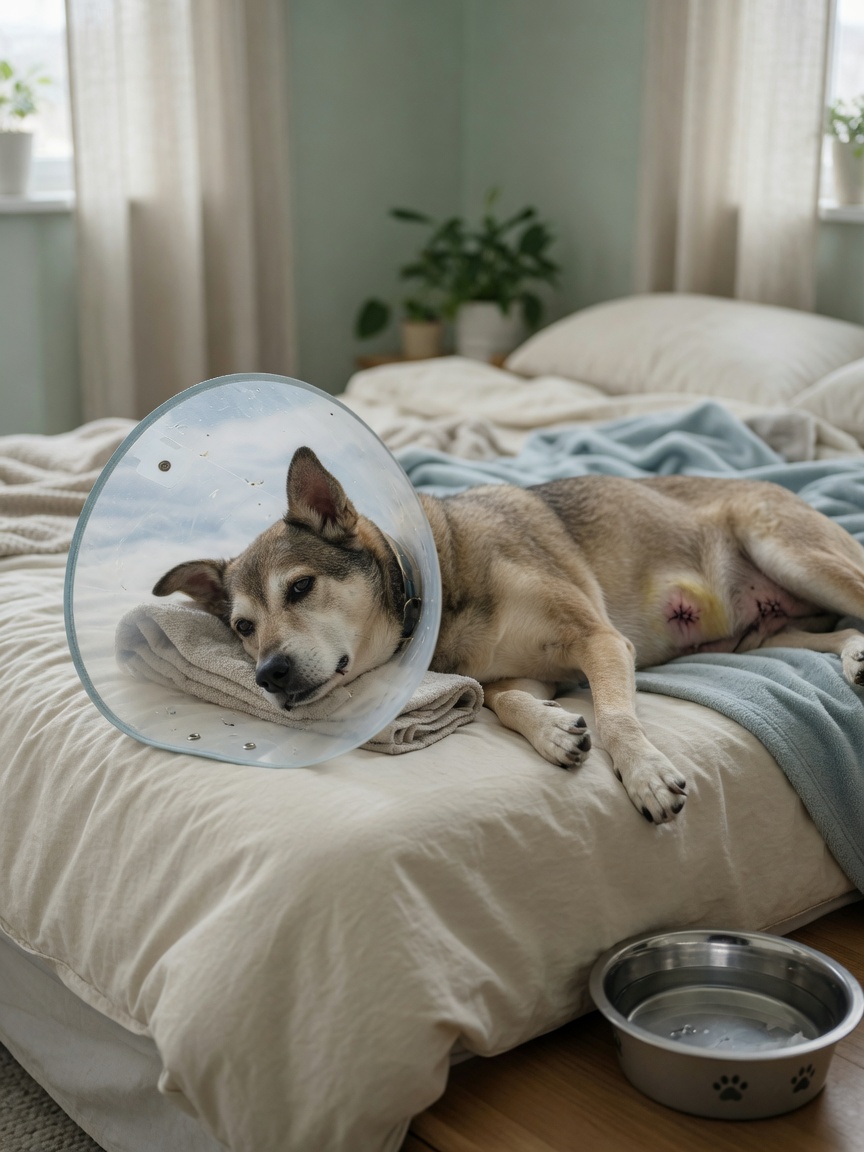
Expect your dog to be quiet, slightly uncoordinated, and uninterested in food on the first evening. These are normal effects of general anaesthesia and resolve within 24 hours for most dogs.
Normal signs in this window
- Drowsiness and reluctance to settle
- Mild swelling at or around the incision site
- Occasional shivering
- Reduced interest in food and water
- Licking or pawing at the wound area
The last point is critical to manage from the outset. An Elizabethan collar must be fitted before your dog is fully alert, not after he has already begun interfering with the wound. Licking introduces bacteria and can rapidly lead to infection or suture breakdown.
Swelling: Normal vs Concerning
Scrotal swelling is among the most common sources of post-castration anxiety for owners, and it is frequently misread as a sign that something has gone wrong. In reality, the empty scrotal sac fills with fluid in the immediate post-operative period as the body responds to surgical trauma. The area may appear larger than the testicles did pre-surgery, which is alarming but normal.
Swelling that is expected
- Fluid accumulation in the scrotal sac within the first 48 to 72 hours
- Mild bruising, particularly in lighter-skinned dogs
- Firmness to the touch in the days following
Swelling that requires veterinary attention
- Rapid or dramatic increase in size beyond day three
- Hot, hard swelling accompanied by systemic signs (lethargy, fever, loss of appetite)
- Discharge that is green, yellow, or has an odour
- Any visible gap or opening in the wound edges
Activity Restriction: The Non-Negotiable Phase
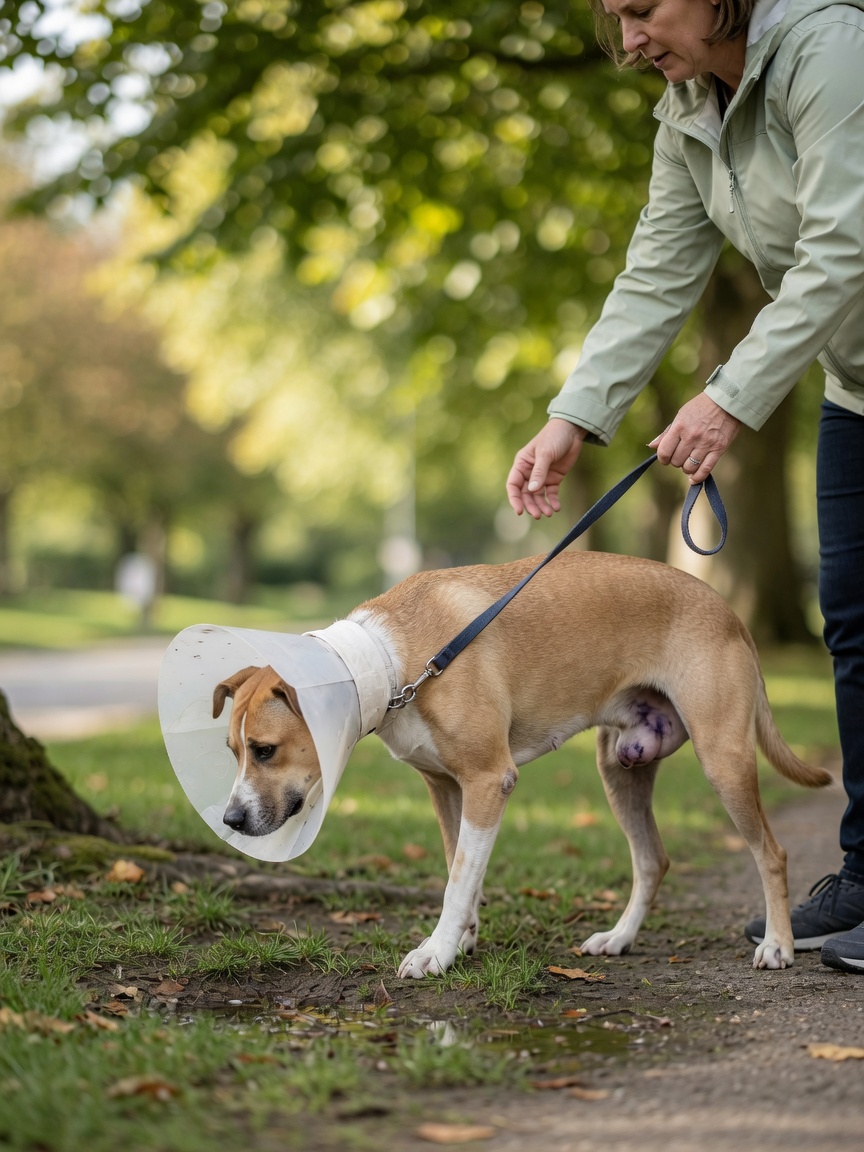
Male dogs typically recover with slightly less surgical trauma than females undergoing spaying, because the abdominal cavity is not entered in a standard castration. However, this does not mean activity restriction is any less important in the first ten to fourteen days.
The most common complication from premature exercise is a seroma — a pocket of fluid that accumulates when movement disrupts healing tissue. Seromas are usually benign but uncomfortable and may require drainage if large.
Activity guidelines by week
- Days 1 to 3: Complete rest; brief leash walks to toilet only, no sniffing or pulling
- Days 4 to 7: Short, calm walks of five to ten minutes; no running or rough play
- Days 7 to 10: Gradual increase in walk duration if wound looks healthy
- Day 10 to 14: Suture check with vet; return to normal activity on their sign-off
Supporting Recovery at Home
Keep the wound dry. Avoid bathing your dog for at least ten days and do not allow swimming. Check the incision site once daily in good light — you are looking for clean, apposed edges with no discharge.
Some dogs benefit from a bodysuit or medical onesie as an alternative to the e-collar, particularly those who find the collar highly distressing. These must fit snugly enough to prevent access to the wound without restricting breathing or movement. Discuss options with your vet before substituting.
Pain relief prescribed at discharge should be completed in full. Contact your vet if your dog appears uncomfortable after the medication course ends rather than reaching for human analgesics, which carry serious toxicity risks in dogs.
Quick Reference: Signs to Watch For
- Persistent lethargy beyond 48 hours post-surgery
- Refusal to eat for more than 24 hours after returning home
- Wound discharge that is coloured or malodorous
- Swelling that grows rather than stabilises after day three
- Any sign of the dog successfully accessing the wound despite the e-collar
Castration aftercare requires two focused weeks of management. Most complications arise not from surgical error but from recoveries cut short. Your vet is your best resource if anything concerns you — early calls prevent late emergencies.