
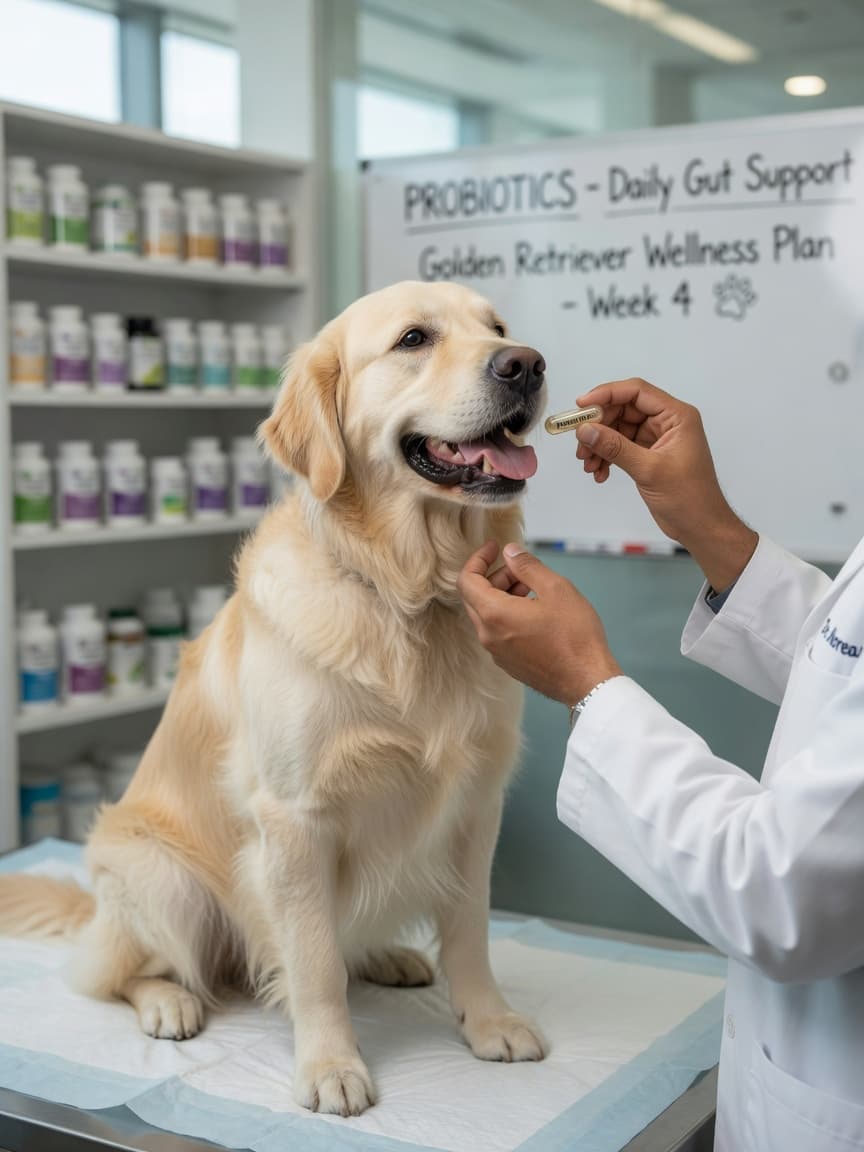
Probiotics for Dogs: Science, Benefits & Best Strains
By Julia Wrenfield, Pet Wellness Researcher | Reviewed June 2026
Interest in the canine gut microbiome has grown substantially over the past decade, driven by advances in genomic sequencing and a deeper understanding of the gut-immune axis. Probiotics — live microorganisms that, when administered in adequate amounts, confer a health benefit on the host — are now among the most frequently purchased supplements for dogs. But which strains actually work? And for which conditions? The answer is more nuanced than most product labels suggest.
The Canine Gut Microbiome: A Quick Primer
A healthy dog's gastrointestinal tract harbours trillions of microorganisms — bacteria, fungi, archaea, and viruses — collectively called the microbiome. The composition of this community profoundly influences digestion, immune regulation, nutrient absorption, and even behaviour through the gut-brain axis.
The canine microbiome differs significantly from the human microbiome in composition, which is why human probiotics are not ideal for dogs. The dominant phyla in healthy dogs are Firmicutes and Bacteroidetes, but the species-level composition is quite different from humans. Studies using 16S rRNA sequencing have identified Blautia, Fusobacterium, Faecalibacterium, and Lachnospiraceae as key genera in the healthy canine gut.
Dysbiosis — an imbalance in the microbiome — is associated with multiple conditions in dogs including chronic inflammatory bowel disease, acute diarrhea, obesity, and certain skin conditions. Correcting dysbiosis is the theoretical basis for probiotic supplementation.
Which Probiotic Strains Are Best Studied in Dogs?
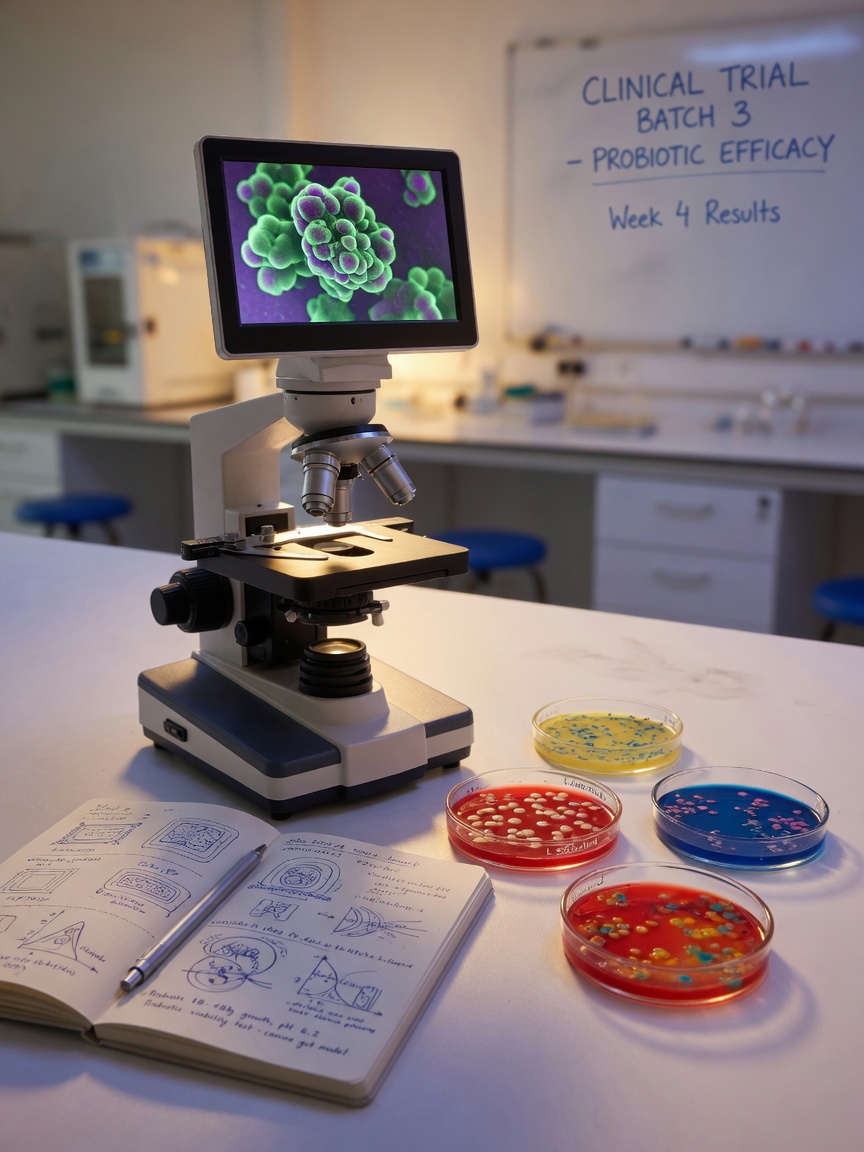
Not all probiotics are created equal. The effects of probiotics are strain-specific, meaning that results from one strain cannot be assumed to apply to a different strain, even within the same species. Here is what the peer-reviewed literature shows for specific strains in canine studies:
Enterococcus faecium SF68
This is among the most studied strains in dogs. Multiple controlled trials have demonstrated its effectiveness in reducing the duration of acute diarrhea in puppies and adult dogs. It is commonly found in veterinary probiotic formulations and has a reasonable safety profile. A study published in the Journal of Veterinary Internal Medicine found that dogs receiving E. faecium SF68 during antibiotic treatment had shorter diarrhea episodes than placebo controls.
Lactobacillus acidophilus and Lactobacillus rhamnosus
These Lactobacillus strains are widely used in pet probiotics, though much of the evidence comes from rodent or human studies. Canine-specific data is more limited. Some studies show modest reductions in inflammatory markers and improvements in fecal consistency. L. rhamnosus GG, well-studied in humans for antibiotic-associated diarrhea, appears to transiently colonise the canine gut but evidence for lasting microbiome changes is weak.
Bifidobacterium animalis (strain AHC7)
This strain, commercially used in some veterinary products, has been studied specifically for acute idiopathic diarrhea in dogs. A randomised controlled trial found that dogs treated with B. animalis AHC7 had significantly shorter diarrhea duration compared to placebo, with stool quality returning to normal faster. This is one of the more robust canine-specific datasets for a single probiotic strain.
Bacillus subtilis and Bacillus coagulans
Spore-forming bacillus strains are gaining attention because they survive stomach acid and high temperatures better than most Lactobacillus species. Preliminary canine data suggests these strains can modulate the gut immune environment, but well-powered clinical trials in dogs are still limited. They may have a role in long-term microbiome maintenance.
Evidence-Based Applications in Dogs

Acute Diarrhea
This is where the evidence is strongest. Multiple controlled studies show that specific probiotic strains (particularly E. faecium SF68 and B. animalis AHC7) reduce the duration of acute, self-limiting diarrhea in dogs. They appear to work by competing with pathogenic bacteria, producing antimicrobial compounds (bacteriocins), and stimulating local immune responses (IgA production).
Antibiotic-Associated Diarrhea
Antibiotics disrupt the gut microbiome, often causing diarrhea. Concurrent probiotic use can help maintain microbiome diversity during treatment. Timing matters: probiotics should ideally be administered 2+ hours apart from antibiotic doses to avoid direct inactivation of the probiotic bacteria. Evidence in dogs is promising but less complete than in humans.
Chronic Gastrointestinal Disease
Dogs with inflammatory bowel disease (IBD) or chronic enteropathy have disrupted microbiomes. Probiotics may help as adjunct therapy, but evidence is inconsistent. Some studies show improvements in clinical scores; others show minimal effect. Given the complexity of IBD management, probiotics should be used alongside, not instead of, veterinary diagnosis and treatment.
Stress-Related Gut Issues
Kennelling, travel, rehoming, and other stressors can precipitate diarrhea in dogs. Preventive probiotic administration before known stressors (e.g., starting 3–5 days before a kennel stay) has some support in the literature, though study sizes are generally small.
Atopic Dermatitis and Allergic Skin Disease
The gut-skin axis — the relationship between microbiome composition and skin immune function — is a growing research area. Some studies show reduced allergy scores and skin inflammation in atopic dogs given probiotics, particularly multi-strain formulations. Evidence here is still emerging and results are inconsistent between studies. This should not be the primary treatment for skin disease but may be a reasonable adjunct.
How to Read a Probiotic Label
Understanding probiotic labelling is essential for choosing an effective product:
CFU count: Colony Forming Units measure the number of live organisms. Most veterinary formulations contain 1–10 billion CFU per serving. Higher is not always better — efficacy depends on strain, not just quantity. More important is that the CFU count is guaranteed at the end of shelf life, not just at manufacture (the difference can be dramatic due to die-off).
Species and strain identification: A good product lists the full strain designation (e.g., Lactobacillus rhamnosus GG, not just "Lactobacillus"). Strain identity matters for predicting clinical effects.
Encapsulation and delivery: Probiotics must survive stomach acid to reach the intestine. Enteric-coated capsules or spore-forming strains have better survival. Powders added to food are convenient but may have lower viable counts after exposure to humidity and heat.
Prebiotic inclusion: Many quality formulations include prebiotics (fermentable fibres such as FOS, inulin, or beet pulp) that feed beneficial bacteria. This synbiotic approach may enhance probiotic colonisation, though direct evidence in dogs is limited.
Zooplus carries a curated range of veterinary probiotic and synbiotic formulations for dogs, including products with strain-specific and CFU-guaranteed labelling.
Browse Probiotic Supplements at Zooplus
Dosage and Practical Use
There is no universally agreed dosing standard for canine probiotics, unlike pharmaceutical drugs. Most veterinary probiotic products are dosed by body weight and provide between 1 and 10 billion CFU per day for average-sized dogs. For acute diarrhea, many clinicians recommend twice-daily dosing for the first 3–5 days, then once daily for maintenance.
Probiotics are generally considered very safe for dogs. Adverse effects are rare and typically limited to mild, transient flatulence or loose stools at the start of supplementation. Probiotics are not recommended for severely immunocompromised dogs without veterinary guidance, as there are theoretical risks of bacterial translocation in individuals with severely compromised gut barriers.
Storage matters: most Lactobacillus and Bifidobacterium products require refrigeration after opening to maintain viability. Bacillus spore-based products are shelf-stable. Always check storage instructions and note the expiry date — a probiotic past its expiry may have negligible viable CFU.
- Probiotic effects are strain-specific — choose products with named strains that have canine-specific clinical data.
- Best evidence in dogs is for acute diarrhea, especially with E. faecium SF68 and B. animalis AHC7.
- Human probiotics are not ideal for dogs — the canine microbiome has a different species composition.
- Check that CFU counts are guaranteed at end of shelf life, not just at manufacture.
- Give probiotics 2+ hours apart from antibiotics if using concurrently.
- Evidence for skin conditions, IBD, and long-term microbiome changes is promising but still limited — set realistic expectations.
- Kelley RL, Minikhiem D, Kiely B, et al. Clinical benefits of probiotic canine-derived Bifidobacterium animalis strain AHC7 in dogs with acute idiopathic diarrhea. Vet Ther. 2009;10(3):121-130. PMID: 19753509
- Suchodolski JS, Dowd SE, Westermarck E, et al. The effect of the macrolide antibiotic tylosin on microbial diversity in the canine small intestine as demonstrated by massive parallel 16S rRNA gene sequencing. BMC Microbiol. 2009;9:210. PMID: 19785738
- Jugan MC, Rudinsky AJ, Parker VJ, Gilor C. Use of probiotics in small animal veterinary medicine. J Am Vet Med Assoc. 2017;250(5):519-528. PMID: 28211757