
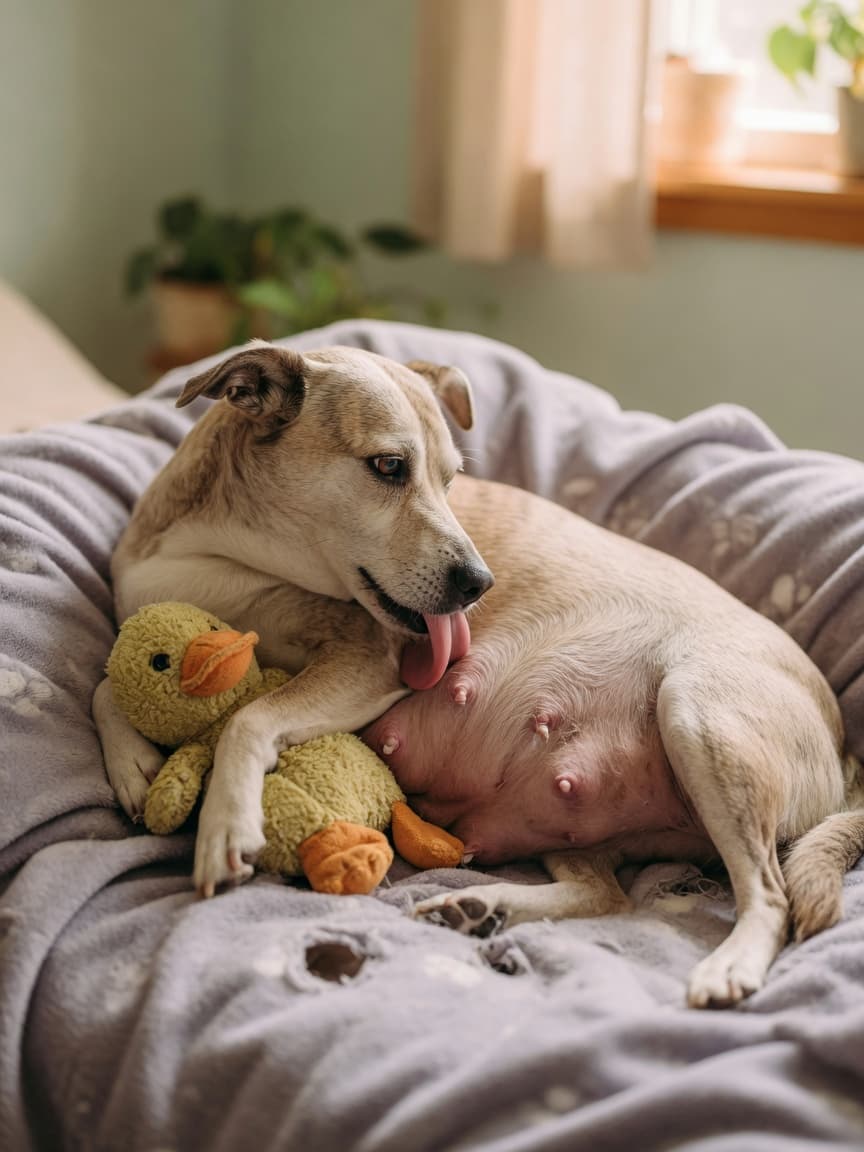
Some Female Dogs Become So Convinced They Are Pregnant That They Produce Milk, Build Nests, and Adopt Surrogate Puppies — Without Ever Having Mated
Phantom pregnancy, or pseudopregnancy, is not a rare quirk — it affects a significant proportion of intact female dogs after every season, with varying severity. For some dogs, the symptoms are mild and self-resolving. For others, the experience causes genuine distress and requires veterinary intervention. Knowing the difference is essential for any owner of an intact female.
What Causes Phantom Pregnancy
After ovulation, the corpus luteum — the hormonal structure that forms in the ovary following egg release — produces progesterone regardless of whether fertilisation occurs. In dogs, this progesterone surge is identical in pregnant and non-pregnant females. When progesterone drops several weeks later, prolactin rises — again, in all females. It is this rise in prolactin that triggers the physical and behavioural signs of phantom pregnancy. The dog's body, hormonally speaking, cannot tell the difference between a real and phantom pregnancy until birth either does or does not occur.
Recognising the Signs
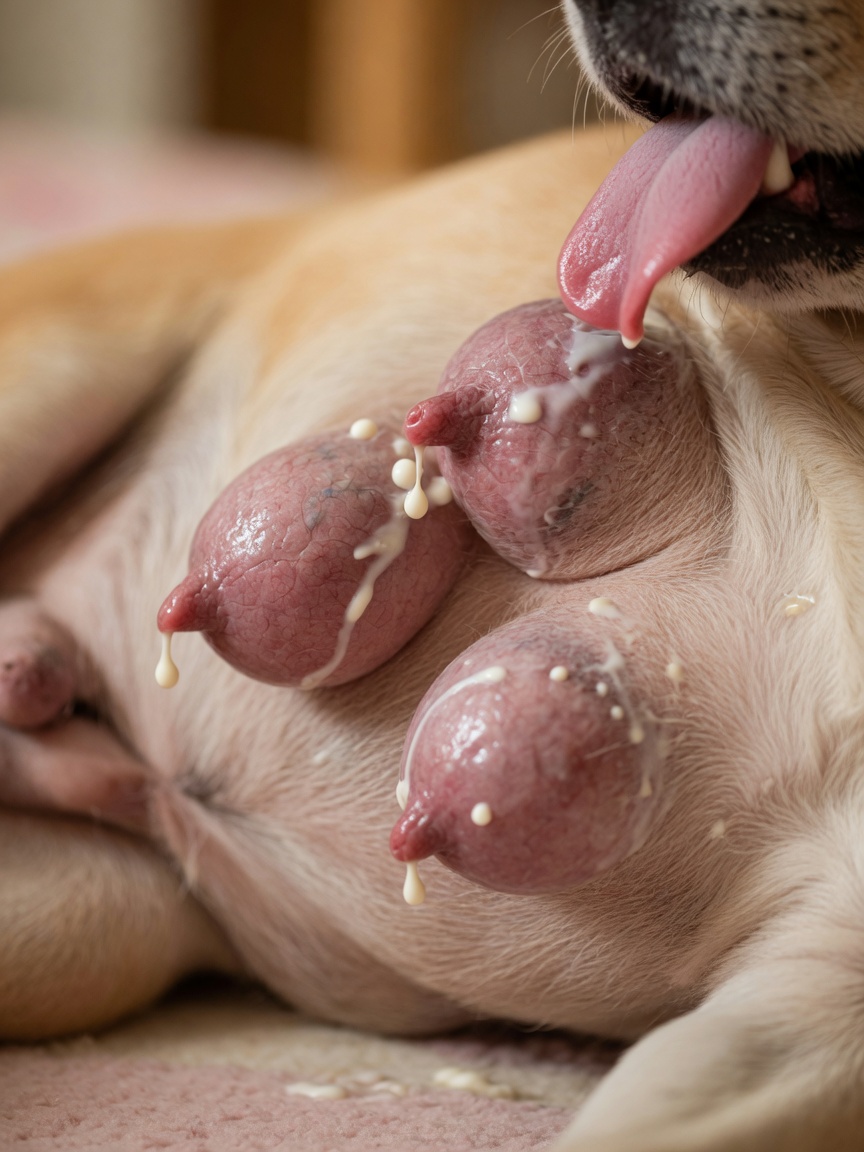
Physical Symptoms
The most striking physical sign is mammary development, which can range from mild gland enlargement to full milk production. The abdomen may appear slightly swollen. Some dogs lick their mammary glands excessively, which stimulates further milk production in a self-perpetuating cycle. Occasionally, mastitis — an infection of the mammary tissue — develops as a complication, particularly if milk is not reabsorbed normally.
Behavioural Symptoms
Many female dogs become restless, begin nest-building, and show strong attachment to objects they adopt as surrogate puppies — soft toys, shoes, socks. Maternal aggression over these objects can appear, and some dogs become withdrawn, anxious, or refuse food. The behavioural component can be as distressing as the physical one, for both dog and owner.
When to Wait and When to Act
Mild phantom pregnancies — slight mammary development without distress, resolving within two to three weeks — often need no treatment beyond sensible management. Removing the objects the dog is mothering, discouraging excessive licking with a soft collar if necessary, and reducing dietary intake slightly (to decrease milk production stimulus) are usually sufficient.
Intervention becomes necessary in the following circumstances:
- Milk production is heavy and not resolving after three weeks
- Mastitis develops — the mammary glands become hot, painful, or discoloured
- The dog is significantly distressed, not eating, or showing persistent aggression
- Symptoms are severe and recurring with every season
- The dog's quality of life is visibly impacted
Treatment Options

Cabergoline
The most commonly used medical treatment in the UK is cabergoline, a dopamine agonist that suppresses prolactin. It is given orally, typically over five to seven days, and is effective at reducing milk production and resolving behavioural symptoms. It is generally well-tolerated, though vomiting can occur and is best mitigated by giving the medication with food. Cabergoline should only be prescribed and dosed by a vet.
Management Without Medication
Where symptoms are moderate but the owner prefers to avoid medication, careful management can help. A well-fitted body suit or a soft buster collar can prevent licking without causing distress. Increasing exercise and mental stimulation helps redirect nesting behaviour. Food reduction should be modest — the goal is to reduce milk stimulus, not to restrict nutrition significantly.
What Not to Do
Expressing or milking the mammary glands to relieve discomfort is counterproductive — it stimulates further production. Similarly, removing surrogate objects suddenly and repeatedly can increase anxiety; gradual reduction is more effective. Cold compresses applied briefly to the mammary glands can provide comfort without stimulating milk let-down.
The Recurring Nature of Phantom Pregnancy
If a dog experiences a phantom pregnancy, she is very likely to experience another after subsequent seasons, often of similar or greater severity. This recurrence is one of the strongest arguments for spaying an intact female once her reproductive life is complete or if breeding is not intended. Spaying eliminates the hormonal cycle that underpins phantom pregnancy entirely.
However, timing matters. Spaying during an active phantom pregnancy is generally avoided, as elevated prolactin can cause complications in recovery and may not immediately resolve the symptoms. Most vets recommend waiting until the phantom pregnancy has fully resolved — typically confirmed at a check-up — before scheduling surgery.
Key Takeaways for Owners
- Phantom pregnancy is a normal hormonal response in intact females, not a sign of illness in itself
- Mild cases often resolve without treatment within two to three weeks
- Discourage licking, avoid expressing milk, and remove surrogate objects gradually
- Seek veterinary attention if symptoms are severe, prolonged, or mastitis is suspected
- Cabergoline is safe and effective but must be prescribed by a vet
- Spaying after the episode resolves eliminates future recurrence
- Always consult your vet if you are uncertain about severity or if your dog appears unwell