
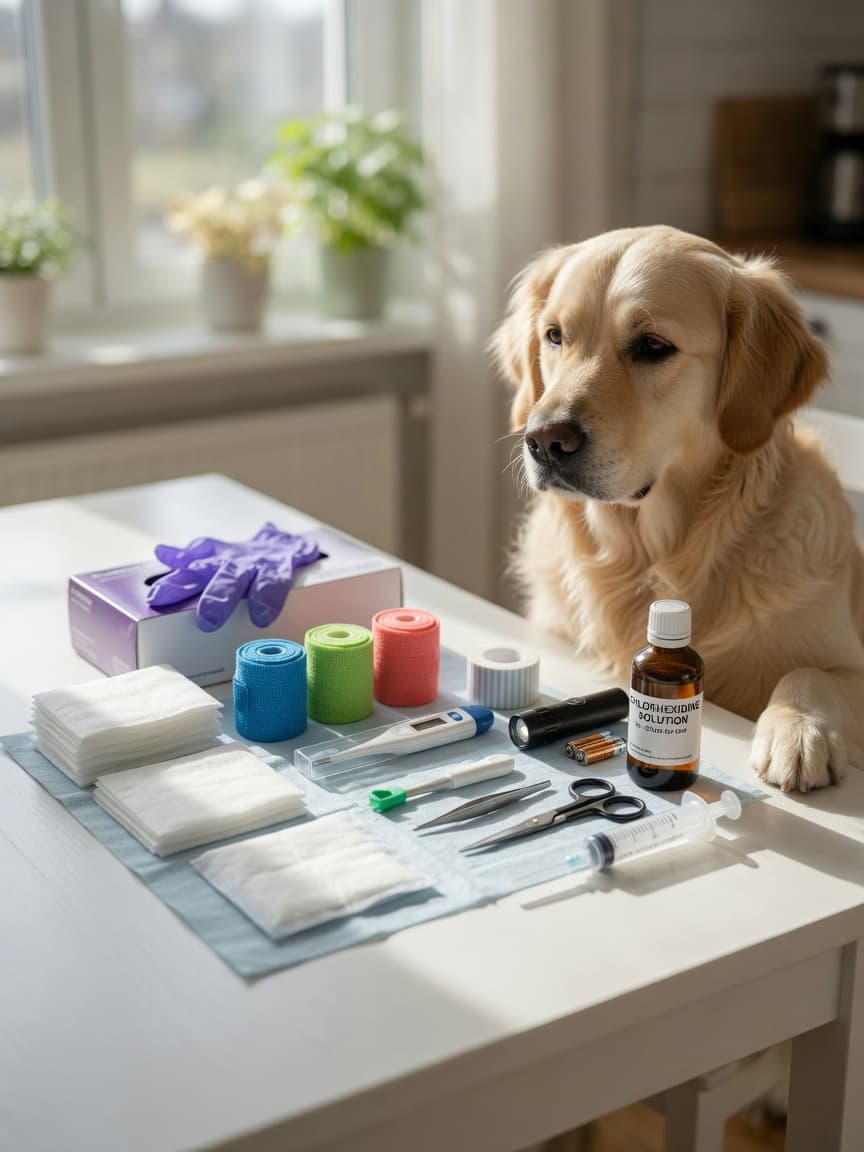
Pet First Aid Kit: The 20 Items Every Owner Needs at Home
By Julia Wrenfield, Pet Wellness Researcher
Most pet owners would not dream of keeping a home without a human first aid kit — yet surveys consistently show that fewer than one in three dog owners and fewer than one in five cat owners keep a dedicated pet first aid kit. In an emergency, the 20–30 minutes it takes to drive to a vet can be critical. The right supplies at home can stabilise a wound, control bleeding, prevent shock, and make transport safer. This guide tells you exactly what to buy, why each item matters, and how to use it.
The Essential 20: What Your Kit Must Contain
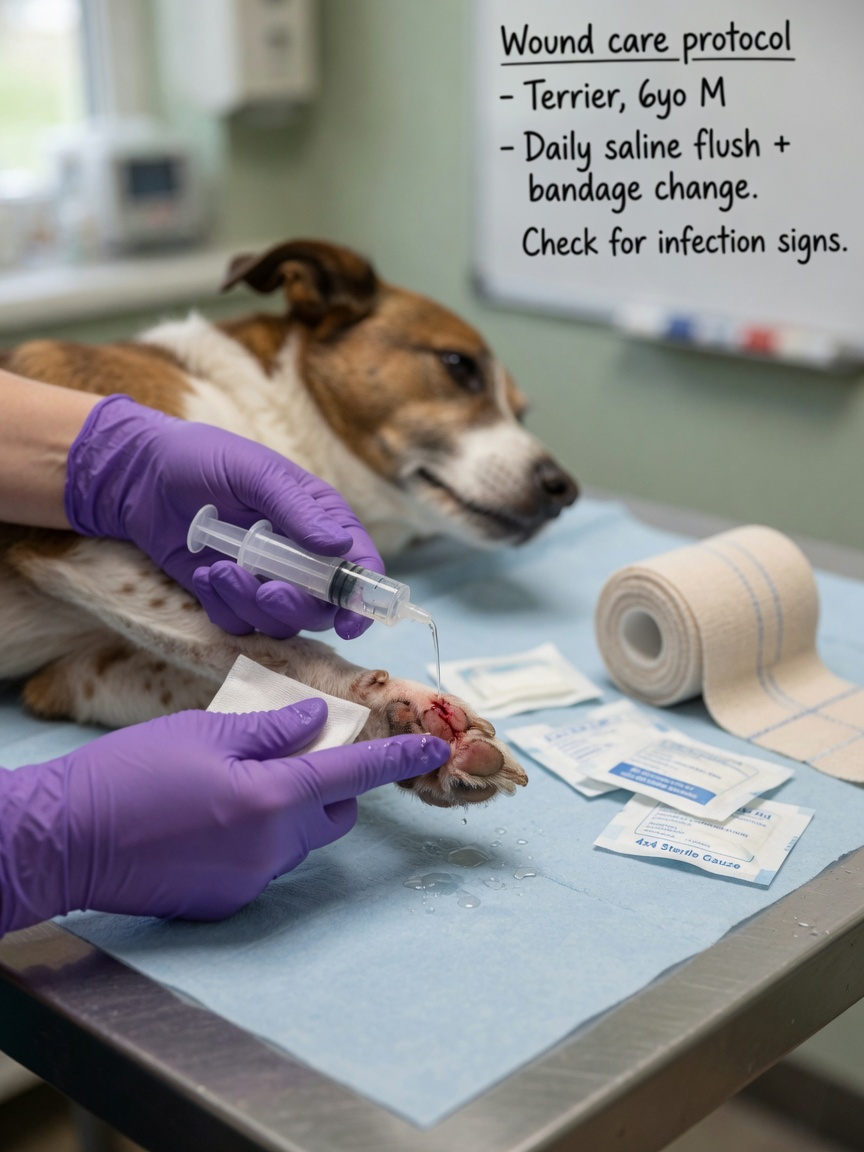
1. Sterile Gauze Pads (multiple sizes)
The workhorse of wound care. Use to apply pressure to bleeding wounds, clean cuts, and cover injuries during transport. Keep at least 10 individually wrapped sterile pads in sizes 5x5 cm and 10x10 cm. Non-adherent pads are preferable for wound contact as they do not stick to drying blood.
2. Self-Adhesive Bandage Wrap (e.g., Vetrap or Coban)
Sticks to itself but not to fur or skin. Used to secure dressings on limbs and paws without requiring tape. Keep a 5 cm and 7.5 cm roll. Check after application that you can slide one finger underneath — too tight cuts off circulation and is worse than no bandage at all.
3. Medical Adhesive Tape
For securing dressings on areas where self-adhesive wrap won't stay, such as the ear flap, head, or torso. Micropore or zinc oxide tape works well on pet skin without causing excessive irritation on removal.
4. Sterile Saline Solution (0.9% NaCl)
The single most important wound-cleaning tool. Saline flushes dirt, bacteria, and debris from wounds far more effectively than cotton wool or antiseptic wipes. Buy pre-measured sterile saline pods or a 500 ml bottle with an irrigation syringe. The AVMA recommends saline irrigation as the gold standard for initial wound decontamination in pets.
5. Irrigation Syringe (20–35 ml)
A large-bore syringe allows you to deliver saline into a wound with the pressure needed to actually dislodge embedded bacteria. Squeezing a bottle does not produce equivalent results. Available from pharmacies and veterinary suppliers.
6. Digital Rectal Thermometer
You cannot manage heatstroke, fever, or hypothermia without knowing your pet's actual temperature. Normal range for dogs and cats is 38.0–39.2°C (100.4–102.5°F). Lubricate with a water-based gel before use. Take temperature in the rectum — ear thermometers are unreliable in pets.
7. Water-Based Lubricant (e.g., KY Jelly)
Multi-use: lubricates the thermometer, can be applied inside wounds before clipping surrounding fur to catch hair clippings, and helps remove sticky substances from fur without alcohol.
8. Blunt-Nosed Scissors
For cutting bandages, trimming fur around wounds, and cutting fabric for makeshift muzzles or restraints. Blunt tips prevent accidental skin puncture on a wriggling animal.
9. Blunt-Nosed Tweezers
For removing visible splinters, grass seeds, ticks, and foreign objects from superficial wounds. Never probe deeply with tweezers — remove only what is clearly visible at the surface.
10. Tick Removal Tool
A dedicated hook-style tick remover (not tweezers) is the safest way to remove embedded ticks without squeezing the body, which can force pathogens into the bloodstream. The AKC recommends hook-style removers over straight tweezers for this reason.
11. Disposable Gloves (nitrile, multiple pairs)
Protect you from infection when handling wounds, blood, or bodily fluids. Also useful for handling chemical exposures on your pet's coat. Keep at least 4 pairs — you may need to change gloves mid-treatment.
12. Small LED Torch
Essential for examining the mouth during a choking emergency, inspecting wounds in dark fur, checking pupil response, and working in low light. Keep spare batteries alongside it.
13. Diluted Chlorhexidine Solution (0.05%)
A safe, effective antiseptic for pet wounds. Pre-dilute 2% chlorhexidine (one teaspoon per litre of water) and store in a labelled bottle. Do not use hydrogen peroxide, undiluted Betadine, or alcohol inside wounds — they damage the tissue needed for healing, as confirmed in research published in Veterinary Clinics of North America (PubMed PMID 21291485).
14. Non-Stick Sterile Wound Dressings
Melolin or Telfa-style non-adherent dressings sit against the wound without sticking to the healing surface. Far less painful to remove than standard gauze directly on a wound.
15. Emergency Foil Blanket (space blanket)
Compact, lightweight, and reflective — reflects body heat back to a dog or cat in shock or hypothermia. Also useful for protecting a pet from further heat exposure in heatstroke cases (as shade, not as a covering — do not wrap a hyperthermic animal in foil).
16. Fabric Strip for Makeshift Muzzle
A 90 cm strip of soft fabric (a cut-up old T-shirt works well) can be fashioned into a temporary muzzle in under 30 seconds. A dog in pain will bite without warning. Practice making the muzzle on a stuffed toy before you ever need it — muscle memory under stress is far more reliable than trying to remember instructions in a crisis.
17. Sterile Eye Wash
For flushing chemical splashes, dust, grass seeds, or debris from eyes. Use sterile saline from your kit or a dedicated eye wash. Never use tap water if an eye injury is suspected — sterile is essential to avoid introducing bacteria to a compromised eye.
18. Hydrogen Peroxide 3% (with vet guidance only)
Keep one small bottle labelled clearly: "Emetic — use ONLY on instruction from vet or poison control." The only safe at-home method for inducing vomiting in a dog after certain poisonings — but only when a professional has confirmed this is the right action for the specific toxin. Never use on cats — it is dangerous in felines.
19. Pet First Aid Reference Card
A laminated quick-reference card listing your vet's number, the emergency clinic number, poison control numbers, normal vital sign ranges for your pet, and the key steps for choking, CPR, and bleeding. The ASPCA publishes a free pet first aid guide that can be printed and laminated. Under stress, even experienced owners forget steps they know well.
20. Pet CPR Breathing Barrier
A small pocket mask designed for pet CPR creates a hygenic seal for mouth-to-snout rescue breathing and reduces hesitation. Available from pet first aid suppliers. Consider taking a pet first aid course — as The Guardian reported, hands-on training dramatically increases confidence and effectiveness in real emergencies.
Storing and Maintaining Your Kit
Keep your kit in a waterproof container with a handle, stored in an accessible location — not buried in a cupboard. Label it clearly. Check the kit every 6 months: replace expired saline, restock used items, and confirm your vet's phone number is still current. Take a mini version (items 1, 2, 4, 6, 9, 10, 11, 12, and the reference card) in your car for walks and travel.
The Item You Should Never Include
Do not keep human NSAIDs (ibuprofen, naproxen, aspirin) or paracetamol/acetaminophen in your pet first aid kit. The risk of accidental administration far outweighs any potential benefit. These drugs are toxic to dogs and cats even at low doses. Your vet will provide appropriate veterinary pain relief.
Key Takeaways
- A first aid kit buys time — it does not replace the vet. Always follow up with professional care.
- Sterile saline and gauze pads are the two most important items for wound management.
- A digital rectal thermometer is essential for managing heatstroke and monitoring fever accurately.
- Diluted chlorhexidine (0.05%) is the safest antiseptic — never use hydrogen peroxide, alcohol, or iodine inside wounds.
- A makeshift muzzle strip and disposable gloves protect you so you can help your pet effectively.
- A laminated reference card with vet and poison control numbers is as important as any physical supply.
- Check and restock your kit every 6 months — expired or missing items are no help in an emergency.