

Why Pet First Aid Matters
In any veterinary emergency, the minutes before professional help arrives can be critical. Medical professionals refer to the "golden hour" — the window of time immediately following an accident or sudden illness during which prompt, appropriate action can significantly improve outcomes. For pet owners, knowing what to do in that window can mean the difference between life and death.
Veterinary delays are a reality. Emergency clinics may be 30 minutes or more away. Out-of-hours services can involve significant travel. Traffic, weather, and geography all play a role. Pet first aid training gives you the knowledge and confidence to act calmly and correctly until a vet takes over — and to avoid making a situation worse by acting without knowledge.
The World Small Animal Veterinary Association (WSAVA) actively promotes pet first aid awareness globally, recognising that informed owners improve animal welfare outcomes worldwide.
What You Learn on a Pet First Aid Course
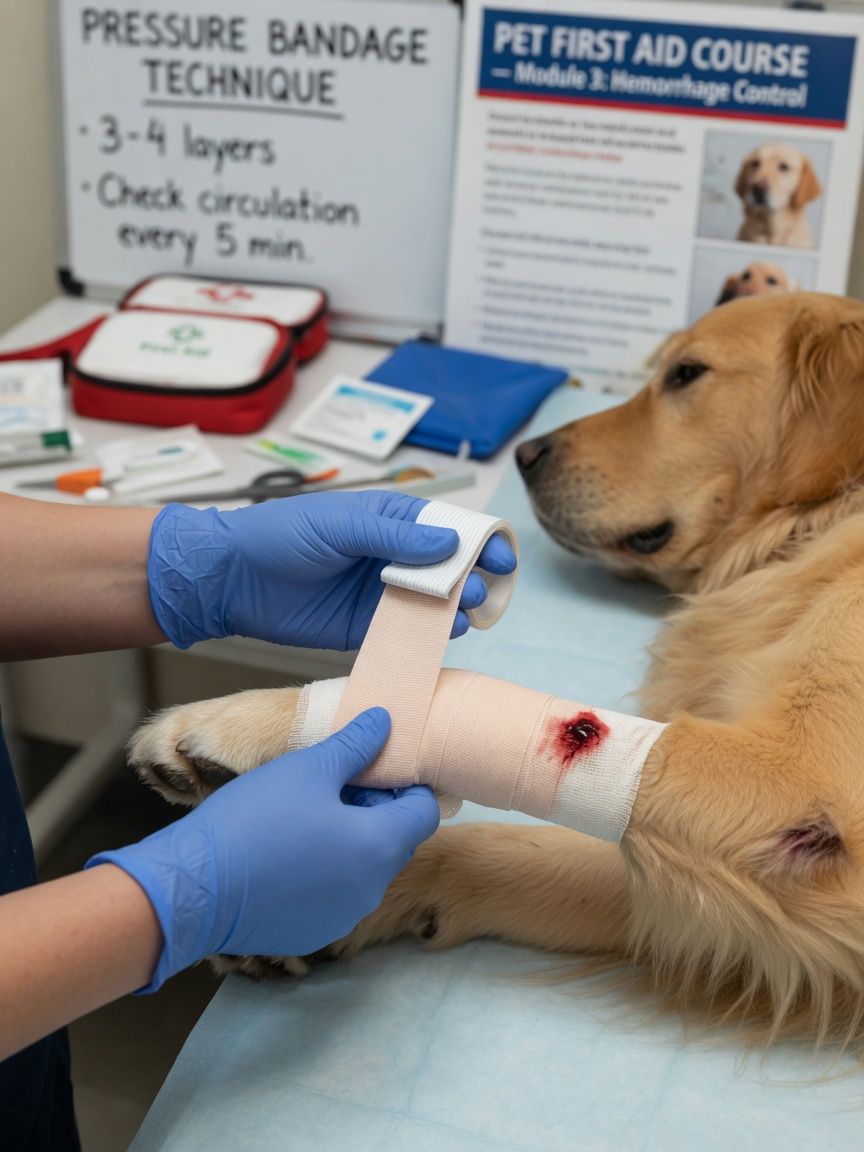
A good pet first aid course covers a comprehensive range of emergencies. You will typically learn how to respond to:
- Choking: How to safely check and clear an airway obstruction in dogs and cats
- CPR: Cardiopulmonary resuscitation technique, compression rate, and rescue breathing for pets of different sizes
- Bleeding: How to apply pressure, use bandaging to control haemorrhage, and recognise signs of internal bleeding
- Poisoning: What to do if your pet ingests a toxic substance, and crucially, what not to do (never induce vomiting without veterinary guidance)
- Fractures and suspected spinal injuries: Safe handling and improvised stretcher use to avoid causing further damage
- Heatstroke: How to cool a pet safely and recognise the signs of heat exhaustion versus heat stroke
- Burns and scalds: Cooling and covering without causing additional harm
- Seizures and fitting: How to keep a pet safe during a seizure and what information to give your vet
- Shock: Recognising the signs of shock and appropriate immediate measures
- Eye and ear injuries: Basic first response
Crucially, a good course will also teach you when not to administer first aid — specifically, when moving or handling a pet could worsen their condition, and when the single most important action is to call a vet immediately.
UK Pet First Aid Providers
A number of reputable organisations offer pet first aid training in the UK. When choosing a provider, look for courses taught by veterinary professionals or those with recognised qualifications in animal care.
- Canine First Aid: One of the UK's most established providers, offering both in-person workshops and online courses. Courses are widely available across England, Scotland, and Wales.
- British Red Cross Pet First Aid: The Red Cross offers pet first aid training aligned with human first aid principles, delivered by trained instructors.
- Cats Protection: Offers guidance and resources specifically focused on feline first aid, particularly useful for cat owners.
- BSAVA-Endorsed Training: The British Small Animal Veterinary Association supports courses delivered by veterinary professionals. Ask your own vet practice whether they offer or recommend local training sessions — many practices run community workshops.
European Options
Across Europe, pet first aid provision varies significantly by country. The WSAVA promotes pet first aid awareness and continuing education globally, and many national veterinary associations offer guidance. If you are based in Spain, Germany, France, or another European country, contact your national veterinary association for accredited first aid resources. Increasingly, online courses from UK providers are accessible to European residents and provide a strong foundation even where in-person options are limited.
Online vs In-Person Courses
Online courses offer convenience and accessibility, and many cover the theory of pet first aid extremely well. However, in-person training offers something online learning cannot: hands-on practice with mannequins, bandages, and real-life scenarios that build genuine muscle memory for stressful situations. Where possible, an in-person course — or a blended online theory plus in-person practical session — is the recommended approach. If only online training is available to you, it is still enormously valuable, and far better than no training at all.
What to Include in a Pet First Aid Kit
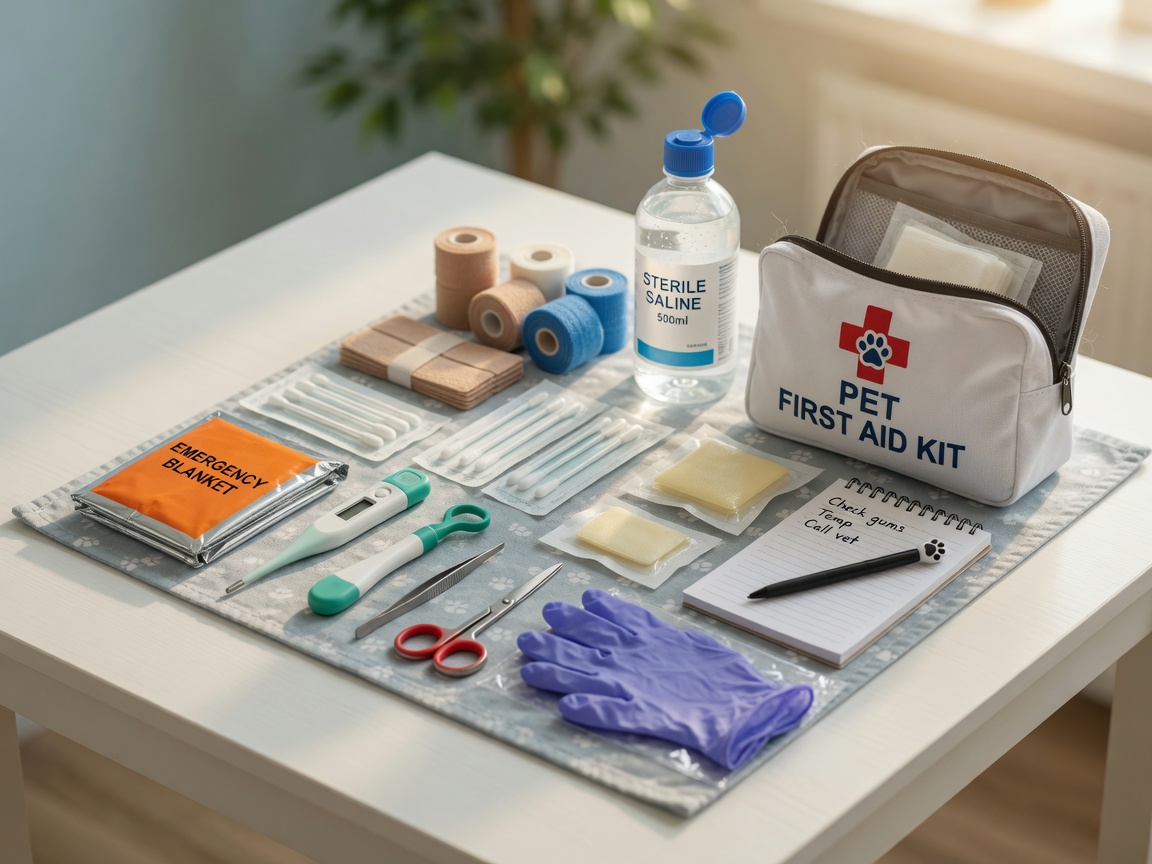
Every pet owner should keep a dedicated first aid kit at home, and a travel version for outings. A well-stocked pet first aid kit should contain:
- Conforming and self-adhesive bandages in multiple sizes
- Sterile non-adhesive wound dressings
- Sterile saline solution for wound irrigation and eye washing
- Blunt-ended scissors and tweezers
- Disposable gloves (several pairs)
- Digital thermometer (rectal use for pets)
- Tick removal tool
- Foil emergency blanket
- Gauze swabs
- A clean towel or blanket (for improvised stretcher use)
- Notepad and pen (to record symptoms, times, and vet instructions)
- Your vet's number and the nearest emergency vet's number
Zooplus stocks a range of pet first aid supplies and complete first aid kits for dogs and cats. Replenish any used items promptly, and check expiry dates on dressings and saline solutions annually.
When to Call a Vet Immediately — Without Administering First Aid
There are situations where first aid is not appropriate, and the only correct action is to call your vet or an emergency service immediately:
- Suspected spinal or neck injury — do not move the animal
- Penetrating wounds to the chest or abdomen
- Suspected poisoning — call your vet or the Animal Poison Line before doing anything
- Loss of consciousness
- Difficulty breathing that is not caused by an obvious obstruction
- Suspected internal bleeding
The Blue Cross, PDSA, and your local emergency veterinary practice are your key contacts in an emergency. Store these numbers in your phone today — not when you need them.
Pet first aid training is an act of love. It takes a few hours of your time and gives you the confidence to be genuinely useful when it matters most.