
What Is Feather Plucking in Parrots?
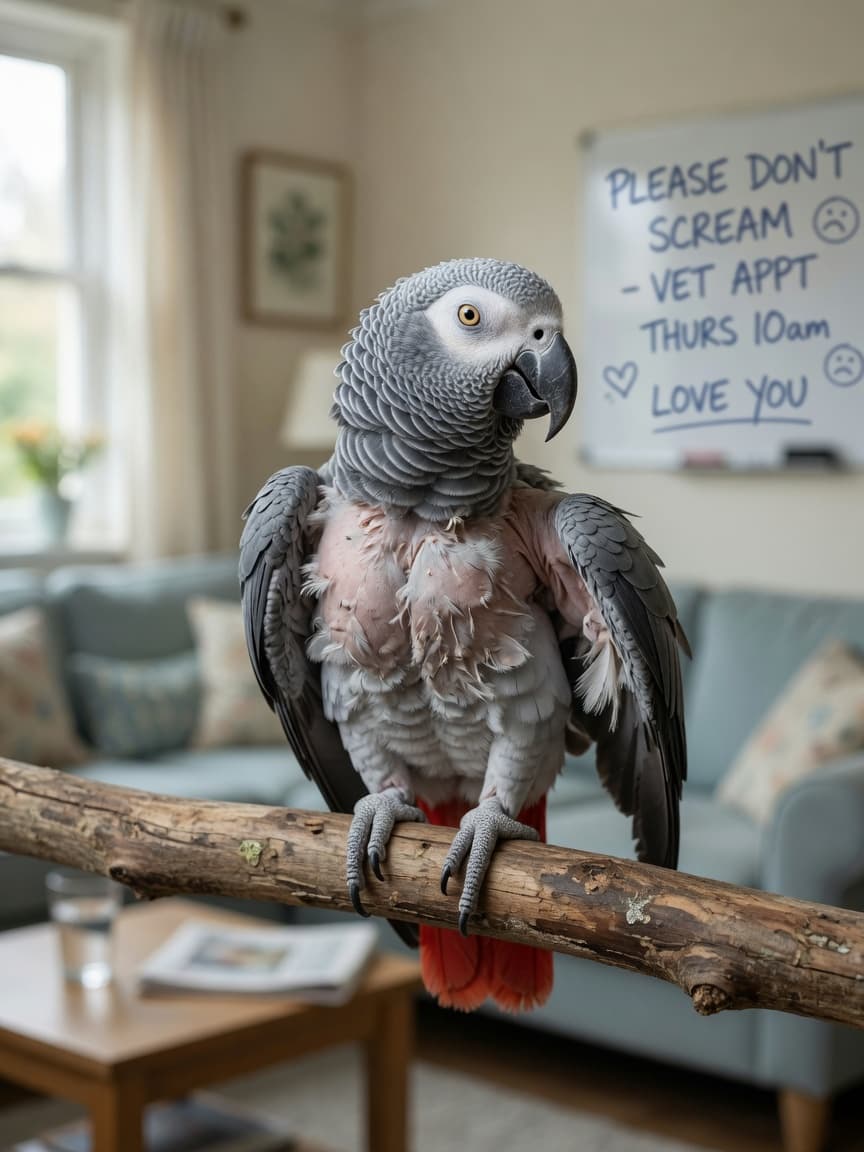
Feather plucking, also referred to as feather destructive behaviour or FDB, describes any situation in which a parrot deliberately removes, chews, or damages its own feathers. The bird may pull feathers out at the root, snap them midway along the shaft, or barbulate individual feathers until they fray. In severe cases the skin itself becomes damaged.
It is important to distinguish FDB from normal moulting. During a healthy moult, old feathers are shed naturally and replaced by new growth. A plucking bird, by contrast, removes feathers that would otherwise remain intact, often leaving bare patches on the chest, inner wings, and thighs — areas the bird can reach with its beak, typically sparing the head and neck.
FDB is particularly prevalent in African Grey parrots, cockatoos, and Amazon parrots, though it can occur across all psittacine species. Once established, the behaviour can become self-reinforcing, which is why prompt veterinary assessment matters enormously.
Medical Causes Must Be Ruled Out First
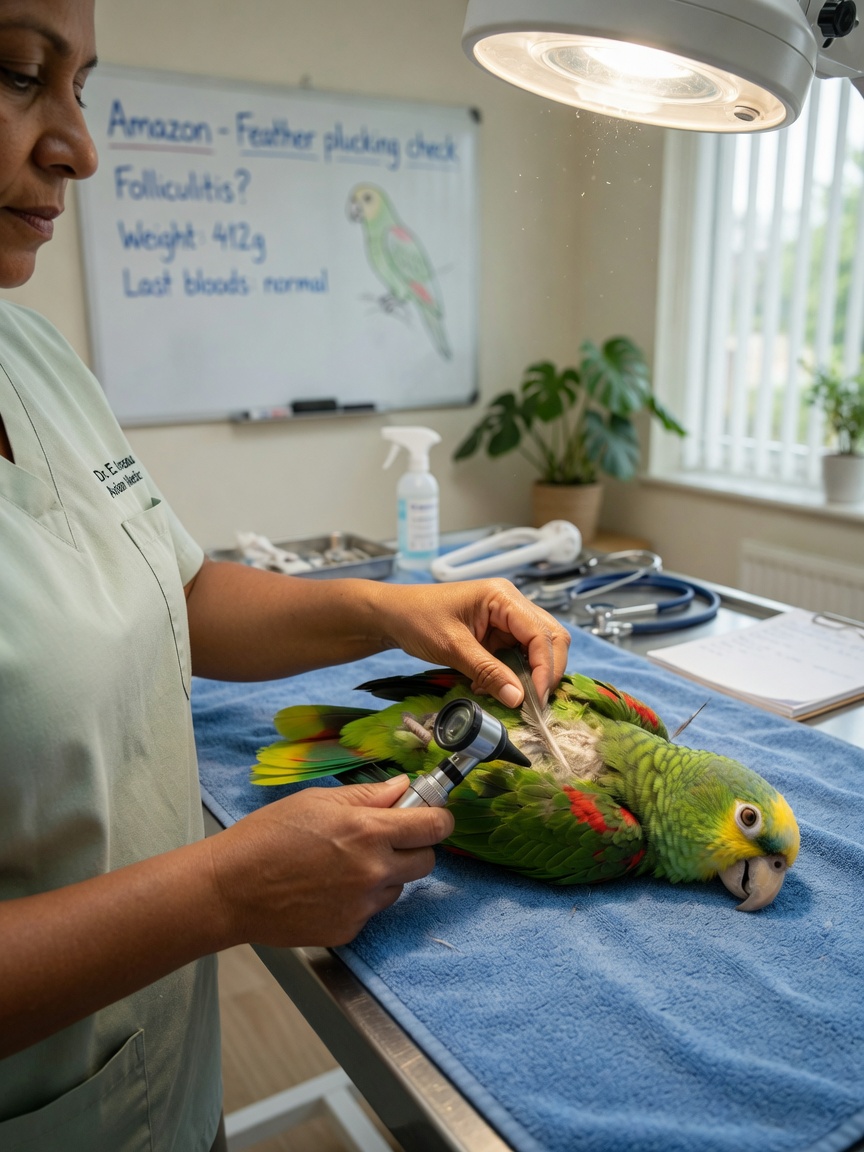
This is the single most important principle in approaching feather plucking: never assume the cause is psychological until medical conditions have been thoroughly excluded by a qualified avian veterinarian. Many owners and even some general-practice vets attribute FDB to boredom or stress without completing the necessary diagnostics, and this delays treatment of underlying illness.
PBFD — Psittacine Beak and Feather Disease
PBFD is caused by circovirus and represents one of the most serious diagnoses possible. The virus attacks the feather follicles and immune system, producing abnormal, dystrophic, or missing feathers. There is currently no cure. A PCR test on a blood sample or feather pulp can confirm infection. Any parrot presenting with feather abnormalities should be tested as a priority, as PBFD is contagious to other birds.
Bacterial and Fungal Skin Infections
Bacterial folliculitis and dermatitis can cause intense irritation that drives a bird to pluck. Fungal infections, including Aspergillus and Candida species, may also affect the skin and feather follicles. Both require laboratory culture or cytology to identify reliably.
External Parasites
Mites and lice are less common in parrots than in some other bird species, but they do occur and can cause sufficient skin irritation to trigger plucking. A skin scrape examined under a microscope is the most reliable way to identify parasitic infestation.
Allergies and Skin Conditions
Parrots can develop hypersensitivity reactions to components of their diet or to environmental factors such as cigarette smoke, aerosol sprays, scented candles, cleaning products, or certain types of bedding and perch material. Identifying the allergen requires a systematic elimination approach guided by your vet.
Nutritional Deficiencies
A diet based primarily on seeds is nutritionally poor and frequently associated with FDB. Deficiencies in vitamin A impair skin and mucous membrane integrity, while insufficient calcium affects nerve function. Parrots fed a varied diet including pellets, fresh vegetables, and appropriate fruits are far less prone to nutritional skin problems.
Liver Disease
The liver plays a central role in processing nutrients and eliminating toxins. Hepatic disease leads to altered fat metabolism, which can produce skin changes and pruritus that drive feather destruction. Liver disease is detectable through blood panels and, where necessary, imaging or biopsy.
Heavy Metal Toxicity
Lead and zinc poisoning are a recognised but often overlooked cause of FDB. Sources include galvanised cage bars, certain paints, costume jewellery, and zinc-coated toys or food bowls. Heavy metal levels can be measured directly from a blood sample. If toxicity is confirmed, chelation therapy under veterinary supervision is required.
Psychological and Behavioural Causes
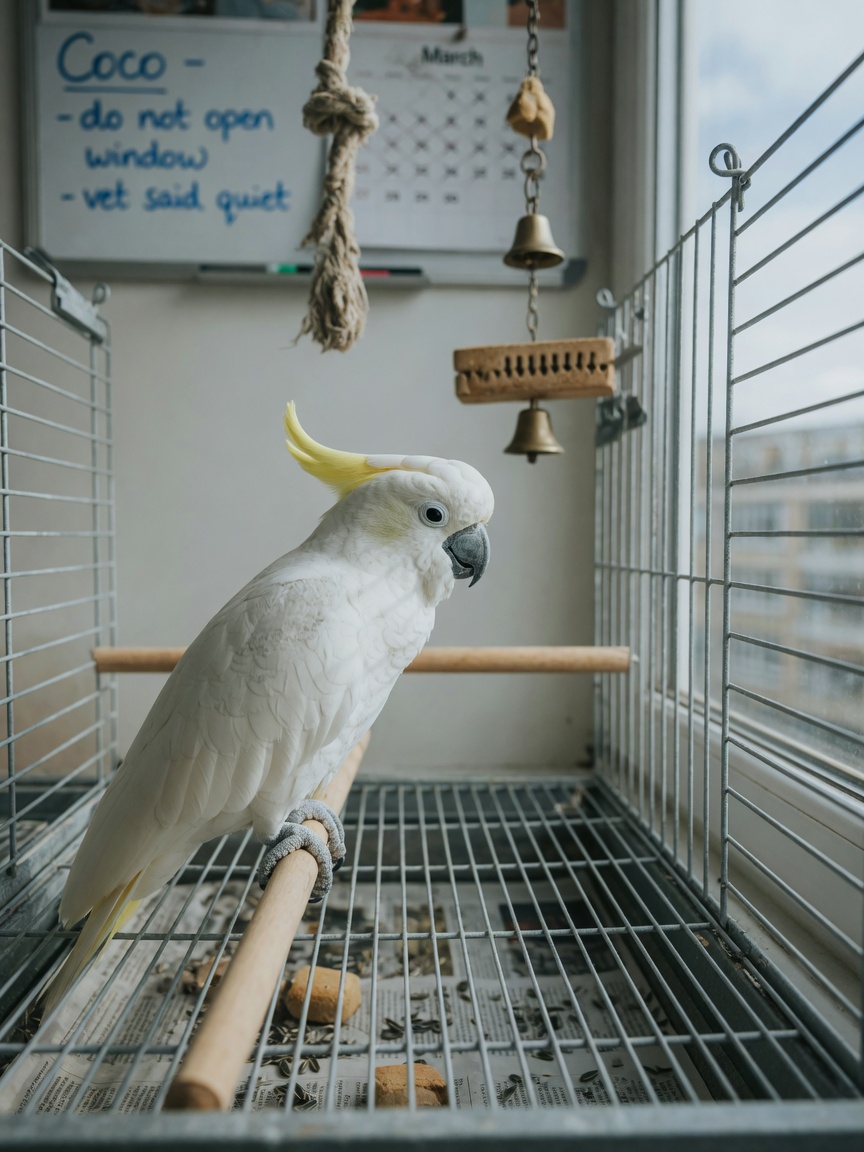
Only once medical causes have been excluded should behavioural explanations be explored. Parrots are highly intelligent, social animals with cognitive needs that many domestic environments fail to meet adequately.
Boredom and Insufficient Stimulation
A parrot left alone for long periods without foraging opportunities or varied activities may begin to pluck simply because it has nothing else to do. In the wild, parrots spend the majority of their waking hours foraging, flying, and interacting socially. Replicating this complexity in captivity requires deliberate effort.
Stress, Anxiety and Environmental Changes
Parrots are sensitive to changes in their environment. The arrival of a new pet, a bereavement in the household, a change of home, or even rearranging furniture can trigger anxiety that manifests as feather plucking. Parrots also form deep emotional bonds with their owners, and prolonged absence or the loss of a companion bird can lead to grief-related FDB.
Inadequate Sleep
Parrots require ten to twelve hours of uninterrupted darkness each night. Exposure to light, noise, or disruption during this rest period leads to chronic sleep deprivation, which in turn causes stress and a lowered threshold for abnormal behaviours including plucking.
Sexual Frustration
Sexually mature parrots that lack an appropriate outlet for reproductive behaviour may develop frustration-related FDB, particularly during breeding season. This is especially common in cockatoos and African Greys.
Diagnosis: What to Expect at the Vet
Assessment of a plucking parrot requires a systematic approach. A full blood panel should measure liver enzymes, kidney function, complete blood count, and zinc and lead levels. Skin scrapes, feather pulp samples, or a skin biopsy may be taken for cytology, culture, or histopathology. A specific PCR test for PBFD is essential in any bird with abnormal feathering.
General practice vets often lack the equipment and experience needed for avian diagnostics. For a thorough workup, you should seek out an avian specialist, ideally one holding a diplomate qualification from the European College of Zoological Medicine (ECZM). You can search for ECZM-recognised avian specialists across Europe via the ECZM website at eczm.eu.
A note on zoonotic risk: if your parrot is unwell, be aware of psittacosis, caused by Chlamydia psittaci. This bacterium can be transmitted from birds to humans and causes a flu-like illness. If you or a family member develop respiratory symptoms while your bird is sick, inform your GP and mention the possibility of psittacosis.
Treatment Options
Treating the Underlying Medical Cause
Where a medical cause is identified, targeted treatment should be started without delay. Bacterial infections are treated with appropriate antibiotics, fungal infections with antifungal agents, and heavy metal toxicity with chelation therapy. Nutritional deficiencies are addressed through dietary reform, often beginning with a transition to a high-quality pelleted diet supplemented with fresh foods.
Environmental Enrichment
For birds with a behavioural component to their FDB, enrichment is the cornerstone of management. Foraging toys, puzzle feeders, shreddable wooden toys, and regular rotation of novel objects help occupy the bird's mind. A varied diet presented in different ways — food hidden inside toys, threaded onto skewers, or scattered for the bird to find — mimics natural foraging activity effectively.
Social Interaction and Positive Reinforcement Training
Increasing the amount of quality time you spend with your parrot, including regular training sessions using positive reinforcement, provides mental stimulation and strengthens the bond between bird and owner. Even short daily sessions of five to ten minutes teaching simple tricks or target training can make a meaningful difference.
Aloe Vera Spray
Pure aloe vera gel diluted in water and applied as a fine mist can help soothe irritated or inflamed skin as a supportive measure. It is important to use only pure, food-grade aloe vera with no added fragrances, preservatives, or alcohol, as additives can be toxic to birds. Aloe vera does not treat the underlying cause but may reduce the discomfort that perpetuates plucking.
Elizabethan Collars
A collar, sometimes called an E-collar or buster collar, physically prevents a parrot from reaching its feathers. It can be useful in the short term to allow damaged skin to heal, but it should be considered a last resort only. Collars cause significant additional stress, do not address the cause of FDB, and require careful monitoring to ensure the bird can eat, drink, and move safely.
A Long-Term Commitment
Feather destructive behaviour is rarely resolved quickly. Even after the primary cause is identified and treated, feather regrowth takes time and some birds develop habitual plucking that persists even when the original trigger has resolved. Patience, a structured approach, and ongoing collaboration with an experienced avian vet are essential to giving your parrot the best chance of recovery.