
Two Stones, Two Very Different Problems
When a cat is diagnosed with urinary stones — technically called uroliths — the type of stone matters enormously. Struvite and calcium oxalate are the two most common uroliths found in cats, together accounting for the vast majority of cases. Despite both causing similar clinical signs — straining, blood in the urine, and discomfort — they form under opposite urinary conditions and require fundamentally different management strategies. Treating one with the approach designed for the other can actively make the situation worse.
Understanding the distinction is not just academic. It directly informs what your cat should eat, whether surgery is necessary, and what the long-term monitoring plan looks like.
Struvite Stones: The Alkaline Problem
Struvite is a mineral compound composed of magnesium, ammonium, and phosphate. It precipitates out of urine that is consistently alkaline — typically above a pH of 6.5 to 7.0 — and in urine that is overly concentrated. In cats, struvite stones were historically the most common urolith, though their prevalence has shifted in recent decades, partly due to widespread adoption of acidifying prescription diets.
An important distinction in cats is that struvite uroliths can form in two different contexts. Infection-induced struvite occurs when urease-producing bacteria alkalinise the urine, promoting mineral precipitation. Sterile struvite forms without infection, in cats that simply produce persistently alkaline or concentrated urine. Both forms produce the same mineral composition but have slightly different management implications.
The critical advantage of struvite is that it is dissolvable. An appropriately formulated urinary diet can dissolve struvite stones over a period of weeks to months, potentially avoiding surgery entirely. These diets work by producing an acidic urine (typically targeting pH 6.0 to 6.5), restricting magnesium and phosphorus, and promoting high urine output through increased water intake.
Calcium Oxalate Stones: The Acidic Problem
Calcium oxalate uroliths have become increasingly common in cats since the 1990s, and there is compelling evidence that the widespread use of acidifying diets — aimed at preventing struvite — played a role in this shift by creating chronically acidic urine in a population that did not need it. Calcium oxalate forms preferentially in acidic, concentrated urine with high calcium or oxalate concentrations.
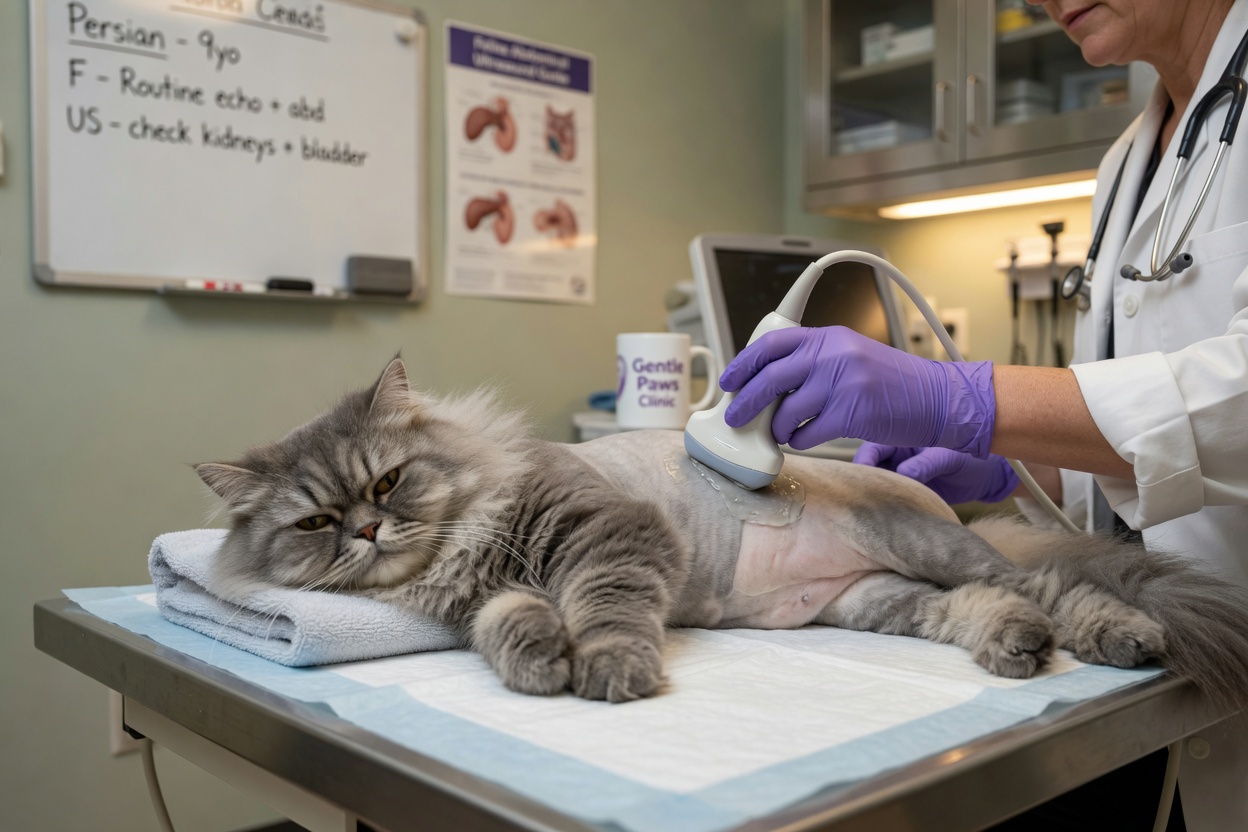
Older, neutered male cats are disproportionately affected. Breeds including the Persian, Himalayan, and Burmese have a recognised genetic predisposition, though any cat can develop these stones. Hypercalcaemia — elevated blood calcium from any cause — significantly increases oxalate urolith risk and should always be investigated when these stones are found.
The critical and frustrating difference from struvite is that calcium oxalate cannot be dissolved with diet. Once formed, these stones must be removed, either by voiding urohydropropulsion for very small stones, cystoscopic retrieval, or surgical cystotomy. Diet then plays a role in prevention of recurrence, not treatment of existing stones.
Dietary Management of Struvite: What to Feed
For cats with struvite uroliths or a documented tendency toward struvite crystalluria, dietary goals include:
- Promoting acidic urine pH (targeting approximately 6.0 to 6.5)
- Reducing dietary magnesium and phosphorus
- Maximising water intake to dilute urine
- Moderating protein to reduce urinary ammonium
Wet food formulations designed for urinary health typically achieve all of these goals simultaneously. The increased moisture alone is beneficial, as dilute urine is less likely to reach the saturation point where crystals precipitate. Prescription diets such as Royal Canin Urinary S/O and Hill's Prescription Diet s/d have well-established evidence for struvite dissolution and are among the most commonly recommended options.
It is worth emphasising that struvite dissolution diets should be used only as long as needed and then transitioned to a maintenance urinary diet or re-evaluated, as prolonged use of dissolution-strength acidifying diets can itself increase oxalate risk.
Dietary Management of Calcium Oxalate: What to Feed
Prevention of calcium oxalate recurrence requires a different approach entirely. The dietary goals here are:
- Promoting neutral to mildly alkaline urine (targeting pH 6.6 to 7.0)
- Maximising water intake to dilute urine
- Avoiding excessive dietary restriction of phosphorus and magnesium
- Moderate calcium intake — neither very high nor very low
- Avoiding foods high in oxalate (though dietary oxalate plays a smaller role in cats than in humans)
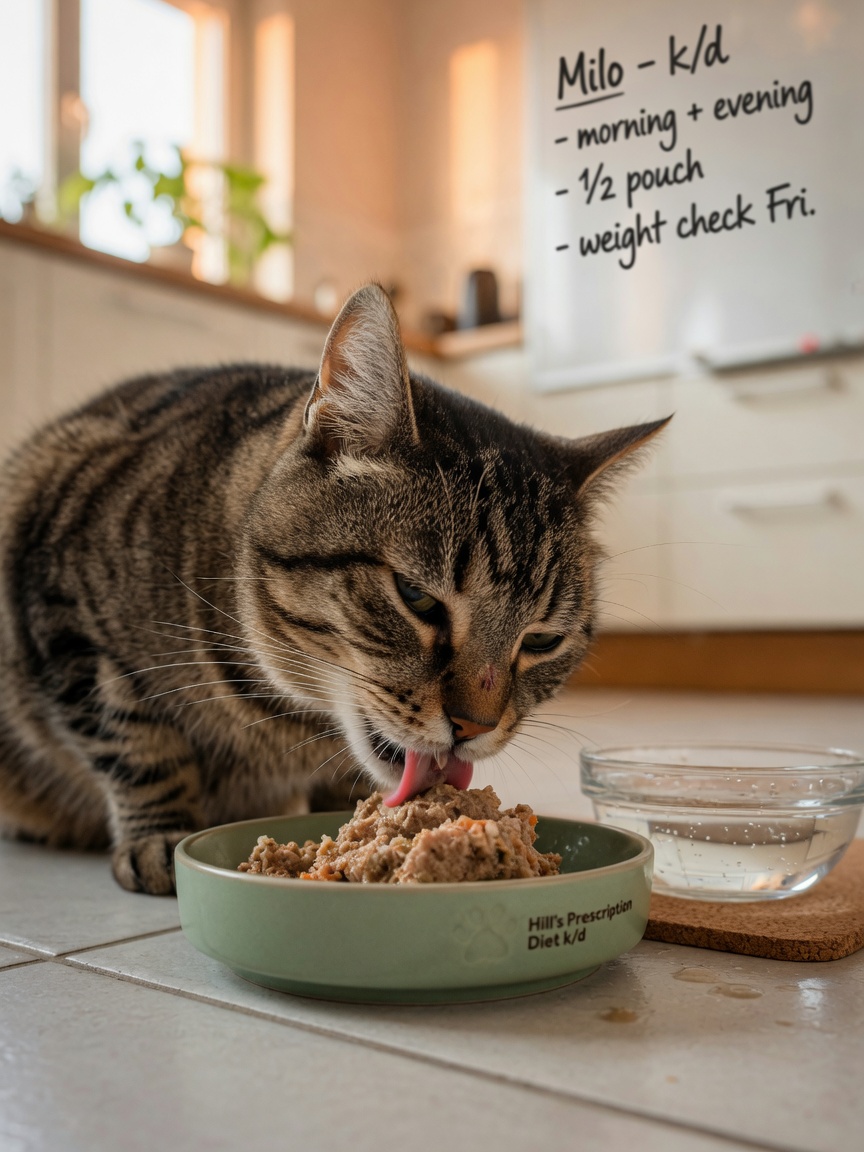
Wet food remains the cornerstone recommendation. Prescription diets formulated for oxalate prevention are designed to produce less acidic urine than struvite diets. Hill's Prescription Diet c/d Multicare and Royal Canin Urinary SO in moderate pH formulations are frequently used, though the specific recommendation should be tailored by your vet based on your individual cat's urine culture results, pH tracking, and bloodwork.
Why Getting the Diagnosis Right Matters
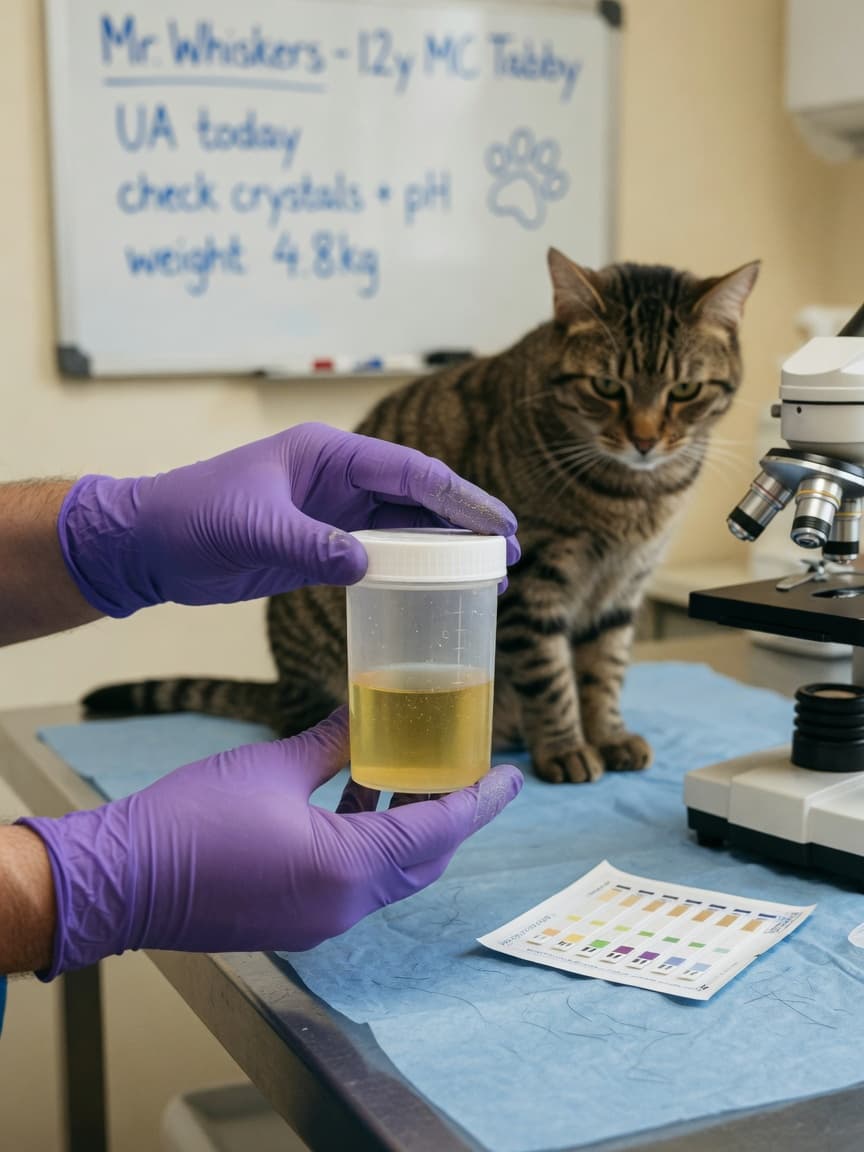
It is not possible to determine the type of urolith from clinical signs, radiographs alone, or even ultrasound findings in all cases. Stone analysis — where a retrieved stone or voided material is sent to a laboratory for mineral composition analysis — is the only definitive way to know what you are dealing with. In the absence of stone analysis, urine pH, urine specific gravity, and the microscopic appearance of crystals in a fresh urine sample provide useful but incomplete guidance.
Feeding a struvite prevention diet to a cat with calcium oxalate disease is not a neutral act — it will likely acidify the urine further and increase oxalate precipitation. The reverse is equally problematic. This is one area of feline urinary management where approximation is genuinely risky, and a definitive diagnosis should always be pursued before committing to long-term dietary management.
Monitoring and Recurrence
Both stone types carry a meaningful recurrence risk. Calcium oxalate recurrence rates in cats are estimated at around 50 per cent within three years. Struvite recurrence is lower with appropriate dietary management but not eliminated. Regular urine monitoring — ideally every three to six months — allows early detection of crystalluria or pH shifts before a new stone forms. This proactive approach, combined with the correct dietary strategy, offers the best chance of keeping your cat stone-free long term.