
Why Cavalier Health Demands Serious Attention
The Cavalier King Charles Spaniel is one of the most beloved breeds in the world, and one of the most medically complex. By the age of ten, virtually all Cavaliers show some degree of mitral valve disease. Syringomyelia — a neurological condition linked to skull malformation — affects an estimated 25% or more of the breed population. These are not fringe concerns. They are the central health challenge facing the breed, and the decisions made by breeders today will determine whether the Cavalier's future improves or continues along its current trajectory.
Mitral Valve Disease: The Breed's Defining Challenge
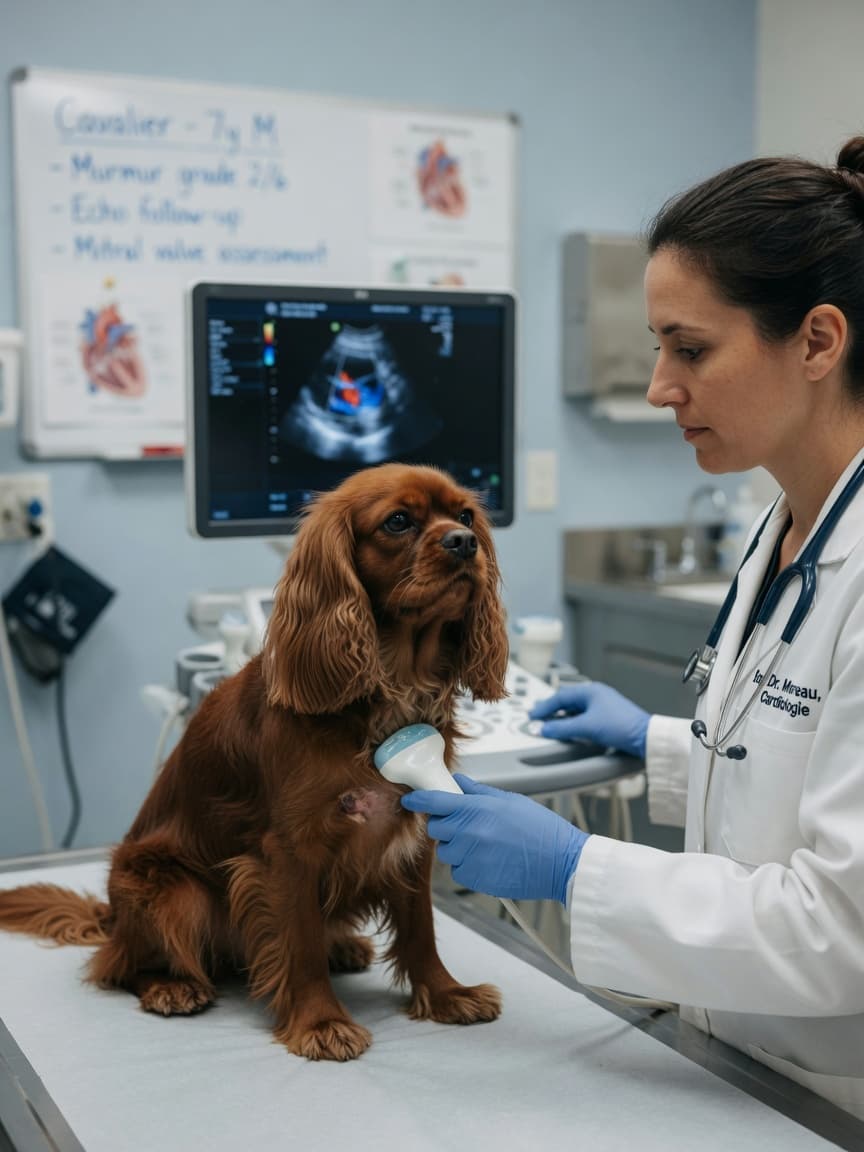
Mitral valve disease (MVD) causes the heart's mitral valve to degenerate over time, allowing blood to leak backwards with each heartbeat. This places increasing strain on the heart, ultimately leading to congestive heart failure in severely affected dogs. In most breeds, MVD is a disease of old age. In the Cavalier, it occurs decades earlier and progresses faster than in any other breed.
Clinical Progression
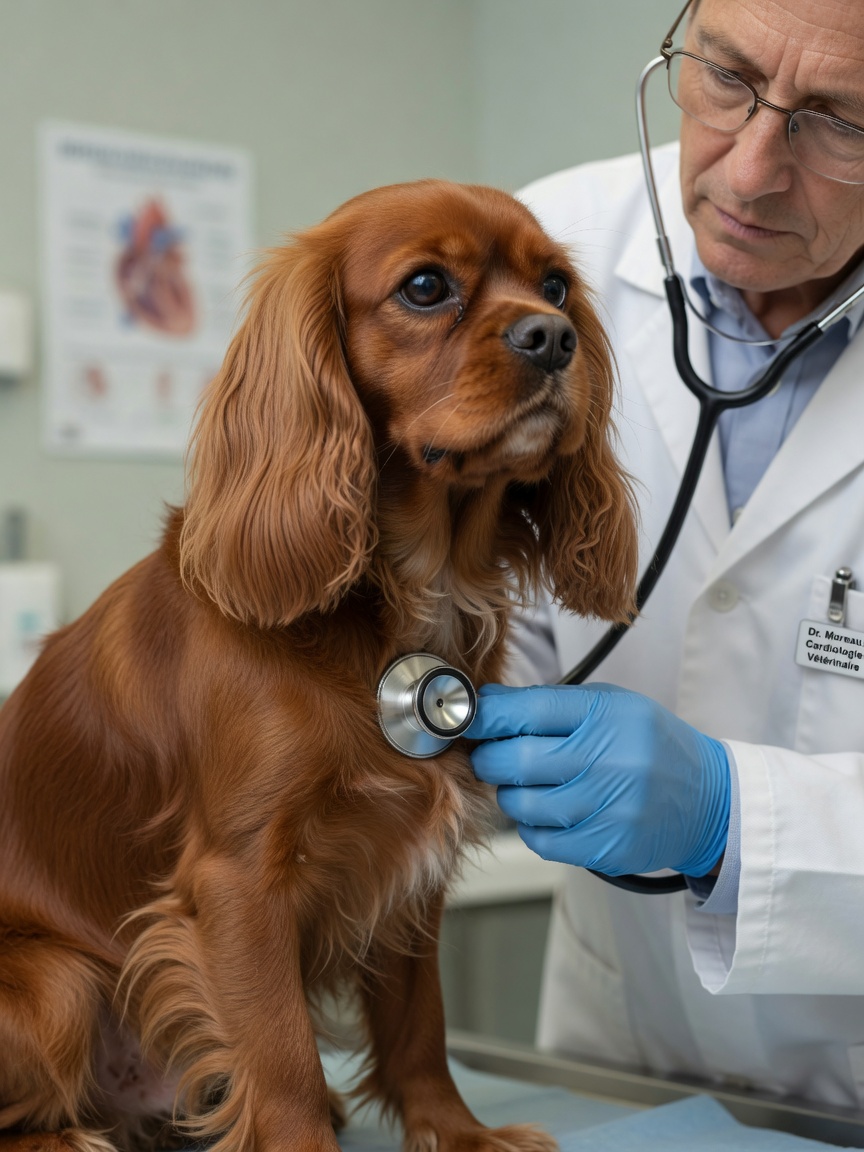
The disease typically begins with a heart murmur detectable by stethoscope, graded on a scale of one to six based on intensity. Most dogs remain clinically normal at lower grades. As the valve deteriorates, the heart enlarges to compensate — a stage detectable on X-ray and echocardiogram — before eventually failing to keep pace, resulting in fluid accumulation in the lungs (pulmonary oedema) and the clinical signs of heart failure: coughing, breathlessness, exercise intolerance, and collapse.
The MVD Breeding Protocol
The MVD Breeding Protocol was developed through collaboration between veterinary cardiologists and Cavalier breed clubs, and has been endorsed internationally as the most evidence-based approach to reducing MVD prevalence in the breed. The current protocol stipulates that dogs should not be bred until at least 2.5 years of age and must be heart clear (murmur free) at that examination. Additionally, both parents should be clear of murmurs at 2.5 years, and ideally at five years. Some schemes extend this to require grandparents to be clear beyond five years.
Research published in peer-reviewed journals has demonstrated that breeding from lines adhering to this protocol produces offspring with significantly later MVD onset than the breed average. The protocol is voluntary, which means its impact depends entirely on breeder commitment and buyer awareness. When acquiring a Cavalier puppy, asking for documented cardiac screening certificates from both parents — and ideally grandparents — is not excessive caution; it is essential due diligence.
Treatment and Monitoring
The EPIC trial and subsequent research have established that pimobendan, a cardiac medication, extends the preclinical phase of MVD when started at the point of cardiac enlargement. Dogs with MVD should be assessed by a veterinary cardiologist at least annually to track murmur grade and cardiac dimensions. Once heart failure develops, a combination of medications can significantly extend comfortable life, but the condition is ultimately progressive. Early detection and proactive management are the most powerful tools available.
Syringomyelia and Chiari-Like Malformation
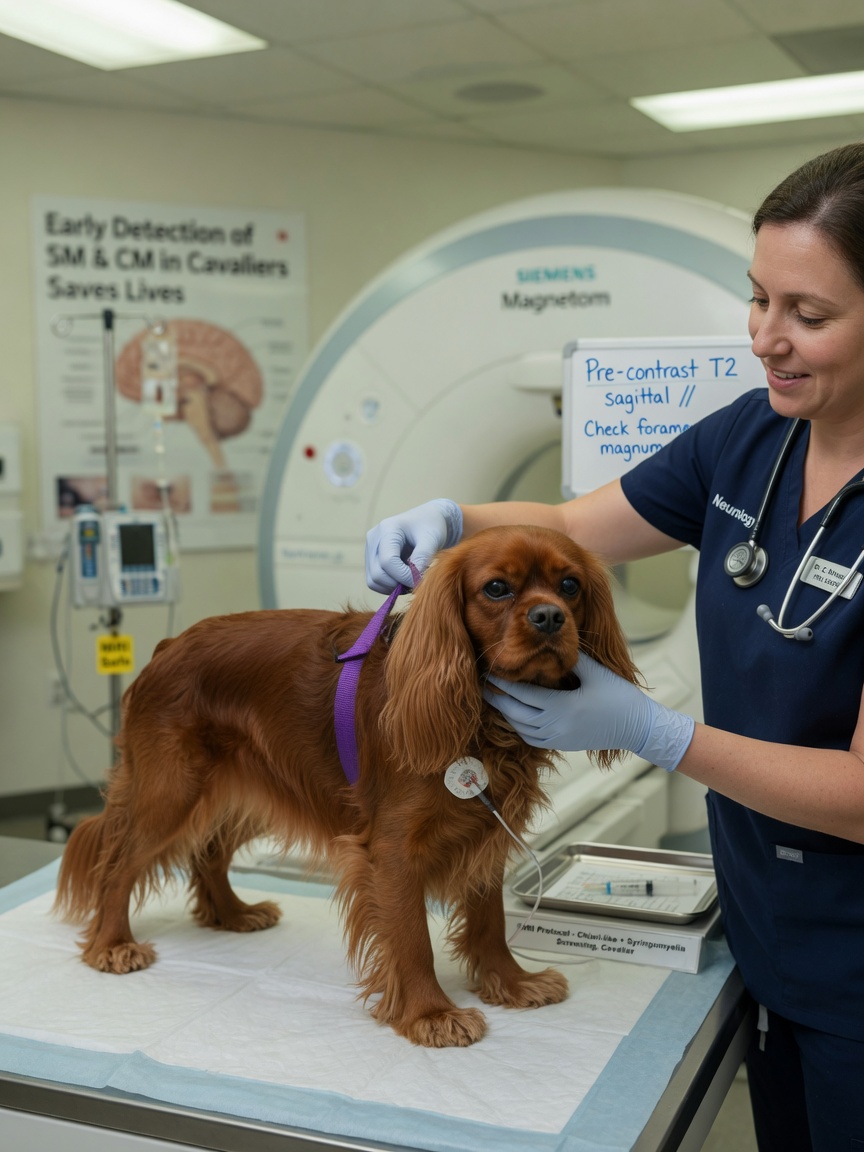
Syringomyelia (SM) refers to fluid-filled cavities within the spinal cord, which develop as a consequence of abnormal cerebrospinal fluid flow. In the Cavalier, the primary driver of this is Chiari-like malformation (CM) — a mismatch between the size of the skull and the brain it contains, causing the cerebellum to be pushed toward the foramen magnum (the opening at the skull base).
Recognising the Signs
The condition presents on a spectrum. Mild CM without significant SM may cause no clinical signs, or only subtle ones such as occasional sensitivity around the neck and ears, or a tendency to scratch at the neck or shoulder area without making contact with the skin — often described as "phantom scratching." More severe SM causes persistent pain, heightened skin sensitivity, postural changes such as a hunched position when walking, weakness, and in the most serious cases, progressive neurological deterioration.
MRI Screening
The only reliable method for assessing CM and SM is MRI scanning. The British Veterinary Association and Kennel Club operate a screening scheme in the UK, classifying dogs according to MRI findings. The recommended breeding strategy, developed by leading veterinary neurologists, advises against using dogs with severe CM or any symptomatic SM for breeding, and emphasises selection of dogs with the least evidence of structural malformation.
MRI is expensive, and screening has not yet achieved the same uptake as cardiac testing, but its importance cannot be overstated. Because CM is heritable, systematic screening of breeding stock is the only way to reduce its prevalence over generations.
Managing Affected Dogs
Dogs with mild SM and manageable pain can be treated medically using a combination of analgesics, drugs that reduce cerebrospinal fluid production (such as omeprazole and furosemide), and gabapentin or pregabalin for neuropathic pain. Surgical decompression of the foramen magnum offers another option for severely affected dogs, with variable outcomes. Pain management and quality of life assessment should be led by a veterinary neurologist familiar with the condition.
Other Health Considerations in the Cavalier
Hip dysplasia, episodic falling syndrome (a movement disorder), and curly coat-dry eye syndrome (linked to a single gene mutation) round out the Cavalier's primary health concerns. Episodic falling is caused by a recessive gene mutation for which a DNA test is available — breeding only tested-clear dogs eliminates the condition.
What Cavalier Owners and Buyers Should Do
- Verify that both parents of any Cavalier puppy have documented cardiac clearances at 2.5 years under the MVD Breeding Protocol.
- Ask whether MRI screening for CM and SM has been performed on the breeding pair and, if possible, their parents.
- Arrange a cardiac auscultation with your vet every six to twelve months once your Cavalier reaches five years of age.
- If your Cavalier scratches repeatedly at the shoulder or neck area without contact, or shows signs of pain or postural change, request a neurological referral rather than attributing it to skin issues.
- Ask your vet about the appropriate time to begin echocardiographic monitoring and whether pimobendan is indicated based on current cardiac dimensions.
- Support breeders who adhere to health protocols — consumer demand for tested stock is the most powerful lever available to improve breed health.
The Cavalier's health challenges are serious, but they are not insurmountable. With rigorous screening, responsible breeding, and informed ownership, meaningful improvement in the breed's health trajectory is achievable within a generation.