

Ibuprofen Poisoning in Dogs: Never Give Human NSAIDs
ASPCA Poison Control: (888) 426-4435
Pet Poison Helpline: (855) 764-7661
Available 24/7. If your dog has ingested ibuprofen or any human painkiller, call immediately — do not wait for symptoms.
Ibuprofen — sold under brand names like Advil, Motrin, and Nurofen — is one of the most common causes of accidental drug poisoning in dogs. It sits in medicine cabinets and handbags in virtually every home, and its availability makes it one of the most dangerous substances a dog can encounter. Here is the critical truth every dog owner must know: there is no safe dose of ibuprofen for dogs. A single standard 200 mg tablet can cause life-threatening gastrointestinal damage in a small dog. At higher doses, kidney failure and death follow. This is a toxicological emergency that demands immediate veterinary intervention.
Why Ibuprofen Is Toxic to Dogs
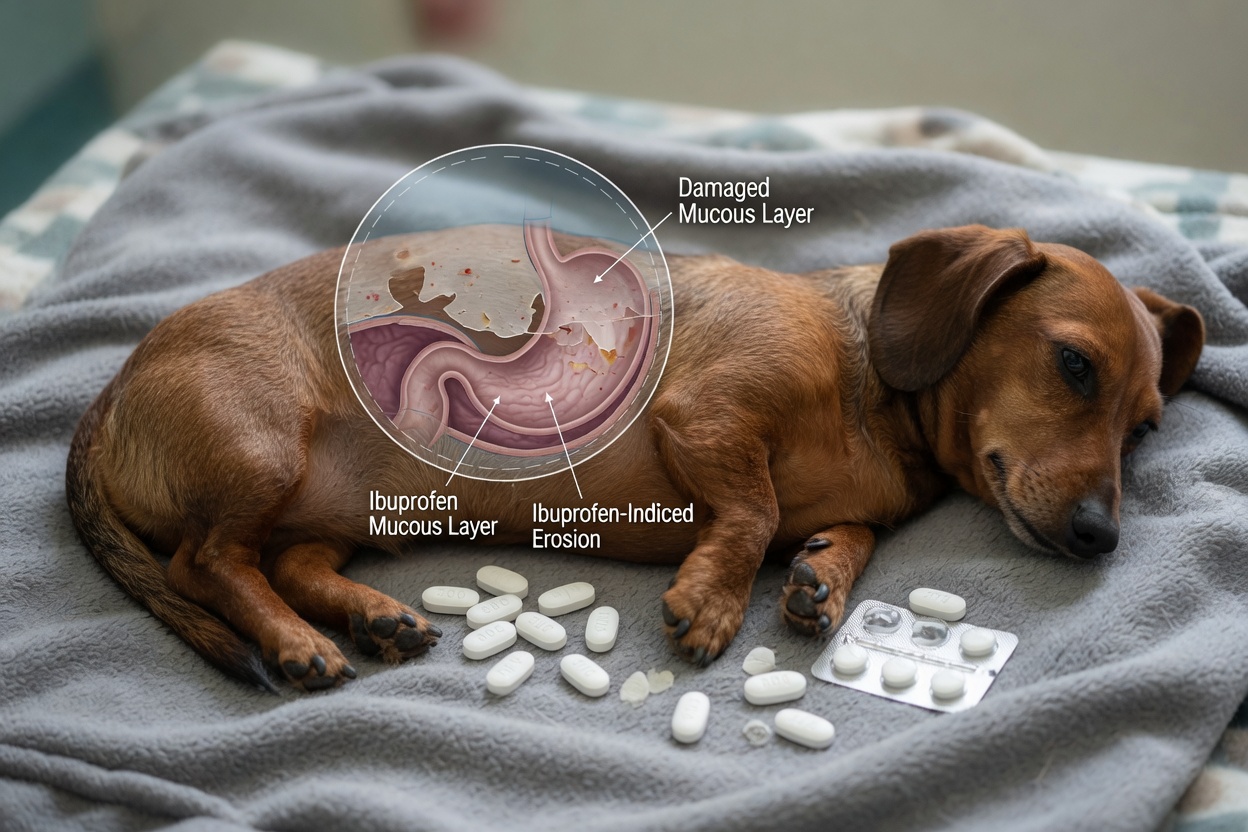
Ibuprofen belongs to a class of drugs called non-steroidal anti-inflammatory drugs (NSAIDs). In humans, these medications work by inhibiting enzymes called COX-1 and COX-2, which are responsible for producing prostaglandins — molecules that drive pain, fever, and inflammation. The problem is that prostaglandins also serve critical protective functions in dogs: they maintain the mucous lining of the stomach and intestines, regulate blood flow to the kidneys, and support normal platelet function.
Dogs metabolize ibuprofen far more slowly than humans do, meaning the drug lingers in their system at toxic concentrations for much longer. Additionally, dogs are significantly more sensitive to the GI-damaging effects of ibuprofen than humans. The result is a drug that strips away the stomach's protective lining, causes severe ulceration, impairs kidney function, and in high enough doses, crosses into the central nervous system causing seizures and coma.
Toxic Dose Thresholds: The Numbers Are Terrifying
Veterinary toxicologists have established approximate toxic thresholds for ibuprofen in dogs, and they are shockingly low. GI signs (vomiting, diarrhea, stomach ulcers) begin at approximately 25 mg per kilogram of body weight. Kidney damage begins at approximately 175 mg/kg. Central nervous system effects — seizures, coma — occur at approximately 400 mg/kg. Death can occur at doses of 600 mg/kg or above.
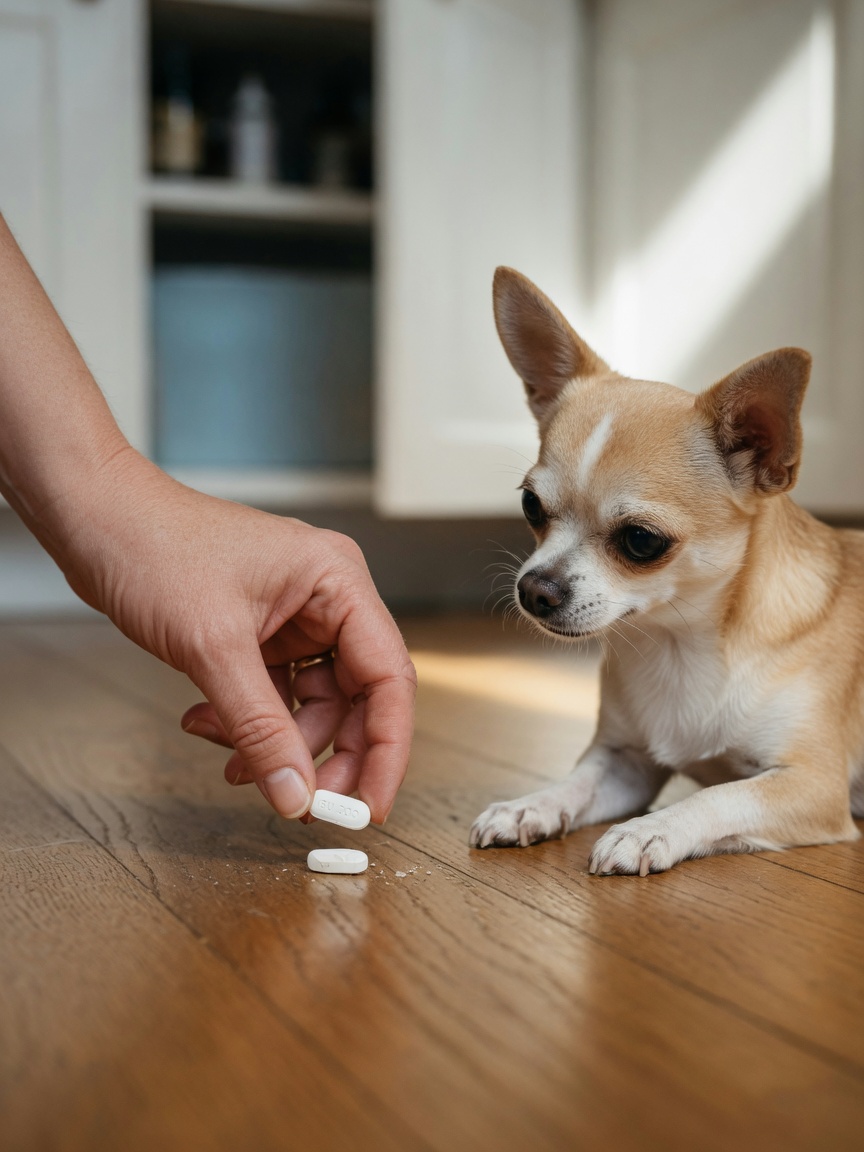
Now consider a real-world scenario: a 5 kg (11 lb) dog — the size of a Chihuahua or small Dachshund — would need only 125 mg to begin showing GI toxicity. That is less than one standard over-the-counter tablet. A full adult dose of 400 mg ibuprofen could push that same dog toward kidney failure. For small breeds, a single dropped pill found on the floor can be catastrophic. Dogs are attracted to the sugar-coated, pleasant-smelling tablets. They will eat them eagerly.
Signs and Symptoms of Ibuprofen Toxicity
Symptoms vary depending on the dose ingested and the time elapsed since ingestion. Early GI signs appear within 2–6 hours and include: vomiting (sometimes bloody), diarrhea (sometimes with blood or dark tarry appearance indicating internal bleeding), abdominal pain and guarding, drooling, and loss of appetite. These signs alone should prompt an emergency call — they indicate the stomach lining is already being damaged.
With higher doses or delayed treatment, kidney toxicity develops over 12–72 hours: markedly decreased or absent urination, excessive thirst initially followed by cessation of drinking, swollen kidneys detectable on imaging, elevated creatinine and BUN on bloodwork, and weakness. Acute kidney injury from ibuprofen can be permanent even if the dog survives.
At the highest doses, CNS signs emerge: disorientation, ataxia (stumbling), tremors, seizures, and coma. Dogs in this stage face a very poor prognosis. At any dose level, there is also a risk of gastric or intestinal perforation — a hole in the gut wall that causes peritonitis (infection throughout the abdominal cavity) and is often fatal without emergency surgery.
What Happens at the Veterinary Emergency Clinic
Time is everything with ibuprofen toxicity. If the dog is brought in within 1–2 hours of ingestion and is not already showing severe symptoms, the vet will likely induce vomiting and administer activated charcoal to bind remaining drug in the GI tract. Beyond this window, treatment becomes supportive and intensive. IV fluid therapy is critical to protect kidney function and maintain blood pressure. The vet will monitor kidney values (creatinine, BUN, phosphorus) every 6–12 hours. Gastroprotectants — sucralfate, omeprazole, misoprostol — are given to help heal and protect the stomach lining. Blood transfusions may be necessary if GI bleeding has been severe. Dogs with kidney failure may require dialysis, though this is not available at all facilities. Hospitalization for 48–72 hours is typically minimum.
Common Scenarios That Lead to Accidental Poisoning
The most frequent causes of ibuprofen ingestion in dogs are: a pill dropped on the floor and eaten before the owner can retrieve it, a dog getting into a purse or bag where ibuprofen is kept, an owner intentionally (and tragically mistakenly) giving ibuprofen to their dog for pain, open pill bottles left on low counters or nightstands, and children sharing pills with pets. Well-meaning owners who give their dog "just one" ibuprofen tablet for a limp or obvious pain cause a disproportionate number of poisoning cases. If your dog is in pain, call your veterinarian. Veterinary-specific NSAIDs such as meloxicam and carprofen are formulated for safe use in dogs — human NSAIDs are not.
Prevention
Store all human medications in high, locked cabinets. Never leave pill bottles on counters. Do not carry loose tablets in bags your dog might access. Never give any human painkiller — including aspirin, naproxen, or acetaminophen — to a dog without explicit veterinary instruction. If your dog is limping or in apparent pain, the only safe action is a veterinary consultation.
Key Takeaways
- There is no safe dose of ibuprofen for dogs — even one tablet can be fatal for small breeds.
- Toxicity causes GI ulceration, kidney failure, and at high doses, seizures and death.
- Symptoms begin within 2–6 hours; kidney failure develops over 12–72 hours.
- Treatment must begin immediately — the window for decontamination is narrow.
- Never give your dog human NSAIDs for pain; use only veterinarian-prescribed medications.
- Call ASPCA Poison Control (888-426-4435) or Pet Poison Helpline (855-764-7661) immediately upon suspected ingestion.
References
- Gwaltney-Brant SM. "Nonsteroidal anti-inflammatory drug toxicosis in small animals." Veterinary Clinics of North America: Small Animal Practice. 2012;42(2):279–292. PMID: 22381179.
- Richardson JA. "Management of acetaminophen and ibuprofen toxicoses in dogs and cats." Journal of Veterinary Emergency and Critical Care. 2000;10(4):285–291. doi:10.1111/j.1476-4431.2000.tb00013.x.
About the Author: Julia Wrenfield is a Pet Wellness Researcher with over 12 years of experience in companion animal health. She writes for ForPetsHealthcare.com to help pet owners make informed, evidence-based decisions for their animals.