
Food Reactions in Cats: More Common Than You Might Think
Adverse food reactions — encompassing both true immunological food allergy and non-immune-mediated food intolerance — are a recognised cause of chronic skin disease and gastrointestinal disturbance in cats. They are thought to account for around ten to fifteen per cent of allergic skin disease in the species and may be responsible for a significant proportion of cats diagnosed with inflammatory bowel disease.
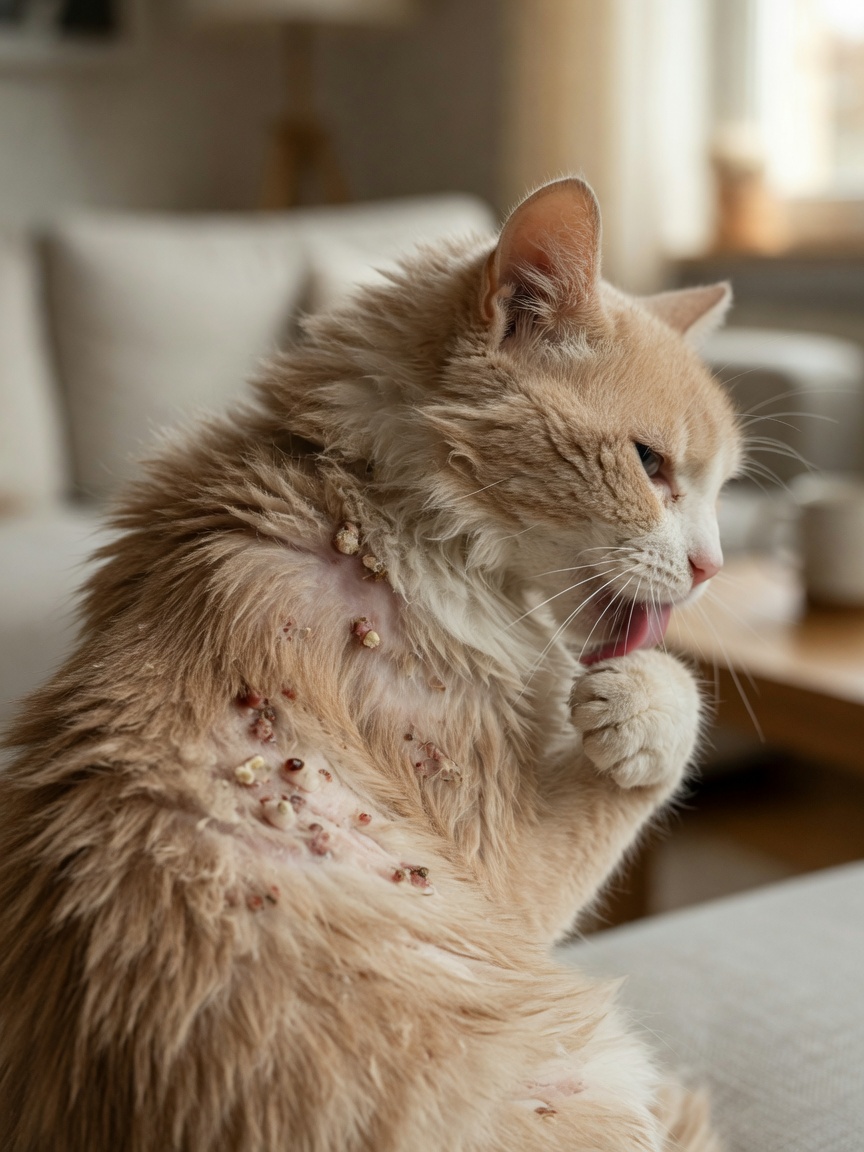
The challenge in cats is that the symptoms of food reactions overlap considerably with those of other common conditions. Generalised pruritus, miliary dermatitis (small crusty skin lesions across the back and neck), eosinophilic plaques, chronic vomiting, and diarrhoea are all consistent with a food reaction, but also with atopic dermatitis, parasites, hyperthyroidism, and IBD of other causes. This makes dietary investigation an important part of a thorough diagnostic workup, not simply a first resort for owners who prefer to avoid medication.
The Most Common Food Allergens in Cats
As with dogs, proteins are the primary drivers of food reactions in cats, not carbohydrates or grains. The most frequently implicated allergens in published studies include:
- Beef — consistently ranked as the most common feline food allergen, reflecting its widespread historical use in commercial cat foods
- Fish — a counterintuitive finding given the popular association of cats with fish; cats fed fish-based diets from early life are often sensitised to common fish proteins
- Chicken — now among the most prevalent proteins in commercial cat food and therefore an increasingly common sensitiser
- Dairy products — milk proteins, particularly caseins, are a well-documented cause of reactions in some cats
- Lamb, egg, and wheat — less frequently reported but confirmed in a proportion of cases
Sensitisation occurs through repeated dietary exposure. A cat that has eaten the same protein throughout its life is far more likely to develop a reaction to it than to a protein it has never encountered. This explains why beef and chicken, as the most widely used commercial proteins, top the list.
Challenges of Running an Elimination Trial in Cats
The elimination diet trial is the only scientifically validated diagnostic method for identifying food reactions in cats. Blood tests, saliva panels, and hair analysis marketed for food sensitivity testing have not been shown to produce reliable results in controlled studies and should not be used to guide dietary decisions.
However, running an elimination trial in a cat presents challenges that do not apply in the same way to dogs.
The Neophobia Problem
Cats are highly resistant to dietary change, particularly when they are unwell or have established a strong preference for a familiar food texture, flavour, or smell. Introducing a novel protein or hydrolysed diet — especially one with an unfamiliar texture — to a cat that refuses it is genuinely difficult. Forced dietary change can cause food aversion, and cats that stop eating altogether are at risk of hepatic lipidosis, a potentially fatal liver condition that develops within days of significant caloric restriction. The palatability of the chosen elimination diet is therefore a clinical priority, not a luxury consideration.
Multi-Cat Households
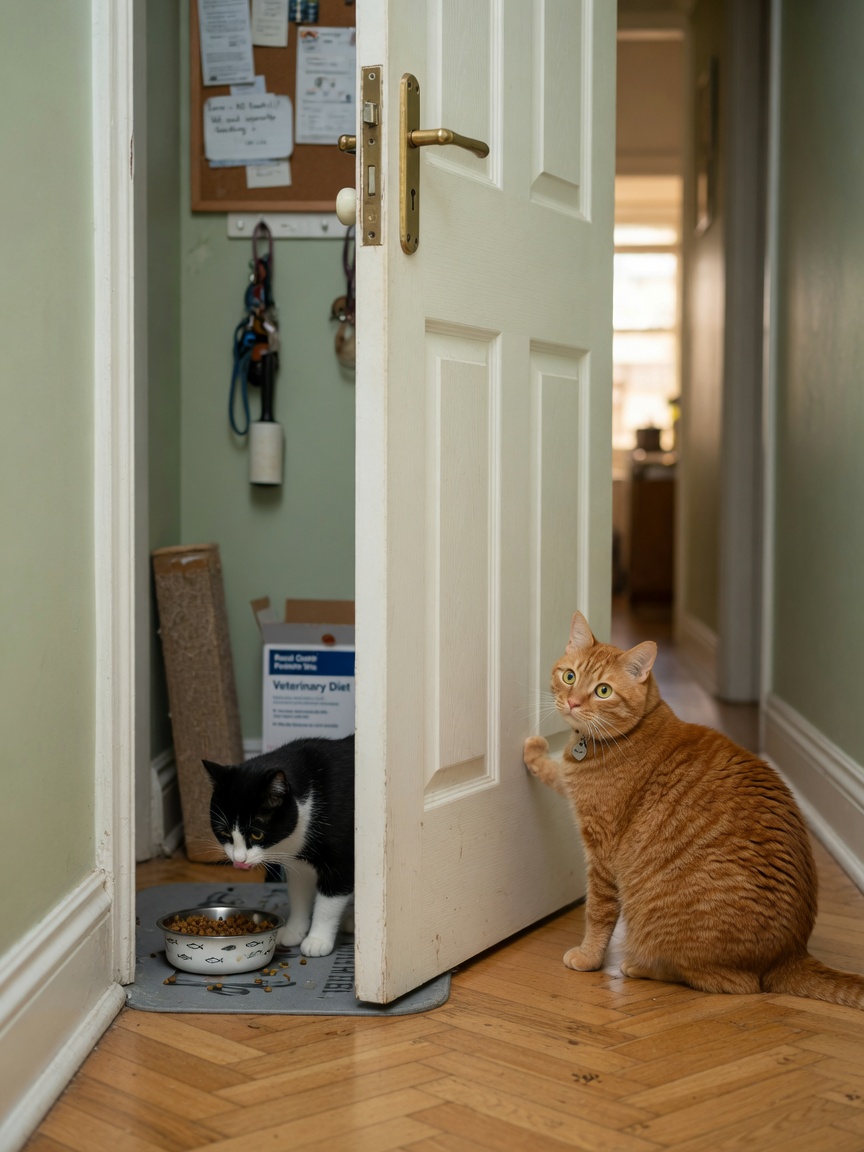
In households with multiple cats, preventing food-sharing is extremely difficult without complete physical separation at every meal. A cat on an elimination trial that accesses another cat's bowl — even occasionally — may consume the allergen and invalidate the trial. Owners must be prepared to feed cats in entirely separate rooms with doors closed, for up to twelve weeks, to run a valid trial in a multi-cat environment.
Outdoor Cats and Hunting Behaviour
This is perhaps the most significant and underappreciated challenge in feline elimination trials. A cat that hunts — even occasionally — is ingesting whole prey containing proteins outside the test diet. A mouse, bird, or rabbit consumed during the trial period introduces proteins that could sustain or trigger the immune response, invalidating weeks of dietary management. Cats that cannot be confined indoors for the duration of the trial cannot complete a valid elimination trial. In such cases, hydrolysed protein diets offer the best chance of managing the condition symptomatically, as their small peptide fragments are less likely to trigger a reaction even without complete dietary exclusivity.
Trial Duration and What to Expect
A feline elimination diet trial should last a minimum of eight weeks, with twelve weeks recommended to allow full resolution of skin symptoms, which can lag behind the dietary change. Gastrointestinal symptoms — vomiting and diarrhoea — often improve more quickly, sometimes within two to four weeks, which can provide early encouragement without constituting a definitive result.
During the trial, no other food, treats, flavoured medications, or supplements with novel ingredients should be given. Unflavoured tablets or injectable medications are acceptable; chewable chicken-flavoured antiparasitic treatments are not.
Hydrolysed Diets: The Most Practical Solution for Many Cats
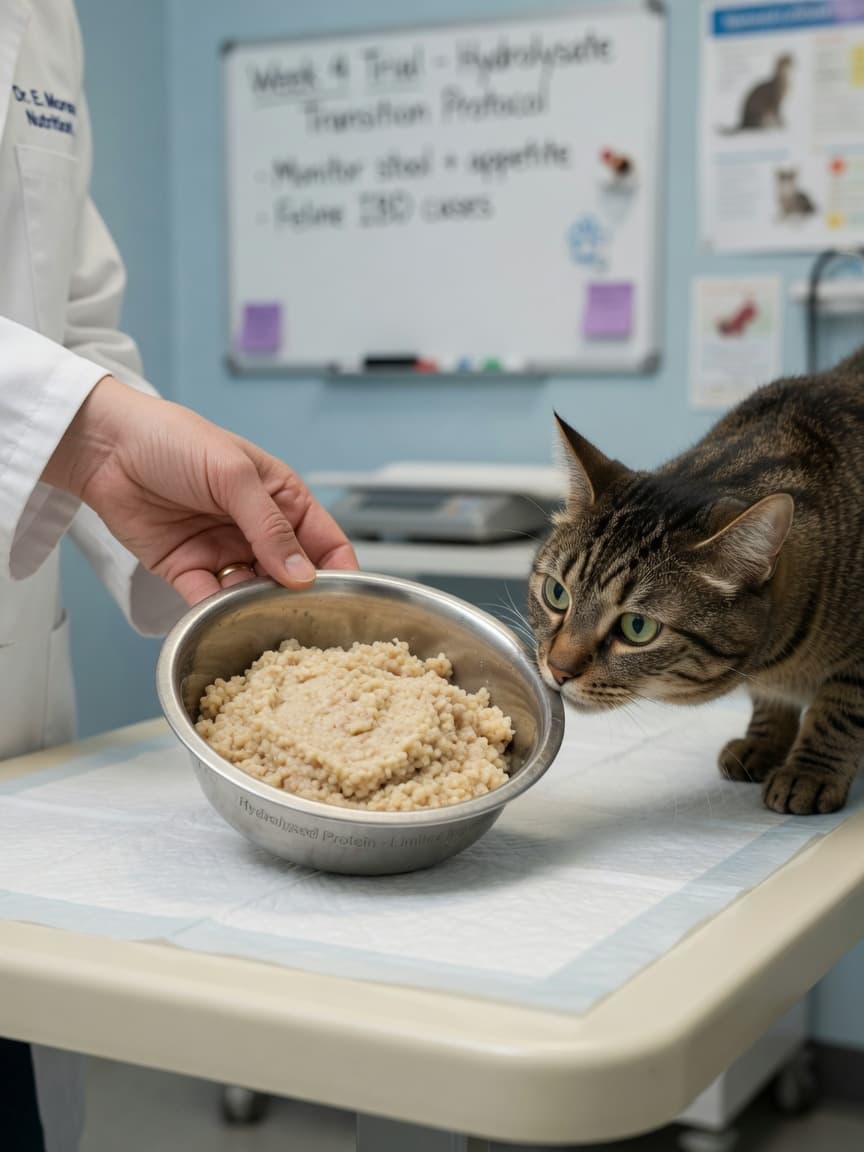
Hydrolysed protein diets break dietary proteins into very small peptide fragments — typically below the molecular weight threshold required to cross-link IgE antibodies and trigger an immune response. In practical terms, this means the diet is unlikely to provoke a reaction even in a sensitised animal, without requiring the identification of a specific novel protein.
Purina Pro Plan Veterinary Diets HA and Royal Canin Anallergenic are the most widely used hydrolysed options for cats in the UK. Both are formulated to be complete and balanced for long-term feeding and are available in wet and dry formats. For cats that find novel protein diets unpalatable, hydrolysed options with more familiar flavour profiles are often better accepted.
These diets are also the most robust choice for cats in multi-cat households or cats with outdoor access, where strict dietary exclusivity cannot be guaranteed. Even partial allergen reduction through hydrolysed feeding may produce clinical improvement in these animals.
Novel Protein Options for Cats
When a hydrolysed diet is not available, not affordable, or refused by the cat, a genuine novel protein — one the animal has never encountered in its diet — is the alternative approach. Novel proteins for cats include:
- Rabbit — increasingly available in commercial and raw food formulations
- Venison — used in several prescription and premium commercial diets
- Kangaroo — available in some specialist brands; genuinely novel for most UK cats
- Crocodile or alligator — niche but effective novel proteins available in some specialist diets
The owner must verify that the cat has not previously consumed these proteins, as even occasional exposure — a rabbit-flavoured treat or a single tin of venison food — can establish sensitisation. Home-cooked novel protein diets can be used under veterinary nutritionist guidance, though ensuring nutritional completeness over weeks of exclusive feeding requires careful planning.
Written by Sarah Bennett