
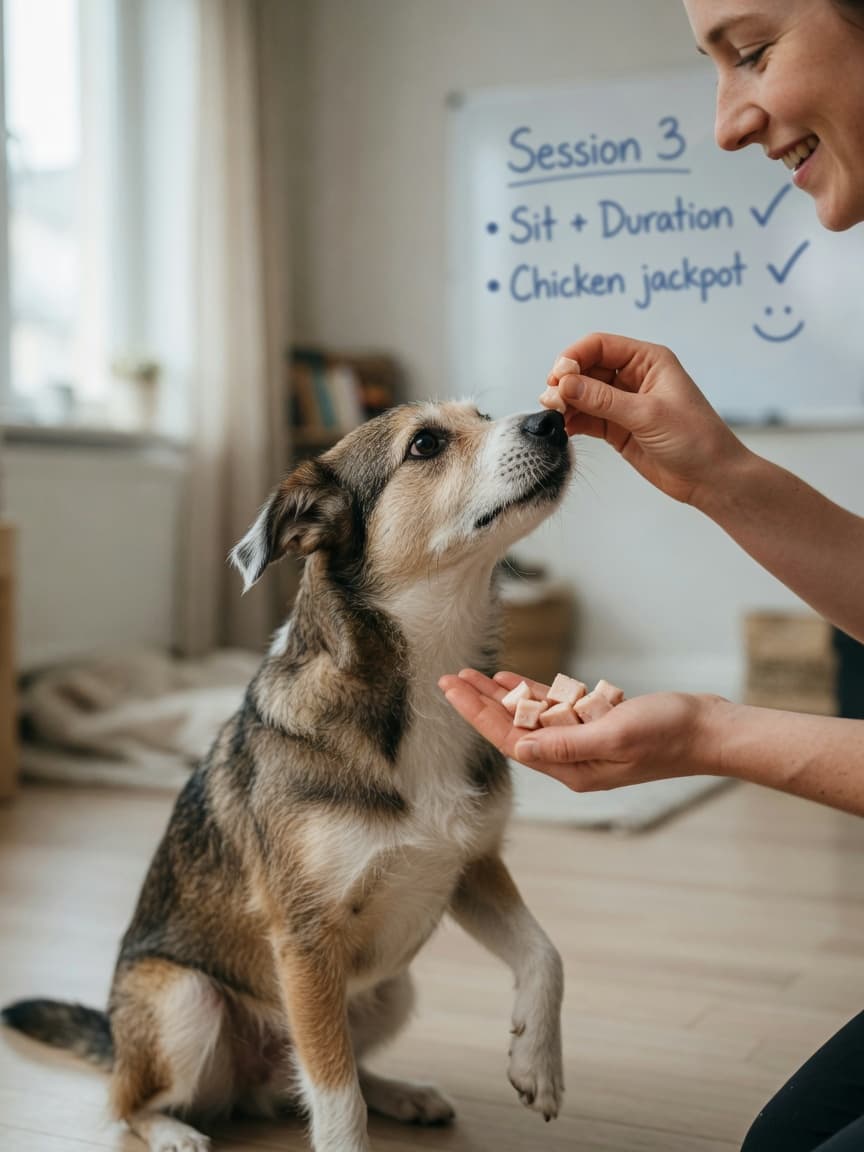
How to Train a Dog to Sit, Stay & Come: Force-Free Method
By Julia Wrenfield, Pet Wellness Researcher — June 25, 2026
- Skills covered: Sit, Stay, and Come (recall)
- Method: Force-free positive reinforcement — works for any age or breed
- Session length: 3–5 minutes, 2–3 times per day
- Tools needed: High-value treats, clicker (optional), quiet training space
- Timeline: Basic sit in 1–2 days; reliable stay and recall in 4–8 weeks
Sit, stay, and come are not just party tricks — they are the foundation of a safe, well-mannered dog and a strong human-canine relationship. Teaching them using force-free positive reinforcement is not only kinder; it produces faster, more reliable results than coercive methods. Research consistently shows that dogs trained with reward-based methods learn more quickly, generalize better across environments, and show fewer stress-related behaviors than those trained with punishment. Here is a complete step-by-step guide to teaching all three cues.
Before You Begin: Setting Up for Success
Training quality matters more than quantity. Short, fun sessions beat long, tedious ones. Before each session:
- Use high-value treats — small (pea-sized), soft, and genuinely exciting. Think small pieces of chicken, cheese, or commercial training treats. The treat should make your dog's eyes light up.
- Train before meals when the dog is slightly hungry, not immediately after eating.
- Start in a low-distraction environment (quiet room, backyard) and gradually increase difficulty.
- Keep sessions to 3–5 minutes maximum for puppies, up to 10 minutes for adult dogs.
- End on success — always finish with something the dog can do well.
Teaching "Sit"
Step 1: Luring the Sit
Hold a treat at your dog's nose level. Slowly move it up and back over their head — as the nose follows the treat upward, the hind end naturally lowers to the ground. The moment the bottom touches the floor, mark with "yes!" (or a clicker click) and deliver the treat immediately. The timing of the mark is critical: you are marking the exact moment of sit, not a second later.
Repeat 5–10 times per session. Most dogs understand the lure movement within the first session.
Step 2: Adding the Verbal Cue
Once the dog is sitting reliably when you lure (8 out of 10 attempts), begin adding the word "sit" just before you begin the lure motion. Say "sit," then lure. After 20–30 repetitions over several sessions, begin saying "sit" and pausing briefly to see if the dog offers the behavior before you add the lure.
Step 3: Fading the Lure
The lure must be faded or the dog learns to respond to the treat in your hand, not the verbal cue. Begin using an empty hand in the same motion, deliver the treat from the other hand after the mark. Gradually reduce the hand motion until a quiet verbal cue alone is sufficient.
Teaching "Stay"
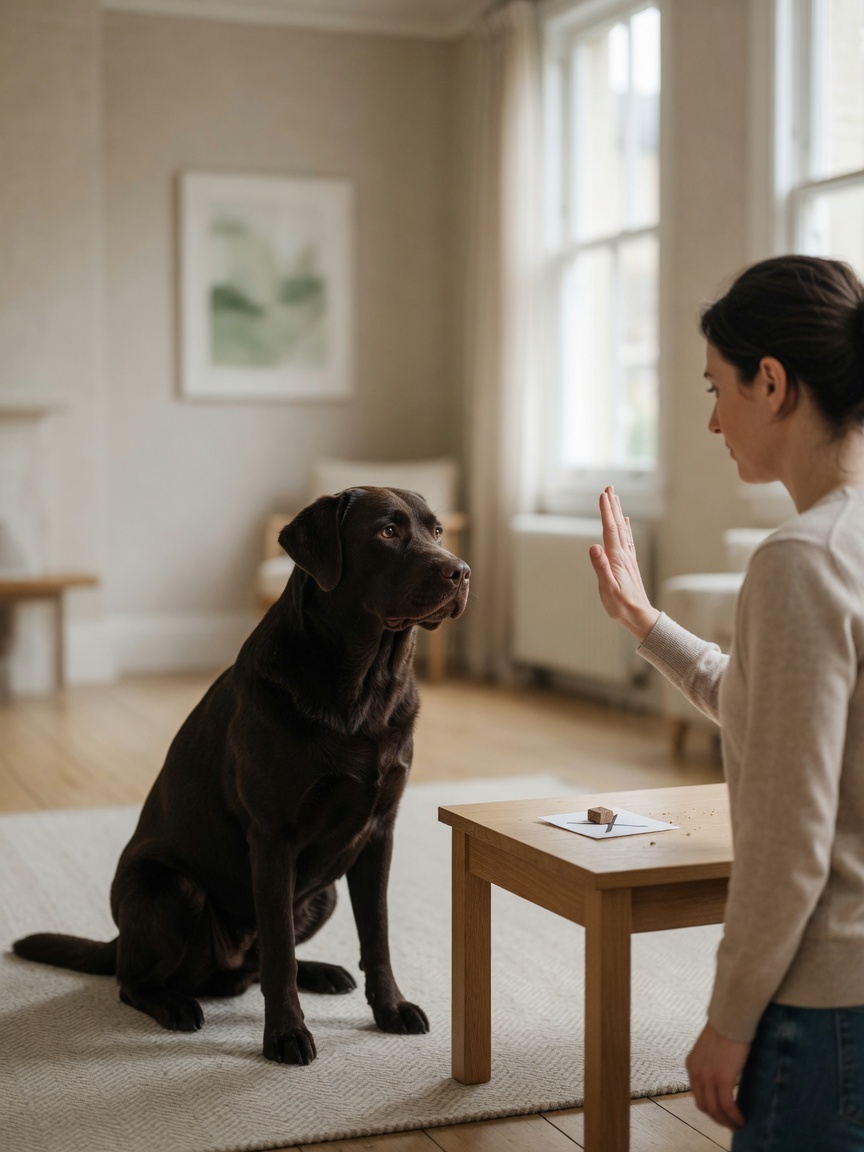
Stay is taught across three dimensions, called the Three Ds: Duration (how long), Distance (how far), and Distraction (how much is happening around them). Critically, work on only one D at a time — increasing all three simultaneously sets the dog up to fail.
Building Duration
Ask for a sit. Pause one second. If the dog remains, mark and reward. Gradually extend: 2 seconds, 3, 5, 8, 12 seconds. If the dog breaks position, simply ask for the sit again without any negative reaction and try a shorter duration. The release word ("okay" or "free") signals the end of the stay — say it clearly each time to help the dog understand the stay ends only when released.
Adding Distance
Once duration is solid at around 30 seconds, introduce distance. Take one step back from the dog while they sit-stay. Return to them (do not call them to you yet), mark and reward at the dog's position. Increase distance gradually — one step per session. At this stage, keep duration shorter while distance is being built.
Adding Distraction
Introduce low-level distractions: a toy on the floor nearby, another person walking past. Work at a difficulty level where the dog succeeds 80% of the time. Real-world stays (at the vet, on a busy street) come after the dog is solid in low-distraction environments.
Teaching "Come" (Recall)
A reliable recall could save your dog's life. It must be built on a foundation of coming to you always equaling something wonderful — never punishment, never being locked away, never the end of fun.
Step 1: Making Yourself the Most Exciting Thing in the Room
Call your dog's name in a happy, exciting voice. When they look at you, back up while keeping the energy high. When they reach you, jackpot reward — 5–10 small treats delivered one after another, praise, petting. The arrival at you must be the best thing that has happened to them all day, every time.
Step 2: Adding the Cue
Once the dog is enthusiastically chasing you, add the cue: "Come!" or "[Name], come!" just as you begin backing up. Always mark and reward the arrival. Never call the dog to you for something unpleasant. If you need to do something the dog dislikes (nail trim, bath), go get them — do not call them.
Step 3: Proofing Recall
Practice in the yard, on a long line (15–30 feet), in different locations. Gradually introduce distractions. A long line allows the dog freedom while ensuring safety during the proofing phase — never practice recall off-leash in an unenclosed area until the recall is highly reliable in controlled settings.
Training Progression Table
| Week | Sit Goal | Stay Goal | Come Goal |
|---|---|---|---|
| Week 1 | Sit on cue with lure, indoors | 3–5 second stay, handler 1 step away | Enthusiastic recall in one room |
| Week 2 | Sit without lure, lure fading | 10–15 second stay, handler 3 steps | Recall across the house |
| Week 3–4 | Sit in new locations | 30 second stay, mild distractions | Recall in yard on long line |
| Week 5–8 | Sit in public with distractions | 1–2 min stay, handler out of sight | Recall with distractions on long line |
Common Mistakes to Avoid
- Repeating the cue — if you say "sit, sit, SIT," you train the dog to respond on the third command. Say it once, wait, prompt if needed.
- Releasing from stay by calling "come" — this teaches the dog that stay ends when you call them, undermining both cues. Use a separate release word.
- Punishing failed recalls — even once destroys weeks of recall training. Never punish a dog for coming to you.
- Training only at home — dogs do not generalize automatically. Practice each skill in at least 5–10 different locations.
- Lure the sit, then fade the lure — verbal cue must work without a treat in your hand.
- Teach stay across Duration, Distance, and Distraction separately — never increase all three at once.
- Recall must always predict something wonderful — never call your dog for anything unpleasant.
- Short sessions (3–5 min), high-value treats, and ending on success produce the fastest learning.
- Generalize every cue to at least 5–10 locations for real-world reliability.
References
- Hiby EF, Rooney NJ, Bradshaw JWS. (2004). Dog training methods: their use, effectiveness and interaction with behaviour and welfare. Animal Welfare, 13(1), 63–69.
- Deldalle S, Gaunet F. (2014). Effects of 2 training methods on stress-related behaviors of the dog and on the dog-owner relationship. Journal of Veterinary Behavior, 9(2), 58–65.
- Herron ME, Shofer FS, Reisner IR. (2009). Survey of the use and outcome of confrontational and non-confrontational training methods in client-owned dogs. Applied Animal Behaviour Science, 117(1–2), 47–54. PMID: 19245592