
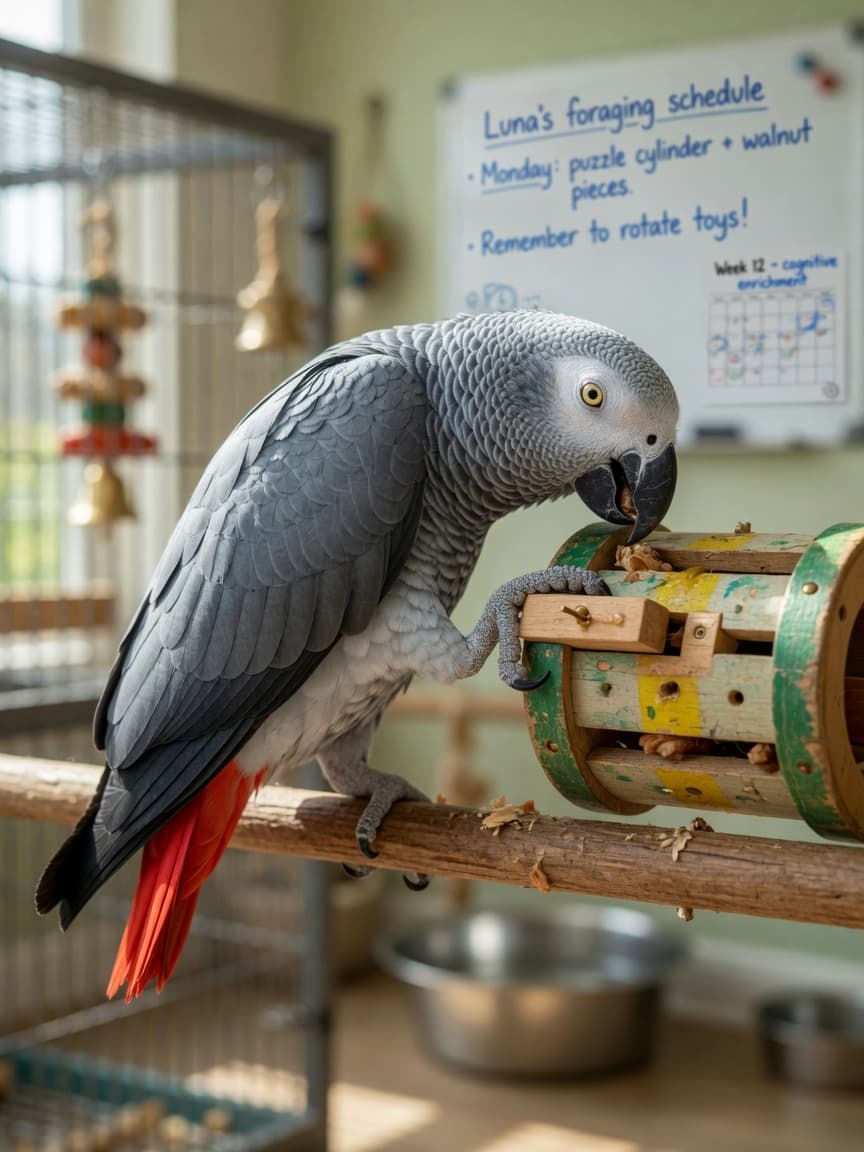
Pet birds are intelligent, social creatures that require mental stimulation and physical activity to thrive. Unlike their wild counterparts, which spend their days foraging, socialising, and exploring, captive birds can quickly become bored and develop behavioural problems such as feather plucking, aggression, and excessive vocalisations. Whether you have a colourful parrot, a cheerful budgie, or a melodious canary, understanding how to enrich your bird's environment is essential for their wellbeing. This guide will help you create an engaging and stimulating home for your feathered friend.
Understanding the Impact of Boredom
Boredom in pet birds isn't simply a matter of unhappiness—it can have serious health consequences. When birds lack mental and physical stimulation, they may develop stereotypic behaviours, including self-directed feather destruction, which can lead to infections and injury. Additionally, bored birds often experience increased stress levels, compromised immune systems, and a shorter lifespan. Research indicates that enriched environments significantly improve behavioural health and reduce the incidence of problematic behaviours in captive birds.
Providing Environmental Enrichment
The first step in preventing boredom is optimising your bird's living space. A larger cage allows for natural movement and flight, which is crucial for physical wellbeing. However, cage size alone isn't enough—the contents matter greatly.
- Install multiple perches of varying diameters and materials (wood, rope, concrete) to promote claw health and engagement
- Rotate toys regularly to maintain novelty and interest
- Place toys at different heights and locations throughout the cage
- Provide branches from safe, pesticide-free trees for natural perching
- Add mirrors and reflective surfaces (though be cautious with highly social birds, as excessive mirroring can cause behavioural issues)
Interactive Toys and Foraging Activities
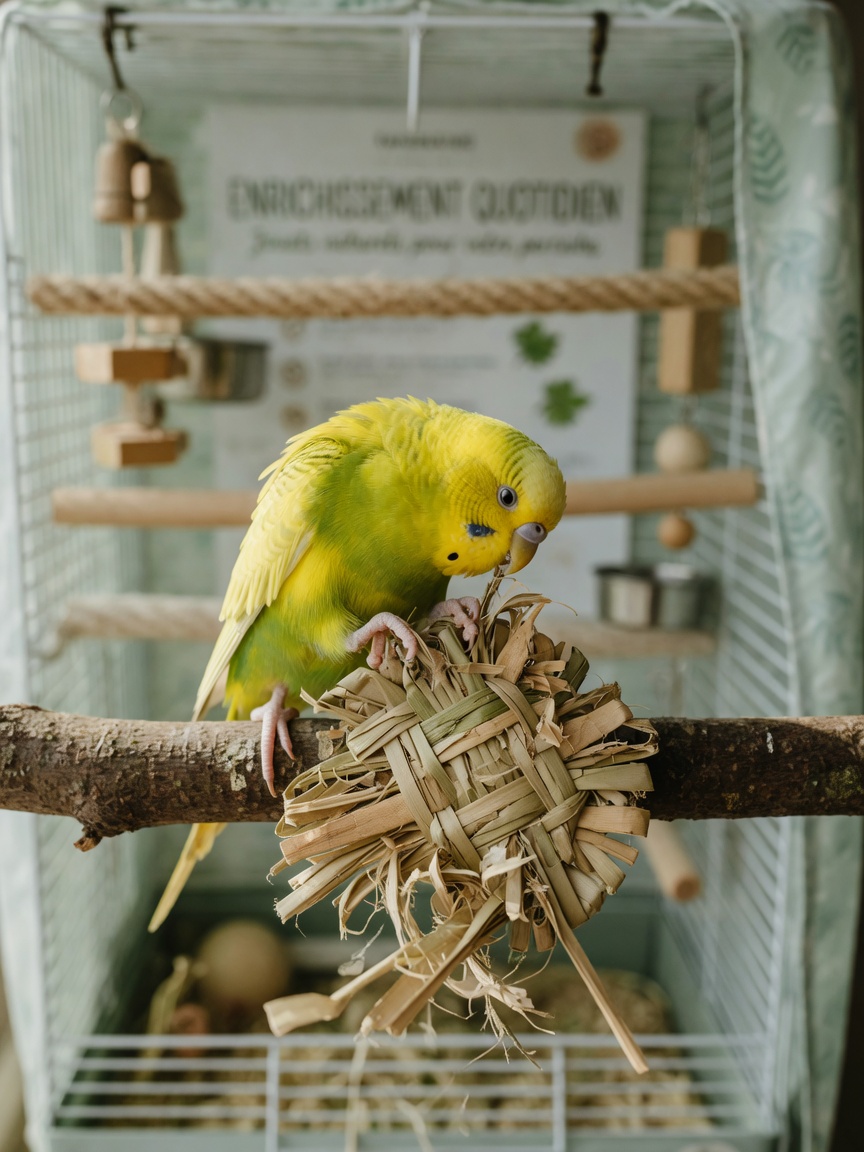
Interactive toys stimulate problem-solving abilities and keep birds mentally engaged. The best toys encourage natural behaviours such as foraging, chewing, and shredding.
- Foraging toys: Hide treats inside puzzle feeders or wrapped in paper to encourage your bird to work for their food, mimicking natural feeding behaviour
- Destructible toys: Provide chewable items such as woven palm strips, untreated wood, and cardboard to satisfy the natural urge to destroy
- Sound toys: Bells, chimes, and rattles provide auditory stimulation
- Foot toys: Smaller toys designed for manipulation with feet engage dexterity and curiosity
Social Interaction and Training
Birds are inherently social creatures and thrive on interaction with their human companions. Regular, consistent interaction is essential for emotional wellbeing.
- Spend at least 30 minutes daily engaging with your bird through conversation, gentle handling, or training sessions
- Teach your bird simple tricks or commands using positive reinforcement—this provides mental stimulation and strengthens your bond
- Allow supervised out-of-cage time for exploration and flight in a safe, bird-proofed room
- Consider introducing your bird to other birds (if species-appropriate) for social engagement
Sensory Stimulation
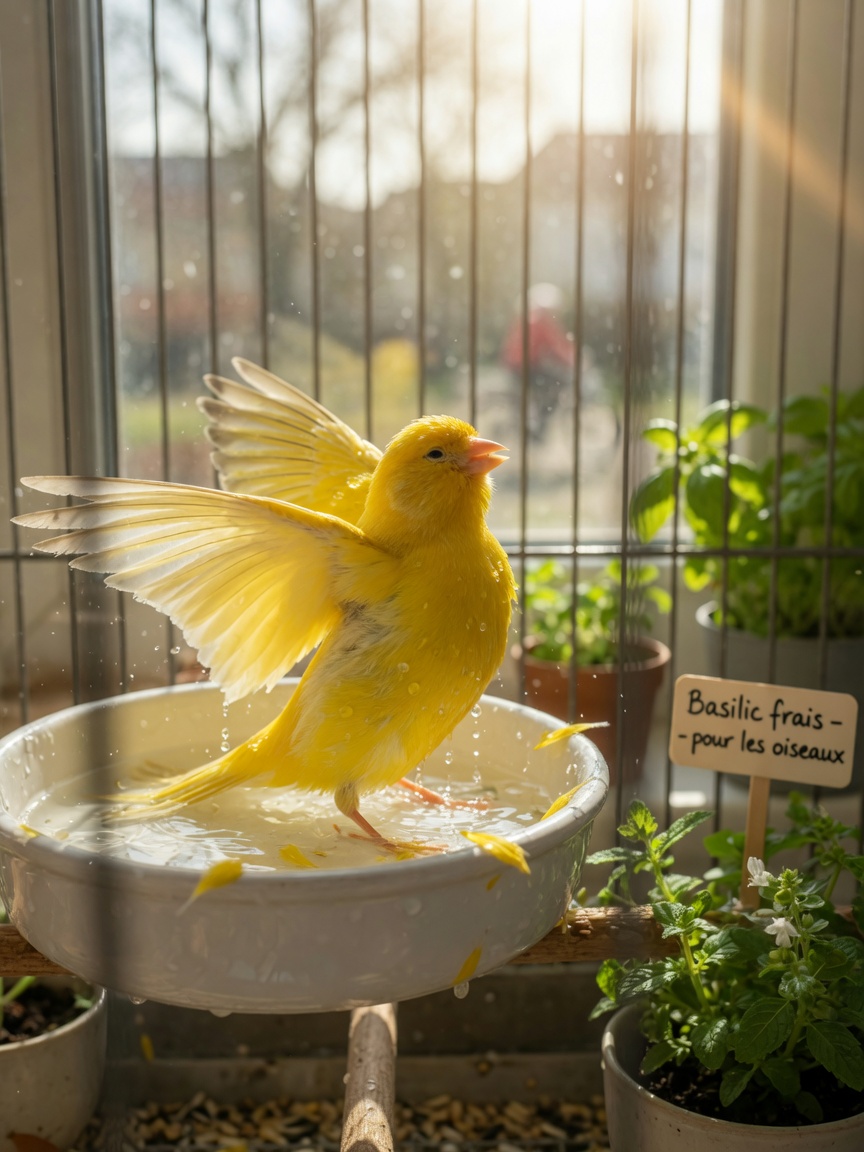
Engaging multiple senses helps prevent boredom and maintains cognitive function. Vary your bird's sensory experiences through:
- Playing soft music or nature sounds designed for birds
- Positioning the cage near a window for visual stimulation from outdoor activity
- Introducing safe scents through bird-safe plants like basil or mint
- Varying lighting conditions to match natural circadian rhythms
- Offering bathing opportunities, which provide both physical activity and enjoyment
Key Takeaways
Preventing boredom in pet birds requires a multifaceted approach combining environmental enrichment, interactive toys, regular social engagement, and sensory stimulation. By implementing these strategies consistently, you'll help your bird maintain good physical and mental health whilst strengthening your relationship. Remember that every bird has unique personality and preferences—observe what your feathered friend enjoys most and adapt accordingly. A stimulated, engaged bird is a happy, healthy bird.