
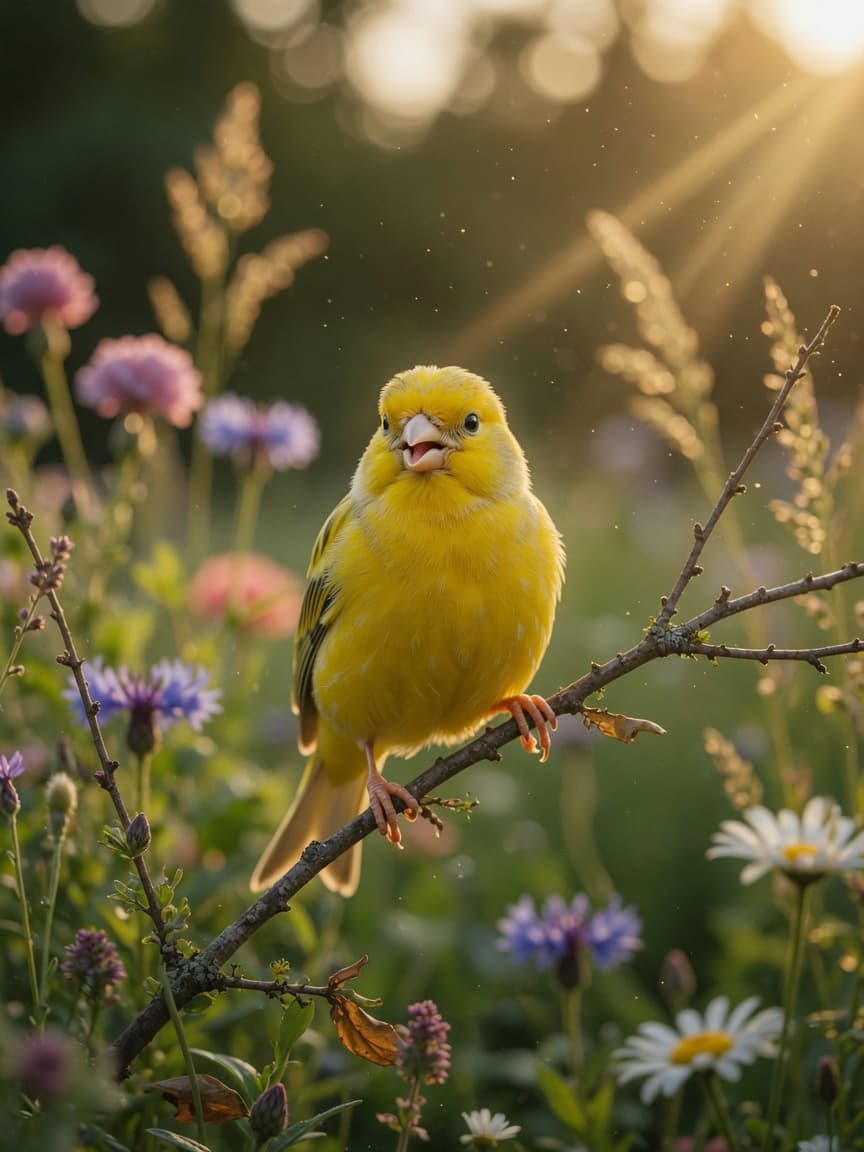
Understanding Canary Behaviour
Canaries (Serinus canaria domestica) are one of the oldest domesticated birds, bred selectively for centuries, yet their fundamental behavioural needs are often misunderstood. Unlike parrots, canaries are not handleable birds in any meaningful sense. Being held in a human hand triggers an intense stress response — known as thigmotaxic stress — in which the bird's heart rate spikes dramatically. Repeated handling causes chronic stress that is genuinely harmful to canary welfare, even when the bird appears to tolerate it outwardly.
This does not make canaries poor pets. They are highly rewarding companion birds enjoyed for their song, movement, and presence. But the relationship is one of observation rather than physical interaction, and this distinction should be understood before acquiring a canary.
Canaries are also social birds and should not be kept alone. Solitary housing causes boredom and low-level chronic stress. Canaries should ideally be kept in pairs or small same-sex groups, or in mixed-sex pairs if breeding is intended. Male canaries will sing regardless of whether a female is present, but they benefit greatly from avian companionship.
Housing Requirements
Canaries are active, fast-moving birds that fly horizontally across the cage rather than climbing vertically as parrots do. This means cage width is more important than cage height. A minimum recommended width for a single canary is 90cm, with larger being always preferable. Bar spacing should be no wider than 12mm to prevent the bird getting its head stuck.
The ideal room temperature for canaries is between 18 and 22°C. Draughts are a significant health risk and can precipitate respiratory illness rapidly. Cages should never be placed near open windows, air conditioning vents, or in areas with strong temperature fluctuations. Kitchen placement should be avoided due to cooking fumes, which can be toxic to birds.
Perches should vary in diameter to exercise the feet and reduce the risk of pressure sores. Natural wood branches from untreated trees such as apple, willow, or hazel are ideal and provide the additional benefit of being chewable. Sandpaper perch covers should not be used, as they abrade the feet and cause sores rather than maintaining nail length as often claimed.
The Three Types of Canary
Most people are unaware that there are three broad categories of canary, each bred for a different characteristic:
- Song canaries — bred selectively for their vocal ability, these include the Roller canary, the Spanish Timbrado, and the American Singer. The Roller canary sings with a closed or nearly closed beak, producing a soft, rolling song, whilst the Timbrado sings with an open beak and a more metallic tone. Only males sing.
- Colour canaries — bred for plumage colour, the most famous being the Red Factor canary, which requires a carotenoid-rich diet (including foods such as red pepper or commercial colour food) to maintain the depth of its red colouration. Without dietary carotenoids, red canaries moult into a washed-out orange-yellow.
- Type canaries — bred for body shape and conformation, these include the Gloster (with a distinctive crest), the Yorkshire (tall and upright), and the Belgian canary. Type canaries are more commonly seen at bird shows than as general pets.
The Annual Moult
Canaries undergo a full moult once a year, typically in late summer between July and September in the UK. During this period, the bird sheds and replaces all of its feathers over several weeks. Male canaries will largely stop singing during the moult, which can alarm owners who are not expecting the change.
The moult places significant nutritional demands on the bird. Feathers are composed largely of protein, so dietary protein should be increased during this period. Offering egg food (a commercial softfood product available from pet shops), along with increased greens and a quality seed mix, supports healthy feather regrowth. The bird may appear scruffy and subdued during the moult — this is normal provided the skin looks healthy and the bird is eating well. If a bird appears unwell, loses weight, or the moult seems to stall, consult an avian vet.
Common Health Problems: Red Mite
The most common ectoparasite affecting canaries in the UK is Dermanyssus gallinae, the red mite (also called the poultry red mite). This is one of the most important health threats to be aware of as a canary owner.
Red mites are blood-feeding parasites that live in the environment rather than on the bird itself. They hide in cracks in the cage, behind perch brackets, in the joins of the cage frame, and in nesting materials during the day. At night they emerge to feed on the sleeping bird. A heavy infestation can cause significant blood loss, anaemia, and death — particularly in young birds and those in poor condition.
Because they hide during daylight hours, red mites are frequently missed in routine daytime inspections. To check for them, use a torch to examine the cage at night. Mites appear as tiny red or grey specks moving on and around the bird and on cage surfaces. A white sheet of paper placed under the cage overnight will reveal them as small red or dark specks in the morning.
Treatment involves a thorough cage clean with a dedicated red mite product, paying attention to all joins and crevices. The bird itself may be treated with a safe anti-parasitic spray recommended by your vet. Regular preventive checks are far easier than dealing with a heavy infestation.
Air Sac Mites
Air sac mites (Sternostoma tracheacolum) are a separate parasite that affects the respiratory tract rather than the skin. They colonise the trachea, air sacs, and lungs, causing respiratory distress, clicking sounds when breathing, tail bobbing, and reduced singing. Diagnosis requires veterinary examination and treatment is with ivermectin or similar. Air sac mite infection is most commonly seen in imported birds or those housed with recently acquired birds from unknown backgrounds.
Lifespan and Veterinary Care
A well-cared-for canary can live between 8 and 12 years, with some individuals reaching 15 years. Annual veterinary checks with an avian-experienced vet are recommended, even for birds that appear healthy. Many canary illnesses progress silently until the bird is significantly compromised — birds instinctively mask illness as a survival behaviour. Weight monitoring at home using a small gram scale is one of the most effective ways to detect early health decline, as weight loss is often the first measurable sign of illness in a bird that otherwise appears outwardly normal.