
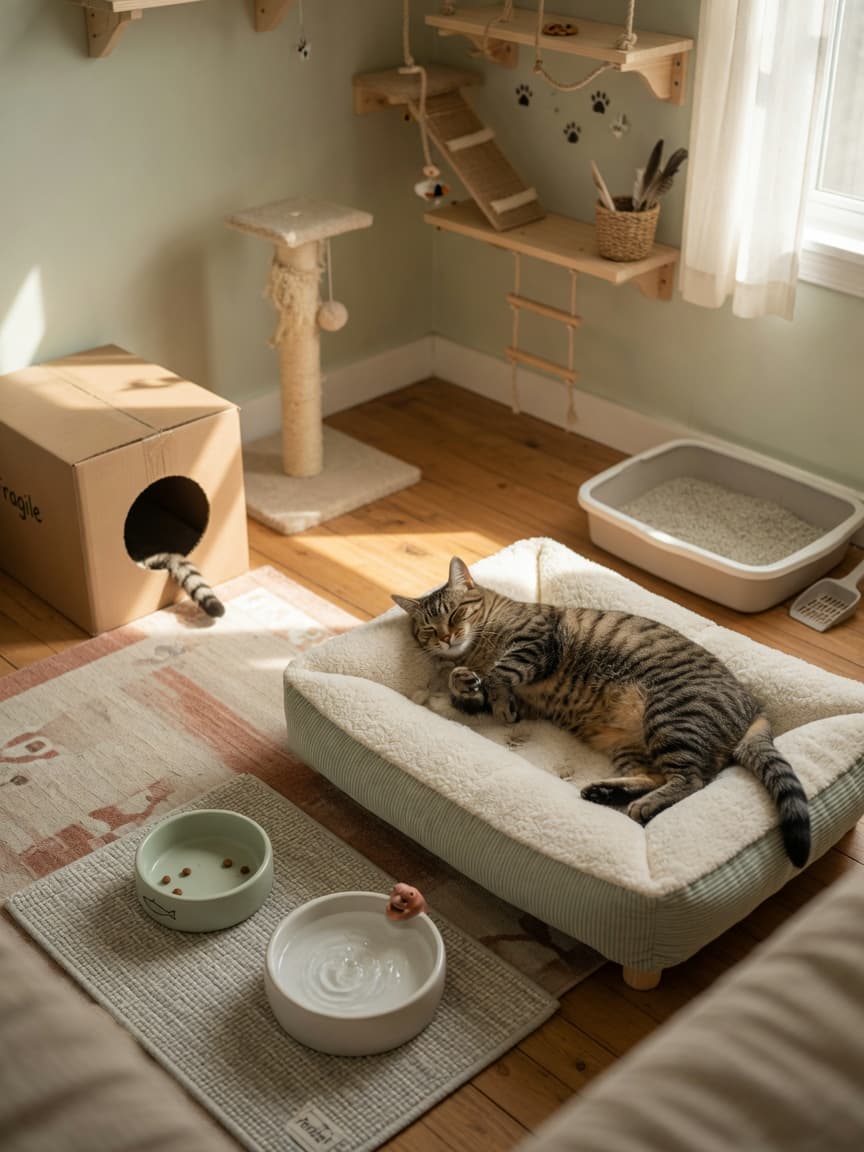
Whether you're bringing a new kitten home, managing a senior cat's declining mobility, or simply wanting to give your feline friend a secure sanctuary, a dedicated safe room can be transformative for your cat's wellbeing. A properly designed safe room provides mental stimulation, reduces stress, and offers protection from household hazards. Let me walk you through creating the perfect feline retreat that your cat will love.
Why Your Cat Needs a Safe Room
Cats are instinctively territorial animals who thrive when they have control over their environment. A safe room serves as a refuge where your cat can retreat, rest undisturbed, and feel secure. This is particularly important during stressful situations like moving house, introducing new pets, or when you have young children or visitors. Research shows that cats with access to secure spaces experience lower cortisol levels and exhibit fewer behavioural problems.
Choosing the Right Location
Select a quiet room away from high-traffic areas. Bedrooms, studies, or spare bathrooms work brilliantly. The ideal space should have:
- Minimal household noise and activity
- Natural light, but also opportunities for shade
- Easy temperature control (cats prefer 18-24°C)
- Access to a window for bird watching stimulation
- A door that closes securely
Avoid kitchens or laundry rooms where cleaning chemicals and appliances create potential hazards.
Essential Furnishings and Resources
Your safe room must contain everything your cat needs for comfort and security:
- Litter tray: Position it away from food and water bowls. Use unscented litter and clean daily.
- Food and water bowls: Keep these separate from the litter area. Fresh water is essential—consider a cat water fountain for encouragement.
- Sleeping areas: Provide elevated beds, boxes, or cat trees. Cats feel safer when they can observe from heights.
- Scratching posts: Essential for claw maintenance and stress relief. Use sisal rope or corrugated cardboard varieties.
- Hiding spots: Cardboard boxes with entry holes or commercial cat caves reduce anxiety significantly.
- Toys and enrichment: Rotate interactive toys, puzzle feeders, and feather wands to maintain mental stimulation.
Safety Considerations
Remove or secure anything potentially harmful:
- Household chemicals, medications, and cleaning products
- Toxic plants (lilies, poinsettias, and philodendrons are particularly dangerous)
- Small objects that could cause choking
- Electrical cords and cables—conceal or cover these carefully
- Open windows or unsecured doors
- Fragile items that could topple if knocked
Ensure air circulation is adequate and the room isn't too hot or cold.
Creating Environmental Enrichment
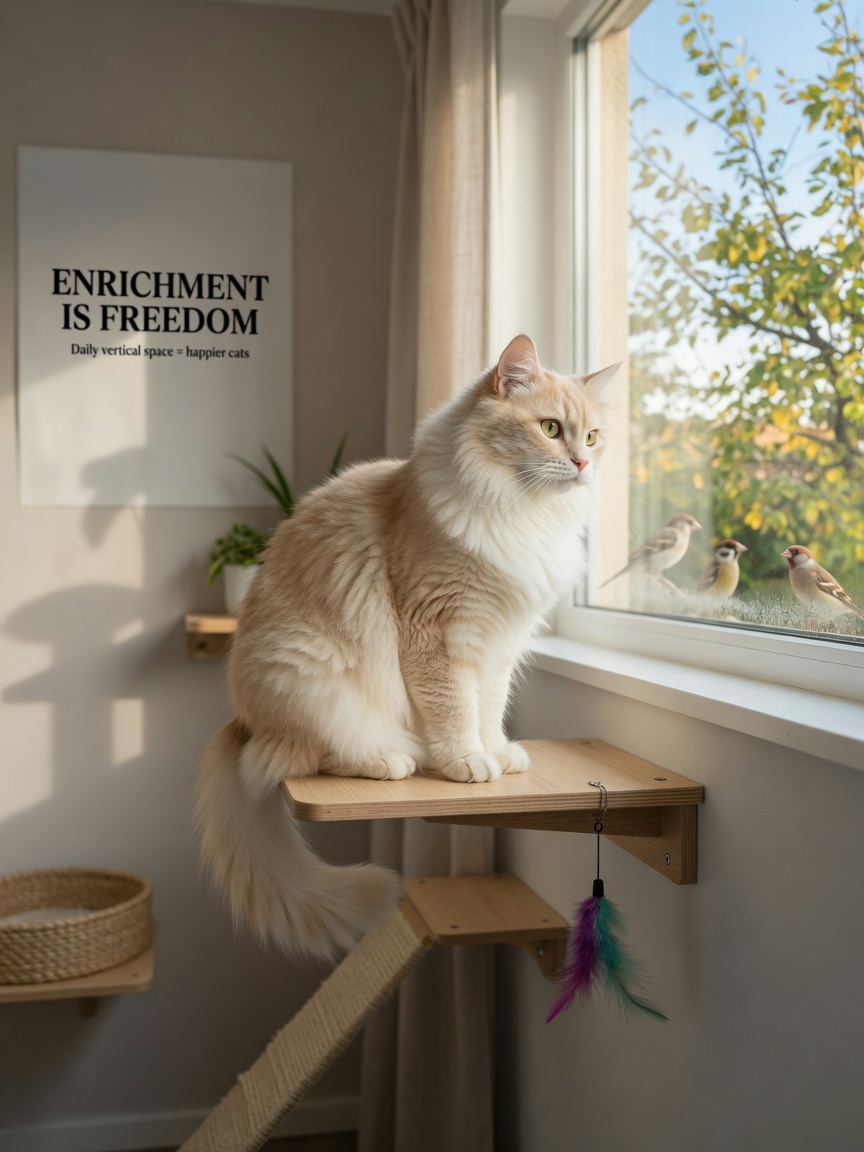
A safe room shouldn't feel like confinement. Provide mental stimulation through window perches for outdoor viewing, wall-mounted shelves for climbing, and regular interactive play sessions. Rotate toys weekly to maintain interest. Some cats enjoy background music or nature videos designed for felines.
Key Takeaways
A well-designed safe room is an investment in your cat's mental and physical health. Start with a quiet, comfortable space, include all essential resources, remove hazards, and add enrichment activities. Whether temporary or permanent, this sanctuary allows your cat to express natural behaviours whilst remaining protected. Check the room regularly for new hazards, and remember that every cat's preferences differ—observe your feline friend and adjust accordingly. A safe room isn't just a room; it's a statement that you understand and respect your cat's need for security and control.