
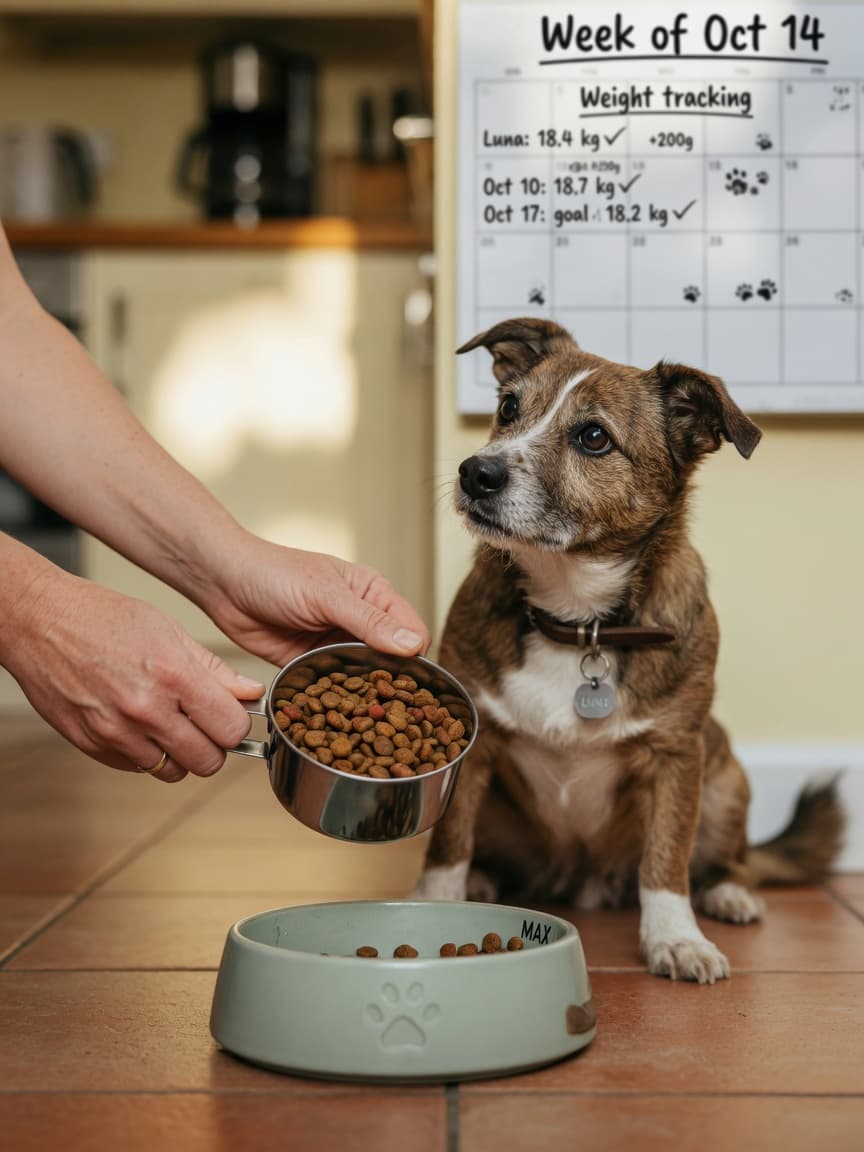
One of the most common questions we hear from dog owners is surprisingly simple yet profoundly important: "Am I feeding my dog the right amount?" Overfeeding leads to obesity, whilst underfeeding can leave your dog malnourished and sluggish. Finding the perfect balance is essential for your dog's longevity, health, and quality of life. In this guide, I'll walk you through the science-backed approach to determining your dog's ideal daily food intake.
Understanding Your Dog's Individual Needs
There's no universal "one-size-fits-all" answer to dog feeding because every dog is unique. Your dog's age, weight, activity level, metabolism, and overall health status all play crucial roles in determining how much food they need daily. A Border Collie working on a farm has vastly different caloric requirements than a retired Cavalier King Charles Spaniel lounging on the sofa.
Most commercial dog foods provide feeding guidelines on their packaging based on weight ranges, but these are starting points rather than exact prescriptions. Think of them as recommendations that may need personalising to your individual dog.
Calculating Daily Caloric Requirements
The most accurate way to determine your dog's food needs is to calculate their daily caloric requirements. As a general baseline, dogs typically need approximately 25-30 calories per pound of body weight if they're moderately active. Here's how to approach this:
- Multiply your dog's weight in pounds by 25-30 to get a basic daily caloric requirement
- Adjust for activity level: Very active dogs may need 40+ calories per pound, whilst sedentary dogs may only need 20 calories per pound
- Account for age: Puppies and senior dogs often have different metabolic needs
- Consider health conditions: Dogs with thyroid issues, digestive problems, or other conditions may require adjustments
For example, a moderately active 30kg (66lb) dog would typically need around 1,650-1,980 calories daily. Once you know this figure, divide it by the caloric content listed on your dog food's packaging to determine the daily portion size.
Life Stage Considerations
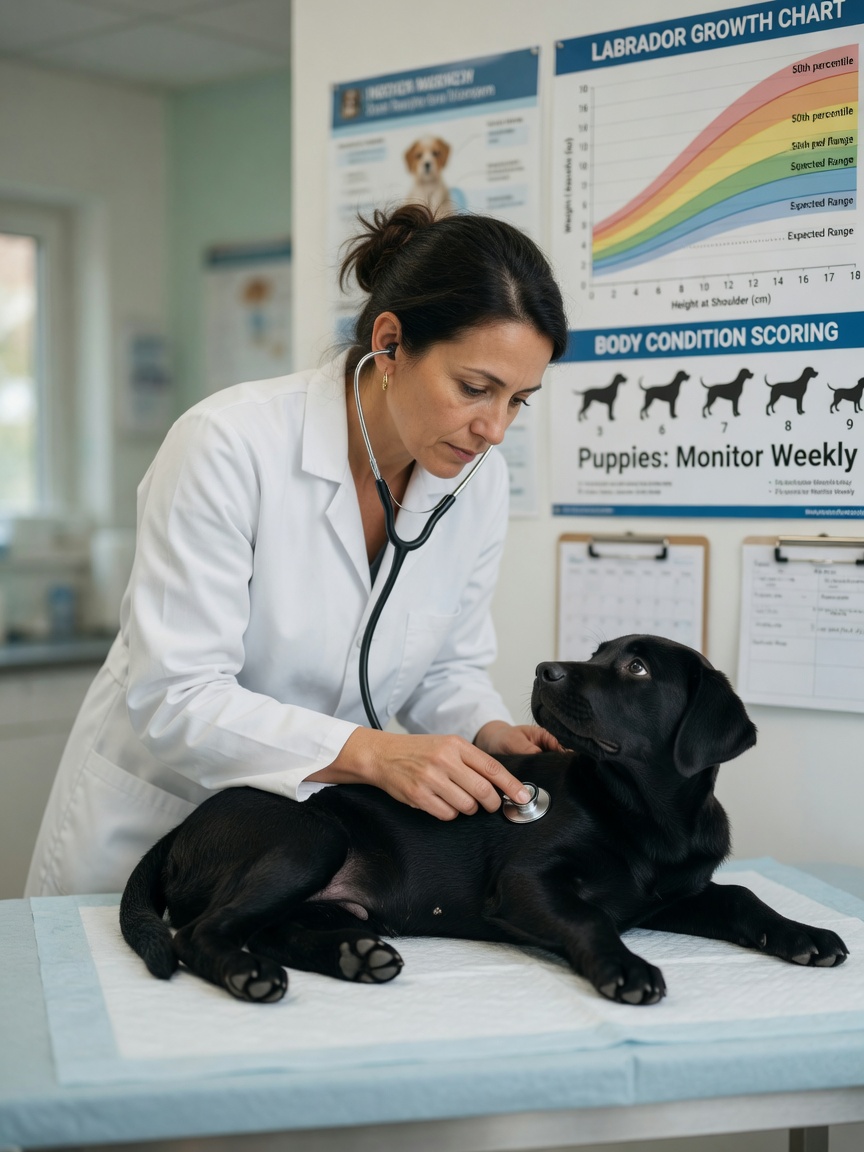
Puppies have significantly higher caloric needs than adult dogs because they're not only maintaining their body but also growing rapidly. Large and giant breed puppies require special consideration—they need controlled growth to prevent developmental orthopedic disease.
Senior dogs (typically aged 7+) often become less active and may require fewer calories, though some older dogs benefit from higher-quality protein to maintain muscle mass. If your senior dog is gaining weight without eating more, it's worth discussing metabolism changes with your veterinary surgeon.
The Body Condition Score Method
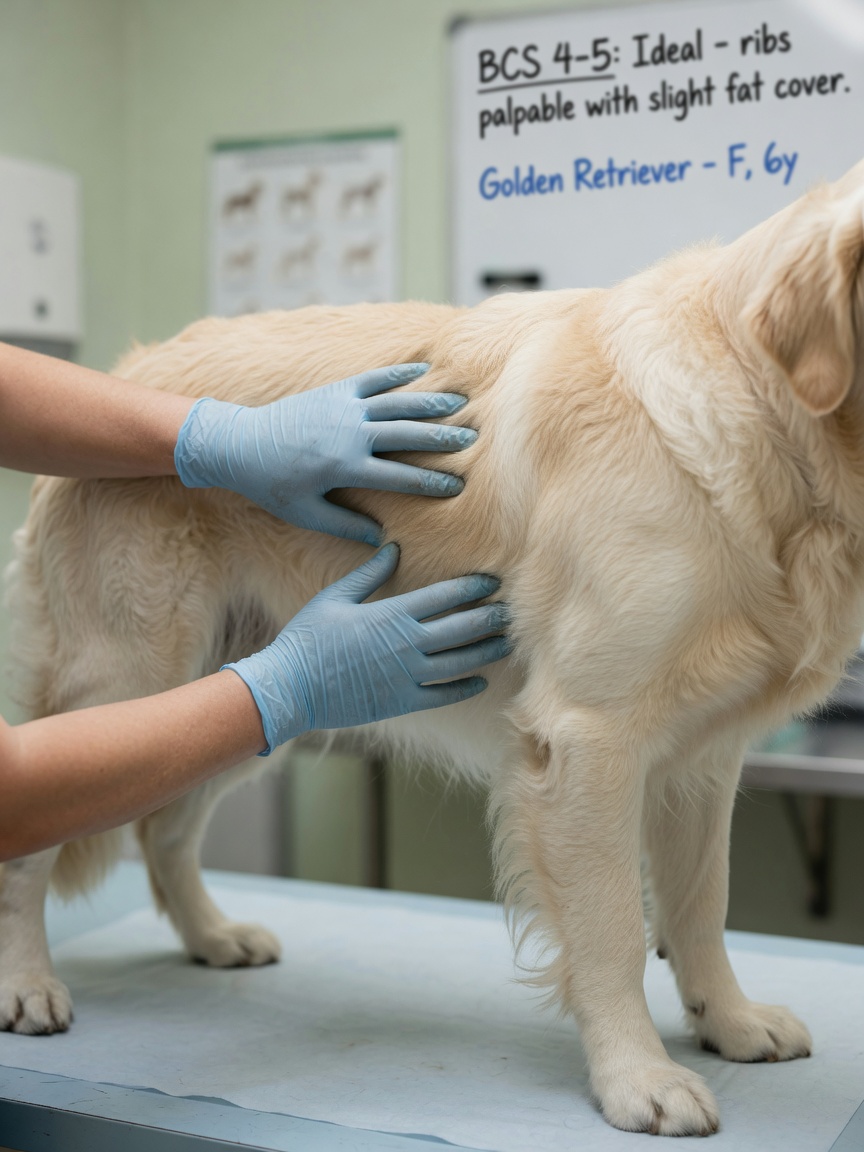
Rather than obsessing over exact measurements, many vets recommend using the Body Condition Score (BCS) system. This involves assessing your dog's shape:
- You should feel their ribs easily with gentle pressure but not see them prominently
- There should be a visible waist when viewing your dog from above
- Their abdomen should not sag or hang
An ideal BCS is typically 4-5 on a 9-point scale. If your dog falls outside this range, it's time to adjust portion sizes and consult your vet.
Practical Feeding Tips
- Divide daily portions: Feed your dog two meals daily rather than one large meal to aid digestion
- Account for treats: Treats should comprise no more than 10% of daily calories
- Monitor weight monthly: Weigh your dog regularly and keep records
- Transition gradually: If changing food quantities, do so over 7-10 days to avoid digestive upset
- Provide fresh water: Always ensure unlimited access to clean drinking water
Key Takeaways
Feeding your dog correctly is an ongoing process of observation and adjustment. Start with your dog food's recommendations and your dog's calculated caloric needs, then monitor your dog's body condition monthly. If your dog seems constantly hungry or is gaining weight despite reasonable portions, contact your veterinary surgeon—underlying health conditions may be at play. Remember, the goal isn't simply feeding your dog, but nourishing them for a long, healthy, active life alongside you.