

Heartworm in Dogs: Prevention, Treatment & Why Vets Insist
By Julia Wrenfield, Pet Wellness Researcher
Heartworm disease is a life-threatening condition that causes permanent damage to the heart, lungs, and arteries. Treatment is painful, expensive, and carries serious risks. A simple monthly preventative costing just a few pounds can spare your dog tremendous suffering. Do not wait until symptoms appear — by then, the damage may already be irreversible.
There is almost no disease in veterinary medicine where the gap between prevention and treatment is as stark as it is with heartworm. Prevention is easy, cheap, and virtually risk-free. Treatment is agonising, dangerous, and costs hundreds or even thousands of pounds. And yet, every year, thousands of dogs worldwide are diagnosed with heartworm disease — many of them dogs whose owners simply didn't know it was a risk. This article explains everything you need to know.
What Is Heartworm?
Heartworm disease is caused by Dirofilaria immitis, a parasitic roundworm that can grow up to 30 centimetres long. Unlike intestinal worms, heartworms live in the right side of the heart, the pulmonary arteries, and the lungs. A single dog can harbour hundreds of adult worms simultaneously. They do not simply live there — they actively damage surrounding tissue, cause chronic inflammation, and obstruct blood flow. Left untreated, heartworm disease is fatal.
How Dogs Get Heartworm
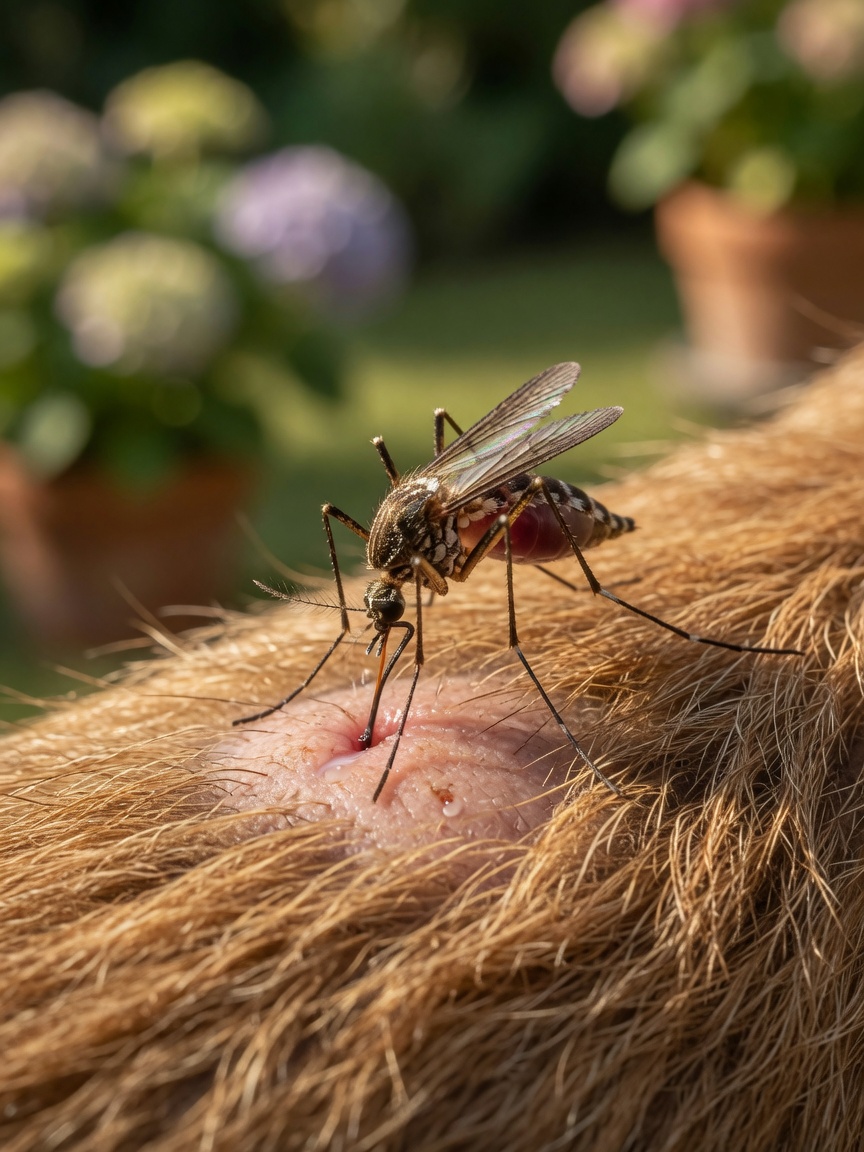
Heartworm is transmitted exclusively through mosquito bites. When a mosquito feeds on an infected animal — a dog, fox, coyote, or wolf — it picks up microscopic heartworm larvae called microfilariae. These develop inside the mosquito over approximately two weeks. When that mosquito then bites another dog, it deposits infective larvae into the dog's skin. The larvae migrate through tissue, eventually reaching the heart and lungs, where they mature into adult worms over six months.
This six-month maturation period is crucial to understand, because it means a dog can be infected for half a year before any worms show up on a standard test. It also means that dogs travelling from low-risk regions to heartworm-endemic areas can return home infected but appear completely healthy.
Geographic Risk: Where Is Heartworm Found?
Heartworm is endemic across the southern United States, Latin America, southern Europe (particularly Italy, Spain, Portugal, Greece, and the Balkans), parts of Asia, and Australia. In the UK, the disease is not currently established in native mosquito populations, but imported cases occur regularly in dogs that have travelled abroad. As climate change expands the range of competent mosquito vectors, previously unaffected regions are coming under threat.
If you live in or are travelling to a heartworm-endemic region, prevention is essential. Full stop. There is no debate among veterinary professionals on this point.
Symptoms of Heartworm Disease
Early-stage heartworm infection (Class I) often produces no symptoms at all, which is one of the reasons it is so dangerous. As the worm burden increases, dogs typically show a mild persistent cough, reluctance to exercise, and fatigue after moderate activity. In Class III disease, symptoms progress to weight loss, difficulty breathing, and a distended abdomen caused by fluid accumulation. Class IV — so-called "caval syndrome" — involves such a massive worm burden that the worms obstruct blood flow mechanically. Dogs in this stage collapse and die without emergency surgical removal of the worms. Surgery carries a very high mortality rate.
The Treatment Problem
Heartworm treatment is not simply a course of medication. The standard protocol involves a series of deep intramuscular injections of melarsomine dihydrochloride — an arsenic-based compound — administered in a precise schedule over months. Dogs must be kept strictly confined and calm throughout treatment because dead worms, if dislodged from the pulmonary arteries during exercise, can cause fatal emboli (blockages). The treatment itself can be as dangerous as the disease in heavily infected dogs. Costs typically range from £500 to over £3,000 depending on the severity of infection and the size of the dog.
Monthly Prevention: Simple and Effective
Preventative medications work by killing heartworm larvae in the bloodstream before they mature. They do not prevent infection but they eliminate any larvae acquired in the previous 30 days. This is why monthly dosing is essential — if you miss a month, larvae can mature beyond the point where preventatives are effective.
Common preventatives include ivermectin (Heartgard, Milpro), milbemycin oxime (Interceptor, Milbemax), and selamectin (Revolution/Stronghold). Many of these also protect against common intestinal worms, making them excellent all-in-one parasiticides. Annual or biannual heartworm testing by your vet is recommended even for dogs on prevention, to catch any lapses in coverage.
Find heartworm and parasite prevention products for dogs on ZooplusTesting Your Dog
Before starting any prevention programme, dogs over seven months of age should be tested for heartworm. This is because giving certain preventatives to a dog with an active adult heartworm infection can trigger a severe and potentially fatal reaction due to the mass die-off of microfilariae in the bloodstream. A simple blood test at your vet clinic can detect antigen proteins released by adult female worms, delivering results in minutes.
Key Takeaways
- Heartworm is transmitted by mosquitoes and can grow to 30cm long inside a dog's heart and lungs.
- The disease is often symptomless until severe — by then, permanent organ damage may have occurred.
- Treatment is costly, dangerous, and requires months of strict cage rest — prevention costs a fraction of that.
- Monthly oral or spot-on preventatives are highly effective when given consistently year-round.
- Always test before starting prevention — giving preventatives to an infected dog can be dangerous.
References
- American Heartworm Society. "Current Canine Guidelines for the Prevention, Diagnosis, and Management of Heartworm (Dirofilaria immitis) Infection in Dogs." J Vet Intern Med. 2020;34(5):1794-1798. PMID: 32671897
- Simón F, Siles-Lucas M, Morchón R, et al. "Human and animal dirofilariasis: the emergence of a zoonotic mosaic." Clin Microbiol Rev. 2012;25(3):507-544. PMID: 22763636
Written by Julia Wrenfield, Pet Wellness Researcher. This article is for informational purposes only and does not substitute professional veterinary advice.