
Halloween Pet Safety: Candy, Costumes & Door Anxiety
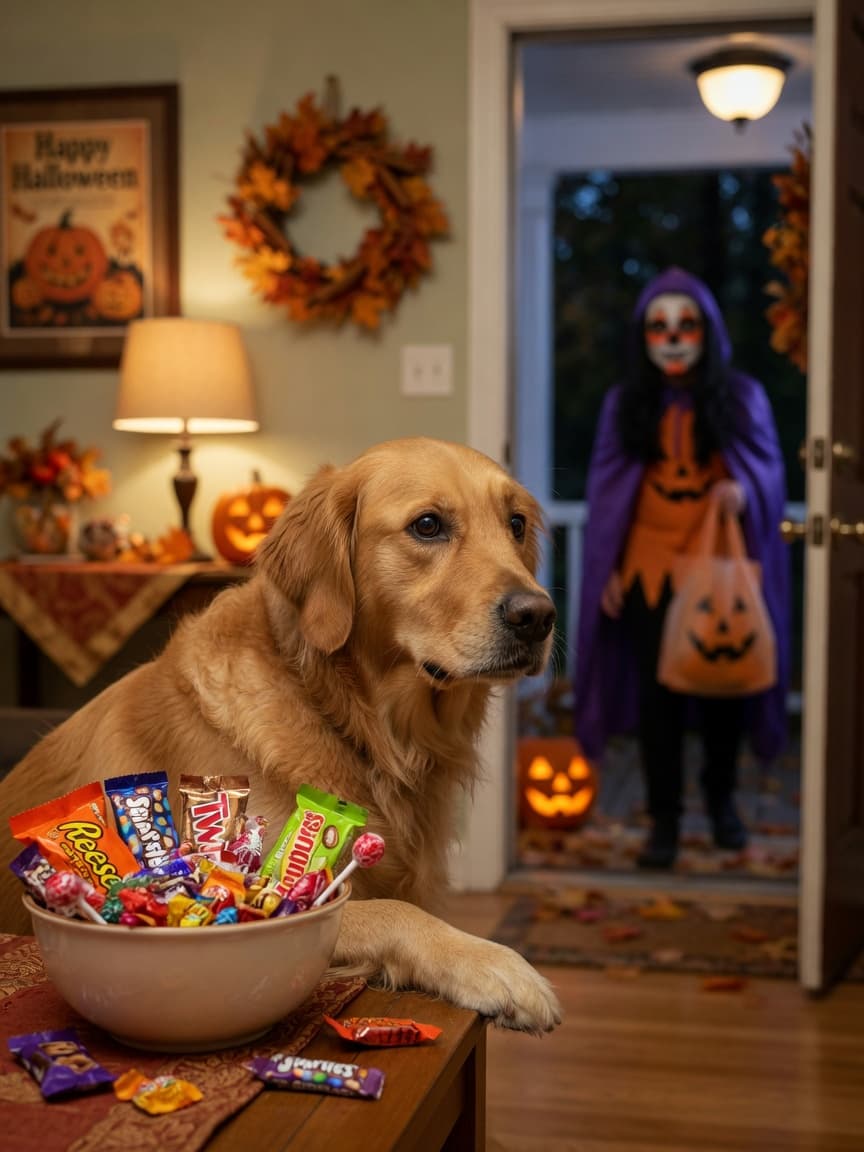
Halloween is one of the most hazardous nights of the year for household pets. In a single evening, your home may contain bowls of toxic candy at paw height, strangers in alarming costumes ringing the doorbell every few minutes, flickering open flames, and a front door opening and closing repeatedly into the dark. With a little advance planning, you can protect your pet and still enjoy the festivities.
Candy Dangers: Chocolate and Xylitol
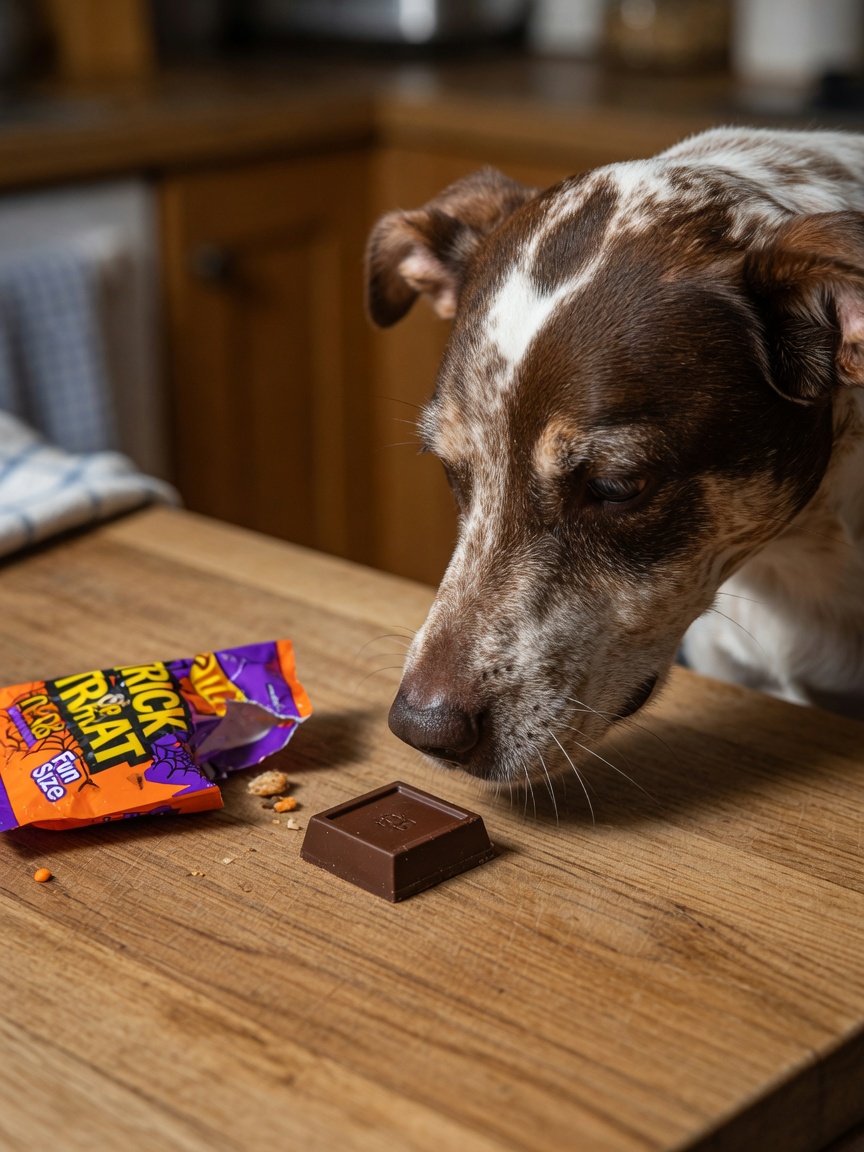
The Halloween sweet bowl is a direct threat to dogs especially, who will eat chocolate and sugar-free sweets without hesitation.
Chocolate
Chocolate contains theobromine and caffeine, both of which dogs metabolise far more slowly than humans. Even moderate amounts can cause vomiting, diarrhoea, increased heart rate, muscle tremors, and seizures. The danger scales with cocoa content: dark chocolate and baking chocolate contain up to 10 times more theobromine per gram than milk chocolate. A medium-sized dog eating a few squares of dark chocolate is a veterinary emergency. White chocolate contains negligible theobromine but is still high-fat and can trigger pancreatitis.
Xylitol
Xylitol is a sugar substitute found in many sugar-free sweets, chewing gum, and some peanut butter brands. In dogs, it causes a rapid and severe release of insulin, leading to life-threatening hypoglycaemia (low blood sugar) within 30–60 minutes. Higher doses cause acute liver failure. Xylitol is dangerous in very small quantities — a few pieces of sugar-free gum can hospitalise a small dog. Check the ingredient labels on every candy in the bowl and keep all of it secured away from pets.
If your dog has eaten any amount of chocolate or xylitol-containing products, call the ASPCA Poison Control or your emergency vet immediately — do not wait for symptoms.
Costume Safety
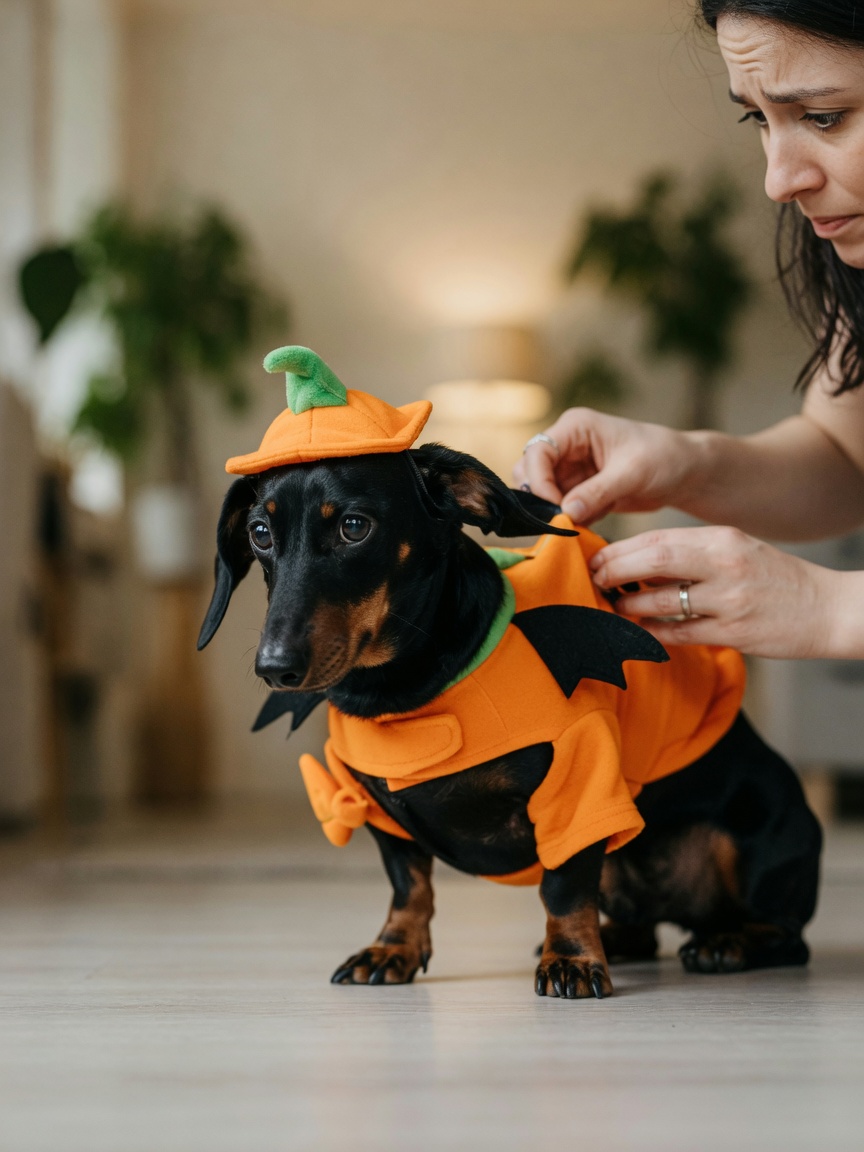
Pet costumes are charming in photos, but many animals find them stressful or even physically dangerous. Before dressing your pet up, consider the following:
- Fit and breathing: The costume must not restrict breathing, movement, vision, or the ability to eat, drink, and toilet normally. Costumes that cover the face or muzzle are particularly risky.
- Stress signs: A pet in a costume who freezes, flattens their ears, tucks their tail, refuses to move, or tries to remove the costume immediately is telling you they are distressed. Not all animals tolerate clothing — respect their signals and remove the costume.
- Choking hazards: Loose decorative elements — buttons, elastic bands, foam pieces, glued-on accessories — can be chewed off and swallowed. Inspect costumes before putting them on and supervise at all times.
- Trial run: Introduce the costume indoors days before Halloween with positive reinforcement (treats and praise) rather than putting it on for the first time in a busy, stimulating environment.
A comfortable, well-fitted bandana or Halloween-themed collar is far less stressful than a full outfit and still participates in the spirit of the occasion.
Door Anxiety: Repeated Doorbells and Strangers
For many dogs, Halloween night is a noise and stranger gauntlet. Doorbells ringing every few minutes, excited children in unfamiliar costumes shouting at the door, and the repeated opening of the front door to the outside — all trigger the territorial and alarm-barking instincts that are deeply ingrained in domestic dogs.
Beyond the barking, there is a real escape risk. A dog surging towards an open door in excitement or fear can bolt into dark streets filled with Halloween activity — a dangerous situation. If your dog is reactive to the doorbell or door-knocking, the safest strategy is to:
- Confine your pet to a back room or upstairs with a baby gate, away from the front door entirely.
- Leave familiar music or a white noise machine on to mask the doorbell sounds.
- Provide a long-lasting chew or stuffed food toy to occupy them during the busy period.
- Place a sign on the front door asking visitors not to ring the bell if you plan to monitor the door yourself.
Calm through the chaos: HolistaPet calming products — including CBD soft chews and calming tinctures formulated for dogs — can help take the edge off high-stress evenings like Halloween. Start a few days before for best effect.
Candles and Jack-o'-Lanterns
Real candles inside carved pumpkins are a fire hazard around curious pets. A cat's tail or a dog's wagging tail can knock a jack-o'-lantern off a surface, and cats in particular are drawn to the flickering light and may investigate with a paw. Battery-operated LED candles provide the same visual effect with zero burn risk — an easy swap that eliminates the hazard entirely.
Decorative candles placed around the home for atmosphere should be placed on high, stable surfaces that cannot be accessed by jumping cats, and never left unattended when pets are loose in the room.
Safe Participation vs Keeping Pets Away
Dogs who are social, well-trained, and non-reactive may enjoy sitting calmly by the door and greeting trick-or-treaters — but this requires an honest assessment of your dog's temperament. Dogs who guard the door, react fearfully to strangers, jump up at children, or have ever snapped when startled are not suited to door duty on Halloween night, regardless of how well they behave in normal circumstances.
For cats, the advice is simpler: keep them indoors from late afternoon through the following morning. This protects them from traffic, stress, and the small but real risk of harassment from unsupervised children on Halloween night. Ensure they are microchipped and wearing an ID tag, and check that they are safely inside before the activity begins.
For more detailed guidance, visit the ASPCA's Halloween Safety Tips and the AVMA's Halloween pet safety page.
Key Takeaways
- Keep all Halloween candy — especially chocolate and xylitol-containing sweets — in sealed containers well out of pet reach.
- Chocolate and xylitol poisoning are veterinary emergencies — call poison control immediately, don't wait for symptoms.
- Check pet costumes for fit, breathing restriction, and chewable hazard pieces; respect distress signals.
- Confine reactive or anxious dogs to a back room with white noise and a food toy during trick-or-treat hours.
- Replace real candles with LED alternatives to eliminate fire risk from curious pets.
- Keep cats indoors from late afternoon through the following morning on Halloween night.
References
1. Gwaltney-Brant SM. "Chocolate intoxication." Veterinary Medicine. PMID: 11268491
2. Dunayer EK, Gwaltney-Brant SM. "Acute hepatic failure and coagulopathy associated with xylitol ingestion in eight dogs." Journal of the American Veterinary Medical Association. PMID: 16336107