
Understanding the French Bulldog's Structural Challenges
French Bulldogs have become one of the most popular dog breeds across the UK and Europe, celebrated for their compact size, affectionate nature, and expressive faces. But that distinctive flat-faced appearance — the feature that makes them so recognisable — is also the source of many of their most serious health problems. Owning a French Bulldog responsibly means understanding these challenges clearly and planning for them.
This article covers the key health conditions affecting the breed, explains the underlying causes, and provides practical guidance for keeping your Frenchie as comfortable and healthy as possible.
Brachycephalic Obstructive Airway Syndrome (BOAS)

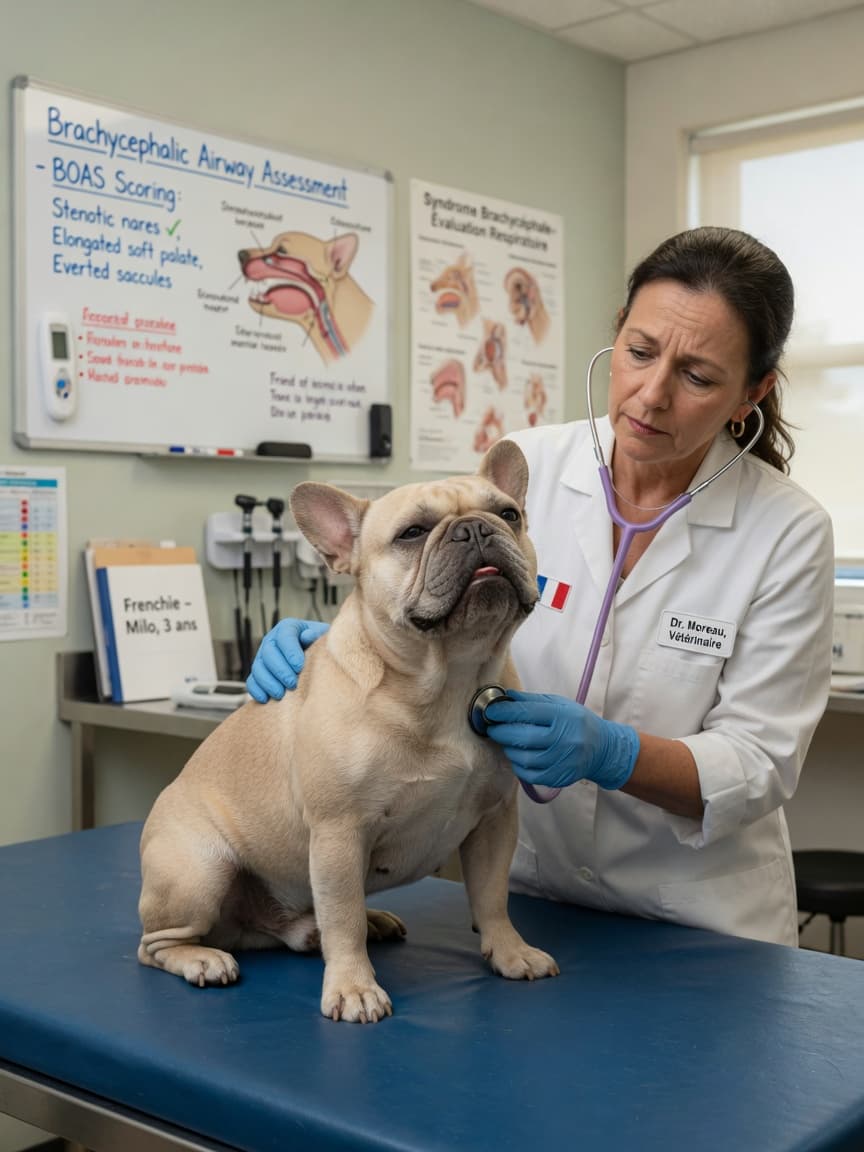
BOAS is the most significant health issue facing French Bulldogs and is directly linked to the exaggerated flat-face structure selectively bred into the line. The condition encompasses a cluster of anatomical abnormalities: narrowed nostrils (stenotic nares), an elongated soft palate that partially obstructs the airway, a narrowed trachea, and everted laryngeal saccules — small pouches in the throat that turn outward and further reduce airflow.
Dogs with BOAS work significantly harder to breathe than other breeds. This is not something they simply adapt to — it is a genuine, chronic respiratory struggle that affects sleep, exercise tolerance, and overall quality of life. In warm weather or stressful situations, it can escalate to a life-threatening crisis.
Signs Your French Bulldog May Be Struggling
- Loud snoring and snorting, particularly during rest
- Laboured breathing or noisy inhalation during calm activity
- Rapid tiring on short walks
- Gagging, retching, or regurgitation — often triggered by the airway obstruction affecting swallowing
- Blue-tinged gums (cyanosis) — a veterinary emergency
- Sleeping in unusual positions, such as with the chin propped up, to keep the airway open
Treatment Options
Corrective surgery — widening the nostrils and trimming the soft palate — can significantly improve airway function and quality of life. Research published in the Veterinary Journal has shown that early surgical intervention, performed before two years of age, leads to better long-term outcomes. Discuss BOAS scoring and surgical options with a vet experienced in brachycephalic breeds.
Skin Fold Dermatitis
The deep facial folds and wrinkles that give French Bulldogs their characteristic look are breeding grounds for moisture, bacteria, and yeast. Without regular cleaning, these folds become inflamed, malodorous, and painful — a condition known as skin fold dermatitis or intertrigo.
The tail pocket — a fold of skin around the base of the naturally short or screw tail — is another common problem area. In severe cases, the tail pocket can develop chronic infections that require surgical correction. The same issues can affect folds around the vulva in females.
Daily Skin Fold Care
- Wipe facial folds daily with a clean, damp cloth or veterinary-grade skin fold wipes
- Ensure folds are thoroughly dried after cleaning — moisture is the primary driver of infection
- Check the tail pocket weekly for redness, discharge, or odour
- Use a gentle antiseptic or antifungal wipe if your vet recommends it for recurring infections
- Report any persistent redness, swelling, or strong odour to your vet promptly
Spinal and Joint Problems
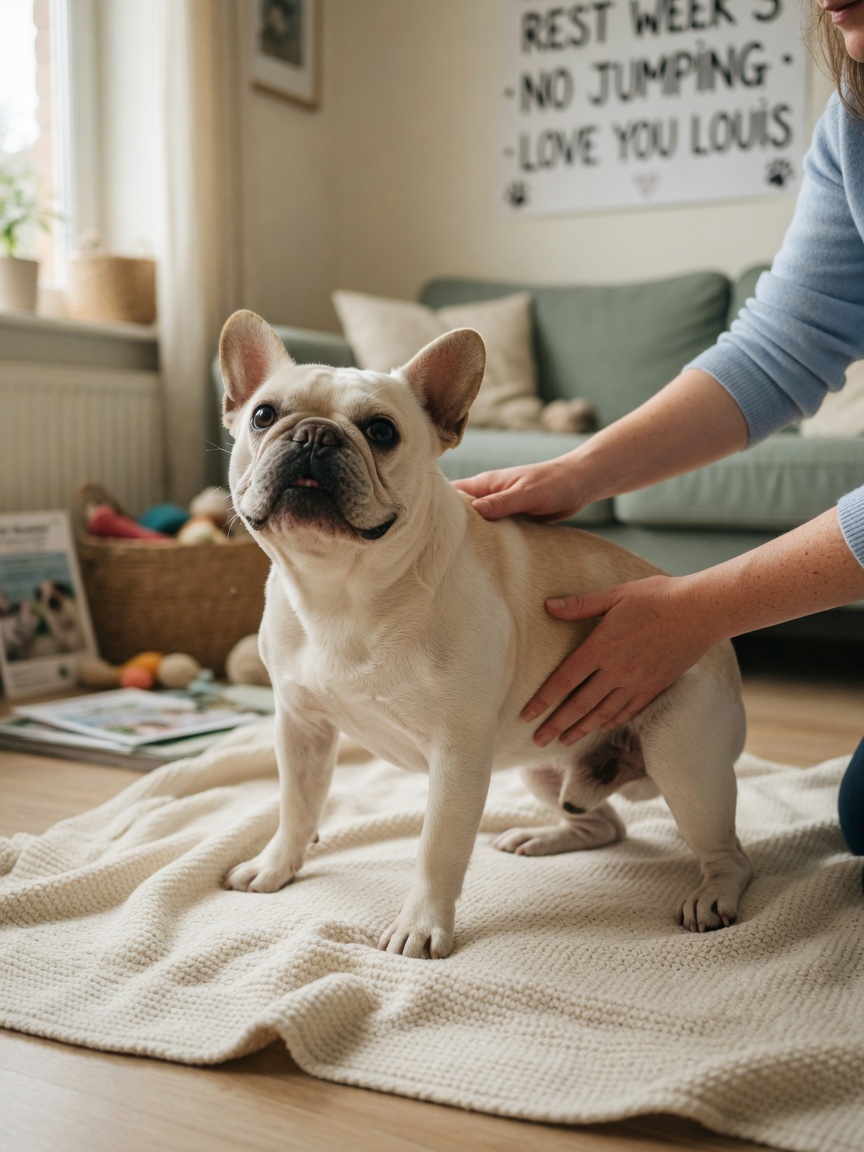
French Bulldogs are a chondrodystrophic breed, meaning their skeletal development is fundamentally altered by their genetics. This affects not only their limb shape but also the vertebrae of the spine. Intervertebral disc disease (IVDD) is a serious consequence — the discs between the spinal vertebrae can degenerate and herniate, placing pressure on the spinal cord.
Hemivertebrae — abnormally shaped, wedge-like vertebrae — are also common in French Bulldogs. While many dogs with hemivertebrae live without symptoms, severe cases can cause progressive weakness in the hindquarters, loss of coordination, and incontinence.
Protecting Spinal Health
- Avoid activities involving repeated jumping on and off furniture — use ramps or steps instead
- Maintain a lean body weight to reduce spinal loading
- Monitor for sudden signs of back pain, reluctance to move, or hind leg weakness — these warrant urgent veterinary assessment
- Discuss spinal screening, including MRI if necessary, if your dog shows any neurological symptoms
Eye Problems
The protruding eyes characteristic of brachycephalic breeds are less protected by the socket than in other dogs, making French Bulldogs prone to corneal ulcers, dry eye (keratoconjunctivitis sicca), and eye injuries from minor trauma. Cherry eye — a prolapse of the gland in the third eyelid — is also seen with some frequency.
Any sign of eye redness, excessive discharge, squinting, or cloudiness should be assessed by a vet without delay. Corneal damage can worsen rapidly if left untreated.
Heat Sensitivity and Exercise Limits
Because French Bulldogs cannot move air efficiently through their compressed airways, they are exceptionally vulnerable to heat stroke. Their ability to pant — the dog's primary cooling mechanism — is severely compromised.
- Never walk your Frenchie during the hottest part of the day in summer
- Keep walks short during warm weather and always carry fresh water
- Ensure your home has cool, shaded areas and consider a cooling mat
- Never leave a French Bulldog in a car, even briefly in mild temperatures
Is a French Bulldog Right for You?
French Bulldogs can live happy, comfortable lives, but they require owners who are genuinely committed to their specific needs. Veterinary costs for this breed tend to be higher than average due to the prevalence of conditions requiring medical management or surgery. If you are considering adding a Frenchie to your family, seek a breeder who prioritises health over extreme conformation, uses BOAS grading in their breeding programme, and provides full health history for both parents. The breed deserves advocates who choose their wellbeing above aesthetics.