
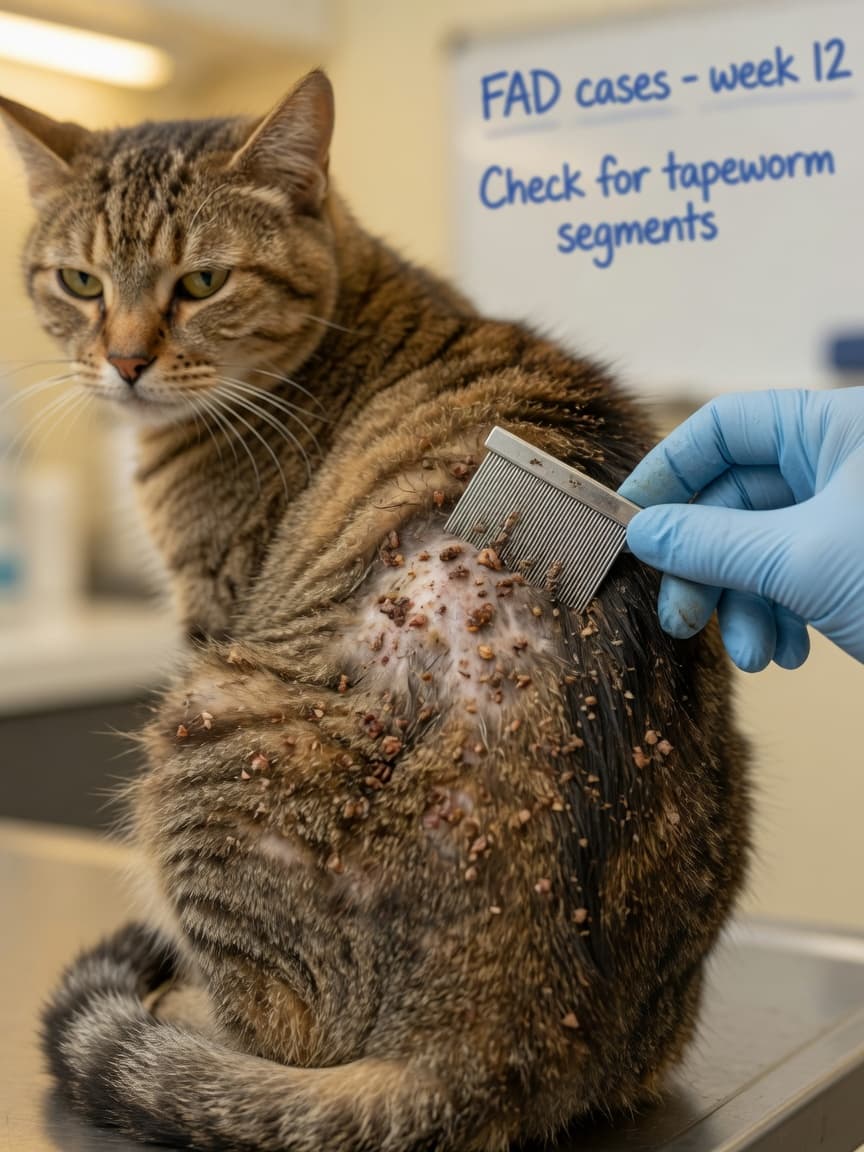
The Problem Is Not the Flea — It Is the Saliva
Most cats tolerate the occasional flea bite with nothing more than a momentary scratch. For cats with flea allergy dermatitis, the situation is categorically different. The immune system of an allergic cat has become sensitised to specific proteins in flea saliva. When a flea bites, it injects saliva into the skin before feeding — and for an allergic cat, this triggers a cascade of immune responses far out of proportion to the insult. A single bite can sustain intense itching and skin damage for two to three weeks.
Flea allergy dermatitis is the most common skin disease in cats globally. It does not require a heavy flea burden. Owners frequently insist their cat has no fleas, and they may be entirely correct at the moment they are speaking — but even one fleeting contact with a flea can be enough to trigger a flare in a highly sensitised individual.
Why Cats Are Hard to Assess for Fleas
Cats are fastidious groomers. They are highly efficient at removing fleas and flea dirt from their coats, which means by the time the owner checks the cat, physical evidence of infestation may be completely absent. This creates a common diagnostic pitfall: owners see no fleas, the vet may find no fleas, and yet flea allergy dermatitis is still the correct diagnosis.
Checking for flea dirt — the digested blood that fleas excrete — is more revealing than looking for the insects themselves. Combing a cat over a white surface and then dampening any dark specks with water will cause flea dirt to turn reddish-brown, distinguishing it from regular environmental debris. But even this can be absent if the cat has groomed thoroughly before examination.
Recognising Flea Allergy Dermatitis
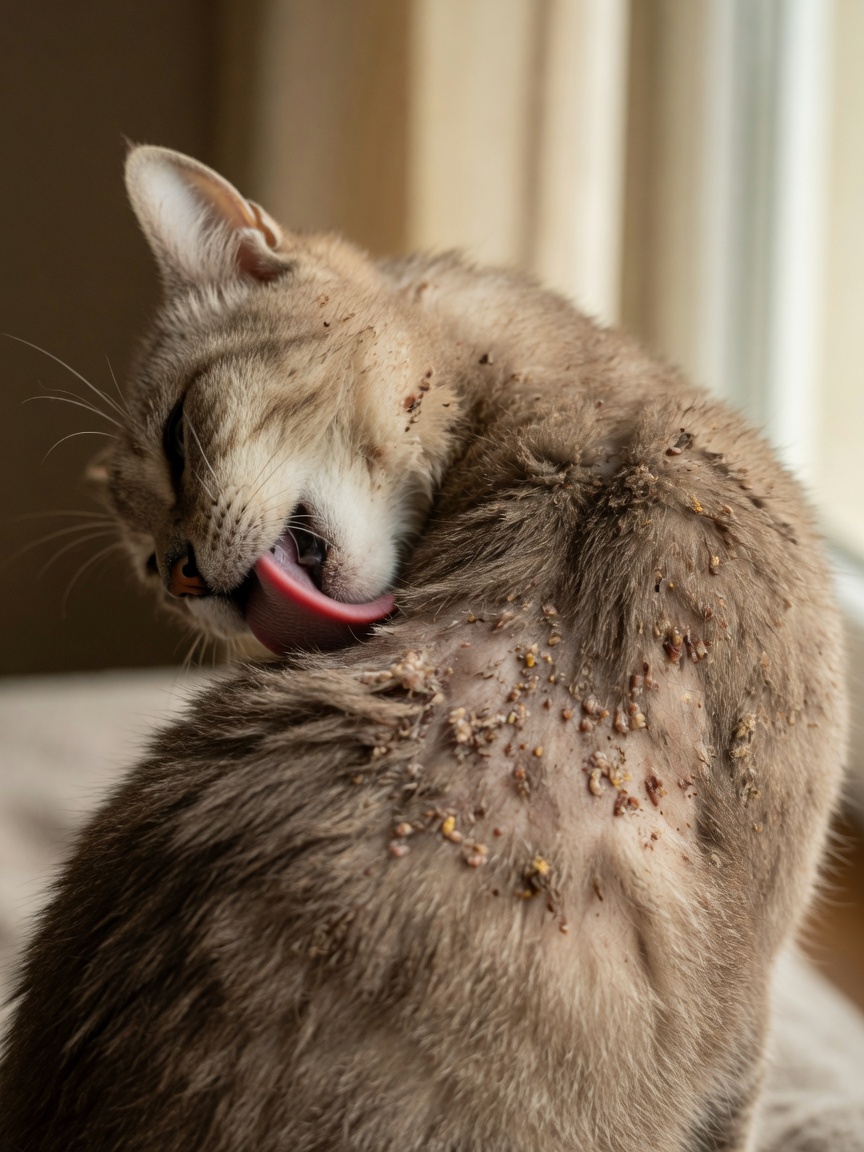
The classic presentation is miliary dermatitis — a pattern of tiny, crusted papules distributed across the back, neck, and base of the tail. Running your fingers along a cat's coat, you can feel these small scabs before you see them. The cat will typically show signs of intense pruritus: excessive grooming, licking, chewing, and scratching. Hair loss, particularly over the lower back and inner thighs, is common and results from the cat physically removing hair through overgrooming rather than the disease itself causing hair to fall.
In some cats, the predominant presentation is eosinophilic granuloma complex — a group of lesions that includes raised, pink-orange plaques, linear granulomas along the back of the thighs, and lip ulcers. These can look alarming but are a symptom of the allergic response rather than a separate primary disease. Symmetrical alopecia over the abdomen and flanks, with otherwise-normal skin underneath, is another presentation attributable to excessive barbering driven by itch.
Diagnosis: Ruling Out and Ruling In
There is no single definitive test for flea allergy dermatitis. Diagnosis is based on clinical signs, history, response to treatment, and elimination of other causes. Intradermal skin testing — injecting small amounts of allergen including flea saliva into the skin and measuring the wheal response — is considered a reliable method in a research context but is not always practical in general practice. Serum allergy testing for flea-specific IgE is available but has variable sensitivity.
In practice, the most robust approach is a rigorous trial of flea control across all pets in the household and within the home environment simultaneously. Improvement with strict flea control is considered diagnostically supportive. Food allergy and environmental allergens should also be considered, particularly in cats that do not respond as expected.
Treatment: Addressing the Immediate Flare
During an active flare, the priority is breaking the itch cycle. Corticosteroids remain the most effective intervention for achieving rapid relief in cats. Short courses of prednisolone are commonly used, with doses tapered as quickly as signs allow. Injectable methylprednisolone acetate is sometimes used for cats that are difficult to medicate orally, though long-acting steroid injections carry greater risk of metabolic side effects with repeated use.
Oclacitinib, a JAK inhibitor widely used in dogs, is not licensed for cats, but newer options are emerging. Ciclosporin has an established evidence base in cats with allergic skin disease and is increasingly used where steroids are not appropriate or as a steroid-sparing agent. Secondary bacterial or yeast infection of the skin should be treated with appropriate antimicrobials when present.
Flea Control: The Only Long-Term Solution
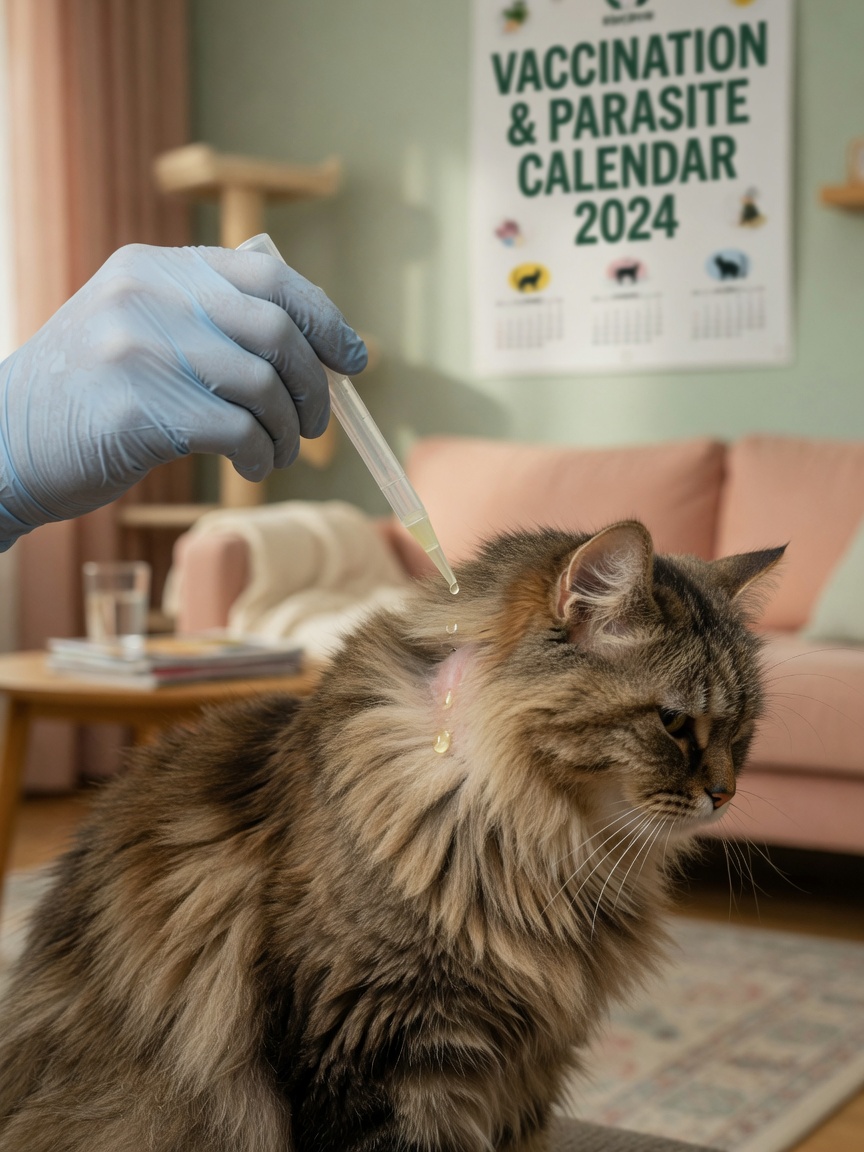
There is no desensitisation protocol for flea allergy that has demonstrated reliable efficacy in cats. The only sustainable management strategy is preventing the cat from being bitten. This requires comprehensive, year-round flea prevention applied to every animal in the household — not just the affected cat — and environmental treatment of the home.
Approximately 95 per cent of a flea population at any given time exists not on the animal but in the environment as eggs, larvae, and pupae. Treating only the cat addresses a fraction of the problem. Insect growth regulators applied to soft furnishings, carpets, and bedding are essential for breaking the life cycle. Products containing imidacloprid, fipronil, selamectin, or fluralaner — available in veterinary-licensed spot-on, oral, or collar formulations — should be selected based on efficacy and the cat's individual health status.
Managing Expectations
Flea allergy dermatitis cannot be cured, only controlled. Even with exemplary flea prevention, a previously sensitised cat may react to an incidental exposure — a visiting animal, time spent outdoors, a flea carried in on clothing. Keeping this in perspective helps owners maintain motivation for what can feel like an endless task. The goal is minimising exposure enough that flares become rare and mild rather than eliminating the possibility entirely.
Regular veterinary skin check-ups, prompt treatment of flares, and consistent year-round prevention give cats with flea allergy dermatitis an excellent chance of a comfortable, largely itch-free life.