
The Most Common Skin Disease in UK Dogs
Flea allergy dermatitis, commonly abbreviated to FAD, holds the unwanted distinction of being the most frequently diagnosed skin disease in dogs across the United Kingdom. Despite widespread availability of effective flea prevention products, FAD remains extremely common — partly because many owners do not apply preventative treatments consistently, and partly because even one flea bite is sufficient to trigger a reaction that can last for weeks in a sensitised animal.
Understanding the mechanism behind this condition is the key to managing it effectively. FAD is not simply an annoyance caused by fleas crawling on the skin. It is a genuine hypersensitivity reaction driven by the immune system, and it behaves quite differently from ordinary flea infestation.
How One Flea Bite Causes Weeks of Itching
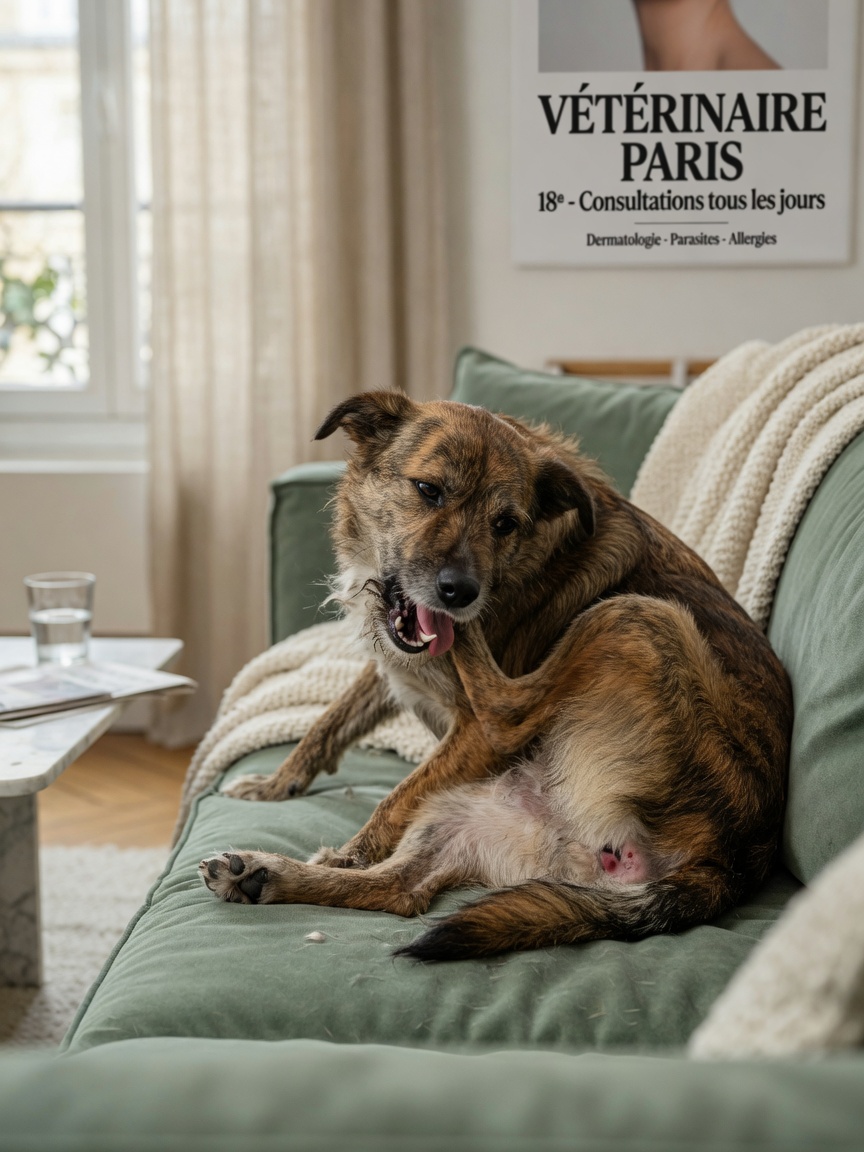
When a flea bites a dog, it injects a small amount of saliva into the skin. Flea saliva contains multiple proteins that function as allergens. In a dog with FAD, the immune system has been sensitised to these proteins and responds to even a single bite with a dramatic inflammatory reaction. This triggers intense pruritus that can persist for up to two weeks after that single bite — long after the flea itself has gone.
This is a critically important point. Owners of FAD dogs often say they cannot find any fleas on their dog and therefore dismiss the diagnosis. In fact, dogs with FAD are typically so intensely itchy that they groom themselves constantly and vigorously, removing fleas before they can be found. The absence of visible fleas does not rule out FAD — it may actually support it.
Recognising the Signs of Flea Allergy Dermatitis
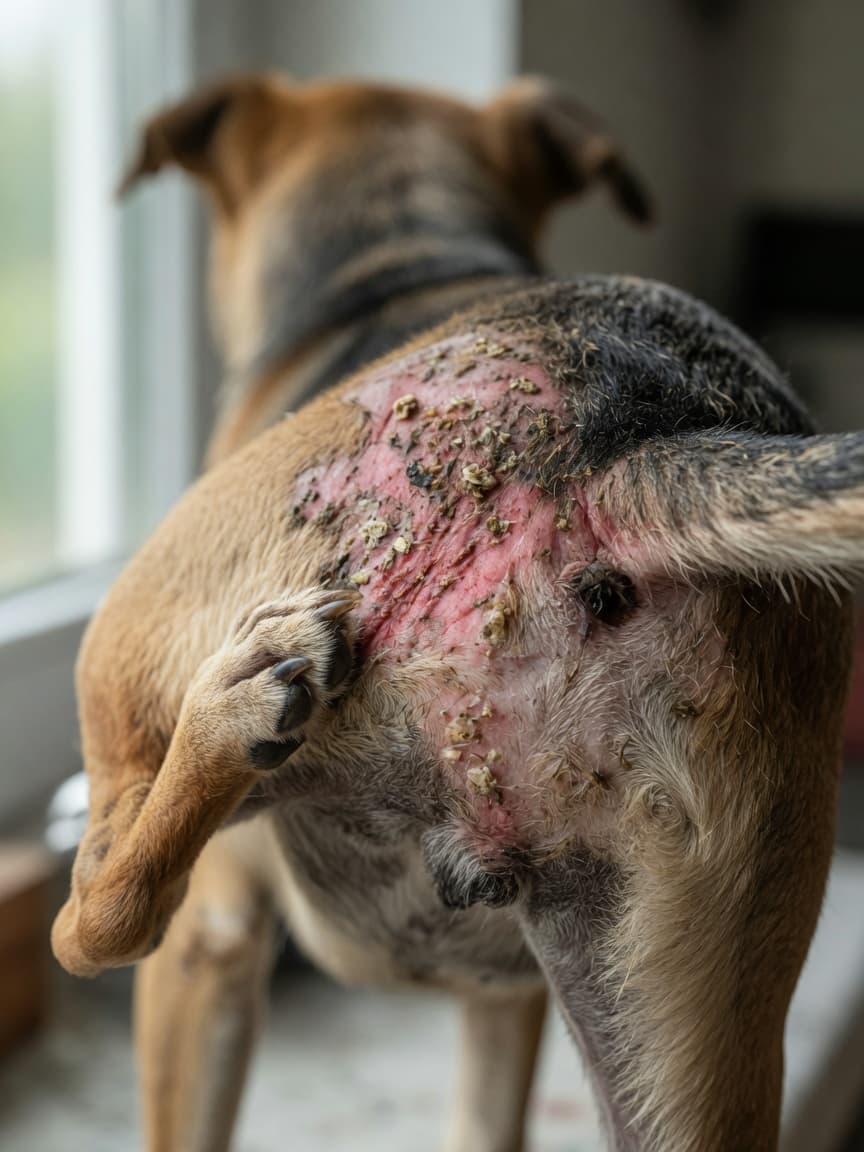
FAD has a characteristic distribution of lesions that makes it recognisable to experienced vets. The itching and skin damage tend to concentrate in the caudal (rear) half of the body, particularly:
- The base of the tail and lower back — often the most severely affected area
- The rump and hips
- The inner thighs
- The abdomen and groin
In severe cases, dogs chew their tail base raw, leading to self-inflicted wounds, hair loss, and secondary skin infections. The skin in affected areas may appear red, thickened, and crusted. Unlike atopic dermatitis, the face and paws are typically spared in FAD.
Finding the Evidence: Flea Dirt
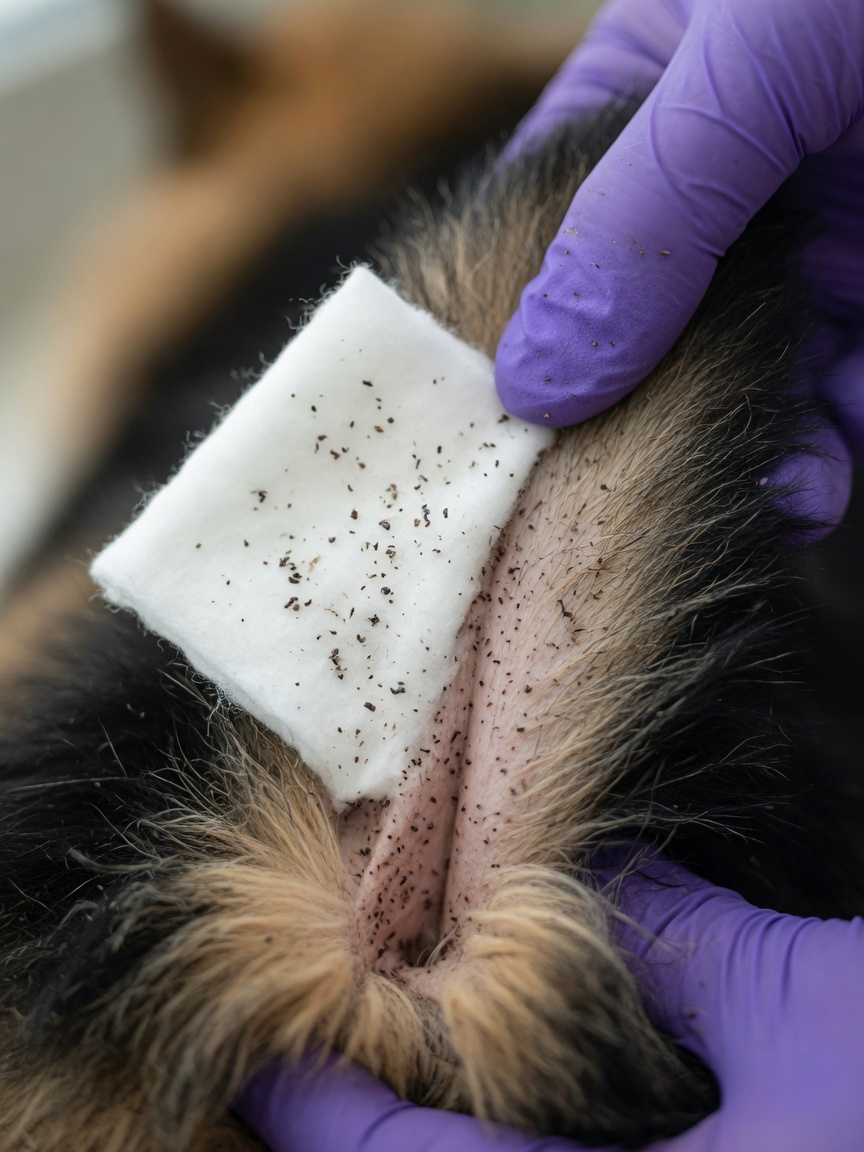
Since the fleas themselves may be absent, detecting flea dirt (flea faeces) becomes the key diagnostic clue. Flea dirt appears as tiny black or dark brown specks scattered through the coat, particularly around the base of the tail and along the back. To confirm it is flea dirt rather than ordinary debris, place some specks on a damp piece of white cotton wool or tissue. If they dissolve to leave a reddish-brown stain, this is digested blood — confirming flea activity. Ordinary soil or dirt will not produce this reaction.
Diagnosis
Diagnosis of FAD is primarily clinical, based on the characteristic distribution of signs combined with evidence of flea exposure. In some cases, particularly when the presentation is unclear or when distinguishing FAD from atopic dermatitis, a veterinary dermatologist may perform intradermal skin testing using flea allergen extract. A positive reaction to this test in the context of appropriate clinical signs confirms the diagnosis. However, the most practical diagnostic approach in first-opinion practice is to observe the dog's response to rigorous flea control — if symptoms resolve substantially with treatment, FAD is confirmed.
Treatment: The Dual Approach
Effective management of FAD requires treating both the dog and the environment simultaneously. Focusing on only one of these will not achieve adequate control.
Treating the Dog
Prescription-only isoxazoline products are currently considered the most effective on-pet flea treatments available. These include fluralaner (Bravecto), afoxolaner (Nexgard), and sarolaner (Simparica). They work systemically — killing fleas rapidly when they bite, before they have time to lay eggs. The speed of kill is particularly important in FAD dogs, where even brief flea exposure triggers a prolonged reaction.
Spot-on alternatives such as imidacloprid with moxidectin (Advocate) or selamectin (Stronghold) are effective options, though they require consistent monthly application. Flea collars containing flumethrin and imidacloprid (Seresto) provide sustained protection and are particularly useful for dogs that swim or are bathed frequently, reducing the effectiveness of spot-ons.
Treating the Environment
This step is essential and is the most commonly overlooked. Only approximately five per cent of the flea population at any given time is on the pet. The remaining 95 per cent exists in the environment as eggs, larvae, and pupae, living in carpets, upholstered furniture, bedding, skirting boards, and floor cracks. These environmental stages are not killed by products applied to the pet.
To break the flea lifecycle in the home, use a household flea spray containing an adulticide (such as permethrin) combined with an insect growth regulator (IGR) such as methoprene or pyriproxyfen. IGRs prevent flea eggs and larvae from developing into adults. Treat all rooms where the dog has access, paying particular attention to the dog's sleeping areas and any soft furnishings. Vacuum thoroughly before spraying to encourage pupae to hatch — the pupal stage is resistant to insecticides and can survive in the environment for months.
All Pets Must Be Treated
If there are other dogs or cats in the household, every animal must receive flea treatment at the same time. Untreated pets act as reservoirs, sustaining the flea population and undermining treatment of the affected dog. This applies even to cats that are strictly indoors, as fleas can enter the home on clothing or be carried in by other pets.
Relieving Symptoms While Flea Control Takes Effect
Even after effective flea control is established, a sensitised dog may continue to itch intensely for days to weeks from the ongoing inflammatory response. A short course of corticosteroids prescribed by a vet can provide rapid relief during this period. Apoquel (oclacitinib) is an alternative that controls itch without the broader immune suppression associated with steroids, and is suitable for use alongside flea treatment.
Prevention Is the Only Long-Term Solution
There is no desensitisation vaccine for FAD that provides reliable, lasting protection. Allergen-specific immunotherapy using flea allergen has been investigated but results are inconsistent. The only truly effective long-term strategy for FAD dogs is rigorous, year-round flea prevention applied to all pets in the household without gaps.
Owners sometimes note that their dog tolerated fleas without serious reactions for years before FAD developed. This is because sensitisation increases with repeated flea exposure — FAD dogs typically become more reactive over time, not less. Year-round prevention prevents the accumulated exposures that drive sensitisation and worsening.