
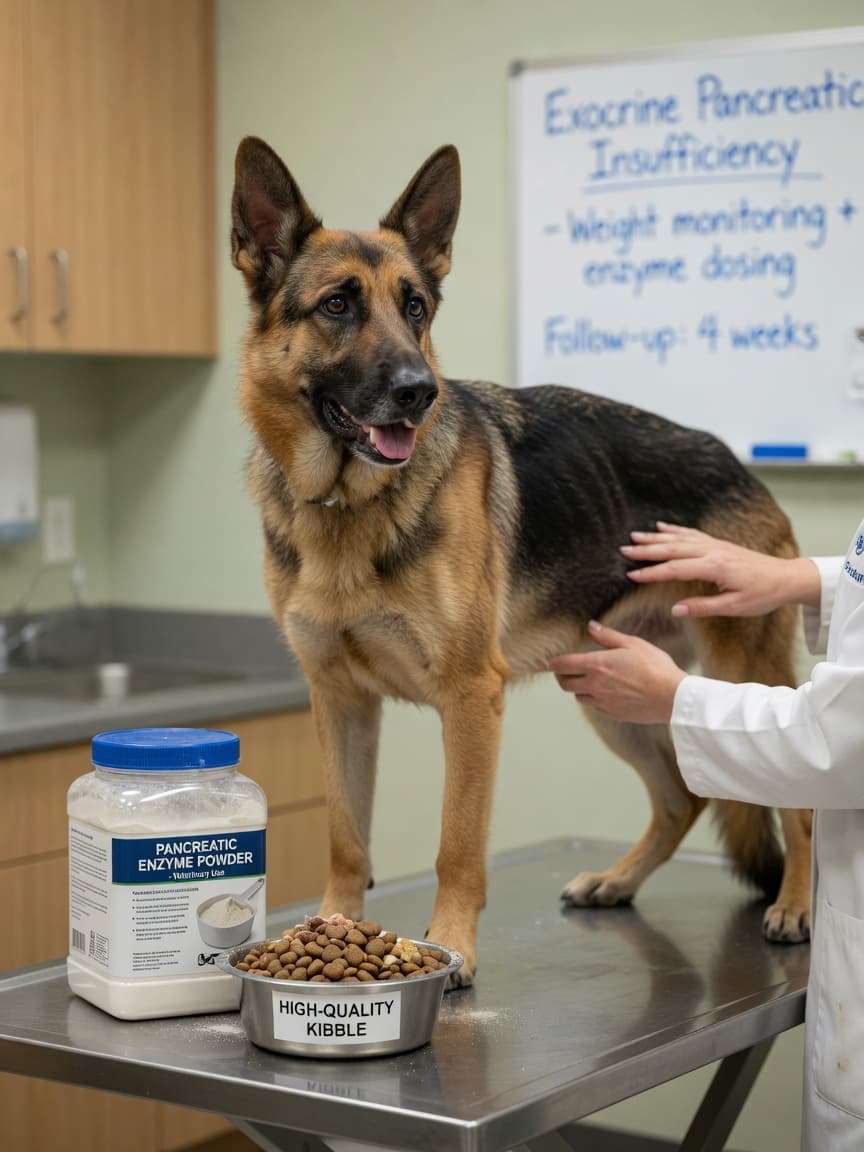
Eating Well but Wasting Away
Imagine a dog with a voracious appetite who eats substantial meals every day but steadily loses weight, produces enormous volumes of pale, greasy faeces, and seems perpetually hungry regardless of how much food is offered. This is the reality for dogs living with exocrine pancreatic insufficiency — a condition where the pancreas can no longer produce the digestive enzymes the body depends upon. It is more common than many owners realise, and without the correct diagnosis, these dogs deteriorate for months or even years.
Understanding Exocrine Pancreatic Insufficiency
The exocrine pancreas is responsible for secreting digestive enzymes — primarily lipase, amylase, and proteases — into the small intestine, where they break down fats, carbohydrates, and proteins into absorbable nutrients. In exocrine pancreatic insufficiency (EPI), this secretory capacity is profoundly reduced, typically because the enzyme-producing cells (acinar cells) have been destroyed or significantly depleted. Without adequate enzyme activity, food passes through the gut largely undigested, and the dog absorbs very little nutritional value regardless of intake.
Causes and Affected Breeds
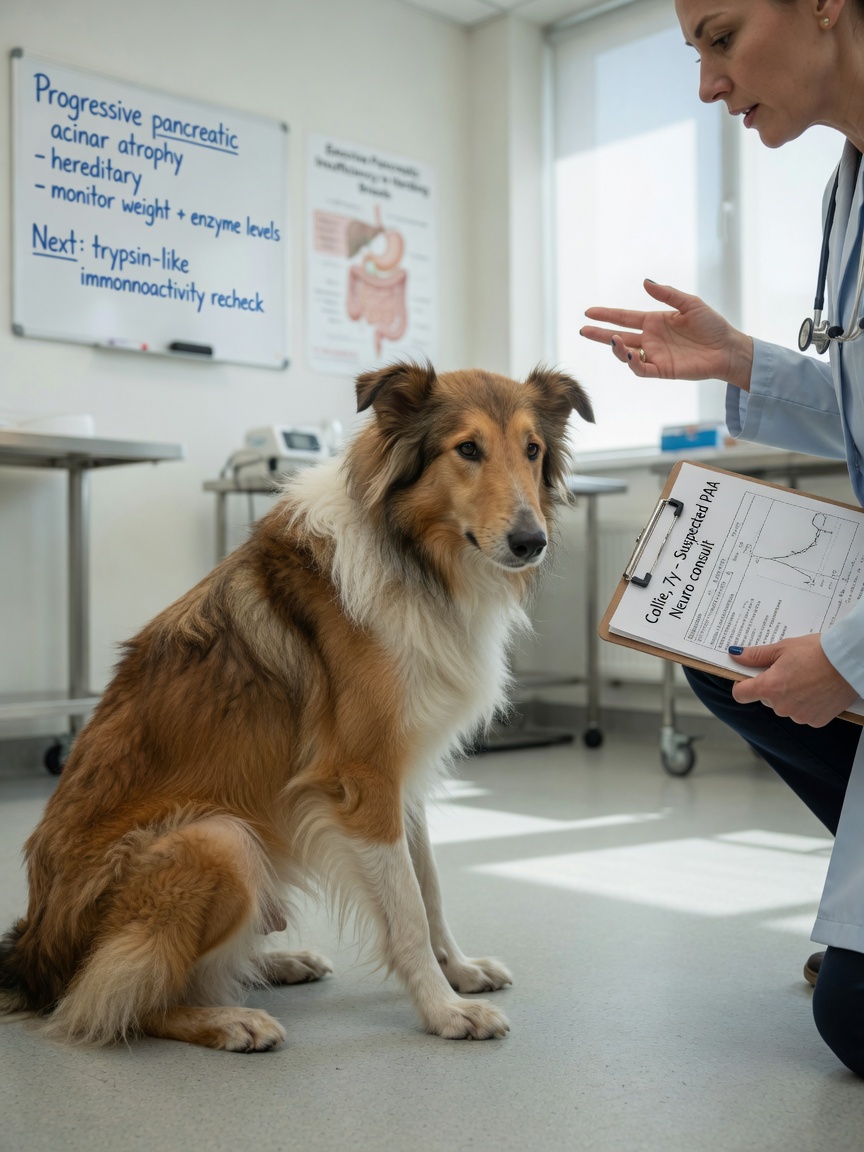
In dogs, the most common underlying cause of EPI is pancreatic acinar atrophy — a hereditary condition in which the enzyme-secreting cells progressively degenerate. German Shepherd Dogs are disproportionately affected, with studies suggesting a strong genetic component in this breed. Rough Collies are also recognised as predisposed. However, EPI can occur secondarily to chronic pancreatitis, where repeated inflammation eventually destroys functional tissue, meaning any breed that experiences ongoing pancreatic disease may be at risk.
Less commonly, EPI develops following surgical removal of pancreatic tissue or as a consequence of other systemic illness. In some cases, the cause remains unclear.
Recognising the Signs
The hallmark signs of EPI are difficult to miss once you know what to look for, though they can initially be confused with other digestive conditions.
Gastrointestinal Symptoms
Chronic diarrhoea or soft, voluminous, poorly formed stools are almost universal. The faeces are often pale or yellowish and may appear greasy or oily — a direct consequence of undigested fat passing through the intestine. Increased frequency of defecation, flatulence, and borborygmi (audible gut gurgling) are also common. Some dogs vomit intermittently.
Nutritional Consequences
Progressive weight loss despite a good or even ravenous appetite is the defining clinical feature of EPI. Muscle wasting becomes apparent over time, the coat typically becomes dull or dry, and affected dogs may show increased hunger-driven behaviours such as coprophagia (eating faeces) — thought to reflect a search for nutrients the gut cannot extract from food.
Secondary deficiencies of fat-soluble vitamins (A, D, E, and K) and cobalamin (vitamin B12) develop in many cases because absorption of these nutrients depends on normal fat digestion and intestinal health. Cobalamin deficiency, in particular, is extremely common in EPI and can perpetuate digestive dysfunction even when enzyme therapy is initiated.
Diagnosis
EPI is definitively diagnosed using the serum trypsin-like immunoreactivity (TLI) test, which measures the amount of trypsinogen leaking from the pancreas into the bloodstream. In a dog with EPI, TLI values are very low, reflecting markedly reduced enzyme production. This test is highly sensitive and specific, and a single fasted blood sample is usually sufficient. Your vet will also typically assess cobalamin levels and may check folate, which is often elevated in EPI due to bacterial overgrowth in the small intestine.
It is worth noting that EPI can coexist with other conditions — including inflammatory bowel disease — which may complicate the diagnostic picture and influence the treatment response.
Treatment and Nutritional Support
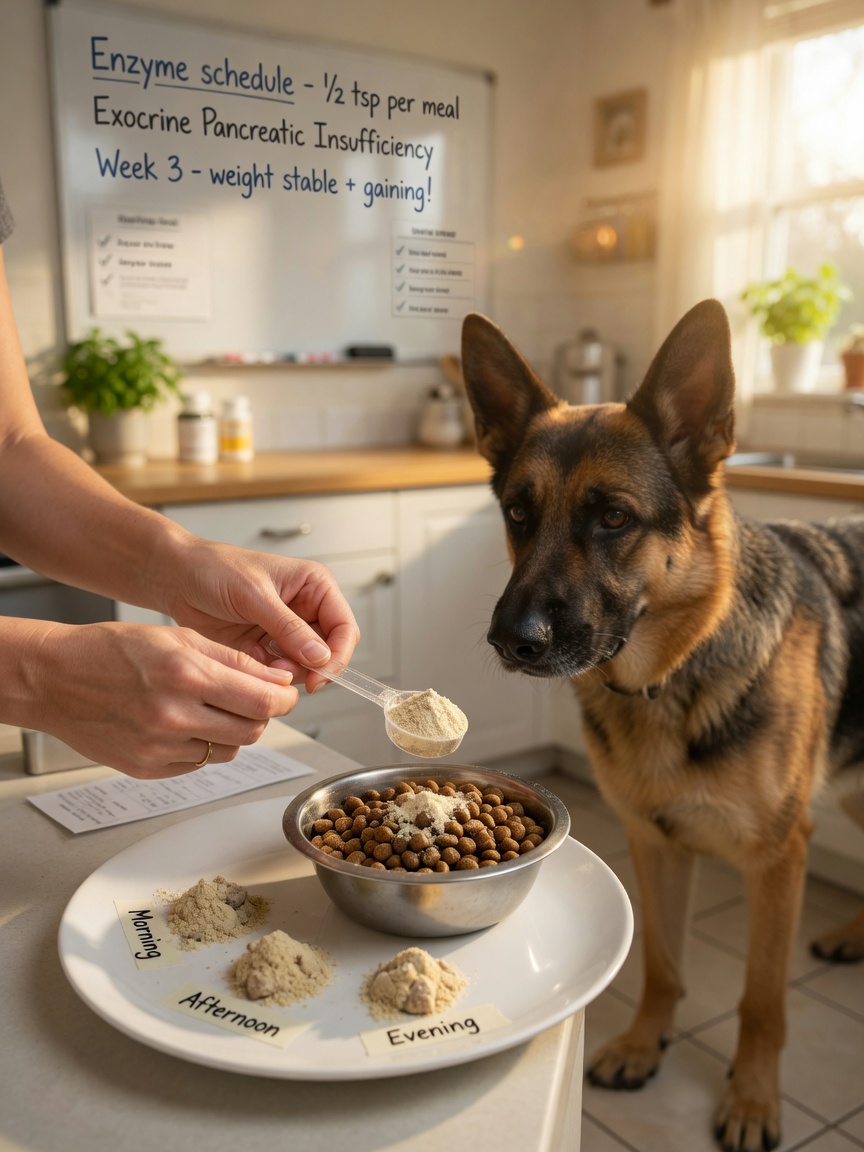
EPI is a manageable condition, but it requires lifelong commitment. The foundation of treatment is enzyme replacement therapy.
Enzyme Supplementation
Powdered porcine (pig-derived) pancreatic extract is the most effective and widely used form of enzyme replacement. It is mixed with food immediately before feeding, allowing the enzymes to act on the meal as it moves through the digestive tract. The correct dose varies considerably between individual dogs and must be titrated carefully — usually starting on the higher end and adjusting downward once stool quality and weight stabilise. Enteric-coated enzyme products are generally less effective in dogs than raw powder preparations.
Dietary Considerations
A highly digestible, moderate-fat diet is typically recommended to reduce the digestive burden and support optimal nutrient absorption. Very high-fat diets can overwhelm even supplemented enzyme capacity, whilst extremely low-fat diets may not provide sufficient energy for weight restoration. Your vet or a veterinary nutritionist can guide you towards an appropriate formulation based on your dog's specific response.
Small, frequent meals — two to four times daily — are better tolerated than single large portions and improve the efficiency of enzyme supplementation.
Addressing Cobalamin Deficiency
If cobalamin levels are low, injectable supplementation is the most reliable route of administration, as oral absorption is impaired in many affected dogs. Regular monitoring is essential, as cobalamin deficiency left untreated will continue to undermine digestive function and neurological health.
Managing EPI for the Long Term
- Commit to lifelong enzyme supplementation — there is no cure, and discontinuing treatment leads to rapid relapse
- Monitor body weight and stool quality regularly as indicators of treatment adequacy
- Recheck cobalamin levels periodically and maintain supplementation as directed
- Report any regression in stool quality or appetite to your vet promptly, as dose adjustments may be needed
- Be aware that some dogs require concurrent treatment for small intestinal bacterial overgrowth or co-existing inflammatory bowel disease
With appropriate enzyme replacement and nutritional support, the majority of dogs with EPI achieve a good quality of life and regain healthy body condition. The adjustment period can take weeks to months, and patience alongside consistent veterinary monitoring is essential throughout.