

Fat Is Not the Enemy
Dietary fat has spent decades being maligned, but for dogs and cats, certain fats are not merely acceptable — they are essential. Essential fatty acids are those the body cannot synthesise in sufficient quantities from other substrates and must obtain from food. In companion animal nutrition, the omega-3 and omega-6 families are the critical groups, and the balance between them has wide-reaching effects on inflammation, skin health, coat quality, brain function, joint integrity, and cardiovascular health.
The Omega-6 Family
Omega-6 fatty acids are found abundantly in plant oils — sunflower, corn, and soya — as well as in poultry fat and many animal tissues. The parent omega-6 fatty acid is linoleic acid (LA), which is truly essential for both dogs and cats. From linoleic acid, dogs can synthesise longer-chain omega-6 derivatives including arachidonic acid (AA). Cats lack sufficient delta-6-desaturase activity to perform this conversion efficiently, making arachidonic acid a conditionally essential nutrient in feline diets — one reason cat foods must contain animal-source ingredients.
Arachidonic acid is the precursor to a family of eicosanoids — prostaglandins, thromboxanes, and leukotrienes — that mediate pro-inflammatory immune responses. This inflammatory capacity is not inherently harmful; it is necessary for wound healing and immune defence. Problems arise when omega-6 intake is excessive relative to omega-3, tipping the balance chronically toward inflammation.
The Omega-3 Family
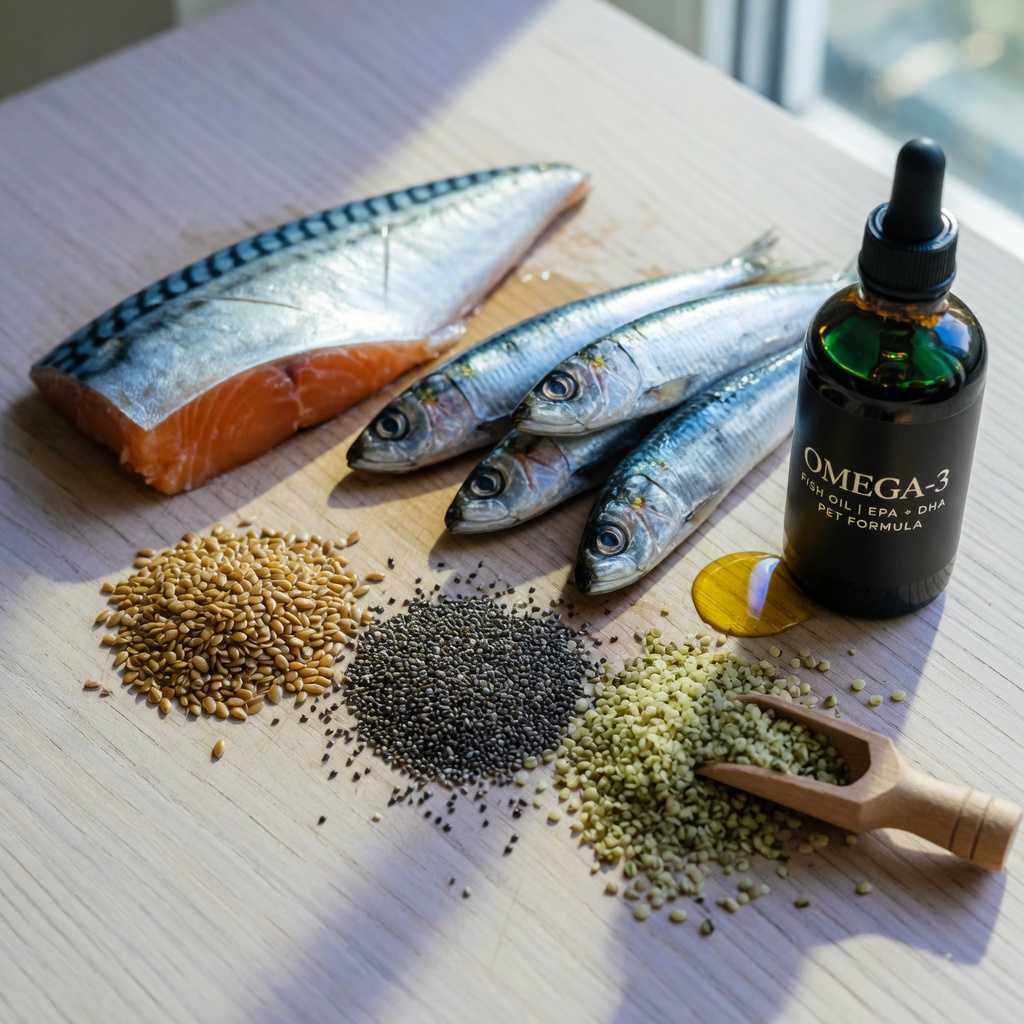
The omega-3 family begins with alpha-linolenic acid (ALA), found in flaxseed, chia, and hemp. Dogs can convert ALA to the longer-chain EPA (eicosapentaenoic acid) and DHA (docosahexaenoic acid), though the conversion efficiency is low — typically below 10 percent and often considerably less. Cats convert ALA to EPA and DHA even less efficiently. This means that ALA from plant sources, while useful, is not an adequate substitute for preformed marine-source EPA and DHA in most therapeutic contexts.
EPA and DHA: The Active Members
EPA and DHA are the omega-3 forms with the most direct and well-documented biological effects in dogs and cats. EPA competes with arachidonic acid for the same enzymatic pathways, producing eicosanoids with reduced inflammatory potency. DHA is structurally concentrated in neural tissue, the retina, and reproductive organs, and is critical for brain and visual development in neonates. Marine fish oil, fatty fish such as sardines and mackerel, and algal oil are the primary dietary sources of preformed EPA and DHA.
The Ratio Problem in Modern Pet Food
A typical commercial dry pet food based on poultry and plant oils may contain an omega-6 to omega-3 ratio of 15:1 to 25:1 or higher. The ratio considered optimal for modulating inflammatory tone in dogs and cats is generally cited as between 5:1 and 10:1, with some conditions — allergic skin disease, osteoarthritis, kidney disease, and cardiac conditions — potentially benefiting from ratios as low as 3:1 to 5:1 when supplementation is used therapeutically.
This gap is significant. The reliance on omega-6-rich plant oils and poultry fat in commercial formulas, combined with minimal marine-source ingredients, has created a dietary pattern where most pet food is strongly skewed toward promoting rather than resolving inflammatory states. This does not make commercial food dangerous, but it does explain why fish oil supplementation is so consistently recommended by veterinary dermatologists and specialists in inflammatory conditions.
Therapeutic Applications of Omega-3 Supplementation
Skin and Coat
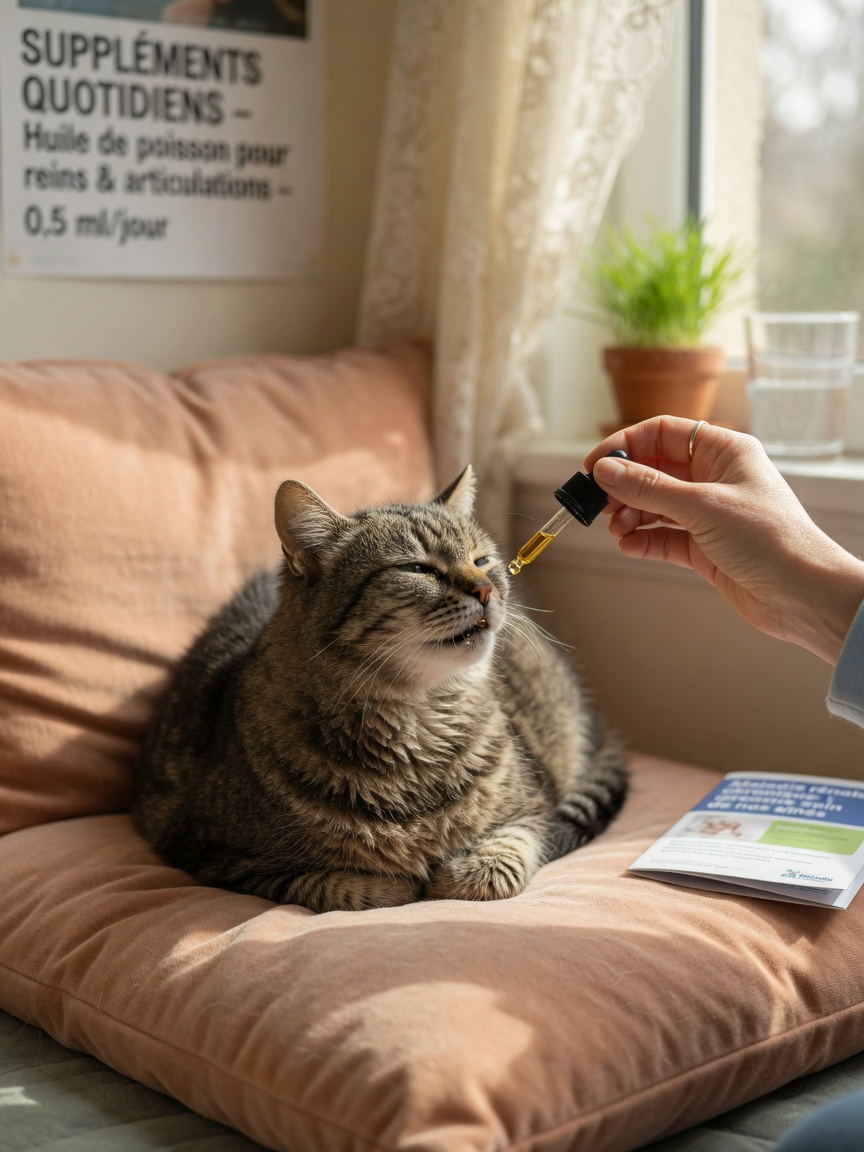
Omega-3 supplementation is among the most evidence-supported nutritional interventions in veterinary dermatology. EPA and DHA reduce the production of pro-inflammatory cytokines and improve the lipid composition of the skin barrier. Dogs and cats with atopic dermatitis, flea allergy dermatitis, and sebaceous gland disorders frequently show improvement in pruritus and coat quality with supplementation, though results vary by individual and omega-3 alone rarely eliminates clinical signs.
Joint Disease
Multiple studies have documented reduced lameness scores and improved mobility in dogs with osteoarthritis fed diets enriched with EPA and DHA, or supplemented with fish oil. The effect is modest compared to pharmaceutical intervention but is relevant as part of a multimodal management plan.
Kidney Disease in Cats
Omega-3 supplementation is incorporated into most prescription renal diets for cats. EPA and DHA reduce glomerular hypertension and proteinuria through their effects on renal vasoconstriction, and studies have shown slower progression of experimental kidney disease in cats supplemented with fish oil.
Choosing and Dosing Supplements Safely
Not all omega-3 supplements are equal. Fish oil degrades rapidly once opened and exposed to light, heat, and air. Rancid oil not only loses potency but delivers harmful lipid peroxides. Choose products with verified EPA and DHA content per dose, stored in dark bottles, and with a traceable production date. Algal oil is a sustainable alternative with direct EPA and DHA content suitable for pets.
Dosing guidance varies by indication and body weight. Fish oil is a blood thinner and can interact with NSAIDs and anticoagulants — relevant for dogs already on anti-inflammatory medication. At very high doses, omega-3 may impair platelet function or delay wound healing. Discuss appropriate dosing with your vet before supplementing, particularly if your pet has a concurrent medical condition.
Practical Takeaways
- Most commercial pet foods are high in omega-6 and low in EPA and DHA — this is the common baseline
- ALA from flaxseed does not reliably replace marine-source EPA and DHA, especially in cats
- Fish oil or algal oil supplementation is well-supported for skin, joint, and kidney conditions
- Store fish oil correctly — rancid oil is counterproductive
- Confirm dosing with your vet, particularly if your pet takes NSAIDs or has a clotting disorder
- Look for foods with fish or fish oil in the ingredient list as a starting point for improving dietary omega-3 balance