
A Virus That Moves as Fast as Horses Do
In February 2019, equine influenza tore through the UK racing industry with a speed that underscored just how vulnerable even vaccinated horse populations can be. Over two hundred horses tested positive within days, prompting the British Horseracing Authority to suspend all racing — a halt not seen since the 2001 foot-and-mouth crisis. Even horses with up-to-date vaccination records were infected. It was a stark reminder that equine influenza is not a historical concern; it is a present and recurring threat.
What Equine Influenza Is and How It Spreads
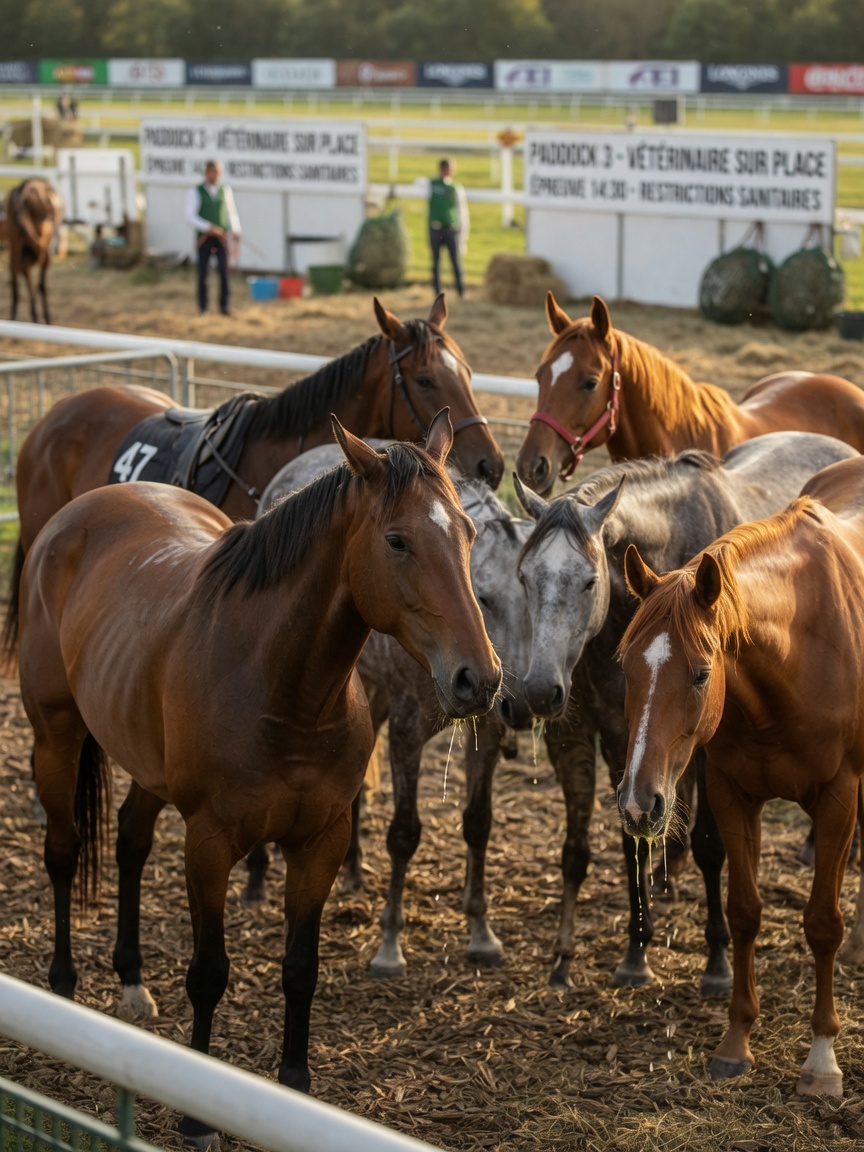
Equine influenza is caused by influenza A viruses, primarily subtype H3N8, which has circulated in horse populations globally since its first documented outbreak in 1963. The virus evolves through antigenic drift — gradual mutation of surface proteins — which is why historical immunity and older vaccines can become less effective against circulating strains. It spreads primarily through aerosolised respiratory droplets, making dense horse populations at competition venues, racetracks, and sales particularly vulnerable. The incubation period is short — typically one to three days — and clinical signs can appear rapidly across a group.
Clinical Signs and Disease Course
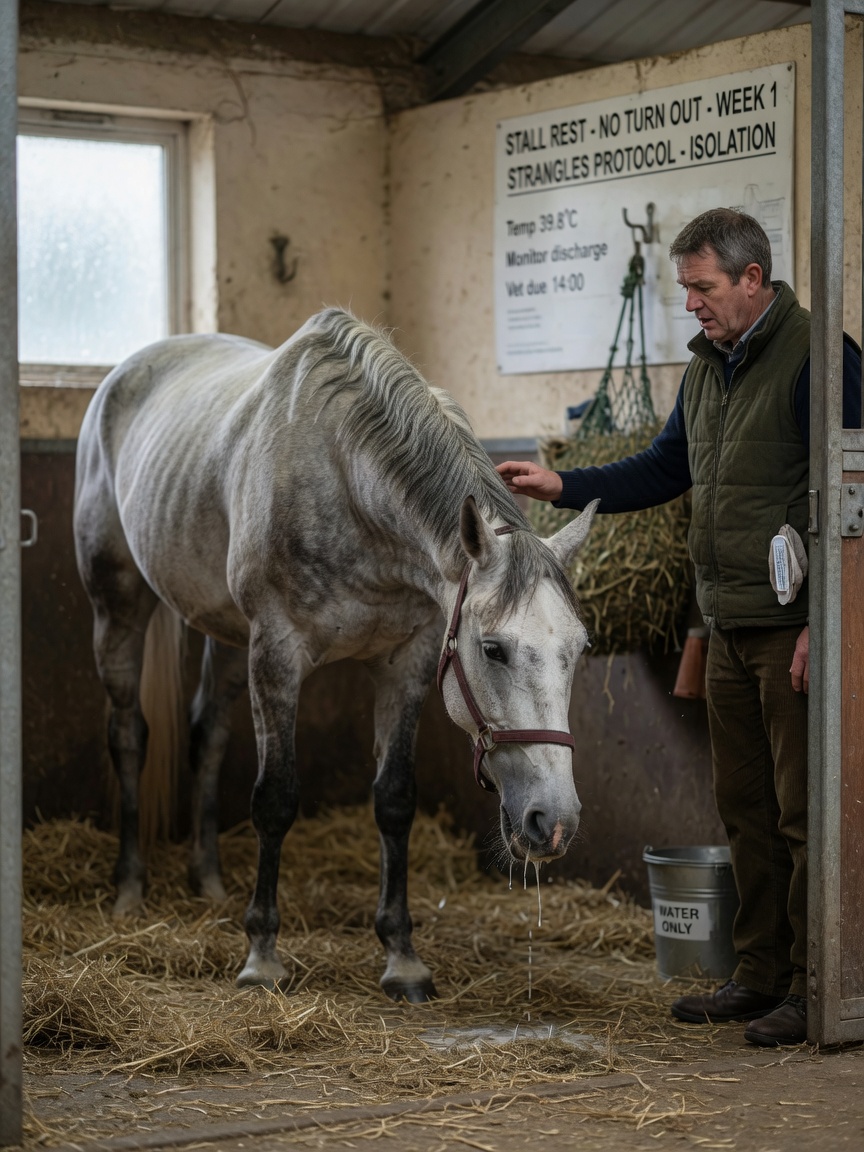
Classic equine influenza presents with a sudden high fever (often 39.5°C or above), a harsh, dry cough, serous to mucopurulent nasal discharge, and marked lethargy. Muscle stiffness, enlarged lymph nodes, and limb oedema may also occur. Most uncomplicated cases resolve within two to three weeks, but the cough can persist considerably longer, and horses returned to work too quickly risk secondary bacterial pneumonia and myocarditis. The standard guidance is one week of rest for every day of fever.
Vaccination: Why It Matters and Its Limitations
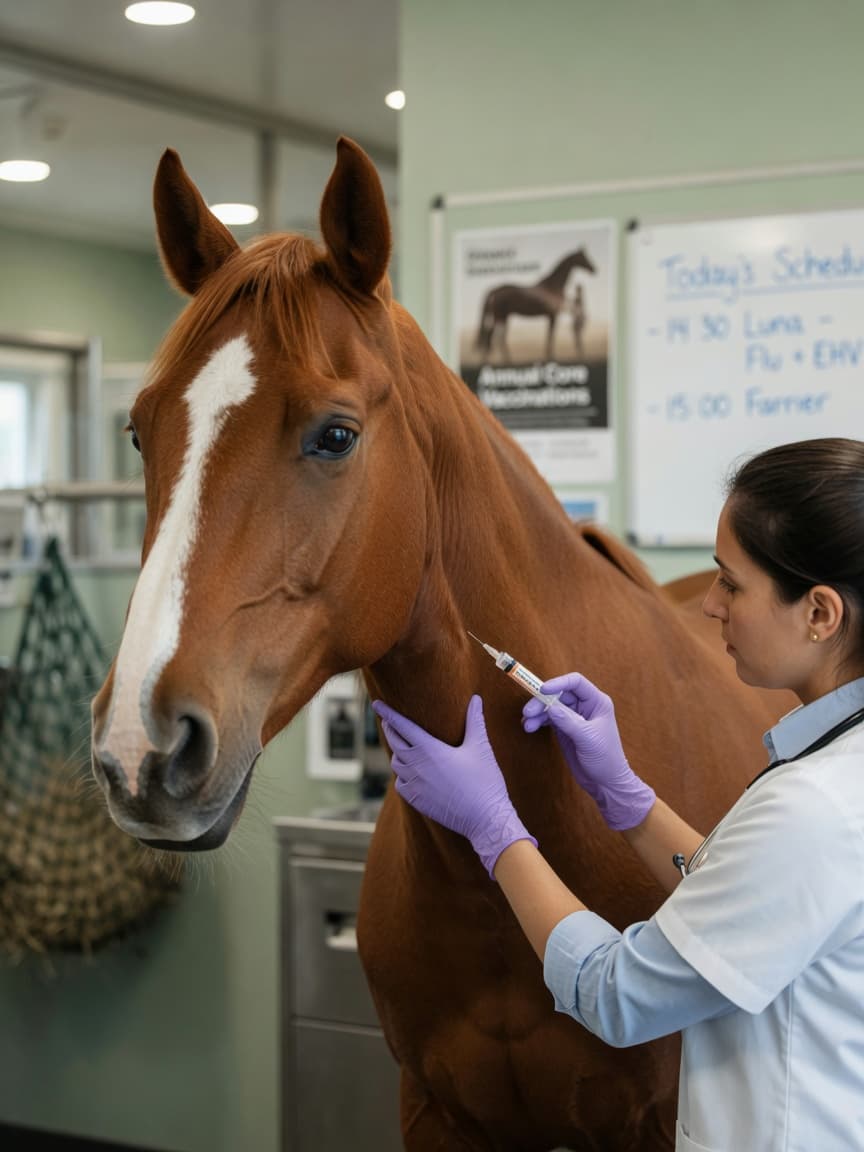
Vaccination is the single most important tool in controlling equine influenza. It does not guarantee complete protection — particularly when circulating strains have drifted from vaccine components — but it substantially reduces clinical severity, viral shedding, and the risk of serious complications. Vaccines must be updated regularly to include relevant strains, and the World Organisation for Animal Health (WOAH) makes annual recommendations based on global surveillance data.
Primary and Booster Schedules
A standard primary course involves two doses given at an interval of three to six weeks, followed by a first booster at approximately six months. Subsequent boosters are given annually at minimum, though higher-risk horses — those competing regularly or living on busy yards — may benefit from six-monthly intervals. Your vet can recommend a schedule appropriate to your horse's risk level.
Competition Rules and Documentation
Most UK equestrian governing bodies mandate proof of vaccination for entry to affiliated competitions. The British Equestrian Federation, the British Horseracing Authority, and affiliated societies each have specific requirements, which have been tightened following the 2019 outbreak. Typically, horses must have completed a primary course with the second dose administered at least seven days before first competition, followed by boosters within specified windows — often no more than six months and twenty-one days between doses for competing horses. Passports must be fully up to date and endorsed by a vet. Gaps in vaccination history — even a single overdue booster — may result in a horse being barred from the premises. Owners should check the rules of their governing body directly, as requirements do vary and are subject to revision.
Managing an Outbreak on Your Yard
If equine influenza is suspected, isolate the affected horse immediately and contact your vet. Avoid moving horses on or off the premises until the situation is assessed. Increase disinfection of shared surfaces, hands, and equipment. Neighbouring yards and competition organisers with whom you have recently had contact should be notified. Your vet may recommend nasal swabs for PCR confirmation and can advise on whether boosting vaccination in exposed horses is appropriate — though this is not universally recommended during active outbreaks and should be discussed case by case. Report confirmed cases to the Animal Health Trust's (AHT) equine influenza surveillance scheme or equivalent national programme, as population-level data is critical for vaccine strain selection.
Practical Vaccination Reminders
- Diarise booster dates well in advance — passport endorsement requires a vet visit that cannot be rushed
- Check competition entry rules each season, as requirements can change
- Do not compete within seven days of an influenza vaccination
- Maintain vaccination in all horses on a yard, not just those competing
- Discuss strain coverage with your vet when selecting a vaccine product
- Allow horses adequate rest after any respiratory illness before returning to work