

Emergency Vet Costs: What to Expect & How to Afford It
By Julia Wrenfield, Pet Wellness Researcher | ForPetsHealthcare.com
The Reality of Emergency Vet Bills
Emergency vet visits are among the most financially jarring experiences a pet owner can face. Unlike a planned consultation where you have time to prepare, emergencies arrive without warning — often at night, on weekends, or during bank holidays, when specialist out-of-hours centres are the only option available.
The costs involved are not simply elevated versions of daytime fees. Emergency practices carry significantly higher overheads: 24-hour staffing, intensive care units, on-site imaging and laboratory equipment, and specialist vets on call. These costs are built into every bill. Understanding what drives emergency vet costs — and how to plan for them — can make a genuinely frightening situation more manageable.
What Does an Emergency Vet Visit Actually Cost?
Emergency vet costs in the UK typically start with a consultation or triage fee of £100–£250 just to be seen. This is before any treatment, medication, imaging, or procedures. In the US, emergency exam fees typically run $150–$400 at specialist emergency centres. These figures are estimates and vary by location and facility.
Common emergency treatments and their approximate costs in the UK:
- Emergency consultation/triage fee: £100–£250
- IV fluid therapy (per night): £150–£300
- Emergency X-rays (two views): £250–£500
- Ultrasound (emergency): £300–£600
- Emergency surgery (minor, e.g. wound repair): £500–£1,500
- Emergency surgery (major, e.g. GDV/bloat): £3,000–£8,000
- Overnight hospitalisation (per night): £200–£500
- Toxin ingestion treatment (e.g. induced vomiting, charcoal, monitoring): £300–£800
- Fractured leg (surgery + aftercare): £2,000–£5,000
- Urinary blockage (cat, treatment + hospitalisation): £1,000–£3,000
A moderate emergency — say, a dog that ate something it shouldn't have and needed overnight monitoring and IV fluids — can easily reach £800–£1,500. A genuine surgical emergency involving the abdomen or chest can run £5,000–£10,000 or more, especially if specialist input is required.
The Most Common Pet Emergencies and Their Costs
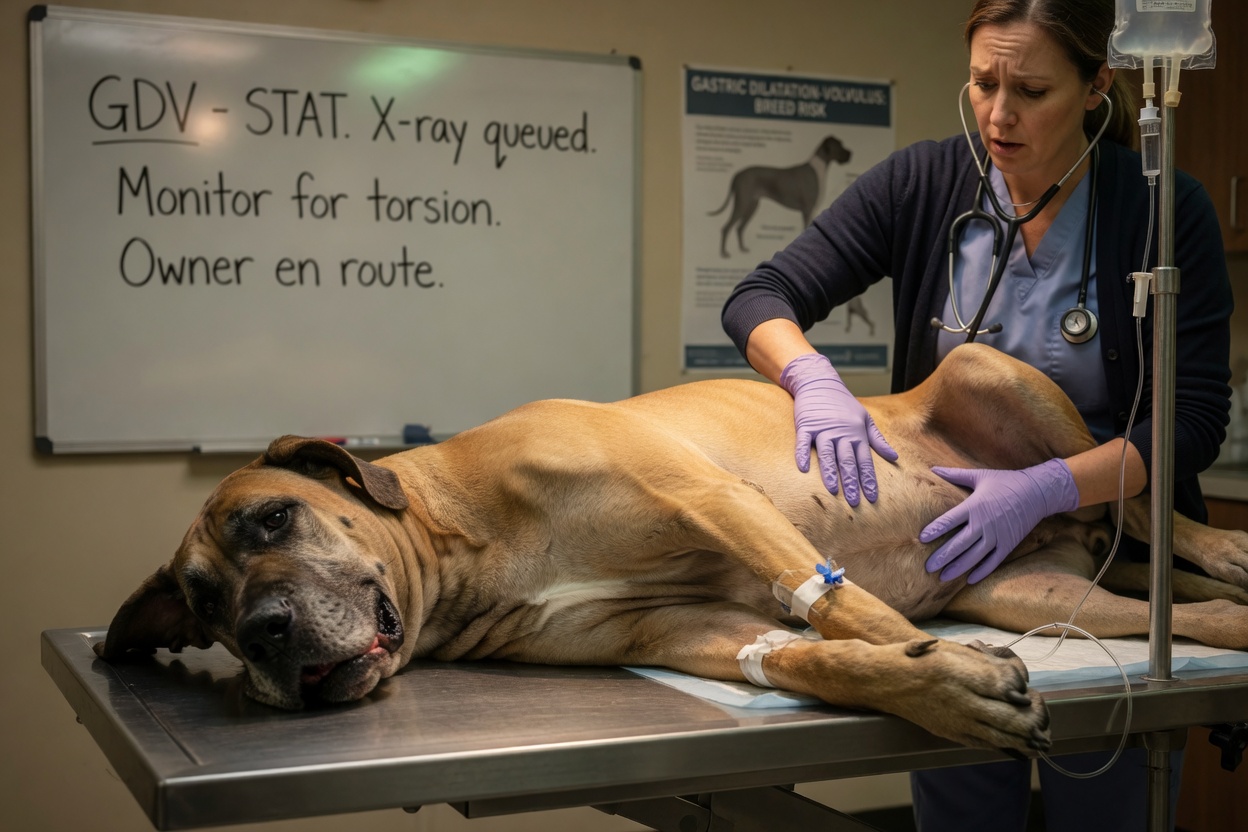
Gastric dilatation-volvulus (GDV or "bloat") in dogs is one of the most expensive and time-critical emergencies. The stomach twists, cutting off blood supply. Without surgery within hours, the outcome is fatal. Surgery and recovery can cost £4,000–£8,000 in the UK, more at specialist centres. Large and giant breeds (Great Danes, German Shepherds, Standard Poodles) are most at risk.
Urinary blockage in male cats is another extremely common emergency. A blocked urethra prevents urination and becomes life-threatening within 24–48 hours. Treatment involves sedation, catheterisation, hospitalisation, and IV fluids — typically £1,000–£3,000 in the UK, $1,500–$4,000 in the US.
Toxin ingestion covers a wide range — from chocolate and grapes to xylitol, rat poison, and human medications. Treatment depends on what was ingested and when. A call to a vet poison line is free and the first step; treatment costs range from £200 for induced vomiting to £2,000+ for intensive monitoring of serious toxins.
Road traffic accidents (RTAs) in dogs and cats often involve multiple injuries — fractures, internal bleeding, pneumothorax. Stabilisation, imaging, and surgery can easily reach £3,000–£8,000 or more depending on the injuries sustained.
After-Hours and Bank Holiday Surcharges
If your pet has an emergency outside standard working hours, you'll be directed to an out-of-hours emergency practice. These operate separately from your regular vet and charge significantly more. Typical surcharges in the UK range from 50% to 100% above daytime rates. A consultation that costs £50 during the day might cost £150 at midnight on a Sunday. This is not profiteering — it reflects the genuine cost of maintaining a 24-hour veterinary team.
In the US, after-hours emergency clinics similarly operate at premium rates. Expect to pay $200–$500 just for the initial emergency exam, before any diagnostics or treatment begins.
How to Afford an Emergency Vet Bill
There are several practical options when faced with an unexpected large bill:
Pet insurance is the most direct solution, but only if you already have it. If your pet is insured, contact your insurer from the emergency practice — many now have 24-hour lines. Some insurers will pay the practice directly (direct claims), removing the need to pay upfront and claim back. Always bring your insurance documents or have the details on your phone.
Payment plans: Many emergency practices and referral centres now offer payment plans, either in-house or through a third-party finance provider. In the UK, providers like Carefree Credit and Paymentsense are used by some practices. In the US, CareCredit is widely accepted at veterinary practices. These spread the cost over 6–24 months, sometimes interest-free for short terms.
Emergency savings fund: Financial advisors who focus on pet ownership consistently recommend maintaining a dedicated pet emergency fund of £1,000–£3,000 (or $1,500–$4,000). Even if it doesn't cover the full bill, it reduces the amount you need to finance or borrow.
Charitable assistance: In the UK, organisations like the PDSA, Blue Cross, and RSPCA offer subsidised vet care to owners on qualifying benefits. In the US, the Humane Society and local animal welfare foundations sometimes provide emergency financial assistance. These resources are explored in more detail in our guide to low-cost vet options.
Talking to Your Vet About Costs
In an emergency, the conversation about money can feel deeply uncomfortable — but it's a conversation vets are trained to have. If you cannot afford the full treatment plan, say so clearly and early. Most vets will work with you to prioritise the most essential interventions and defer or reduce less critical elements. Knowing your financial limit upfront allows the vet team to make the best clinical decisions within those constraints.
Never feel ashamed to ask for a written treatment estimate before authorising procedures. In the UK, practices are expected to provide cost estimates on request, and you are entitled to give or withhold consent for each element of treatment.
Can You Reduce the Risk of a Major Emergency?
While emergencies can never be fully prevented, some proactive steps reduce the probability of the most common and expensive ones. Keeping toxic substances (chocolate, grapes, xylitol, medications) out of reach significantly reduces toxin ingestion incidents. Feeding large breeds from raised bowls and avoiding exercise immediately after meals reduces GDV risk. Keeping cats indoors, particularly at night and near roads, dramatically reduces RTA risk and urinary stress-related conditions.
Key Takeaways
- Emergency vet consultation fees alone run £100–£250 in the UK, $150–$400 in the US before any treatment.
- Major emergencies (GDV, RTAs, complex surgery) can cost £3,000–£8,000 or more.
- Out-of-hours care typically costs 50–100% more than daytime rates.
- Pet insurance, payment plans, and emergency savings funds are the three main ways to afford large bills.
- Always ask for a written cost estimate before authorising treatment, and be honest with your vet about your financial situation.
- Charitable organisations like PDSA and Blue Cross can assist owners on qualifying benefits in the UK.
References
- Glickman LT, et al. "Incidence of and breed-related risk factors for gastric dilatation-volvulus in dogs." Journal of the American Veterinary Medical Association. 2000;216(1):40-45. PMID: 10638316. PubMed
- Cooper ES. "Controversies in the management of feline urethral obstruction." Journal of Veterinary Emergency and Critical Care. 2015;25(1):130-137. PMID: 25586266. PubMed
Written by Julia Wrenfield, Pet Wellness Researcher | ForPetsHealthcare.com