
Understanding Ear Mites
Ear mites are among the most common external parasites affecting cats, particularly in younger animals and those with outdoor access. The culprit in the vast majority of cases is a tiny organism called Otodectes cynotis — a microscopic mite that lives in the ear canal and feeds on skin debris, wax, and tissue fluids.
Despite their small size, ear mites cause a disproportionate amount of discomfort. They are highly contagious between animals, spreading easily through direct contact, which is why they are so prevalent in multi-pet households, rescue environments, and feral colonies. They do not generally infect humans, though temporary skin irritation is occasionally reported in people who have close contact with heavily infested animals.
Recognising the Symptoms
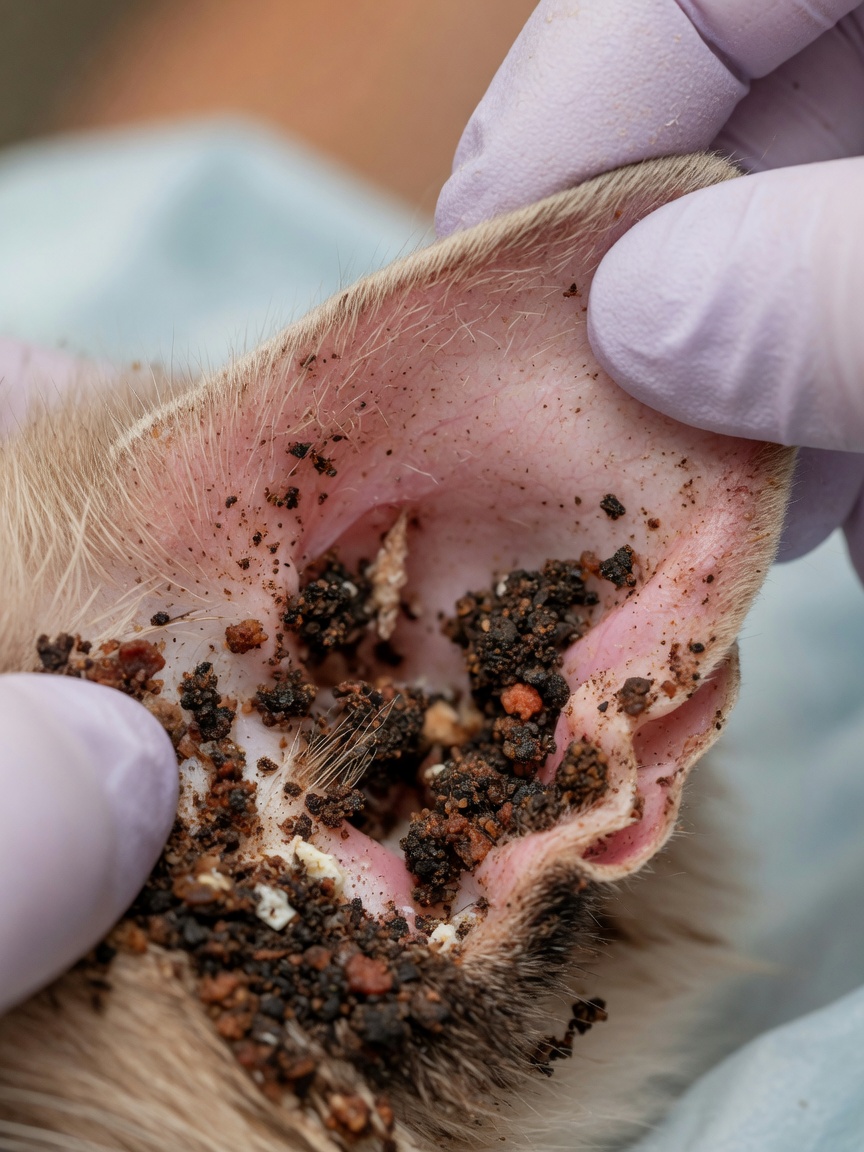
One of the most distinctive signs of an ear mite infestation is a dark, crumbly discharge in the ear canal. It is often described as resembling coffee grounds — a dark brown to black accumulation of wax, mite waste, dried blood, and debris. If you gently lift your cat's ear flap and notice this kind of material, ear mites should be high on your list of suspicions.
Beyond the visible discharge, common symptoms include:
- Frequent scratching at the ears, sometimes to the point of causing raw skin or bleeding around the base of the ear
- Vigorous head shaking, which can occasionally result in haematomas — painful blood-filled swellings — if a blood vessel in the ear flap ruptures
- Holding the head tilted to one side
- An unpleasant odour emanating from the ears
- Visible redness or swelling of the inner ear flap and canal entrance
- Restlessness or apparent discomfort, especially when the ears are touched
In severe infestations, some mites may migrate beyond the ears to affect the head, neck, and tail area. This is less common but worth noting if your cat is showing skin irritation in areas beyond the ears alone.
Getting a Proper Diagnosis
While the coffee-ground discharge is a classic indicator, a definitive diagnosis should always be confirmed by a veterinarian. Several other conditions can produce similar symptoms in cats, including bacterial ear infections, yeast infections, and foreign bodies in the ear canal. Treating for ear mites when a different condition is actually present can delay appropriate care and worsen the underlying problem.
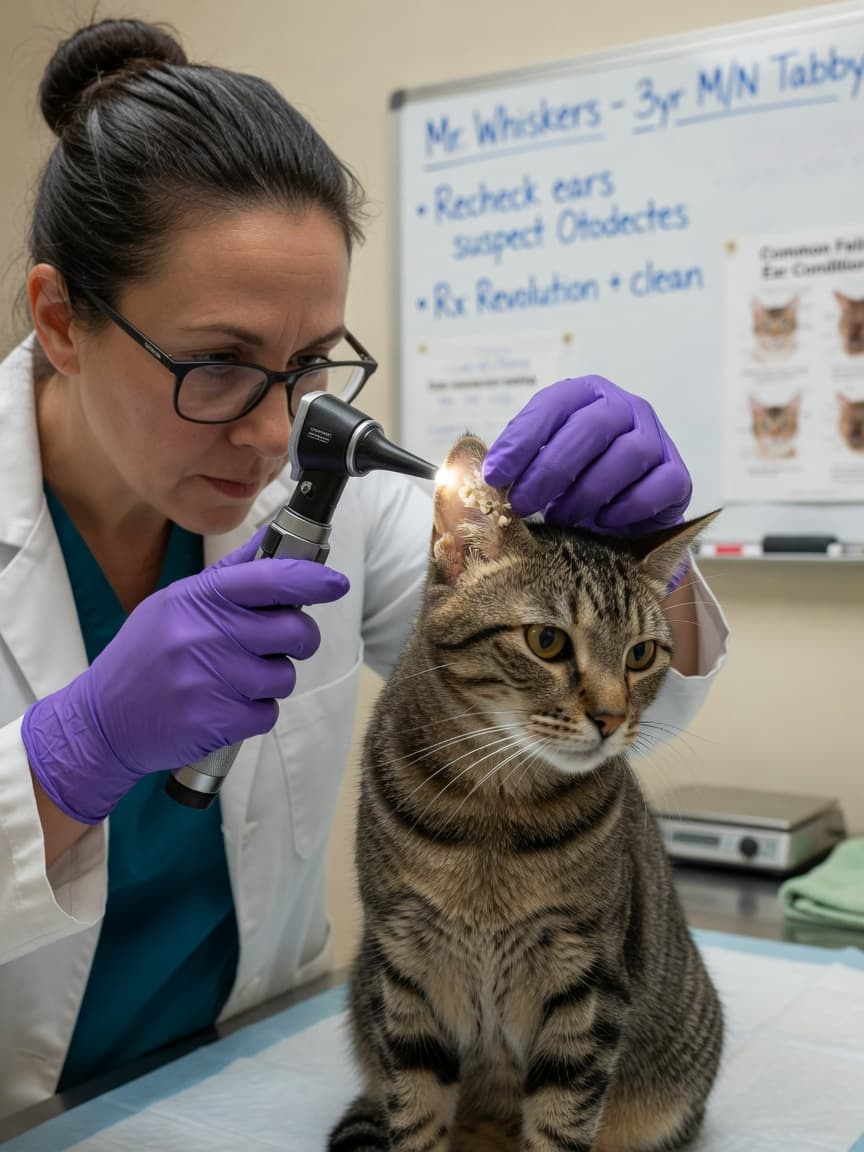
Your vet will use an otoscope to examine the ear canal directly. In many cases, the mites themselves are visible as tiny white specks moving against the darker debris. A swab sample may also be examined under a microscope to confirm the presence of mites, eggs, or faecal material.
Treatment Options

The good news is that ear mites respond well to treatment. Several effective products are available, and your vet will recommend the most appropriate one based on your cat's age, health status, and the severity of the infestation.
Topical spot-on treatments applied to the back of the neck are among the most convenient options and often provide protection against a range of parasites simultaneously. Products containing selamectin, moxidectin, or fluralaner are commonly used and have good efficacy against Otodectes cynotis. Some of these treatments require only a single application, while others call for a repeated dose several weeks later to address eggs that may have hatched after initial treatment.
Ear drops containing acaricidal agents — substances that kill mites — are another option. These are applied directly into the ear canal over a course of days or weeks. They require more consistent handling of the ear, which can be challenging in cats that are already uncomfortable.
Before applying any treatment, the ears should ideally be gently cleaned to remove the accumulated debris. Your vet can demonstrate the safest technique, as overly aggressive cleaning can cause further irritation or damage to the delicate ear canal.
Treating All Animals in the Household
This point is critical and one that owners sometimes overlook. Because ear mites spread so readily through contact, treating only the affected cat is unlikely to resolve the problem long-term. All cats and dogs in the household should be treated simultaneously, even if they show no visible symptoms. Asymptomatic carriers can reinfect treated animals and perpetuate the cycle.
Environmental treatment is generally not considered necessary for ear mites, as they do not survive for extended periods away from a host. However, washing bedding and vacuuming areas where the animals frequently rest is reasonable practice during treatment.
Possible Complications
When ear mites are treated promptly and effectively, complications are uncommon. However, in cases where infestation has been prolonged or where excessive scratching has occurred, secondary issues can arise. Bacterial or yeast infections may develop in the already-irritated ear canal, requiring additional treatment with appropriate antimicrobials.
Aural haematomas — caused by vigorous head shaking rupturing a blood vessel in the ear flap — may require veterinary drainage or surgical correction if significant. Cats that have scratched themselves raw around the ears may also need short-term pain relief and treatment for any secondary skin infections.
Prevention Going Forward
Preventing ear mites largely comes down to managing your cat's exposure to infested animals and keeping up with routine parasite prevention. Monthly or quarterly spot-on treatments that include mite coverage are an effective preventive measure, particularly for cats that go outdoors or live alongside other animals.
Regular gentle inspection of your cat's ears — perhaps once every couple of weeks — allows you to notice changes early. Healthy cat ears should be clean, pale pink, and free of odour. Any build-up of dark debris, redness, or your cat showing discomfort when their ears are touched warrants a veterinary check rather than a wait-and-see approach.
Keeping new animals quarantined and examined before introducing them to existing household pets is a sensible precaution that reduces the risk of ear mites and many other transmissible conditions entering your home.