
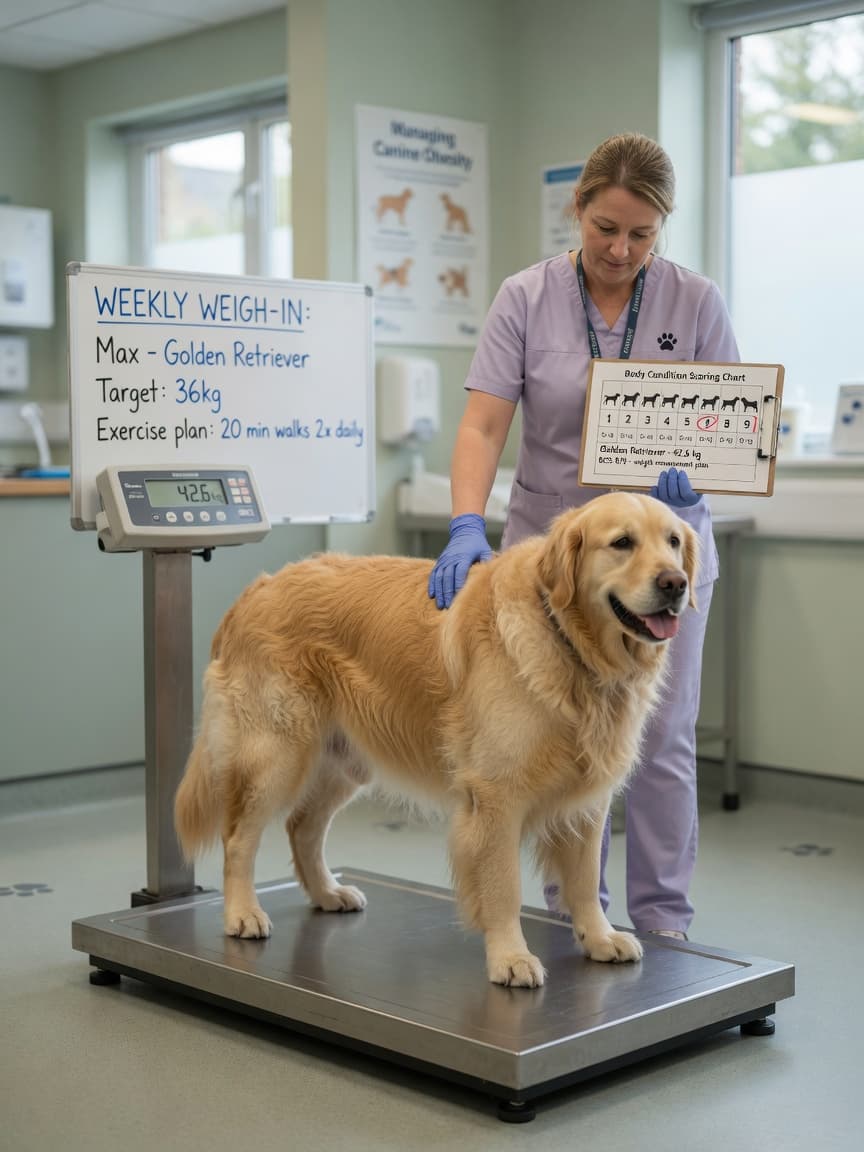
The Scale of Dog Obesity in Europe
Dog obesity has become a significant public health concern for companion animals across Europe. Studies from veterinary practices in the United Kingdom, Germany, and the Netherlands consistently estimate that between 25 and 40 per cent of dogs presenting to veterinary clinics are overweight or obese. WSAVA recognises obesity as a chronic disease state that requires active management, and FECAVA has issued guidance encouraging veterinary teams to address weight proactively with every client.
The consequences of carrying excess weight extend far beyond aesthetics. Obese dogs are at considerably higher risk of type 2 diabetes, osteoarthritis, respiratory difficulty, heart disease, certain cancers, anaesthetic complications, and a shortened lifespan. Studies suggest that dogs maintained at an ideal body weight live on average 1.8 years longer than their overweight counterparts — a compelling reason to take the issue seriously.
Breeds Most Prone to Obesity
While any dog can become overweight with overfeeding and insufficient exercise, certain breeds show a markedly higher predisposition. Labradors and Golden Retrievers are among the most commonly cited — research has identified a specific genetic mutation in Labradors affecting the POMC gene, which impairs the feeling of satiety and drives food-seeking behaviour. Owners of these breeds often describe their dogs as perpetually hungry, making portion discipline especially important.
Beagles, Cocker Spaniels, Rottweilers, and French Bulldogs are also well-documented among high-risk breeds. French Bulldogs present a particular challenge because their brachycephalic anatomy limits their capacity for vigorous exercise, making weight control through diet even more critical. If you own any of these breeds, regular weight monitoring and conservative portion sizes should be part of your standard care routine from an early age.
Assessing Your Dog's Body Condition
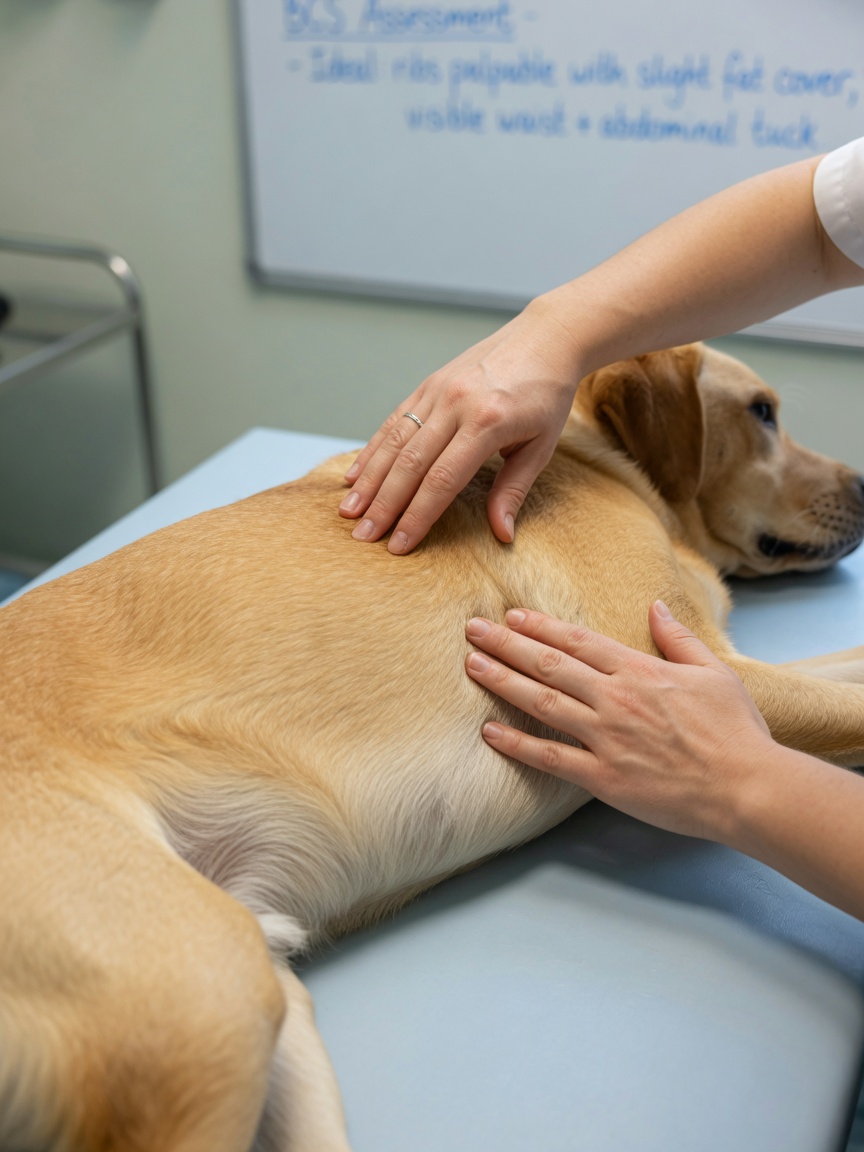
The body condition score (BCS) is the most practical tool available to owners for assessing whether their dog is at a healthy weight. Most veterinary organisations use a nine-point scale, where one to three indicates underweight, four to five represents ideal condition, and six to nine reflects varying degrees of overweight or obese.
To assess your dog, run your hands along the ribcage. You should be able to feel the ribs easily with gentle pressure, without pressing hard, but they should not be visually prominent. Viewed from above, the dog should show a visible waist behind the ribcage. From the side, there should be an abdominal tuck — the belly should rise up toward the hindquarters rather than hanging level or sagging. If you cannot feel the ribs without firm pressure, or if there is no discernible waist, your dog is likely overweight.
Your veterinary nurse can perform a formal BCS assessment at your practice, and many European veterinary clinics now offer free weight clinics as part of preventive care.
Understanding Why Dogs Gain Weight
Excess weight almost always results from an imbalance between energy intake and energy expenditure. The most common contributors are overfeeding — including generous portions of main food combined with frequent treats and table scraps — and insufficient physical activity. Neutering reduces metabolic rate by approximately 20 to 30 per cent, meaning neutered dogs require significantly fewer calories than their intact counterparts of the same size and breed.
Medical causes of weight gain, while less common, should always be ruled out before embarking on a weight loss programme. Hypothyroidism, in which the thyroid gland produces insufficient hormone, slows metabolism and causes weight gain alongside lethargy and coat changes. Cushing's disease (hyperadrenocorticism) similarly causes weight redistribution and a pot-bellied appearance. A veterinary consultation before starting a weight loss plan is advisable in all cases.
Making Safe Dietary Changes
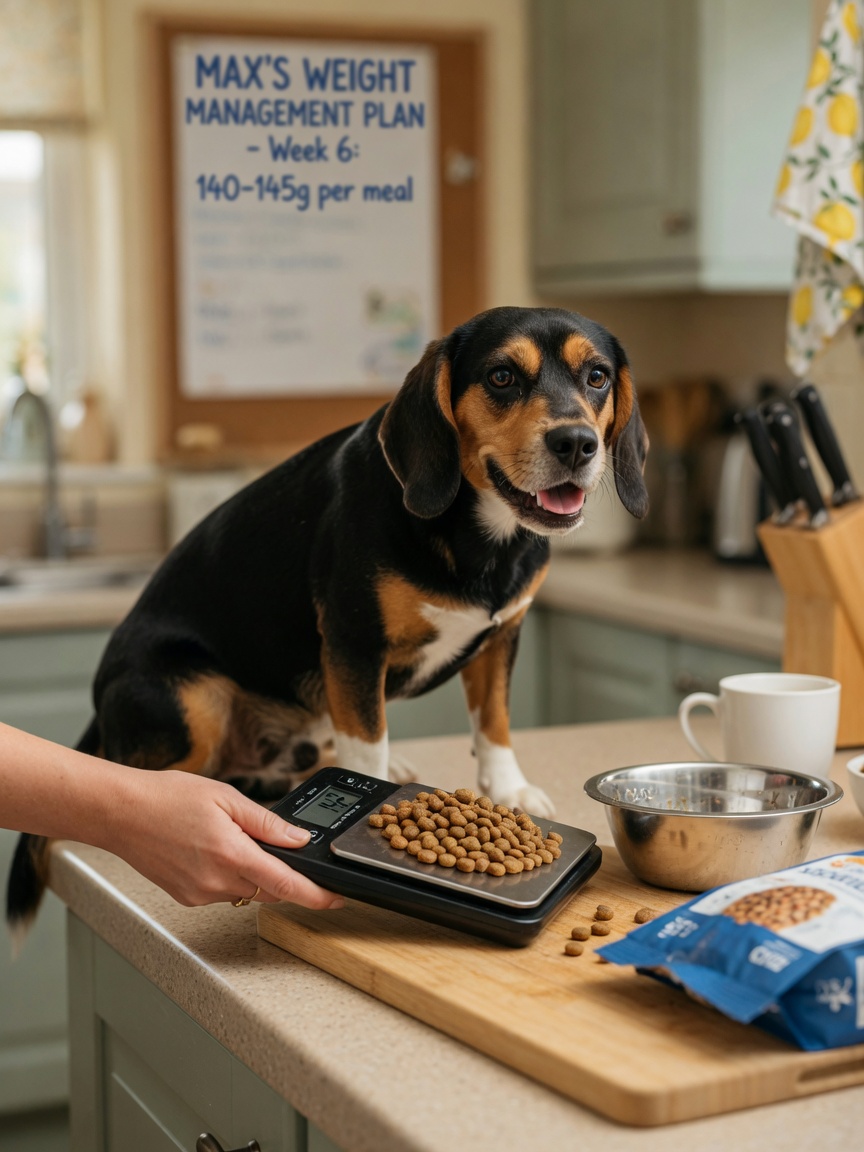
The most important dietary change is accurate measurement of food portions. Studies show that owners who measure food by eye consistently underestimate portions by 20 to 50 per cent. Use a kitchen scale rather than a measuring cup, as the caloric density of different foods varies considerably. Follow the feeding guide on the food packaging as a starting point, bearing in mind that these guides often err on the generous side — your vet or veterinary nurse can calculate a more precise daily calorie target based on your dog's ideal body weight.
Switching to a veterinary-formulated weight management diet can be highly effective. These diets are designed to reduce calorie intake while maintaining adequate protein and micronutrient levels, helping the dog feel satiated. They also have defined energy content, making accurate portioning straightforward. Zooplus offers a range of weight management diets from reputable brands, including options for specific breeds, making it easy to find an appropriate product without overspending.
Treats should account for no more than 10 per cent of total daily calories. Substitute high-calorie commercial treats with low-calorie alternatives such as carrot sticks, cucumber slices, or small pieces of cooked chicken breast. Never add table scraps or human food to the diet of a dog on a weight loss programme.
Exercise and Activity
Increased physical activity supports weight loss and improves cardiovascular fitness, joint health, and mental wellbeing. However, obese dogs — particularly those with concurrent joint disease or respiratory conditions — must begin an exercise programme gradually to avoid injury or distress. Start with short, gentle walks on flat ground and increase duration and intensity incrementally over several weeks as fitness improves.
Swimming is an excellent low-impact option for dogs with arthritis or mobility issues, as the water supports body weight while providing resistance. Controlled on-lead walks are preferable to off-lead sessions during the weight loss phase, as they allow you to set the pace consistently. Aim to build up to at least 30 to 60 minutes of moderate activity daily, adapted to the individual dog's capabilities.
Monitoring Progress and Long-Term Maintenance
Monthly weigh-ins allow you to track progress and adjust the plan as needed. A safe rate of weight loss for most dogs is between 0.5 and 2 per cent of body weight per week — faster loss can result in muscle breakdown and nutritional deficiencies. Once the target weight is reached, the daily food allowance will need to be recalibrated to a maintenance level to prevent regain. Many dogs require ongoing calorie restriction throughout their lives, particularly genetically predisposed breeds such as the Labrador.