
ForPetsHealthcare
Nutrition

Dog Not Eating: Causes and What to Do

By Julia WrenfieldUpdated August 4, 20262 min read
Evidence-based · Sources checked
{"en": "Concerned dog owner checking on their sick dog that refuses to eat, assessing appetite loss symptoms", "es": "Due\u00f1o preocupado observando a su perro enfermo que se niega a comer y pierde el apetito", "fr": "Propri\u00e9taire inquiet examinant son chien malade qui refuse de manger et perd l'app\u00e9tit", "de": "Besorgter Hundebesitzer beobachtet seinen kranken Hund, der nicht fressen will und den Appetit verliert", "nl": "Bezorgde hondenbaas controleert zijn zieke hond die weigert te eten en appetijtverlies vertoont", "pt": "Dono preocupado observando seu c\u00e3o doente que se recusa a comer e perde o apetite", "it": "Proprietario preoccupato che esamina il suo cane malato che rifiuta di mangiare e perde l'appetito"}

A dog that stops eating is concerning — though the cause varies widely from minor to serious. Here is how to assess the situation.

When Is It an Emergency?

Seek emergency vet care if: the dog is also vomiting repeatedly, the abdomen is distended (bloat is a life-threatening emergency in large breeds), the dog is in obvious pain or distress, or it has been more than 48 hours without eating.

Common Minor Causes
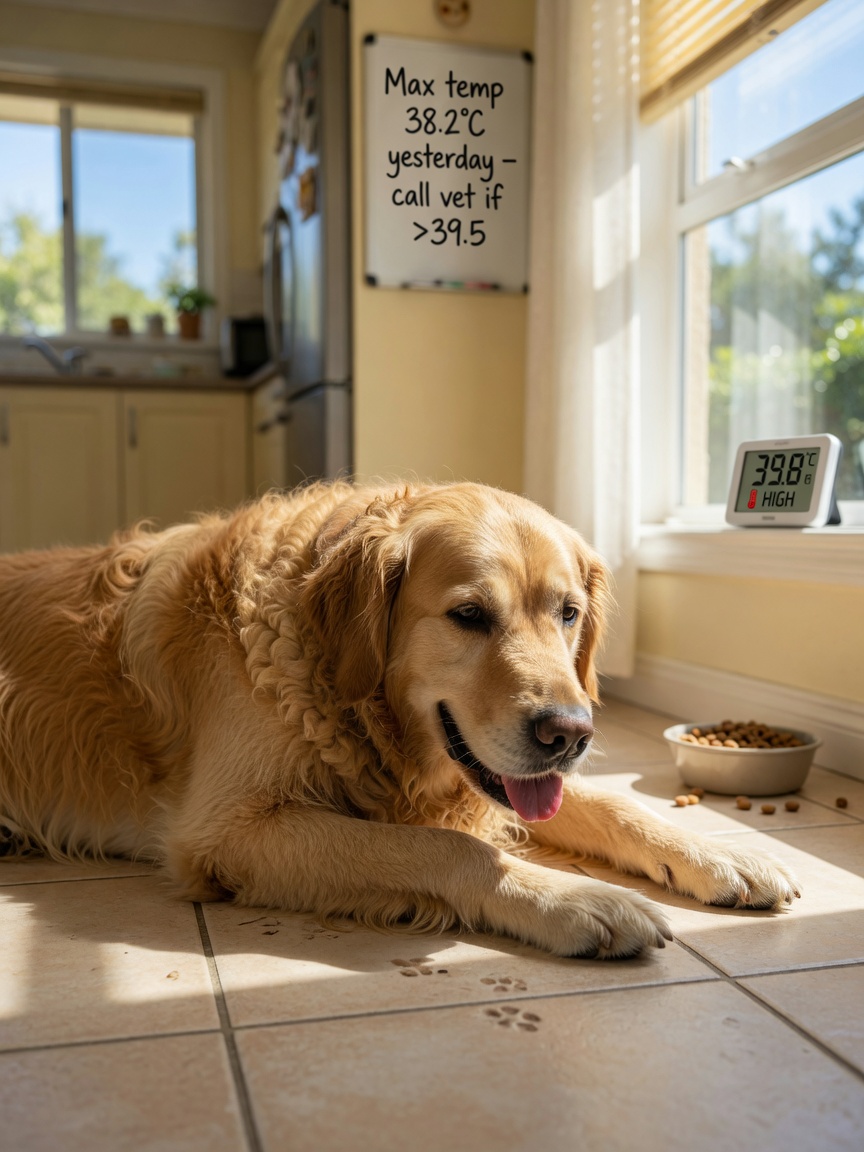
Dog lying down lethargic during hot weather, illustrating heat affecting appetite
  • Recent vaccination (appetite returns within 24–48 hours)
  • Stress or change in routine
  • Dietary change (new food introduced too quickly)
  • Eaten something unusual (grass, rubbish)
  • Being fed by someone else
  • Hot weather reducing appetite

Medical Causes
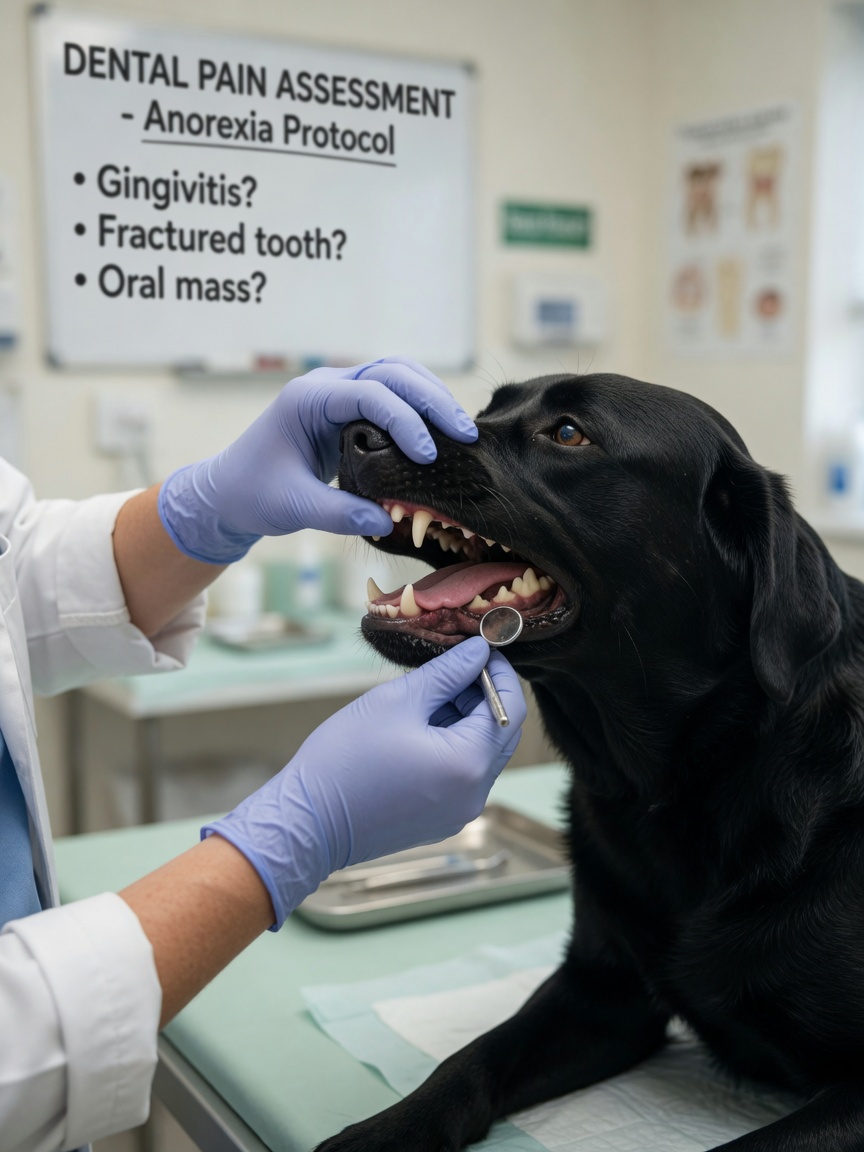
Veterinarian examining a dog's teeth and mouth for dental pain during oral inspection
  • Dental pain — very common and often missed
  • Upset stomach or mild gastroenteritis
  • Intestinal blockage — also causes vomiting, urgent
  • Parvovirus (unvaccinated dogs)
  • Kidney or liver disease
  • Cancer
  • Pancreatitis

What to Try at Home (Minor Cases)

  • Offer small amounts of bland food: plain boiled chicken and rice
  • Warm food slightly to enhance smell
  • Try a different bowl or location
  • Check no other food sources (other pets, guests)

See a Vet If

Not eating for more than 24 hours in a puppy or senior dog. Not eating for more than 48 hours in an otherwise healthy adult dog. Any other symptoms alongside not eating.

#dog not eating causes solutions#dog health#dog nutrition#forpetshealthcare

Sources & further reading

This article is based on peer-reviewed veterinary research and reputable animal-health sources. Explore the underlying science in our Research Library.

Related articles

Great Dane Bloat (GDV): Causes, Signs & Care

Great Danes are one of the breeds most vulnerable to gastric dilatation-volvulus (GDV, commonly called "bloat"), a life-threatening emergency in which the stomach fills with gas and may twist upon itself. Their deep, narrow chest allows the stomach to swing and rotate more easily than in breeds with…

Read more →

Bulldog Breathing problems (BOAS): Causes, Signs & Care

Bulldogs are prone to breathing problems because their entire skull and airway have been shaped by generations of selective breeding for a flat face, leading to a condition called Brachycephalic Obstructive Airway Syndrome (BOAS). This affects the vast majority of Bulldogs to some degree, from mild …

Read more →

Pug Breathing problems (BOAS): Causes, Signs & Care

Pugs are one of the breeds most affected by Brachycephalic Obstructive Airway Syndrome (BOAS), a condition caused by their short, flattened skull shape which squashes the airway into too little space. This means many Pugs snore, snort and struggle to breathe normally even at rest, and the problem te…

Read more →

Raw Cat Food Guide

Cats are obligate carnivores, which means their biology is fundamentally different from dogs and humans. They cannot survive on plant-based diets and…

Read more →

Prescription Diet Guide Dogs

Prescription or veterinary therapeutic diets are not simply premium foods with a clever label. They are formulated to contain therapeutic levels of…

Read more →

Prescription Diet Guide Cats

Cats have unique nutritional needs that make therapeutic diets more complex than those for dogs. This guide covers prescription foods for CKD, hyperthyroidism, urinary disease, IBD, and diabetes — and why strict dietary compliance is especially critical in cats.

Read more →
Disclaimer:This article is for informational purposes only and does not constitute veterinary advice. Always consult a qualified veterinarian for your pet's health concerns.

Free newsletter

Pet health tips, straight to your inbox

Weekly science-backed advice for dog & cat owners. No spam, unsubscribe anytime.

Dog Not Eating: Causes and What to Do | ForPetsHealthcare