
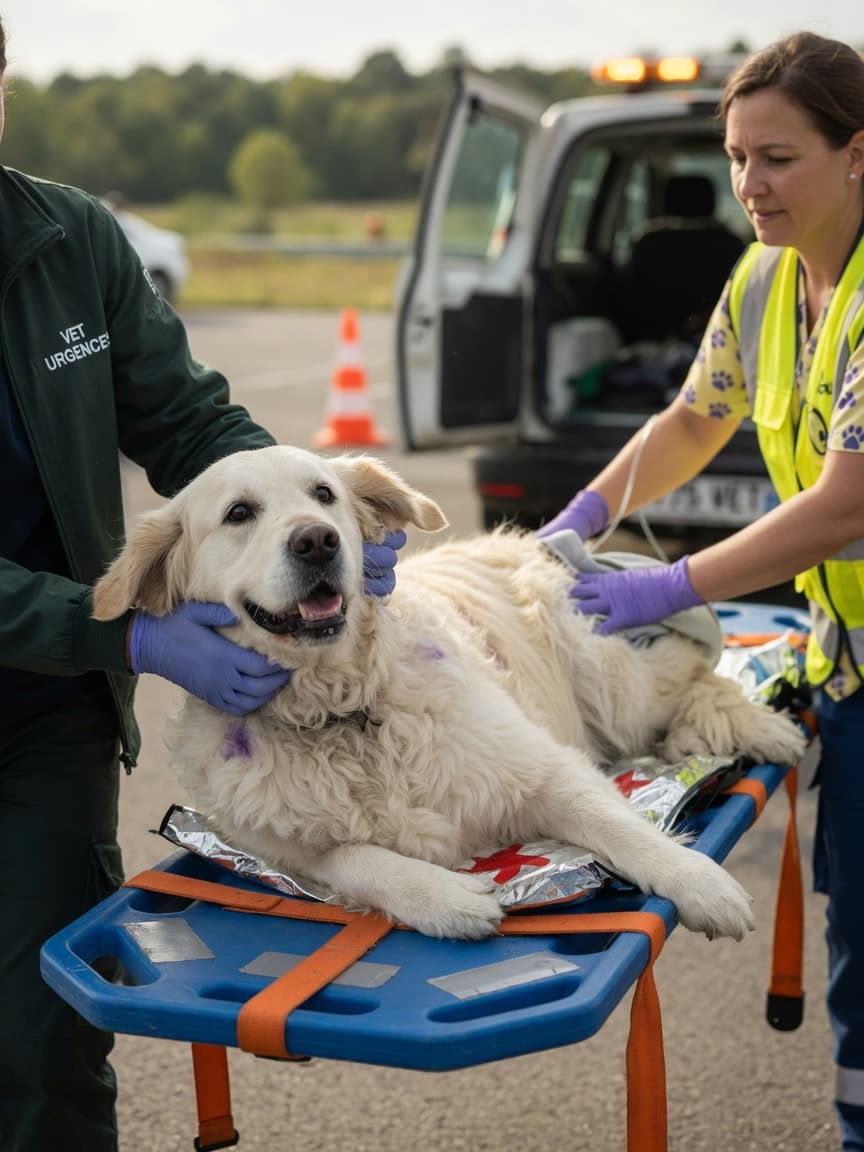
Dog Hit by Car: Immediate Steps That Save Lives
By Julia Wrenfield, Pet Wellness Researcher | ForPetsHealthcare.com
In that split second when your dog runs into the road, the next five minutes become the most critical of their life. Vehicular trauma is the leading cause of sudden traumatic death in dogs, and the injuries are often more severe than they appear. A dog that is standing and seemingly alert can have ruptured internal organs that will cause death within 2–4 hours without surgery. This guide is your step-by-step action plan — read it now so you don't have to think under pressure when it matters most.
The Hidden Danger: Why "Looks Okay" Doesn't Mean Safe
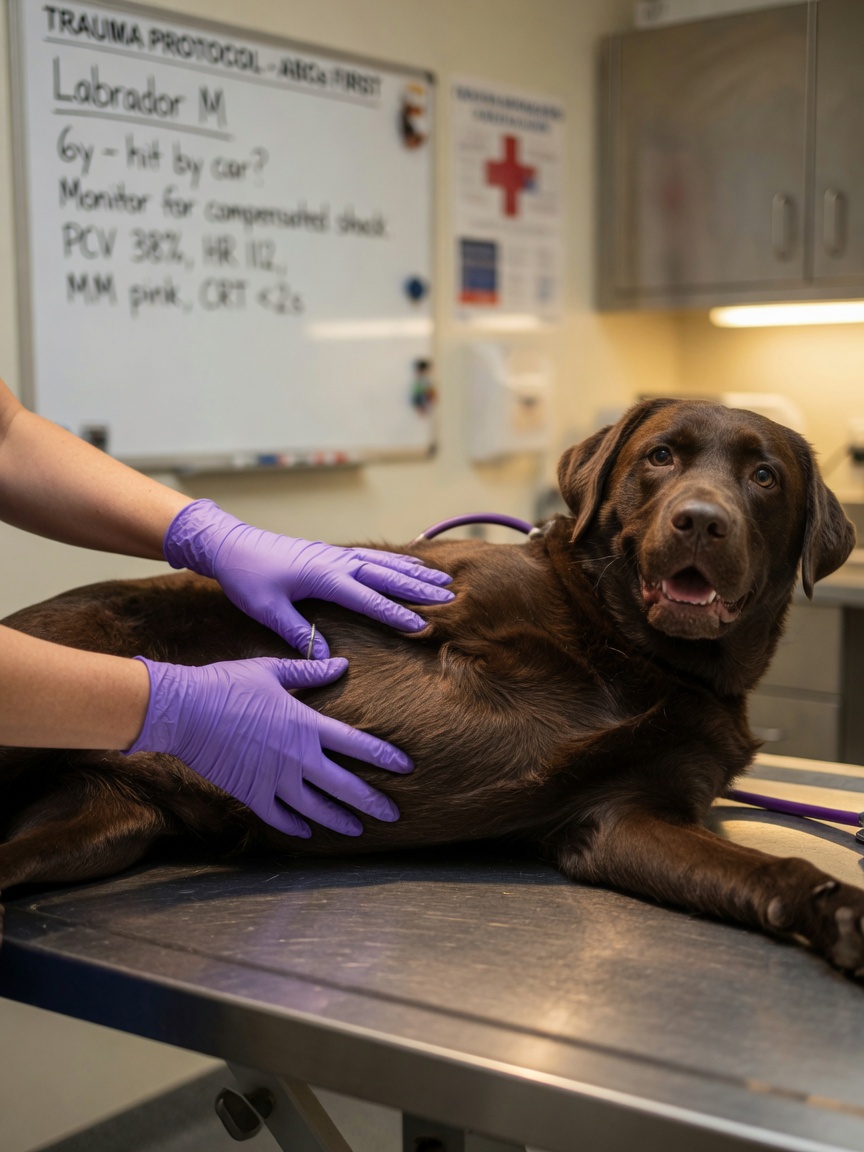
Dogs in shock produce a massive adrenaline surge that temporarily masks pain and injury. This is called the "compensatory phase" of shock, and it can last 30 minutes to 2 hours. During this phase, a dog may stand, wag its tail, and even want to walk — while internally bleeding at a life-threatening rate.
The organs most commonly damaged in vehicular trauma include:
- Spleen and liver — highly vascular organs prone to rupture and haemorrhage on impact
- Bladder — can rupture if full at time of impact, causing urine to flood the abdominal cavity
- Lungs — pulmonary contusions cause delayed respiratory failure, often worsening 12–24 hours after injury
- Diaphragm — a torn diaphragm allows abdominal organs to enter the chest cavity, compressing the lungs
- Kidneys — traumatic kidney injury can cause acute kidney failure over 24–72 hours
- Spinal cord — even without visible spinal fracture, cord bruising (contusion) can cause paralysis
Step-by-Step: What to Do the Moment Your Dog Is Hit
Step 1: Make the Scene Safe
Before approaching your dog, ensure traffic has stopped. Signal oncoming vehicles. Do not run into traffic — a second accident helps no one. Ask bystanders to block traffic if safe to do so.
Step 2: Approach Your Dog Calmly
A dog in pain and shock is unpredictable — even the most loving pet will bite when in extreme distress. Approach slowly, speak in a calm, low voice, and avoid sudden movements. Keep your face away from the dog's mouth initially.
Step 3: Muzzle the Dog (If Possible)
Use a soft cloth, a leash looped around the muzzle, or a commercial muzzle. If the dog is having difficulty breathing, do NOT muzzle — airway management takes absolute priority.
Step 4: Check for Immediate Life Threats
In order of priority:
- Is the dog breathing? Watch for chest rise. If no breathing, begin rescue breaths.
- Is there a heartbeat/pulse? Feel inside the upper thigh for a femoral pulse. If absent, begin CPR.
- Is there severe external bleeding? Apply firm, direct pressure with a cloth. Do NOT remove the cloth — add more on top if it soaks through.
- Is the airway clear? Check the mouth for visible obstructions or blood. Clear carefully if safe.
Step 5: Do NOT Move the Dog Unless in Immediate Danger
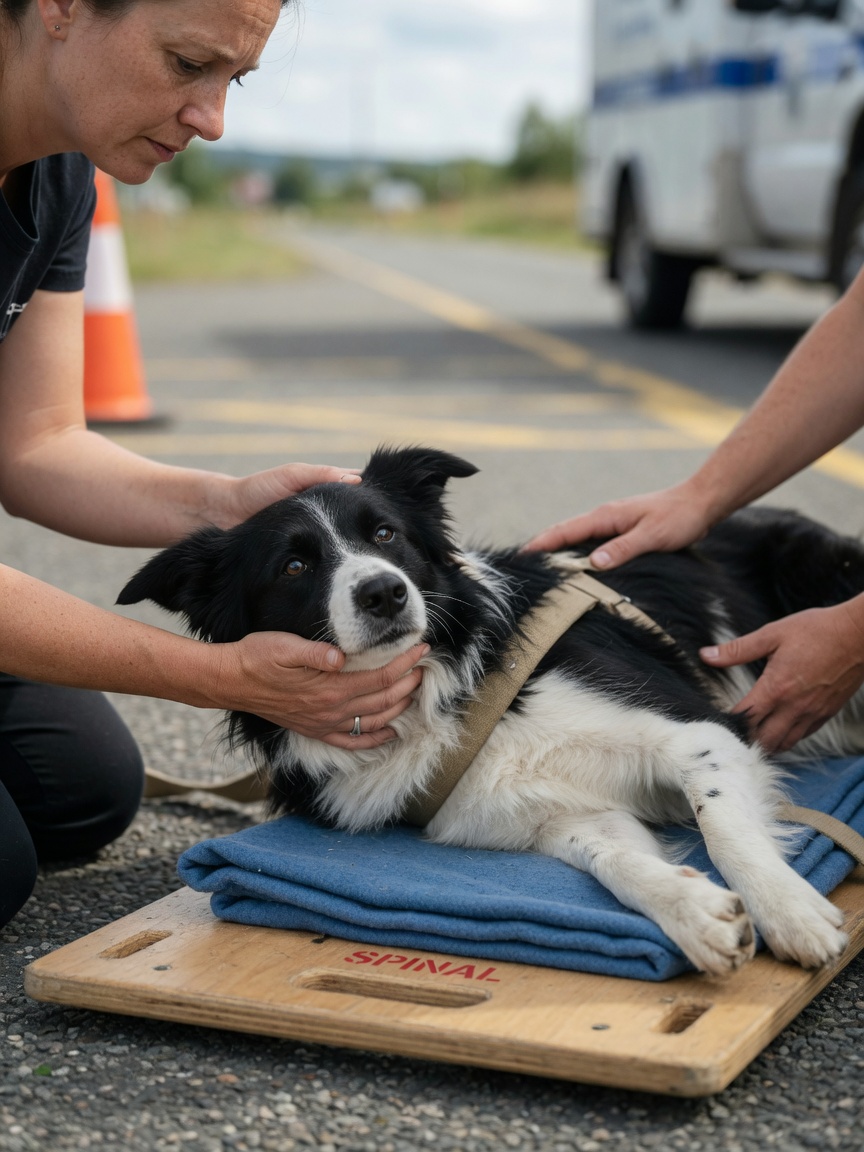
If the dog is in the middle of the road and more traffic is coming, you must move it — but do so as a team, keeping the spine as straight as possible. Slide the dog onto a rigid stretcher (flat board, piece of cardboard, blanket held taut by multiple people) and move it as one rigid unit. One person supporting the head and neck is critical.
Step 6: Call the Vet Immediately
Call while a second person manages the dog. Give the emergency clinic your ETA, describe the accident (speed of vehicle if known, which body part was struck, current breathing status), and ask if they need you to do anything specific en route.
Step 7: Transport Safely
- Keep the dog on its side (right side preferred) on the stretcher
- Keep the neck slightly extended if there are breathing difficulties
- Cover with a blanket to prevent heat loss (shock causes rapid cooling)
- Drive smoothly — avoid sharp turns and braking
- Have a second person monitor breathing and gum colour every 2–3 minutes during transport
Do not wait until you arrive at the clinic. Call the moment you assess the dog is breathing. Emergency clinics can prepare surgical teams, blood transfusions, and imaging equipment before you arrive — this preparation dramatically improves survival odds. State clearly: "My dog was hit by a car" — these words trigger an emergency protocol at most clinics.
Gum Colour: Your Real-Time Shock Monitor
During transport, gum colour is your most accessible indicator of how well the dog is circulating blood:
- Pink and moist: Normal circulation
- Pale pink or white: Early to moderate shock — blood loss or severe vasoconstriction
- Grey or blue (cyanosis): Severe circulatory failure or oxygen deprivation — critical
- Bright red: Can indicate early vasodilation in toxin exposure or heat stroke (uncommon in trauma)
- Sticky or tacky gums: Dehydration and shock
Check gum colour by pressing your finger firmly against the gum above the upper teeth, then releasing. The colour should return within 2 seconds (capillary refill time). Longer than 2 seconds indicates poor circulation.
What the Vet Will Do: Emergency Trauma Protocol
On arrival, the emergency team will implement a trauma protocol:
- IV catheter placement and fluid resuscitation for shock
- Oxygen supplementation and airway management
- Pain management (IV opioids)
- Physical examination and triage of injuries
- Chest X-ray to assess for lung contusions, pneumothorax, or diaphragmatic hernia
- Abdominal ultrasound (FAST scan) to detect internal bleeding within minutes
- Full body X-rays to assess for fractures
- Blood work including clotting parameters (trauma disrupts the clotting system)
- Surgical intervention if internal bleeding, organ rupture, or spinal injury is confirmed
Survival Statistics: How Quickly You Act Matters
Studies in veterinary emergency medicine show that dogs receiving treatment within 1 hour of vehicular trauma ("the golden hour") have survival rates of approximately 75–80%. Dogs arriving 4–6 hours after impact, particularly those with internal haemorrhage, have survival rates that drop to 40–50%. The presence of traumatic brain injury or diaphragmatic hernia reduces survival odds further but remains treatable with rapid intervention.
Prevention: Keep Your Dog Safe Near Roads
- Never let dogs off-leash near roads, regardless of training level — a squirrel or cat can override years of obedience in a second
- Use double-snap collars and harnesses — a panicked dog can slip a collar
- Fence your property with gates that cannot be opened accidentally
- Microchip your dog so it can be identified and your vet contacted if you're not present at the scene
- Fit reflective collars and lights if walking in low-visibility conditions
Dogs recovering from vehicular trauma — especially those undergoing surgery or prolonged hospitalisation — have dramatically elevated nutritional needs. High-quality protein, omega-3 fatty acids for inflammation control, and joint support are all critical during rehabilitation. Browse veterinary recovery diets and rehabilitation supplements at Zooplus.es. For natural anti-inflammatory support post-trauma, explore hemp-derived CBD options designed for dogs at HolistaPet.
Key Takeaways
- A dog hit by a car must see a vet immediately — even if they appear fine.
- Internal organs can rupture silently — a walking dog can die within 2 hours from haemorrhage.
- Muzzle before handling — pain causes even gentle dogs to bite.
- Use a rigid stretcher and move the dog as one unit to protect the spine.
- Monitor gum colour every 2–3 minutes during transport — pale or white gums mean critical shock.
- Treatment within 1 hour gives a 75–80% survival rate — time is everything.
References
- Hall KE, Holowaychuk MK, Sharp CR, Reineke E. "Multicenter prospective evaluation of dogs with traumatic hemoperitoneum: 90 cases (2007–2012)." Journal of the American Veterinary Medical Association. 2014;244(10):1157–1165. PMID: 24786069
- Streeter EM, Rozanski EA, Laforcade-Buress A, Freeman LM, Rush JE. "Evaluation of vehicular trauma in dogs: 239 cases." Journal of Veterinary Emergency and Critical Care. 2009;19(3):254–261. PMID: 19691536
Article by Julia Wrenfield, Pet Wellness Researcher | ForPetsHealthcare.com | Last reviewed June 2026