
How Common Is Firework Fear in Dogs?
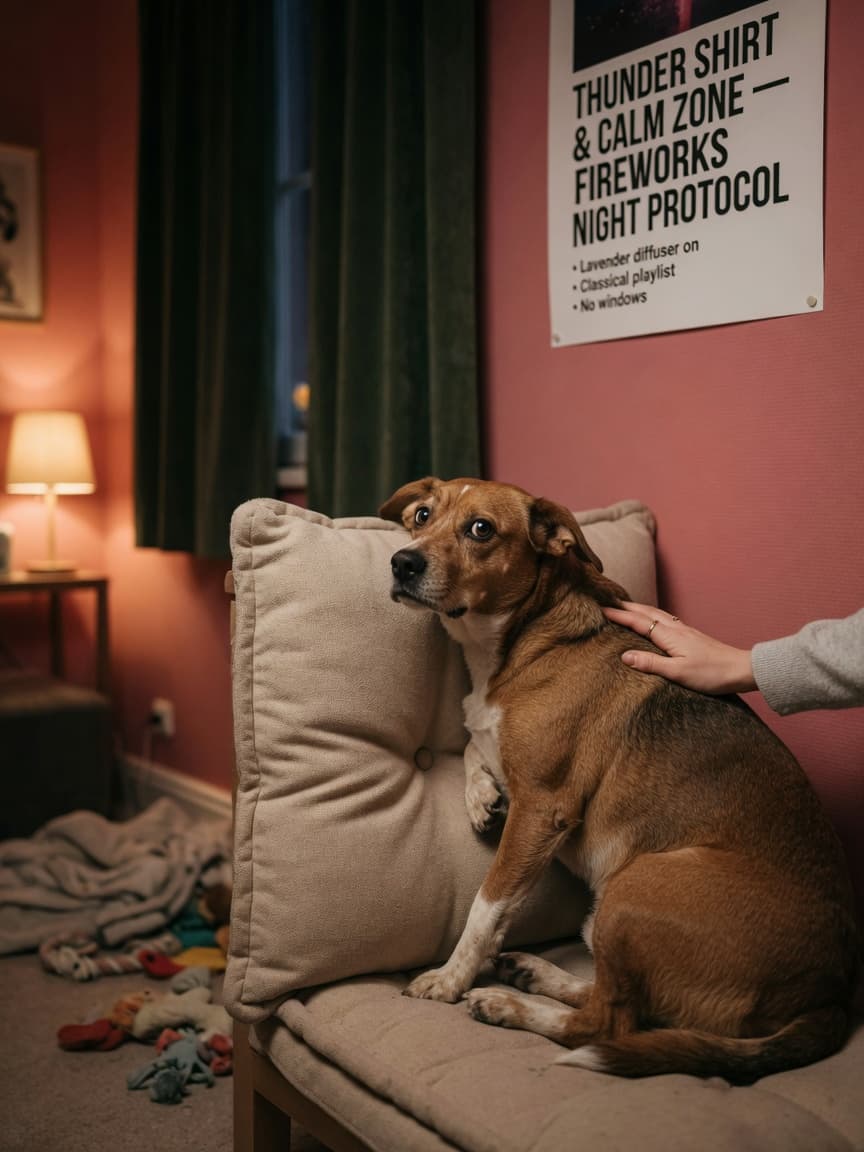
Noise phobia is one of the most widespread welfare problems in domestic dogs across Europe. Research consistently estimates that between 40 and 50 per cent of dogs show fear responses to fireworks, thunderstorms, or other sudden loud noises — yet the majority of owners never discuss it with a vet, often assuming it is a character trait rather than a treatable condition. The Association of Pet Behaviour Counsellors (APBC) and the Centre of Applied Pet Ethology (COAPE) both recognise noise phobia as a significant and progressive welfare concern that worsens over time if left unaddressed.
The progressive nature of noise phobia is important: dogs that are mildly anxious about fireworks at two years old are likely to become increasingly reactive unless their fear response is actively managed. Early intervention produces the best long-term outcomes.
Signs That Your Dog Is Afraid of Fireworks
Dogs express fear in many ways and not all of them are obvious. Signs to watch for include:
- Panting, drooling, or yawning excessively
- Trembling or shaking
- Pacing, restlessness, or inability to settle
- Hiding behind furniture, in cupboards, or pressing into corners
- Barking, whining, or howling continuously
- Attempting to escape — jumping fences, bolting through doors
- Destructive behaviour such as chewing or scratching at walls and doors
- Loss of bladder or bowel control
- Refusing to eat or drink
- Seeking excessive contact with owners, or conversely refusing all contact
Even dogs that appear to simply become very still and quiet during fireworks may be experiencing significant fear — suppression of outward signals is not the same as calm. If your dog's behaviour changes noticeably around fireworks, treat it as fear worth addressing.
Setting Up a Safe Room
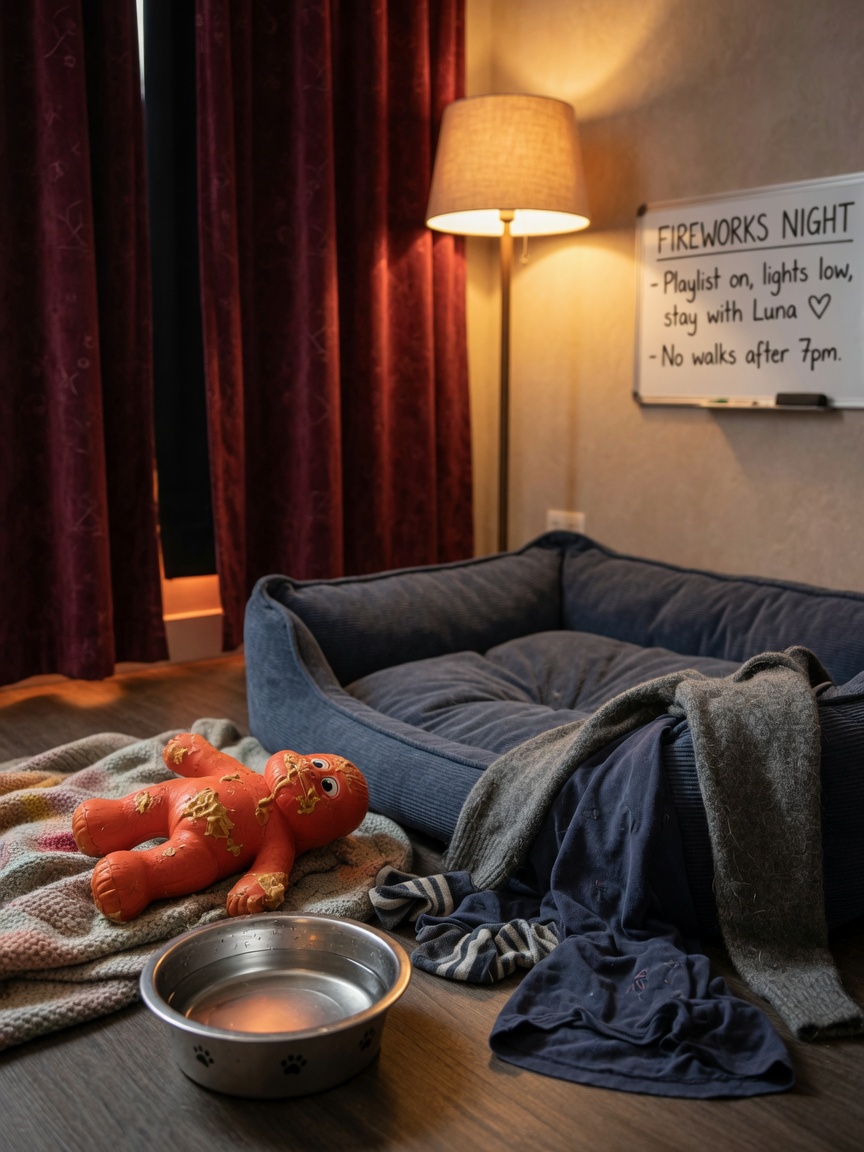
Before fireworks are expected, prepare a safe room for your dog — ideally an interior room with minimal windows, where sound transmission is reduced. Dogs often self-select a safe location (under a bed, inside a wardrobe, behind a sofa) and you should work with rather than against this preference.
- Place your dog's bed, some unwashed clothing carrying your scent, and a favourite toy in the chosen space
- Draw curtains and blinds to reduce the visual flash of fireworks
- Play calming background noise — a TV or radio at moderate volume, or dedicated canine relaxation music, to mask external sounds
- Provide a stuffed Kong or long-lasting chew to give your dog something positive to focus on
- Ensure fresh water is always available
Never lock your dog in a room alone if it is panicking — having you calmly present is almost always beneficial. Your calm demeanour communicates that the situation is manageable.
Adaptil Pheromone Diffusers
Adaptil (also known as DAP — Dog Appeasing Pheromone) is a synthetic version of the natural pheromone produced by lactating dogs to comfort their puppies. Available as a plug-in diffuser, a collar, or a spray, Adaptil has a solid evidence base for reducing anxiety in dogs during fireworks and other stressful events. It is most effective when the diffuser has been running continuously for at least a week before the stressful event.
Zooplus stocks Adaptil diffusers, collars, and refill packs. For dogs with known firework anxiety, it is worth plugging in a diffuser in early November if your primary concern is New Year preparations, or in late December ahead of the main season. Combining Adaptil with behavioural strategies produces better results than either approach alone.
Pressure Wraps: Do Thundershirts Work?
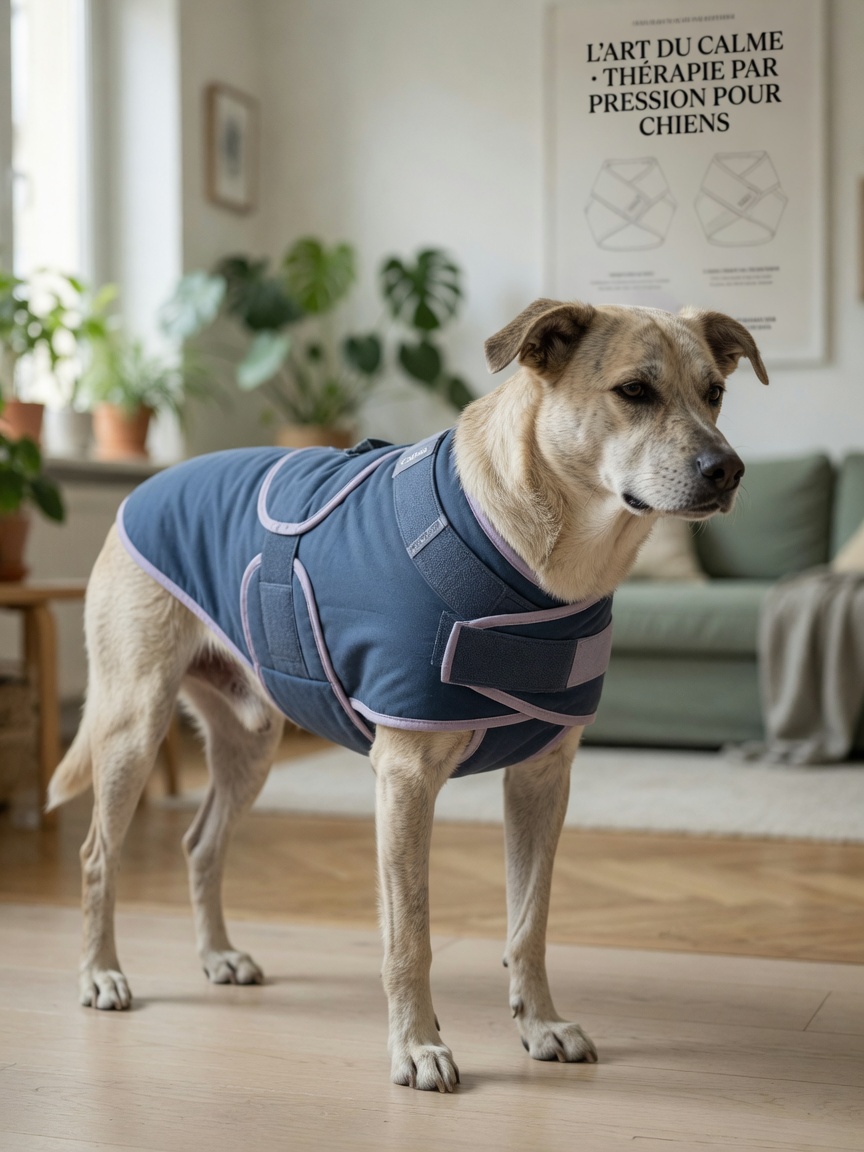
Pressure wraps such as the Thundershirt apply gentle, constant pressure across the dog's torso — a principle similar to swaddling in human infants. Research results are mixed but many owners and behaviourists report meaningful reductions in visible anxiety signs. They work best for dogs with mild to moderate anxiety and are most effective when introduced and worn during calm periods before the stressful event, so the dog associates the garment with neutral experience rather than only with fear.
Thundershirts and similar anxiety wraps are available through Zooplus. They are safe, non-invasive, and worth trying as part of a multi-modal approach alongside pheromones and environmental management.
The Sounds Scary Desensitisation Programme
Sounds Scary, developed by veterinary behaviourist Julia Heath and available as a free download from the Dogs Trust website, is the most widely recommended structured desensitisation programme for dogs with noise phobia. The programme uses recordings of fireworks and other sounds played at very low volume initially, then systematically increasing over weeks, while the dog engages in calm, positive activities. The aim is to gradually reduce the emotional charge associated with the sounds.
Desensitisation is not a quick fix — the programme typically takes several months to complete and must not be rushed. It should never be attempted during fireworks season itself, as flooding a fearful dog with the stimulus it fears can make phobia worse. APBC and COAPE both recommend pairing Sounds Scary with professional guidance from an accredited behaviourist for dogs with severe phobia.
Medication Options: When Behavioural Strategies Are Not Enough
For dogs with moderate to severe noise phobia, veterinary medication is not a last resort — it is a responsible and often essential component of treatment. Your vet may consider:
- Dexmedetomidine (Sileo): an oromucosal gel licensed specifically for noise aversion in dogs across the EU. Applied to the gum approximately 30 to 60 minutes before the event, it reduces anxiety without heavy sedation and allows the dog to remain conscious and responsive
- Gabapentin: used off-label for situational anxiety; often prescribed for the night of fireworks and potentially the day before if anticipatory anxiety is evident
- Trazodone: a serotonin antagonist and reuptake inhibitor used in some EU countries for situational anxiety in dogs
- Imepitoin: licensed in the EU for noise aversion in dogs; acts on GABA receptors and produces anxiolytic effects without causing deep sedation
All of these options require a veterinary consultation and prescription. Speak to your vet at least several weeks before fireworks season begins — do not leave it until the night of the event. Avoid using acepromazine (ACP), which was historically prescribed but is now known to cause sedation without reducing fear, effectively leaving dogs mentally terrified but unable to express it.
EU Fireworks Calendar: When to Prepare
In continental Europe, fireworks are associated with several major events. New Year's Eve is by far the most intense, with prolonged displays in almost every country. Additional dates include national celebrations in France (14 July), Portugal (10 June), Italy (various patron saint festivals), Spain's regional fiestas (Fallas in March, Semana Grande in August, and numerous local verbenas), and Germany (New Year's Eve alone is exceptionally loud by European standards). If you live in a Mediterranean country, your dog may be exposed to significant fireworks multiple times between spring and autumn.
When to Call for Emergency Help
If your dog injures itself trying to escape, becomes unresponsive, or collapses during a fireworks event, treat it as a medical emergency. Contact your nearest emergency veterinary service immediately. In EU countries, the general emergency number is 112, which can connect you to local services. Always have your out-of-hours vet number saved in your phone before fireworks season begins.
Summary
Dog fear of fireworks is common, progressive, and highly treatable with the right combination of environmental management, pheromones, pressure wraps, desensitisation, and where needed, veterinary medication. Start preparations early — plug in your Adaptil diffuser from Zooplus, familiarise your dog with its safe room, and book a vet appointment if medication may be needed. Acting before each fireworks season is far more effective than reacting in the moment.