
Dog Colitis and Diarrhoea: A Complete Owner's Guide
Diarrhoea is one of the most common reasons for emergency veterinary consultations across Europe, and colitis — inflammation of the large intestine (colon) — is among its most frequent causes in dogs. While many episodes resolve with simple home care, understanding the type and severity of diarrhoea is essential for knowing when to manage at home and when to seek veterinary attention.
Understanding Diarrhoea: Large Bowel vs Small Bowel
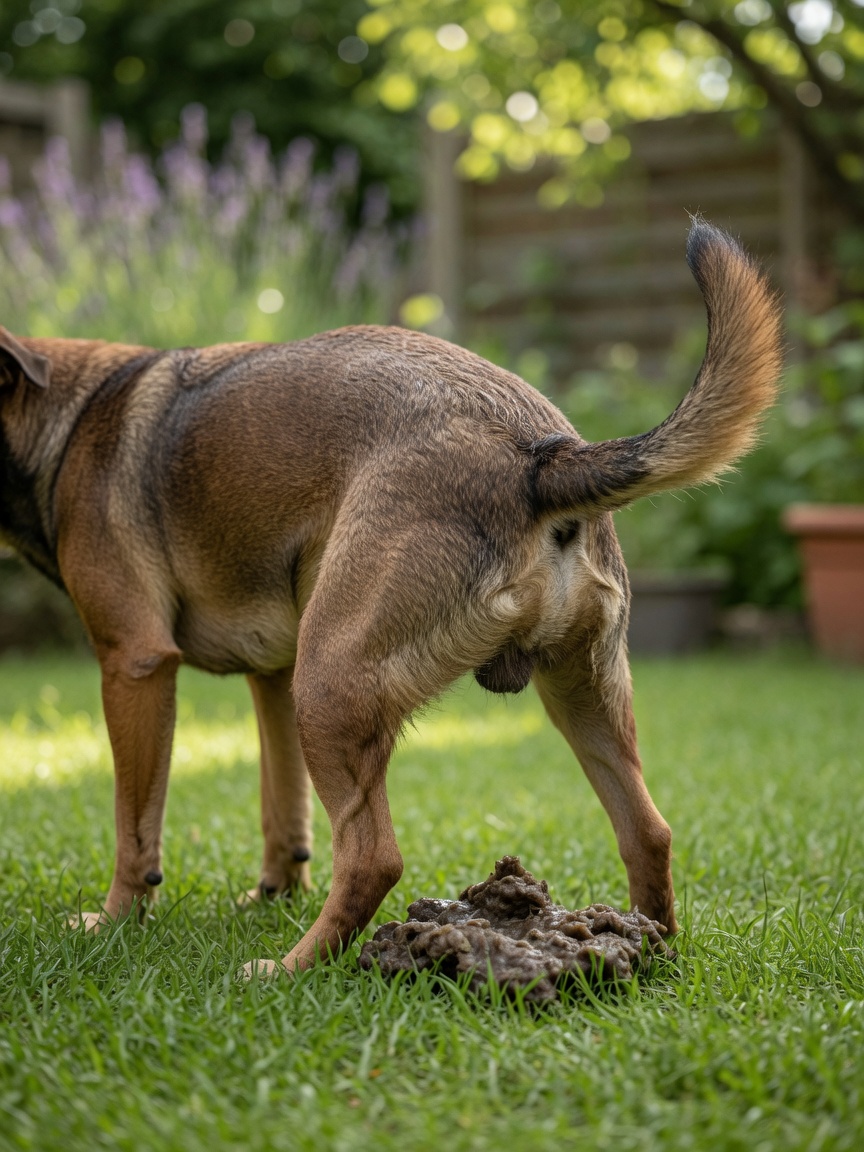
Not all diarrhoea is the same. Distinguishing between large and small bowel diarrhoea helps identify the likely site of the problem and guides appropriate management.
Large Bowel Diarrhoea (Colitis)
- Small volumes of faeces passed frequently — often more than five times per day
- Urgency — the dog strains and may seem desperate to get outside
- Presence of fresh, bright red blood (haematochezia)
- Mucous or "jelly" coating on the stools
- Tenesmus — visible straining during or after defecation, sometimes passing only mucous
- Usually no weight loss unless chronic
- Appetite is typically maintained
Small Bowel Diarrhoea
- Large volumes of loose faeces, often two to three times normal daily amount
- No straining or urgency
- Dark (digested) blood may be present (melaena)
- Weight loss common in chronic cases
- Appetite often reduced
- Borborygmi (loud gut sounds) and flatulence frequent
Colitis specifically affects the large bowel and produces the first set of signs described above.
Causes of Colitis in Dogs
Stress Colitis
Stress colitis is the most common form of acute colitis in dogs. It develops in response to psychological stress — kennelling, house moves, thunderstorms, fireworks, changes in routine, or the arrival of a new pet or baby — and typically causes a sudden onset of large bowel diarrhoea lasting two to five days. It is self-limiting in most cases and resolves with dietary management and, if appropriate, stress reduction strategies.
Dietary Indiscretion
Eating rubbish, compost, faeces (coprophagia), dead animals, or unusual foods triggers acute colitis through a combination of toxic insult and disruption of the colonic microbiome. This is particularly common in Labradors and other dogs with an indiscriminate appetite.
Parasites
Whipworms (Trichuris vulpis), Giardia, and Tritrichomonas foetus are the parasites most commonly associated with colitis. Whipworms in particular can cause a dramatic, watery, blood-tinged large bowel diarrhoea. Routine faecal examination and parasite prevention following ESCCAP guidelines for your European region is important in dogs with recurrent colitis.
Bacterial Causes
Campylobacter, Salmonella, Clostridium perfringens, and pathogenic E. coli can all cause infectious colitis. These are more common in dogs that eat raw food diets, scavenge outdoors, or are in contact with other animals. Some have zoonotic implications — Campylobacter and Salmonella can be passed to humans.
Chronic Colitis
Recurrent or persistent colitis is often due to inflammatory bowel disease (IBD) affecting the large bowel, food allergy, or chronic parasitism. Investigation of chronic colitis requires a systematic diagnostic approach including parasitology, dietary elimination trials, and often colonoscopy and colonic biopsy.
Managing Acute Colitis at Home
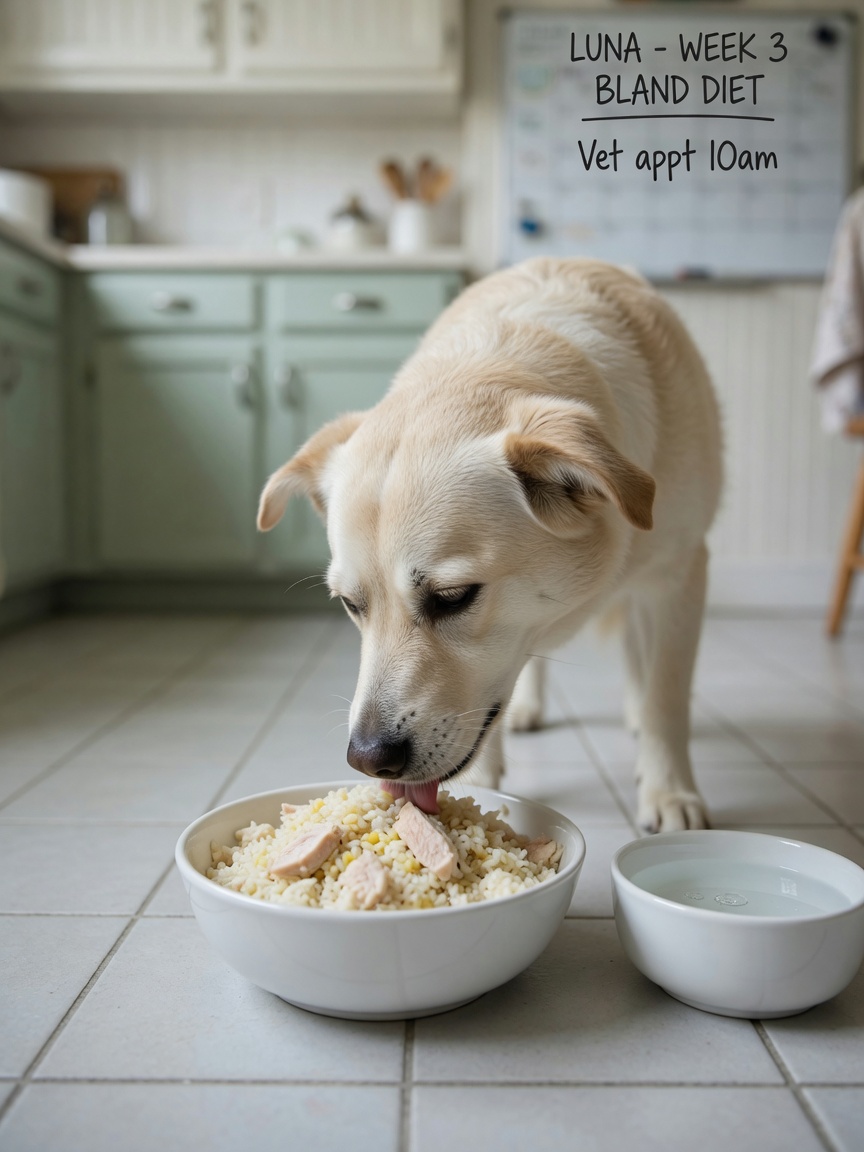
For a bright, alert dog with acute large bowel diarrhoea that has been going on for less than 24 to 48 hours and shows no blood in the stools, no vomiting, and no deterioration in general condition, home management is appropriate:
- Bland diet — feed small, frequent meals of boiled white rice and boiled chicken breast (no skin, no seasoning), or a commercial gastrointestinal diet. Low-fat gastrointestinal diets from Royal Canin, Hill's I/D, and Purina EN are ideal and available at Zooplus.
- Gradual return to normal diet — transition back to the normal diet over 3 to 5 days once stools have normalised
- Probiotics — canine-specific probiotic supplements (Fortiflora, Enterogenic, Proviable) can support microbiome recovery and reduce duration of acute diarrhoea
- Ensure hydration — offer fresh water freely; add water to food if the dog seems reluctant to drink
Withholding food entirely (fasting) is no longer routinely recommended in dogs with diarrhoea — current evidence favours early, gentle feeding over fasting.
Metronidazole in Colitis
Metronidazole is an antibiotic with anti-protozoal and anti-inflammatory properties that is frequently prescribed for acute colitis in dogs. It can be effective for bacterial and protozoal causes and has a direct anti-inflammatory effect on the colonic mucosa. However, it should be used appropriately — not for every episode of diarrhoea — to avoid contributing to antimicrobial resistance, which is a concern across human and veterinary medicine in Europe.
When to See a Vet
Seek prompt veterinary attention if your dog has:
- Blood in the diarrhoea — more than a few streaks, or dark/black stools
- Vomiting in addition to diarrhoea
- Signs of pain or distress
- Lethargy, loss of appetite, or signs of dehydration (sunken eyes, dry gums, skin that does not spring back when pinched)
- Diarrhoea lasting more than 48 to 72 hours despite home management
- Recurrent episodes of colitis (more than two to three per year)
- A puppy or senior dog affected — these age groups are less able to compensate for fluid loss
Diarrhoea in very young puppies is a medical emergency and should always be assessed by a vet without delay.