
Dog Dementia (Cognitive Dysfunction Syndrome): Signs & Management
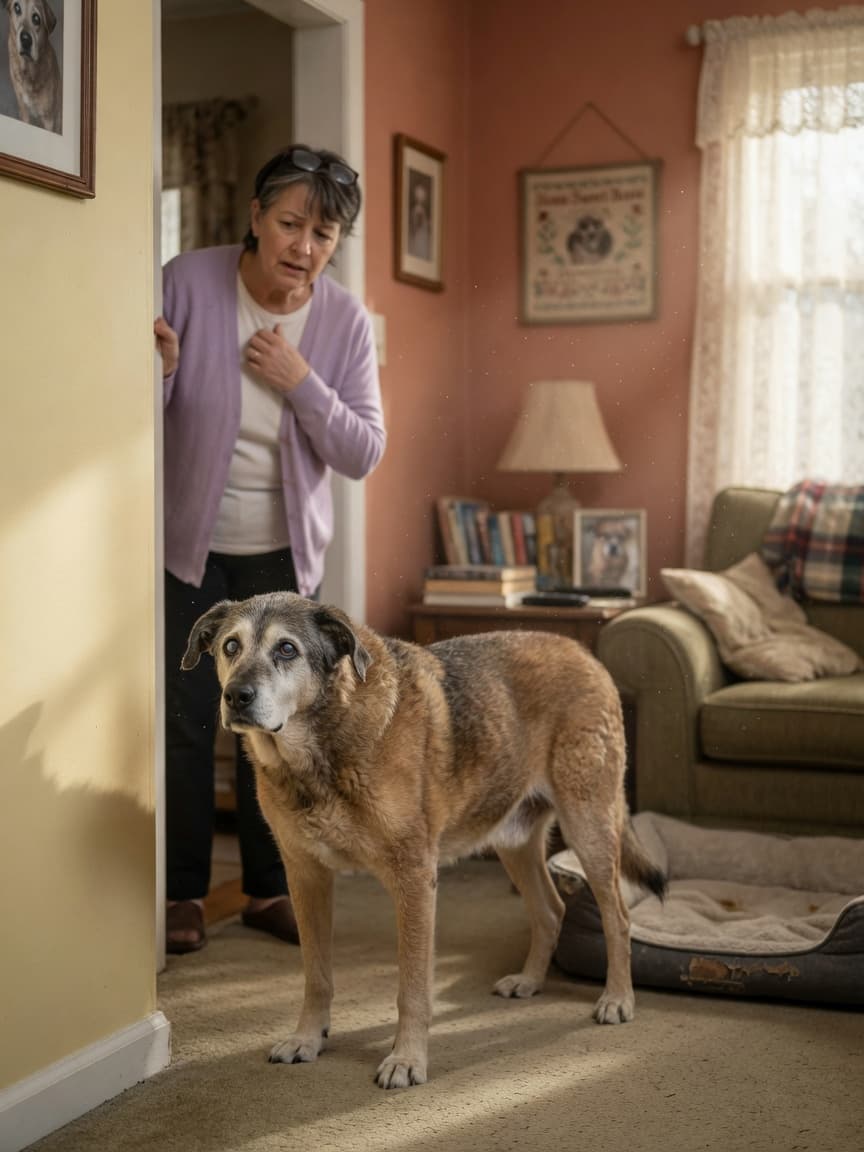
Dogs are living longer than ever, and with longer lives comes a condition that many owners are unprepared for: canine cognitive dysfunction syndrome, commonly called dog dementia. If your senior dog is staring at walls, getting stuck behind furniture, waking you at 3 a.m. for no apparent reason, or seeming to forget where the back door is, you may be watching cognitive dysfunction unfold. Understanding what is happening in your dog's brain—and what you can do about it—makes a profound difference in the quality of life for both dog and owner.
The DISH Acronym: Recognizing the Signs
Veterinary neurologists use the DISH acronym to organize the clinical signs of canine CDS into four core categories. Recognizing these patterns is the first step toward getting a diagnosis and beginning management.
D — Disorientation: This is often the most striking sign for owners. Affected dogs may stand and stare at walls or corners, get "stuck" in familiar spaces, appear confused in rooms they have navigated daily for years, fail to recognize familiar people or other pets, or wander aimlessly. Spatial memory and navigational ability depend heavily on the hippocampus, one of the first brain regions affected by CDS-related changes.
I — Interaction changes: Dogs with CDS often show altered social behavior. Some become clingy and anxious, needing constant contact with their owner. Others become withdrawn and irritable, no longer seeking affection or greeting family members at the door. This change in social engagement is distinct from normal senior mellowness and should be noted carefully.
S — Sleep-wake cycle alterations: Disrupted sleep is one of the most distressing aspects of CDS for human family members. Affected dogs may sleep excessively during the day and then pace, vocalize, or appear agitated at night. The mechanism is partly neurological—the brain circuits that regulate circadian rhythm are disrupted—and partly related to the anxiety and confusion that night-time darkness exacerbates.
H — House soiling: A dog that has been reliably house-trained for years and begins having indoor accidents may be experiencing cognitive decline. CDS can cause dogs to forget they need to eliminate, forget house training rules, or simply fail to signal appropriately. Before attributing accidents to CDS, a veterinarian should rule out urinary tract infections, kidney disease, and mobility-related difficulties getting outside.
What Is Happening in the Brain
Canine CDS is not simply behavioral—it has a documented neuropathological basis. Post-mortem studies in affected dogs consistently show accumulation of beta-amyloid plaques in the cerebral cortex and hippocampus, cerebrovascular changes that reduce blood flow to neural tissue, and oxidative damage to neurons from accumulated free radicals. The parallels to human Alzheimer's disease are so pronounced that dogs are actively studied as a natural model for human dementia research.
Dopamine and acetylcholine pathways are particularly affected, which helps explain the changes in motivation, memory, and learning. As neurotransmitter function declines, information processing slows and existing memories become harder to retrieve.
Environmental Enrichment: Training the Aging Brain
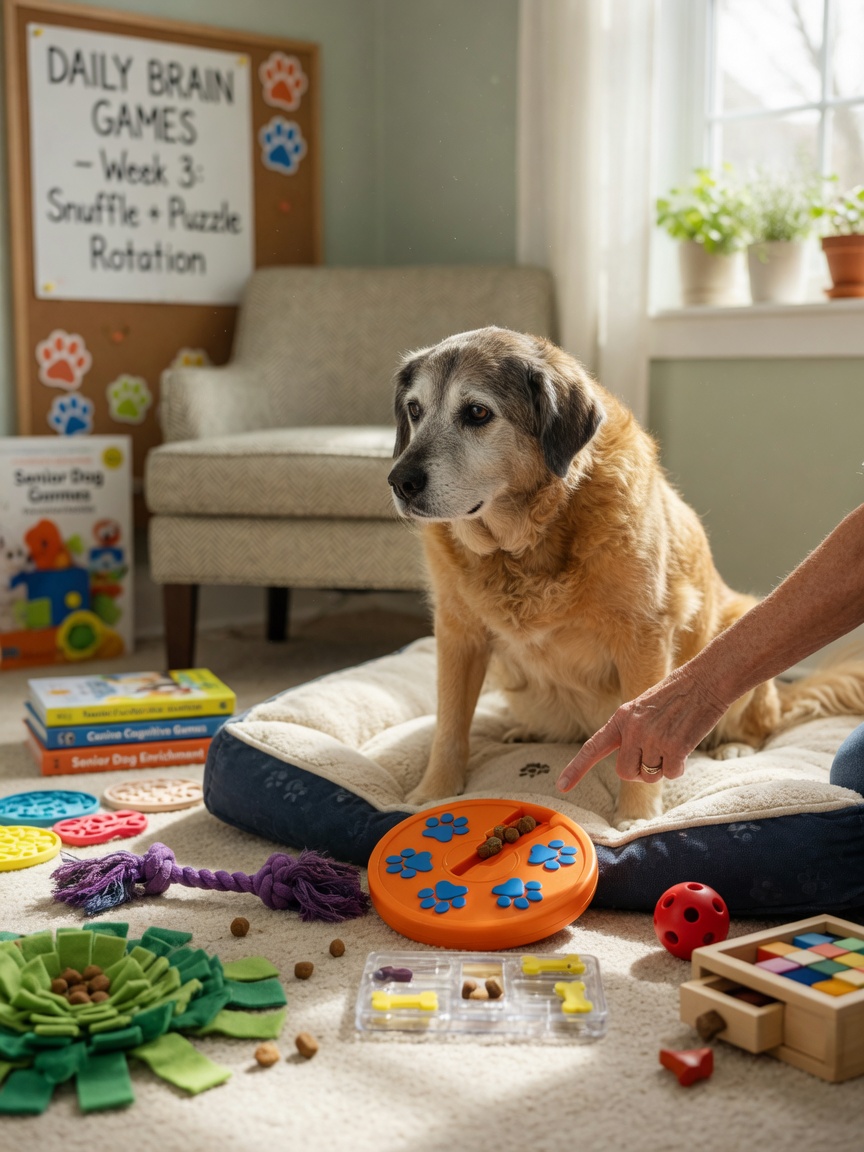
The principle of "use it or lose it" applies to the aging canine brain just as it does to the human brain. Environmental enrichment—providing mental challenges and novelty—has been shown in multiple studies to support cognitive function in aging dogs by stimulating neural plasticity and promoting the production of brain-derived neurotrophic factor (BDNF).
Practical enrichment strategies include:
- Puzzle feeders: Replacing the standard bowl with food-dispensing puzzles requires the dog to problem-solve for every meal, providing daily cognitive exercise. These range from simple rubber Kongs to complex multi-step puzzle boards.
- Scent work: The olfactory system tends to remain relatively preserved in early-to-moderate CDS. Hiding food around the house or garden and encouraging the dog to find it provides mental engagement without physical strain.
- Routine with novelty: Maintaining a predictable daily structure reduces anxiety in CDS dogs, but introducing controlled novelty—a new walking route, a new toy, a new scent—stimulates the brain without overwhelming the dog.
- Social interaction: Regular, positive interactions with family members—gentle play, training with simple commands the dog still knows, calm handling—support emotional wellbeing and maintain neural connections.
Diet and Nutritional Support for Cognitive Health
Nutrition plays a direct role in brain health, and several nutrients have evidence supporting their use in dogs with CDS or at risk of it:
Omega-3 fatty acids (DHA/EPA): Docosahexaenoic acid (DHA) is the primary structural fatty acid in brain tissue. Studies in aging dogs demonstrate that omega-3 supplementation supports neuronal membrane integrity, reduces neuroinflammation, and may slow cognitive decline. Marine-sourced omega-3s (fish oil, krill oil) provide more bioavailable DHA and EPA than plant sources.
Antioxidants: Oxidative stress contributes significantly to neuronal damage in CDS. Vitamins C and E, beta-carotene, selenium, and plant-derived antioxidants such as lycopene and lutein have shown benefits in canine cognitive studies. The landmark Purina study (Milgram et al., 2004) demonstrated that a diet enriched with antioxidants and mitochondrial cofactors significantly improved cognitive performance in aged beagles.
Medium-chain triglycerides (MCTs): The brain can use ketone bodies derived from MCT metabolism as an alternative fuel source when glucose metabolism is impaired by aging. Several prescription veterinary diets for cognitive dysfunction are enriched with MCTs from coconut oil for this reason.
B vitamins: B6, B12, and folate are essential for neurotransmitter synthesis and homocysteine regulation. Elevated homocysteine is associated with brain atrophy in aging mammals, including dogs.
Veterinary Management Options
A diagnosis of CDS should always involve a veterinarian, as many of the signs overlap with other treatable conditions (hypothyroidism, pain, sensory decline, brain tumors). Once confirmed, veterinary management may include:
- Selegiline (Anipryl): The only FDA-approved medication for canine CDS, a monoamine oxidase inhibitor that increases dopamine availability in the brain and has some antioxidant properties.
- Melatonin: Useful for re-establishing sleep-wake cycle regulation in dogs with significant night-time disruption.
- Anxiolytic medications: Dogs with severe nighttime anxiety may benefit from short-term pharmaceutical support.
Key Takeaways
- Canine CDS follows the DISH pattern: Disorientation, Interaction changes, Sleep disruption, House soiling.
- The underlying neuropathology—beta-amyloid plaques and oxidative damage—closely mirrors human Alzheimer's disease.
- Environmental enrichment, particularly puzzle feeders and scent work, is among the most evidence-backed management tools.
- Diet rich in omega-3 fatty acids, antioxidants, and MCTs has demonstrated cognitive benefits in aging dogs.
- Selegiline is the only FDA-approved pharmaceutical for canine CDS; melatonin can help with sleep-wake disruption.
- CDS cannot be reversed, but early intervention and active management significantly improve quality of life.
References
- Milgram NW, Head E, Muggenburg B, et al. Landmark discrimination learning in the dog: effects of age, an antioxidant fortified food, and cognitive strategy. Neurosci Biobehav Rev. 2002;26(6):679–695. PMID: 12479843.
- Osella MC, Re G, Odore R, et al. Canine cognitive dysfunction syndrome: prevalence, clinical signs and treatment with a neuroprotective nutraceutical. Appl Anim Behav Sci. 2007;105(4):297–310.
About the Author: Julia Wrenfield is a Pet Wellness Researcher with over 12 years of experience in companion animal health. She writes for ForPetsHealthcare.com to help pet owners make informed, evidence-based decisions for their animals.