
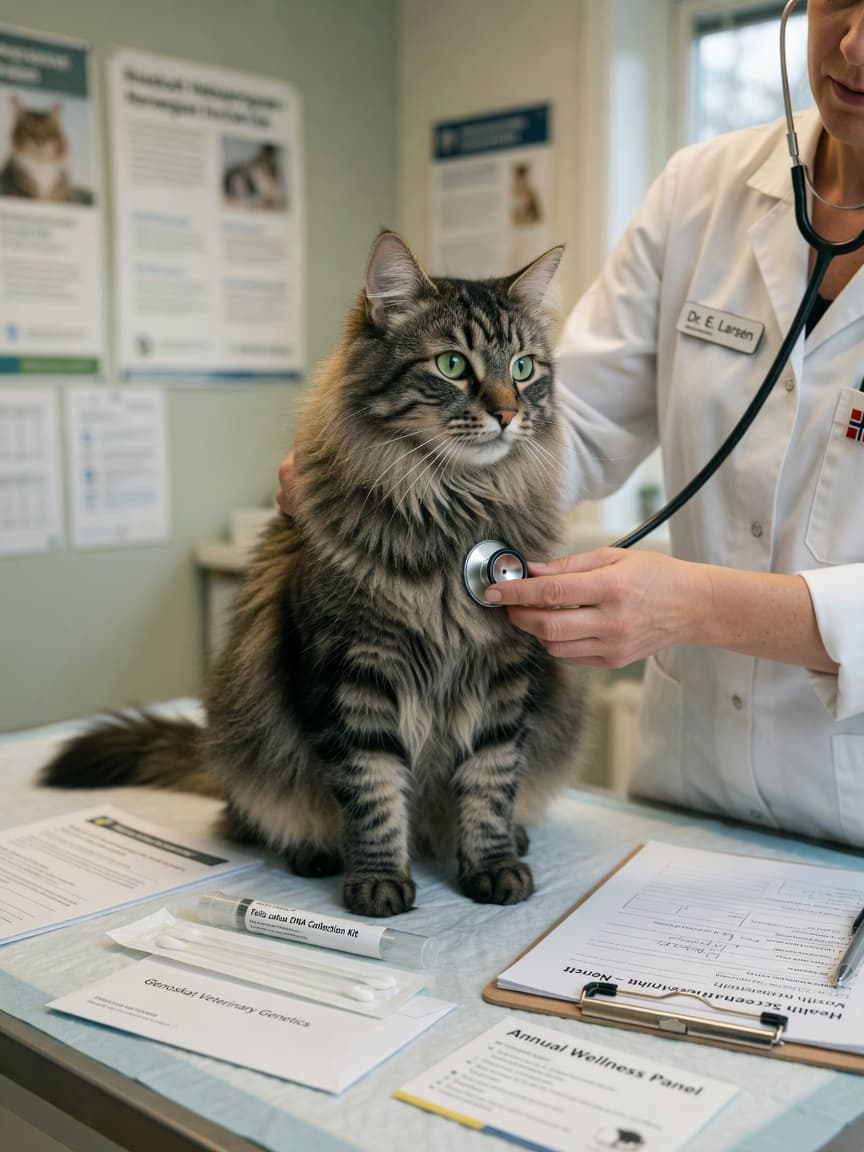
Norwegian Forest Cat: Breed Overview
The Norwegian Forest Cat — affectionately known as the Wegie — is a semi-longhaired Nordic breed recognised by TICA, FIFe, and most major international cat registries. Originating from the forests and farms of Norway, the breed developed a robust double coat and strong, athletic build suited to cold, wet conditions. Wegies are large, sturdy cats, calm and gentle in temperament, and typically excellent with children and other animals. They are agile climbers and retain strong outdoor instincts, even if kept as indoor cats.
With a lifespan of 14 to 16 years and a generally healthy constitution, the Norwegian Forest Cat is among the more robust pedigree breeds. However, there are specific inherited conditions — one of them fatal — that make pre-breeding DNA testing a non-negotiable aspect of responsible Wegie breeding. Understanding these conditions is important for both breeders and owners.
Glycogen Storage Disease Type IV: A Fatal Inherited Condition
Glycogen Storage Disease Type IV (GSD IV) is the most serious inherited condition in the Norwegian Forest Cat breed. It is a fatal metabolic disorder caused by a deficiency of the enzyme glycogen branching enzyme (GBE), which is essential for normal glycogen metabolism. Without this enzyme, abnormal glycogen accumulates in multiple organs including the muscles, nervous system, liver, and heart.
Affected kittens typically die in the neonatal period or early kittenhood. Some kittens die before or shortly after birth, while others show progressive muscle weakness and deterioration in the first few months of life before succumbing to the disease. Carrier cats — those with one copy of the mutation — are entirely healthy and show no signs of disease. However, if two carriers are mated, there is a one-in-four chance of producing an affected kitten with each pregnancy.
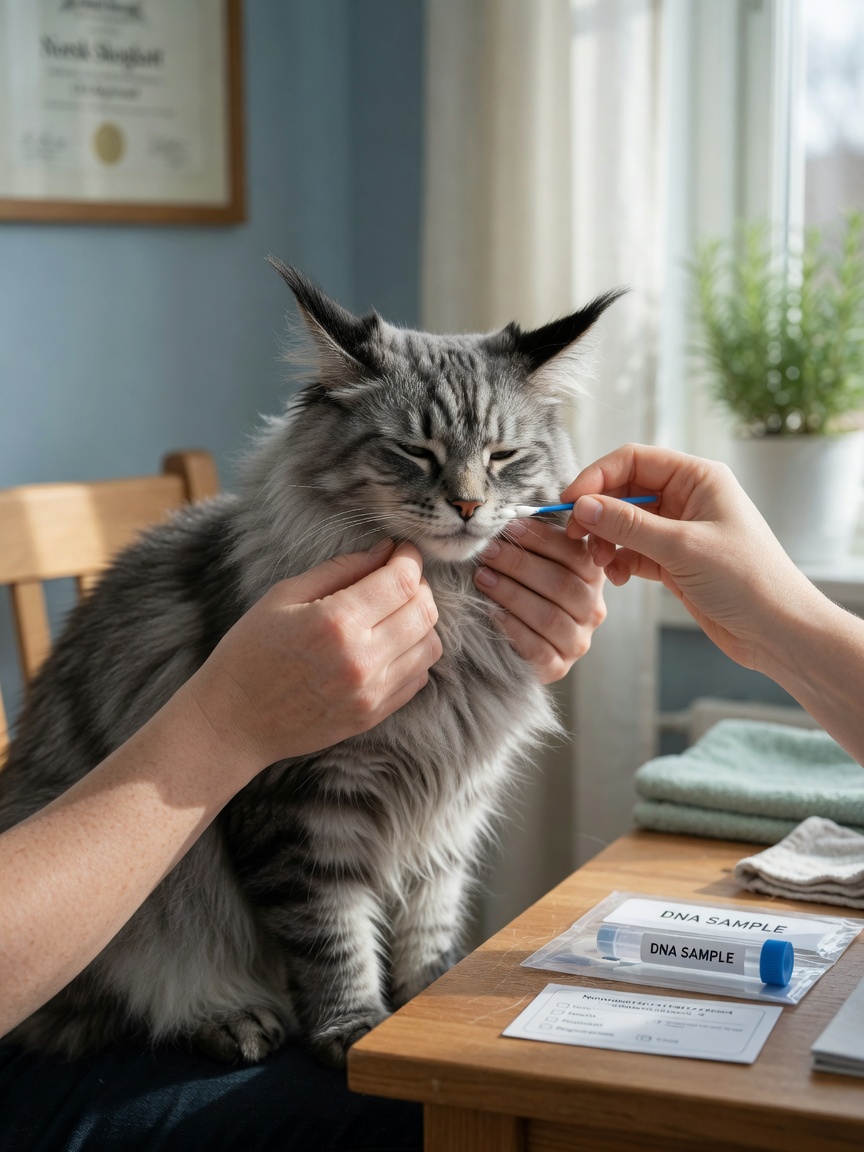
A DNA test for GSD IV is available through several laboratories including Laboklin and UC Davis, and testing is considered mandatory for responsible Norwegian Forest Cat breeders. The test clearly identifies clear cats (two normal copies), carriers (one normal copy, one mutated copy), and affected cats (two mutated copies). No two carrier cats should ever be mated together. A carrier can be mated with a clear cat safely — no affected kittens will be produced, though some offspring will themselves be carriers. Over time, the aim should be to reduce the carrier frequency in the breed population.
When purchasing a Norwegian Forest Cat kitten, always ask for GSD IV test documentation for both parents. Reputable breeders will provide this as a matter of course.
Hypertrophic Cardiomyopathy (HCM): Screening Without a Breed-Specific Test
Hypertrophic Cardiomyopathy is the most common heart condition in cats across all breeds, and Norwegian Forest Cats are not exempt. HCM involves abnormal thickening of the heart muscle (particularly the left ventricle), which impairs the heart's ability to fill and pump effectively. In severe cases, it leads to heart failure, thromboembolism (blood clots), and sudden death.
Unlike the Maine Coon — in which a specific MYBPC3 mutation has been identified and a DNA test is available — no equivalent breed-specific DNA test has been validated for Norwegian Forest Cats. The genetic basis of HCM in Wegies appears to differ from that in Maine Coons, and the Maine Coon test should not be used for Wegies as it will not provide meaningful results.
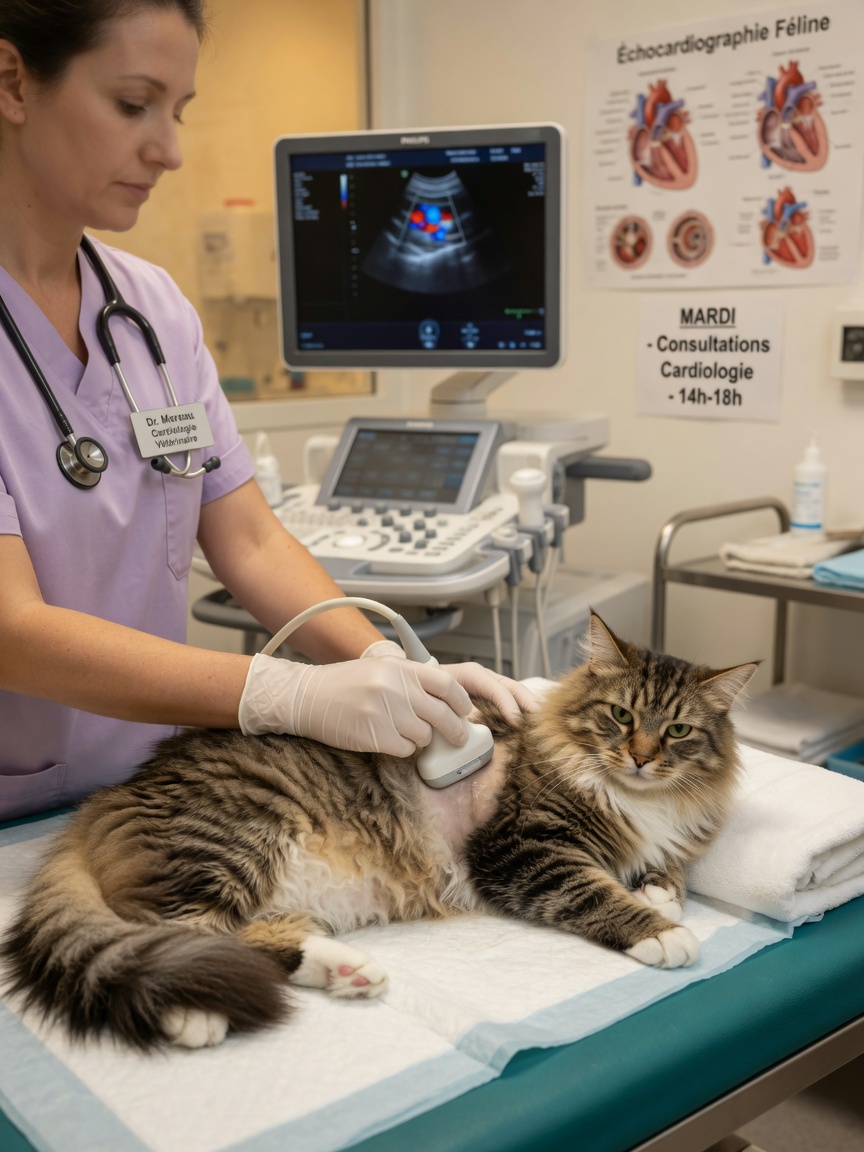
For Norwegian Forest Cats, the recommended approach is echocardiographic screening — an ultrasound examination of the heart performed by a veterinary cardiologist. This should ideally begin at two to three years of age and be repeated annually or every two years throughout the cat's life, as HCM can develop or progress at any age. Annual screening is particularly important for breeding cats. Cats with evidence of HCM should be excluded from breeding programmes, even though the precise inheritance pattern in the breed is not yet fully characterised.
Signs of HCM in cats can be subtle and may include exercise intolerance, increased respiratory rate or effort, and open-mouth breathing. However, many cats show no obvious signs until the condition is advanced. This makes regular veterinary cardiac examinations all the more important.
Hip Dysplasia in Cats
While hip dysplasia is primarily associated with dogs, it does occur in cats, and Norwegian Forest Cats are one of the breeds in which it has been documented. The condition involves abnormal development of the hip joint and can lead to pain, reduced mobility, and arthritis over time. Radiographic screening is available. For breeding cats, hip evaluation provides useful data and contributes to efforts to reduce the prevalence of the condition in the breed. Affected cats may benefit from weight management, joint supplements, and veterinary pain management.
Polycystic Kidney Disease
Polycystic Kidney Disease (PKD) — associated primarily with Persian cats — has also been reported in Norwegian Forest Cats, though at much lower prevalence. PKD involves the development of fluid-filled cysts within the kidneys that progressively replace normal kidney tissue, leading to chronic renal insufficiency. A DNA test for the Persian-associated PKD1 mutation is available, and while this mutation is not the primary concern for Wegies, it may be worth testing cats from lines with any possible Persian influence. Regular monitoring of kidney function through blood and urine tests is appropriate as part of routine veterinary care in older cats of any breed.
Coat Care: The Wegie's Most Famous Feature
The Norwegian Forest Cat's coat is one of its most distinctive qualities — a dense, water-resistant double coat with a woolly undercoat and longer, glossy guard hairs. This coat evolved to protect the cat in harsh Nordic conditions and performs remarkably well at shedding rain and snow. For domestic cats, however, the coat requires regular owner attention to remain in good condition.
Weekly brushing is sufficient for most of the year, but during the spring moult, Wegies shed their entire undercoat over a period of several weeks. During this period, daily combing with a wide-toothed comb or a deshedding brush is necessary to prevent matting and reduce hairballs. The coat rarely requires bathing in healthy cats, as the natural oils maintain its condition well. Mats, if they develop, should be carefully teased out or, in severe cases, trimmed by a professional groomer or veterinary nurse.
Weight Management and Indoor vs Outdoor Living
Norwegian Forest Cats are naturally active and well-muscled, but neutered cats — particularly males — are prone to weight gain if their calorie intake is not carefully managed. Obesity increases the risk of diabetes, joint problems, and cardiovascular strain. Feeding a measured, weight-appropriate diet rather than free-feeding is advisable, and regular weigh-ins at veterinary check-ups help identify creeping weight gain early.
In much of Europe, Norwegian Forest Cats are kept as indoor-outdoor cats, and their natural athleticism and hunting instincts make them well suited to this lifestyle where safe outdoor access is available. In urban areas, a securely enclosed garden or a well-equipped indoor environment with climbing structures, scratching posts, and interactive play opportunities can meet their needs effectively. Dental care — daily toothbrushing with a cat-safe toothpaste or regular dental chews — is important for all cats, and Wegies are no exception.