
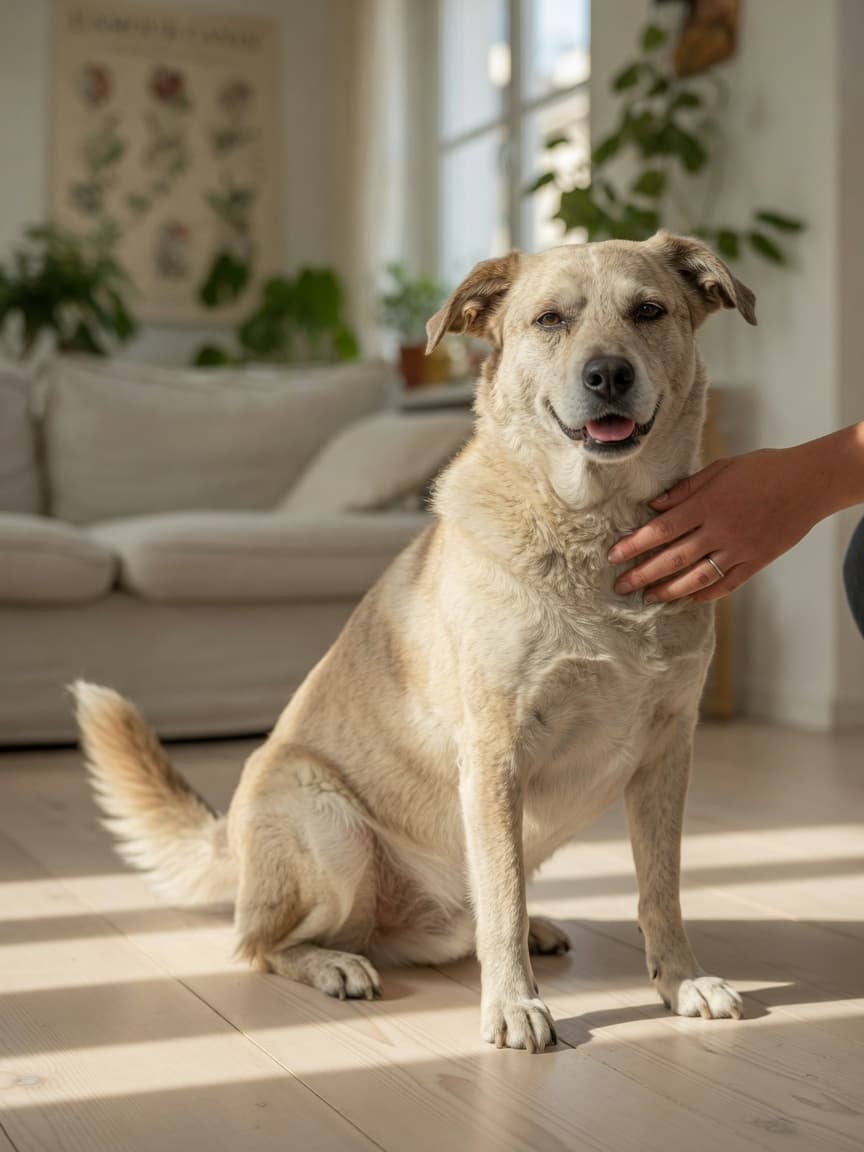
What Your Dog Is Trying to Tell You: 25 Body Language Signs
Your dog cannot tell you they're scared, in pain, or overjoyed with words. But they are constantly communicating through the position of their tail, the set of their ears, the tension in their jaw, and a dozen other subtle physical cues. Most bites happen because humans missed the warning signs. Most misunderstandings between owners and dogs come down to one thing: we're not fluent in dog.
This guide breaks down 25 key body language signals, organized by body part, so you can start reading your dog like a pro — and respond in ways that build trust, reduce anxiety, and deepen your bond.
Tail Signals (Signals 1–5)
-
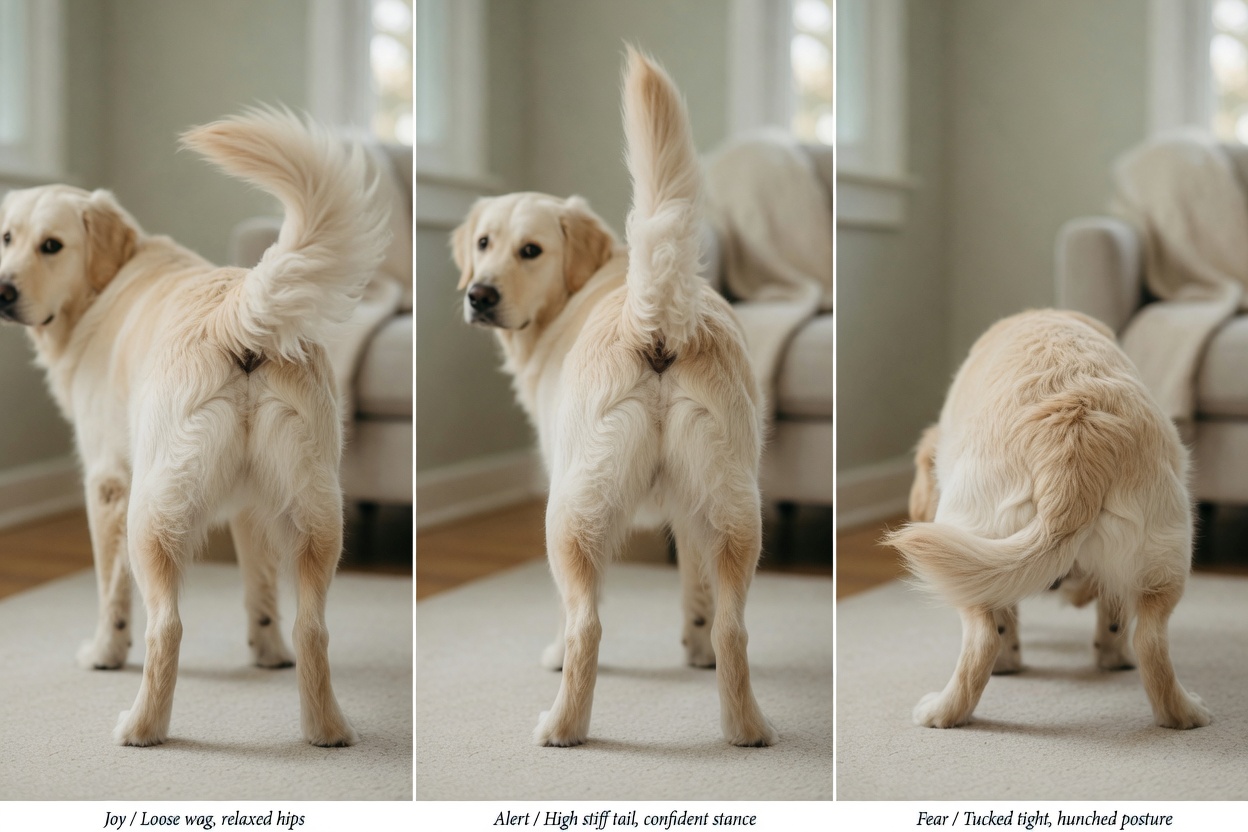
1. Tail Wagging at Mid-Height
What it means: Your dog is happy, relaxed, and engaged. This is the "everything is great" wag. The tail moves freely at roughly spine level.
Context clue: Combine with loose, wiggly body and soft eyes for a confirmed happy state.
-
2. Tail Held High and Stiff
What it means: Alertness, arousal, or dominance assertion. This is not necessarily aggressive, but it signals heightened attention and a dog that is assessing the situation. In an unknown dog, treat with caution.
Context clue: Stiff tail + stiff body + direct stare = potential aggression incoming.
-
3. Tail Tucked Between Legs
What it means: Fear, submission, or extreme stress. The tail-tuck literally covers the scent glands in the anal area — it's your dog making themselves "invisible" to other animals.
Context clue: Never punish a dog showing this signal. They are already overwhelmed.
-
4. Slow, Low Wag
What it means: Insecurity or appeasement. "I'm not sure about this situation, please don't hurt me." Often seen in rescue dogs meeting new people.
Context clue: Give space, use a calm voice, let the dog approach at their own pace.
-
5. Helicopter Tail (Full-Body Wag)
What it means: Pure, uncontainable joy. The tail wags so fast and wide it moves the entire hindquarters. Reserved for the people and dogs your dog absolutely loves.
Context clue: Almost always paired with play bowing or jumping. Enjoy it.
Ear Signals (Signals 6–9)
-
6. Ears Relaxed and Natural
What it means: Calm and content. "Natural" position varies by breed — a Labrador's natural ear position is down; a Husky's is up. Learn your dog's neutral baseline first.
-
7. Ears Pricked Forward
What it means: Alert and interested. Your dog has detected something — a sound, a smell, movement. Not threatening, but attentive. They're processing information.
-
8. Ears Pinned Flat Back
What it means: Fear or extreme submission. The dog is trying to appear smaller and less threatening. This is a major stress signal — find the stressor and remove it.
Context clue: Ears pinned back + growl = fear-based aggression. Do not approach.
-
9. One Ear Cocked to the Side
What it means: Curious and slightly confused. Classic "head tilt." Your dog is trying to process a sound or word they almost recognize. It's also just adorable.
Eye Signals (Signals 10–13)
-
10. Soft Eyes / Relaxed Gaze
What it means: Happy, trusting, and comfortable. The eyes look slightly squinted or soft, with no visible tension in the facial muscles around them. This is a dog at ease with you.
-
11. Hard Stare (Direct, Unblinking)
What it means: A challenge or pre-aggression signal. In dog language, a prolonged hard stare is a threat. If an unknown dog stares directly at you without breaking eye contact, do not stare back — look away slowly and move out of their space.
-
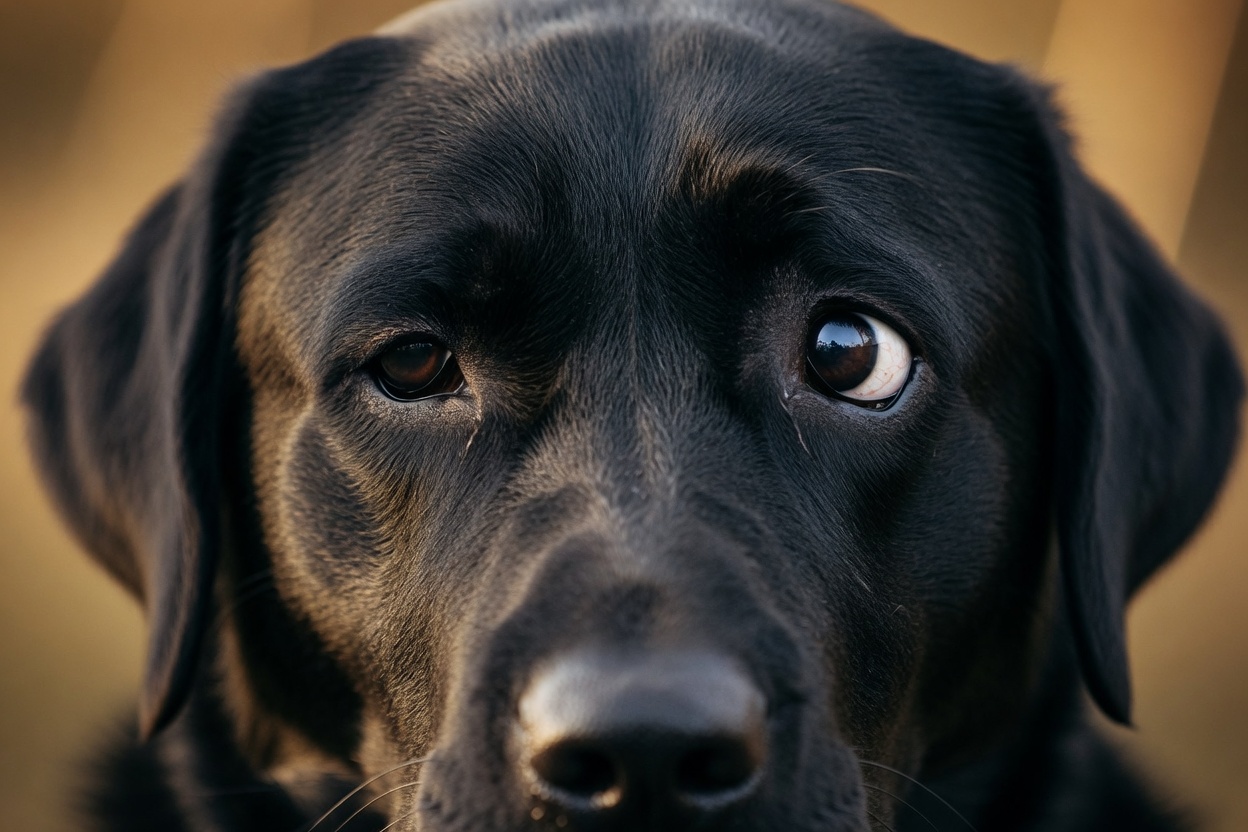
12. Whale Eye (Whites of Eyes Visible)
What it means: Extreme stress, discomfort, or a warning. When a dog shows the white crescent at the edge of their eye while looking sideways, they are uncomfortable with what is happening to them (often petting, hugging, or being restrained). Stop immediately.
-
13. Slow Blinking
What it means: Relaxed affection and trust. A dog that slow-blinks at you is saying "I feel safe with you." You can slow-blink back to communicate the same thing.
Anxious dog? Support calm behavior naturally: HolistaPet's CBD calming chews are vet-formulated to reduce stress without sedation. Shop HolistaPet Dog Calming Chews →
Posture & Body Signals (Signals 14–19)
-
14. Play Bow
What it means: The unmistakable invitation to play — front legs flat on the ground, rear end high in the air. This is one of the clearest, most universally understood signals in canine communication. When your dog does this, they want to have fun with you or another animal.
-
15. Loose, Wiggly Body
What it means: Relaxed and happy. A content dog's body moves fluidly — no stiffness, no tension. They might "wiggle" when they walk, especially when greeting loved ones.
-
16. Body Stiff and Still
What it means: Hypervigilance or aggression building. A dog that suddenly goes very still is deciding whether to fight or flee. The stillness before a bite is one of the most important signals to recognize.
-
17. Rolling Over and Exposing Belly
What it means: Submission and trust — but not always a request for belly rubs. Some dogs roll over as a calming signal to diffuse tension, not because they want contact. Read the rest of the body: tense muscles + whale eye = leave them alone. Relaxed + wiggly = belly rub approved.
-
18. Leaning Into You
What it means: Affection, security-seeking, and deep trust. When your dog leans their full body weight against your legs, they are expressing attachment and seeking comfort. It is one of the more touching expressions of bonding in dogs.
-
19. Hackles Up (Piloerection)
What it means: Arousal — which can be excitement, fear, or aggression. The hair along the spine rises automatically due to adrenaline. It doesn't always mean danger, but it always means the dog's nervous system is activated. Proceed cautiously.
Mouth & Facial Signals (Signals 20–25)
-
20. Relaxed, Open Mouth (Panting)
What it means: Happy and comfortable (if not overheated). A relaxed open mouth with "soft" panting and a loose tongue means your dog is content. Combine with soft eyes and relaxed ears for full confirmation.
-
21. Lip Licking / Nose Licking
What it means: A calming or stress signal. When a dog licks their lips or nose repeatedly in a non-eating context, they are experiencing mild-to-moderate stress. Common during training sessions that are too long or too intense, or during veterinary visits.
-
22. Yawning
What it means: Stress release or a calming signal directed at another animal or person. If your dog yawns when you lean over them or speak sternly, they're telling you they feel pressured. Back off and give them space.
-
23. Snarling / Lip Curl
What it means: A final warning before a bite. This is your dog telling you — loudly and clearly — that they have reached their limit. Never punish a dog for snarling. Snarling is communication; punishing it removes your only warning system and creates dogs that bite without signals.
-
24. Sneezing During Play
What it means: "I'm just playing, this is all for fun." Dogs sneeze during play interactions to signal that their aroused behavior is not serious or aggressive. It is essentially punctuation: "Don't worry, we're just messing around."
-
25. Chattering Teeth
What it means: Usually excitement combined with intense olfactory stimulation (especially intact males detecting female pheromones), but can also signal pain, nausea, or extreme cold. If teeth chattering appears suddenly with no obvious trigger, rule out dental pain.
Reward good behavior with treats your dog will love: Zooplus carries a huge range of natural training treats perfect for positive reinforcement sessions. Shop Zooplus Dog Training Treats →
Key Takeaways
- Always read multiple signals together — a wagging tail alone doesn't tell the full story; the whole body does.
- Whale eye, lip licking, yawning, and turning away are stress signals, not disobedience — your dog is communicating discomfort.
- Never punish a snarl. It is your dog's last warning before a bite, and removing it creates an unpredictably dangerous dog.
- Play bowing is unambiguous: your dog wants to play and is in a positive emotional state.
- A hard, direct stare is a challenge in dog language — avoid prolonged eye contact with unfamiliar dogs.
- A loose, wiggly body is one of the most reliable indicators of a genuinely relaxed and happy dog.
- Learning your individual dog's baseline behavior is essential — "normal" varies by breed, age, and personality.
Scientific References
- Wan M, Kubinyi E, Miklósi Á, Champagne FA. A Cross-Cultural Comparison of Reports by German Shepherd Dog Owners in Hungary and the United States of America. PLoS One. 2012;7(8):e43779. PubMed: 22937094
- Döring D, et al. Fear-Related Behaviour of Dogs in Veterinary Practice. Vet J. 2009;182(1):38-43. PubMed: 18790662