
A Scratch That Can Cost Your Dog Their Sight
A dog squinting, pawing at one eye, or holding it shut is never a minor concern. In many cases, what looks like a simple eye irritation is a corneal ulcer — a break in the surface of the eye that can deteriorate within hours if left untreated. Corneal ulcers are among the most common ophthalmic emergencies in dogs, and their severity ranges from superficial abrasions to deep perforations that threaten the eye itself.
What Is a Corneal Ulcer?
The cornea is the clear, dome-shaped surface covering the front of the eye. It consists of several layers, and an ulcer occurs when one or more of those layers are damaged or eroded. Superficial ulcers affect only the outermost epithelial layer and typically heal within a few days with appropriate treatment. Deep ulcers, however, penetrate further into the stroma and carry a real risk of perforation — a genuine ocular emergency requiring immediate surgical intervention.
Common Causes
Physical Trauma
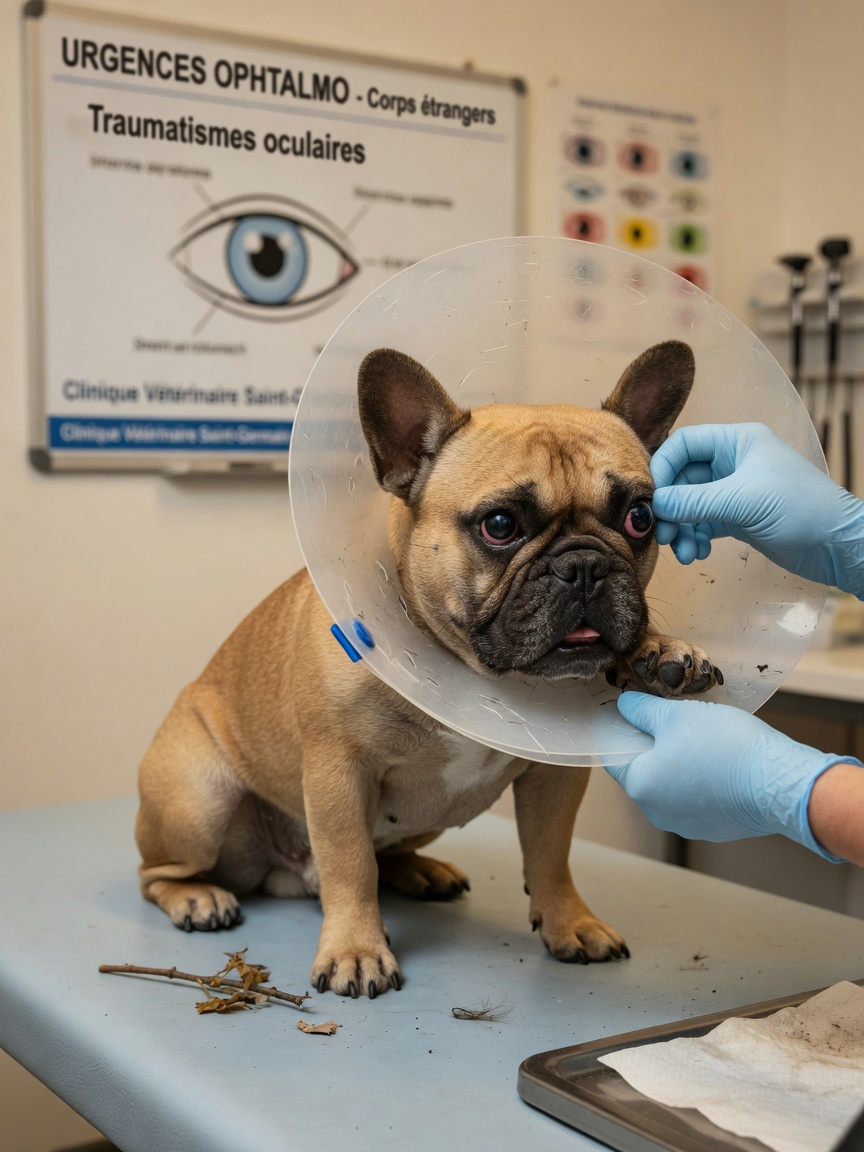
The most frequent cause is direct injury: a scratch from a cat, a twig during an off-lead run, or even rough play with another dog. Short-nosed breeds such as French Bulldogs, Pugs and Shih Tzus are particularly prone due to their prominent eyes and limited blink reflex.
Entropion and Eyelid Abnormalities
When the eyelid rolls inward, the lashes constantly abrade the corneal surface, causing repeated superficial ulcers. Dogs with chronic eyelid defects will keep re-ulcerating until the underlying structural problem is corrected surgically.
Dry Eye (Keratoconjunctivitis Sicca)
Insufficient tear production leaves the cornea poorly lubricated and highly vulnerable to ulceration. Cavalier King Charles Spaniels and West Highland White Terriers are among the breeds with elevated risk for this condition.
Infections and Foreign Bodies
Bacterial infection can both cause and complicate corneal ulcers. Grass seeds lodged under the third eyelid are a common culprit in warmer months and can create progressive ulceration if not removed promptly.
Recognising the Signs
Dogs with corneal ulcers typically show some combination of the following: excessive blinking or squinting, watery or mucoid discharge, redness around the eye, cloudiness or a bluish-white haze on the cornea, and sensitivity to light. Pawing at the face is common and can worsen the injury. Any dog displaying these signs should be seen by a vet the same day — not the following morning, and certainly not after the weekend.
How Vets Diagnose Corneal Ulcers
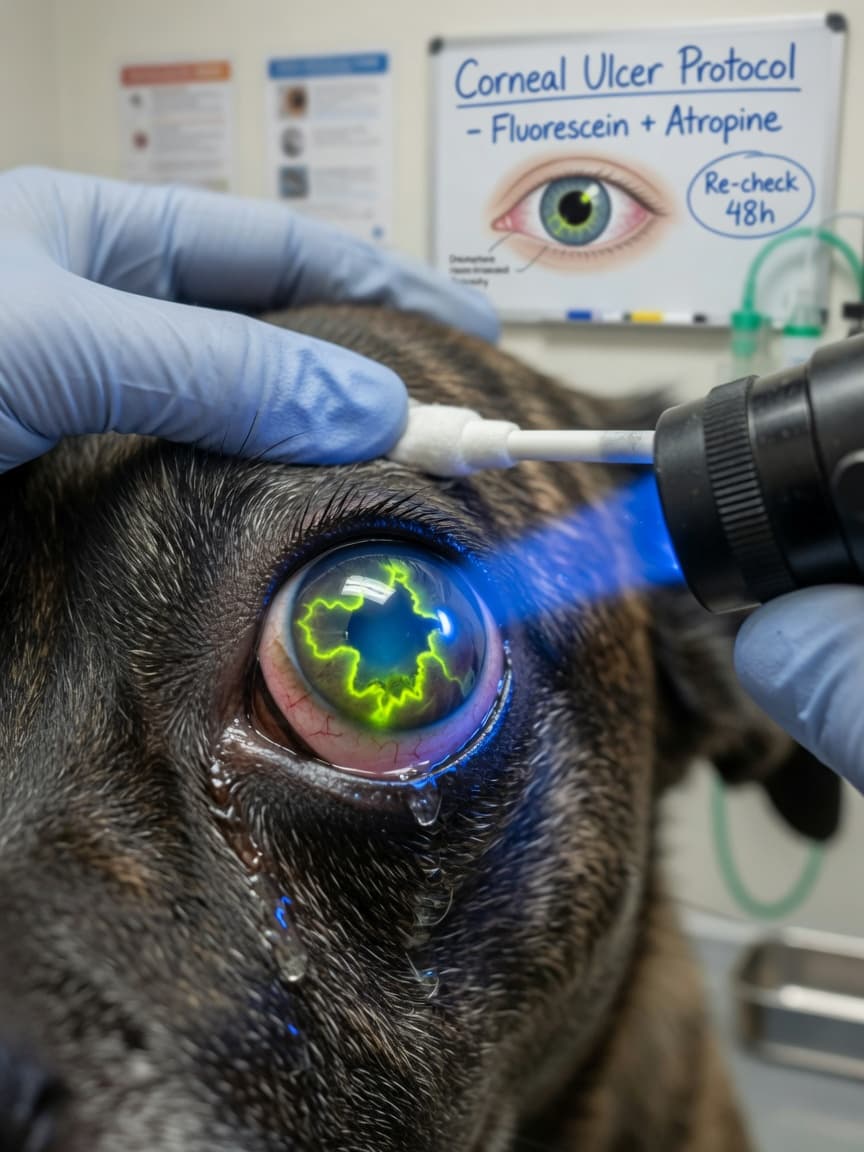
Diagnosis is straightforward using fluorescein stain, an orange dye that adheres to damaged corneal tissue and glows green under a blue light. This allows the vet to map the size and depth of the ulcer. A Schirmer tear test may also be performed to rule out dry eye, and in referral cases, a specialist may use a slit-lamp biomicroscope to assess stromal depth with greater precision.
Treatment Options
Superficial Ulcers
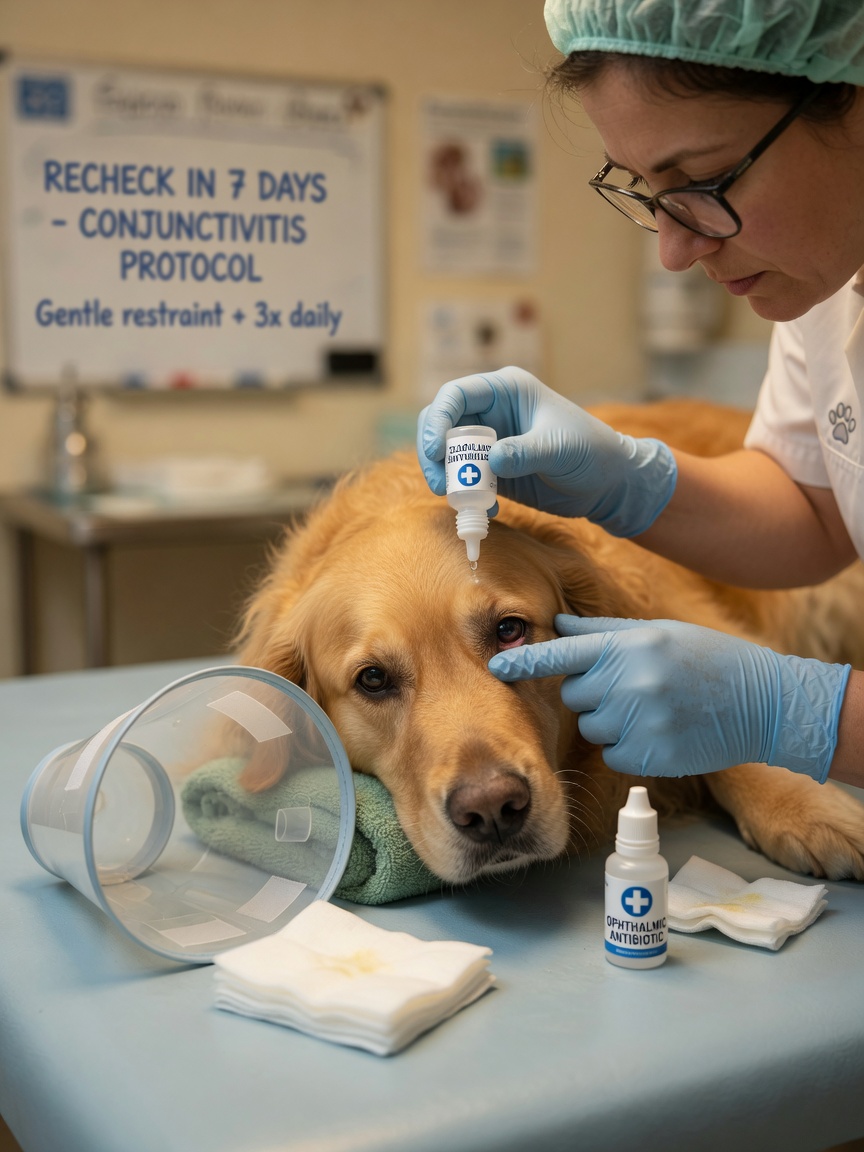
Most straightforward ulcers are managed with topical antibiotic eye drops to prevent secondary infection, atropine drops to relieve the painful ciliary spasm that accompanies ulceration, and an Elizabethan collar to stop self-trauma. Follow-up staining at 48 to 72 hours confirms healing progress. The majority resolve fully within five to seven days.
Indolent Ulcers
Some ulcers — particularly in Boxer dogs and other middle-aged to older dogs — fail to heal despite appropriate treatment. These are called spontaneous chronic corneal epithelial defects (SCCEDs) or indolent ulcers. The surrounding epithelium simply does not adhere properly. Treatment involves a minor procedure called debridement and superficial keratectomy, often combined with grid keratotomy, performed under topical anaesthesia. Success rates are high with this approach.
Deep or Infected Ulcers
Ulcers extending into the deeper stromal layers or those that are infected with aggressive bacteria such as Pseudomonas require intensive topical antibiotic therapy — sometimes every one to two hours through the night. In cases of descemetocoele (where only the innermost membrane remains intact) or perforation, surgical grafting using conjunctival tissue is necessary to save the eye. These cases are typically referred to a veterinary ophthalmologist.
What to Do While You Wait for Your Appointment
If you suspect a corneal ulcer, fit your dog with an Elizabethan collar immediately to prevent further self-trauma. Do not apply any eye drops, creams, or human eye preparations unless specifically directed by your vet — steroid-containing drops in particular are absolutely contraindicated in the presence of a corneal ulcer and can cause catastrophic progression. Keep the area clean and get to your vet as quickly as possible.
Key Takeaways
- Corneal ulcers range from minor to sight-threatening and always warrant same-day veterinary attention
- Brachycephalic breeds and dogs with dry eye are at higher risk and should be monitored closely
- Never apply steroid eye drops to a dog with a suspected ulcer
- An Elizabethan collar is essential to prevent the dog from worsening the injury
- Deep ulcers and non-healing indolent ulcers require specialist treatment and referral
- Most superficial ulcers heal well with prompt, appropriate antibiotic therapy and recheck examinations