
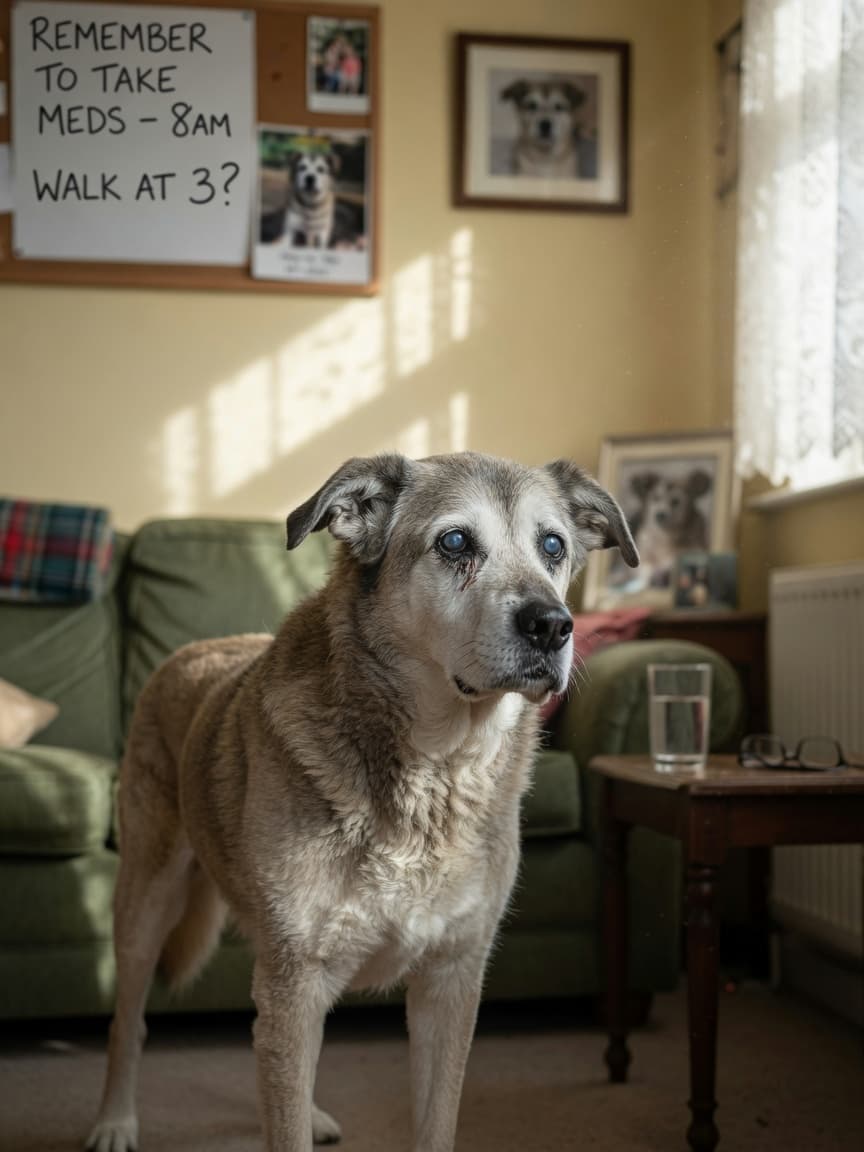
When Your Old Dog Seems Lost in Their Own Home
If your dog has started staring blankly at walls, getting stuck in corners, or forgetting where the water bowl is, you are not imagining things. Canine Cognitive Dysfunction Syndrome (CDS) affects an estimated 14–35% of dogs over the age of eight, rising sharply with each additional year of life. It is the canine equivalent of Alzheimer's disease, and whilst it cannot be reversed, it can be managed far more effectively when caught early.
What Is Cognitive Dysfunction Syndrome?
CDS is a neurodegenerative condition caused by physical and chemical changes in the ageing brain. Amyloid plaques accumulate between neurons, oxidative stress damages brain cells, and blood flow to the brain declines. The result is a gradual but progressive erosion of cognitive function that affects memory, learning, spatial awareness, and social behaviour.
It is not simply "old age." CDS is a diagnosable condition, and recognising it as such is the first step towards meaningful management.
Recognising the Signs: The DISHA Framework
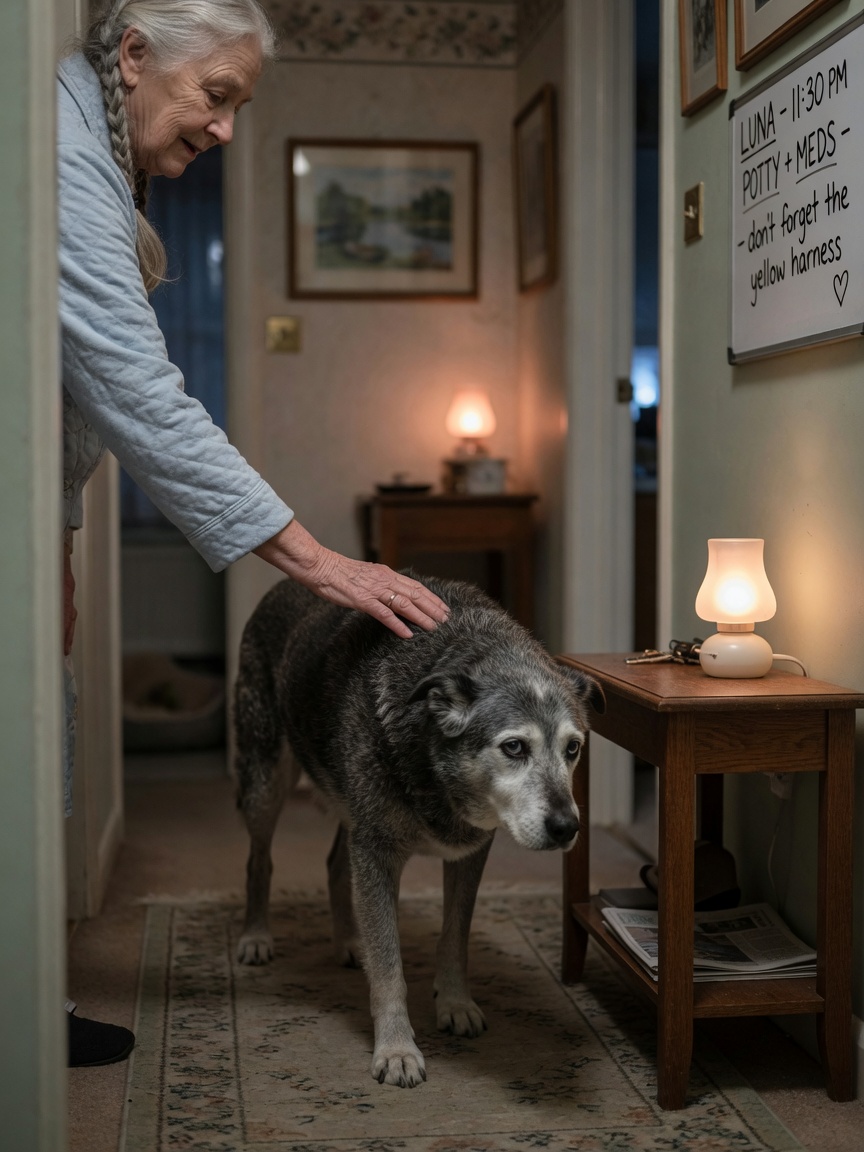
Veterinary neurologists commonly use the DISHA acronym to categorise CDS symptoms, which makes it easier for owners to identify and report changes accurately.
Disorientation
Your dog may appear confused in familiar environments, walk into furniture, get stuck behind doors, or fail to navigate steps they have managed for years. Some dogs stare into space for prolonged periods or appear not to recognise their own home.
Interaction Changes
A previously affectionate dog may become withdrawn, indifferent to family members, or uncharacteristically clingy. Some dogs stop greeting people at the door — a behaviour that can be easily dismissed as laziness but may signal neurological decline.
Sleep-Wake Cycle Disruption
Nighttime restlessness is one of the most disruptive symptoms for owners. Dogs with CDS often sleep more during the day and pace, vocalise, or appear agitated through the night. This reversal of the normal sleep cycle is a hallmark sign.
House-Training Accidents
Indoor elimination in dogs who have been reliably house-trained for years is not stubbornness. In CDS, dogs may simply forget to signal, forget where to go, or lose the ability to hold on long enough to reach the garden.
Activity Level Changes
Reduced exploration, loss of interest in play, and apparent aimless wandering all fall under this category. Some dogs become repetitive in their movements, circling endlessly or licking the same spot on the floor.
Staging the Condition
CDS typically progresses through three broad stages. In mild CDS, one or two DISHA signs are present but subtle. The dog still functions reasonably well day-to-day. In moderate CDS, multiple signs are evident and begin to affect daily routine and quality of life. Severe CDS involves significant loss of function across most areas, with the dog requiring considerable support for basic activities.
Early identification matters because interventions introduced at the mild stage can meaningfully slow progression and extend quality of life.
Management Strategies That Make a Difference
Veterinary Assessment First
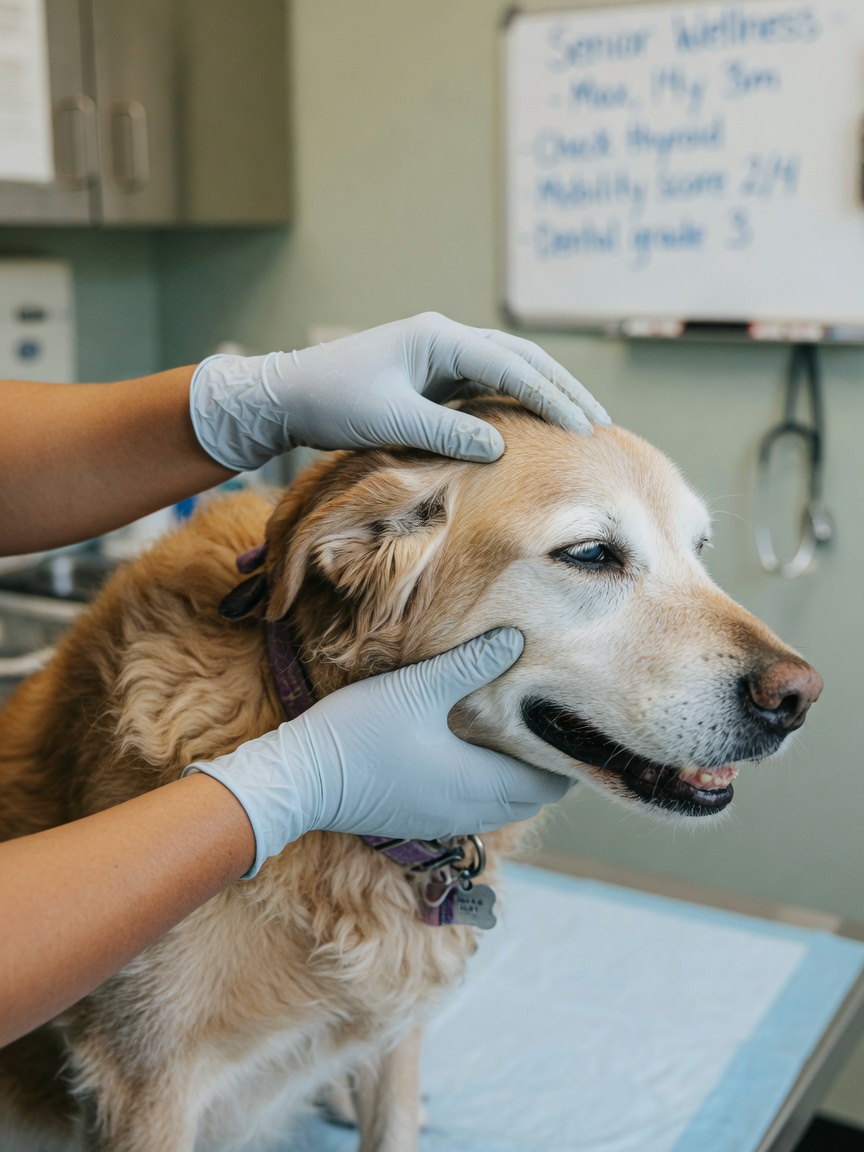
Before assuming CDS, your vet must rule out other conditions that mimic its signs — hypothyroidism, brain tumours, sensory loss, pain, and urinary tract infections can all produce similar symptoms. A thorough clinical assessment is essential. Always consult your vet before initiating any management plan.
Nutritional Support
Diets enriched with antioxidants, omega-3 fatty acids (particularly DHA and EPA), medium-chain triglycerides, and B vitamins have shown promise in supporting cognitive function in ageing dogs. Several prescription senior diets are formulated specifically with CDS in mind. Supplementation with phosphatidylserine and SAMe has also been studied, though quality varies widely across products.
Environmental Modifications
Keep furniture arrangements consistent. Add nightlights to help disoriented dogs navigate after dark. Provide orthopedic bedding in a quiet, easily accessible location. Baby gates can prevent falls down stairs. Predictable routines — feeding, walking, and sleeping at the same times each day — reduce anxiety and help anchor a dog's sense of time.
Mental Stimulation
Contrary to the instinct to let an older dog rest completely, gentle cognitive engagement can support brain health. Short, calm training sessions, scent work, and puzzle feeders keep neural pathways active without causing fatigue. The key is low-intensity and consistent.
Medication Options
Selegiline (sold under veterinary brand names) is a licensed medication for CDS in dogs that works by increasing dopamine levels in the brain. It is not effective in all patients but benefits some dogs in the early-to-moderate stages. Anxiolytic medications may also be appropriate if nighttime distress is significant. Discuss these options thoroughly with your vet.
Living With a Dog With CDS: A Practical Summary
- Schedule a vet appointment to confirm the diagnosis and rule out other causes.
- Begin a CDS-appropriate diet or supplementation protocol under veterinary guidance.
- Establish and stick to a consistent daily routine.
- Modify the home environment to reduce navigation hazards and improve safety.
- Incorporate gentle daily mental stimulation — even five minutes of scent work counts.
- Keep a symptom diary to track progression and share with your vet at check-ups.
- Consider your dog's overall quality of life regularly and honestly, revisiting that assessment with your vet as the condition evolves.
CDS is not a death sentence. Many dogs live comfortably for months or years after diagnosis with the right support in place. The earlier you act, the more time you and your dog have together — on good days.