
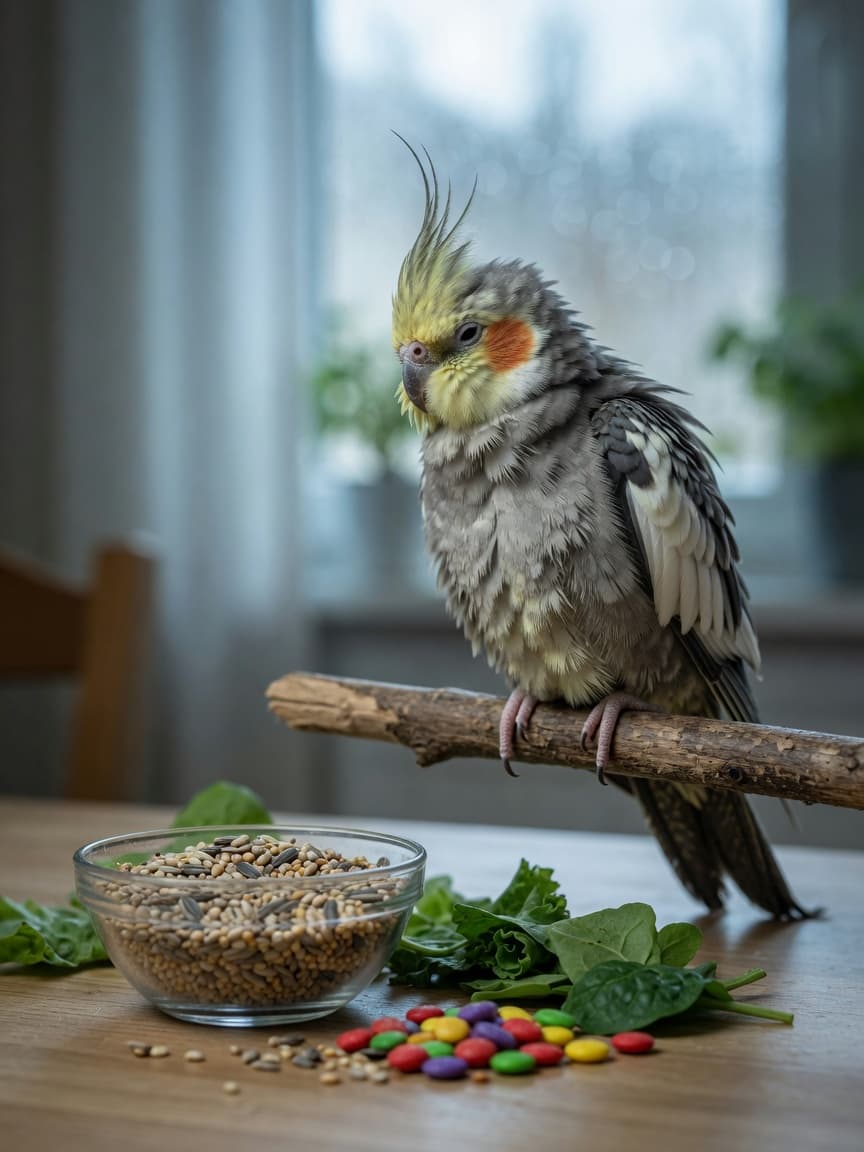
Cockatiels and Seed-Only Diets: Why It's a Slow Health Crisis
Walk into almost any pet shop and you will find bags of cockatiel seed mix prominently displayed, often with cheerful branding and images of healthy-looking birds. It is easy to understand why new owners assume seed is the natural and correct diet for their bird. After all, cockatiels eat seeds in the wild, and they clearly love them in captivity. The problem is that the connection between what a bird enjoys eating and what is good for it can be a very loose one indeed, and the consequences of a seed-only diet accumulate slowly and silently over years.
What a Wild Cockatiel Actually Eats
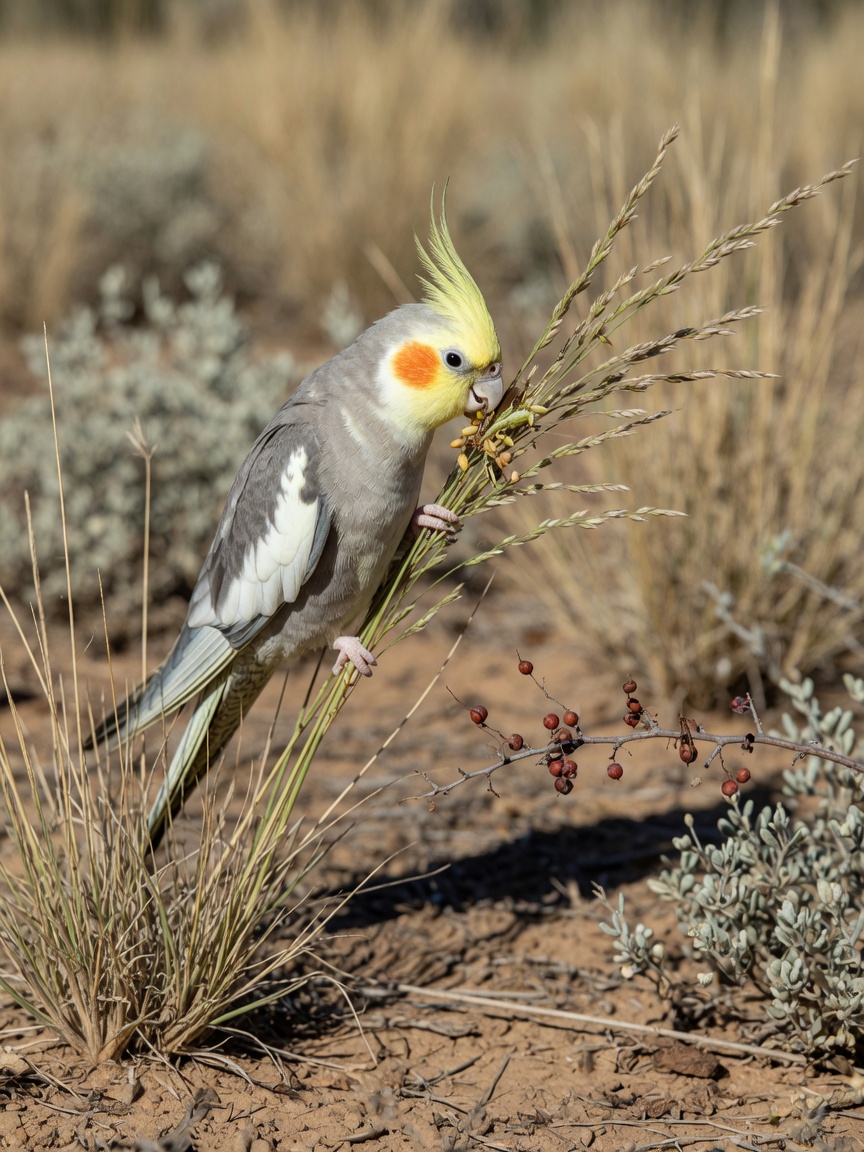
Native to the arid interior of Australia, wild cockatiels are nomadic birds that follow rainfall and food availability. Their natural diet is far more varied than the typical captive offering. They consume grasses and grass seeds — importantly, mostly unripe or partially ripened seeds rather than the dry, fat-dense seeds found in commercial mixes — along with berries, fruit, insects, and whatever plant matter is seasonally available. The seeds they eat in the wild are nutritionally quite different from the hulled, dried sunflower and millet that make up the bulk of commercial mixes.
What Is Missing in a Seed-Only Diet
Vitamin A Deficiency
This is arguably the most consequential nutritional gap in seed-based diets. Seeds are extremely poor sources of vitamin A (or its precursor, beta-carotene). Chronic vitamin A deficiency in cockatiels leads to changes in the mucous membranes lining the respiratory tract, sinuses, and digestive system. The cells that normally produce mucus are replaced by a thickened, squamous-type tissue that is less effective as a barrier against infection. This is why cockatiels on seed-only diets are disproportionately prone to recurrent respiratory infections, nasal discharge, and abscesses around the choanal slit (the groove in the roof of the mouth).
Protein Imbalance
Commercial seed mixes tend to be high in fat and relatively low in quality protein. Cockatiels require specific amino acids for feather production, organ function, and immune health. A diet that does not deliver these adequately over years will manifest in poor feather quality, delayed moults, and reduced resilience to illness.
Fat Content and Liver Disease
Fatty seeds — particularly sunflower seeds, which many cockatiels will eat to the exclusion of everything else if given the opportunity — are extremely energy dense. In captivity, where energy expenditure is limited compared to the wild, this excess caloric intake is stored as fat. Hepatic lipidosis, or fatty liver disease, is common in middle-aged and older cockatiels fed predominantly on seed. The liver becomes enlarged and infiltrated with fat deposits, impairing its ability to perform its many metabolic functions. By the time clinical signs appear — weight loss, fluffed feathers, abnormal droppings, reduced activity — the disease is often significantly advanced.
Calcium and Mineral Deficiency
Seeds are low in calcium and have an unfavourable calcium-to-phosphorus ratio. Over time, this contributes to weak bones, poor egg quality in hens, and impaired nerve and muscle function. Egg-binding — a life-threatening condition in which a hen cannot pass an egg — is associated with poor nutritional status including calcium deficiency.
Why Transition Is Difficult
Cockatiels are notoriously conservative in their food preferences, particularly those that have been raised on seed from an early age. Seed is high in fat and sugar — essentially, it is junk food that the bird finds immediately rewarding. Introducing pellets, vegetables, or cooked grains to a confirmed seed addict requires patience and a degree of strategy. A bird that has never seen a piece of broccoli may refuse it for weeks before curiosity wins out.
The critical point is that transition must be managed carefully. Simply removing seed and offering only pellets can result in a bird that refuses to eat and loses dangerous amounts of weight. Cockatiels can be extraordinarily stubborn, and starvation is a real risk if the process is rushed.
How to Improve a Cockatiel's Diet
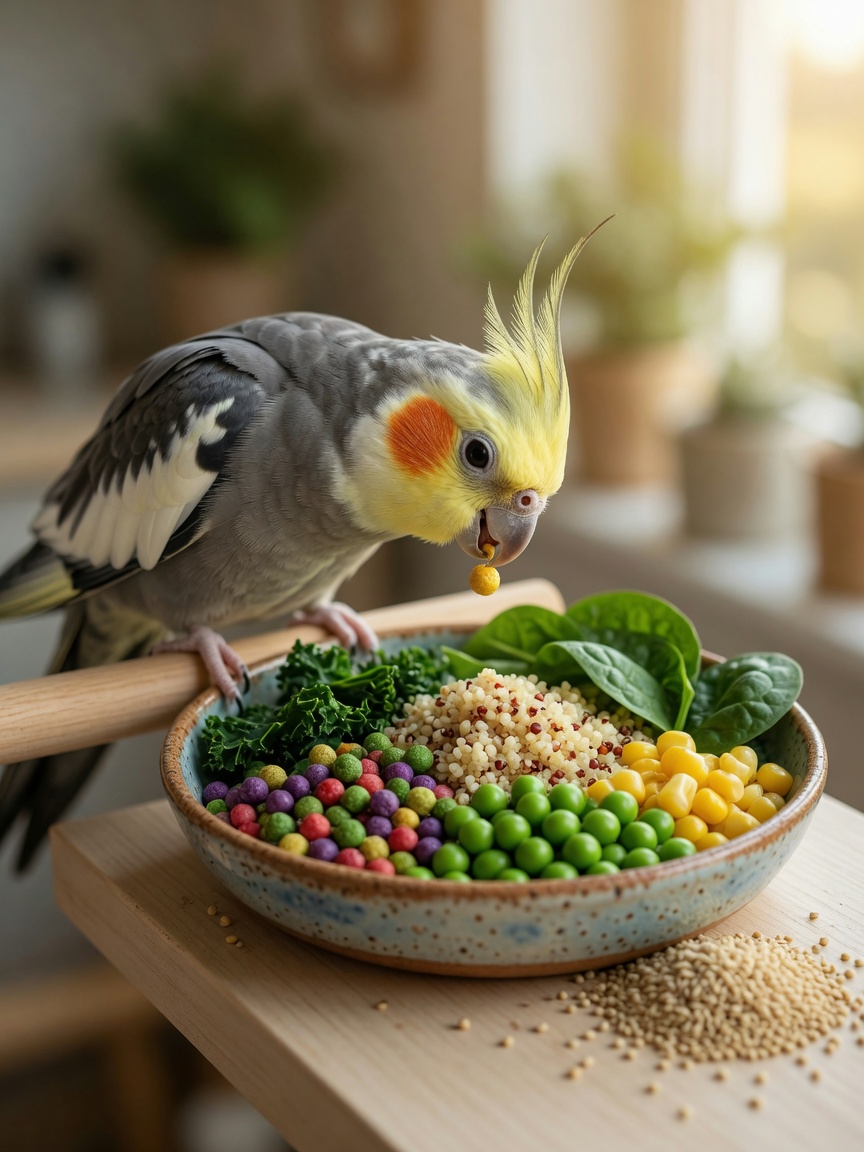
- Introduce high-quality pelleted food gradually, offered alongside (not instead of) seed initially. Harrison's and Roudybush are well-regarded options. Expect weeks to months before significant acceptance occurs.
- Offer dark leafy greens such as kale, spinach, rocket, and parsley. These are rich in beta-carotene and will help address vitamin A deficiency over time.
- Introduce cooked grains — quinoa, brown rice, and cooked pasta are often more readily accepted than raw vegetables initially.
- Offer fresh corn, peas, and carrot regularly. Many cockatiels accept these more readily than leafy greens.
- Avoid avocado, onion, garlic, chocolate, caffeine, and fruit seeds, all of which are toxic to birds.
- Reduce high-fat seeds like sunflower gradually rather than abruptly. Millet and plain canary grass seed are lower in fat and better as a seed component of a mixed diet.
- Weigh your bird weekly during dietary transitions. A loss of more than a few grams warrants slowing the pace of change.
The Longer-Term Picture
A cockatiel can live for fifteen to twenty-five years with excellent care. The dietary choices made in the first few years of life have a direct bearing on what the final decade looks like. Birds maintained on varied, nutritious diets consistently outlive and outperform those kept on seed alone. The transition from seed to a balanced diet is genuinely one of the most meaningful things a cockatiel owner can do for their bird's long-term health, even if the bird itself would strongly disagree.