
Understanding the Health Challenges That Affect Cockatiels Most
Cockatiels are among the most popular pet birds in the world, and for good reason — they are sociable, expressive, and relatively straightforward to care for. Yet behind that cheerful crest lies a bird that can be quietly vulnerable to a range of serious health conditions. Three that every cockatiel owner should understand are psittacosis, egg binding, and feather destructive behaviour. Each presents differently and requires a distinct approach, but all share one thing in common: early recognition dramatically improves outcomes.
Psittacosis in Cockatiels
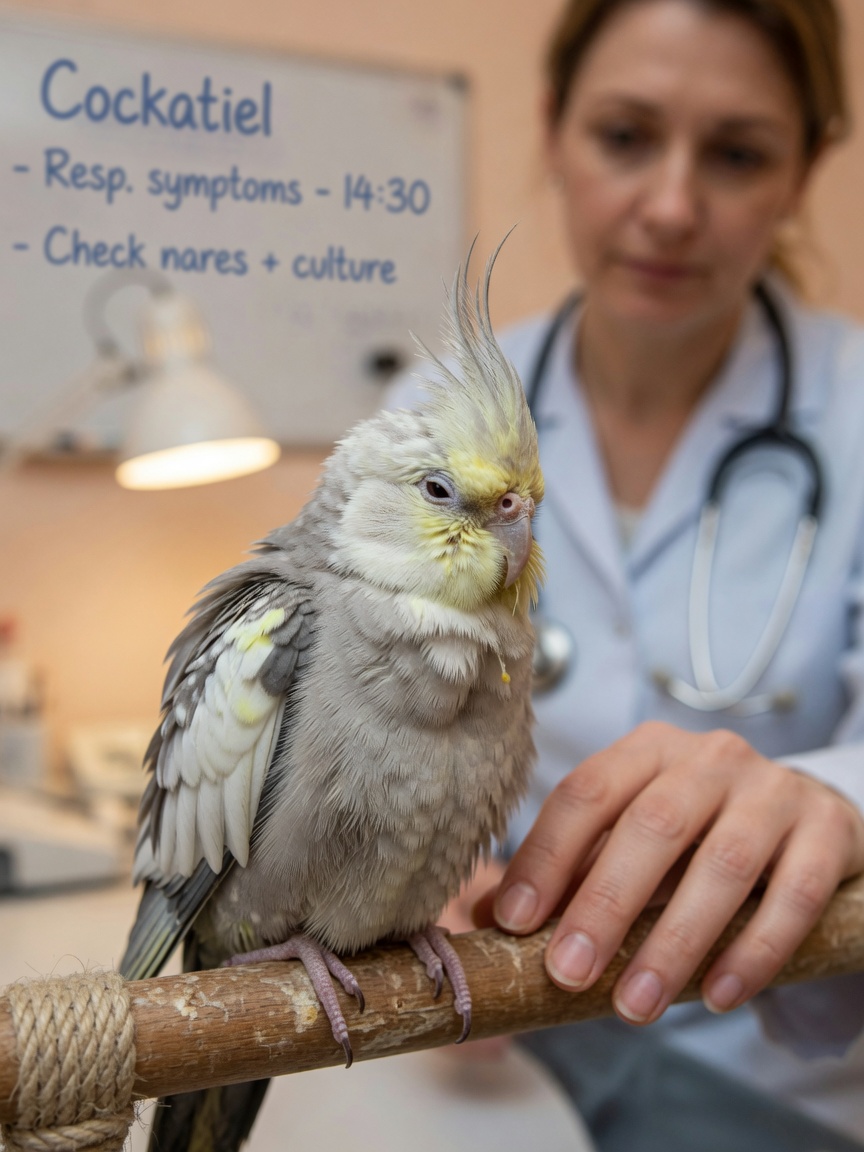
Psittacosis, caused by the intracellular bacterium Chlamydia psittaci, is sometimes called parrot fever. It is a zoonotic disease, meaning it can be transmitted from birds to humans, which makes prompt diagnosis not just important for the bird but a matter of human health too.
How It Presents in Cockatiels
Infected birds may show a range of symptoms, or in some cases none at all — cockatiels can carry the organism without appearing unwell, shedding it in faeces and respiratory secretions. When symptoms do appear, they typically include:
- Conjunctivitis (discharge from the eyes)
- Nasal discharge and sneezing
- Laboured breathing
- Lime-green or yellow-tinged droppings
- Weight loss and lethargy
Diagnosis and Treatment
Because psittacosis can be transmitted to humans — causing flu-like symptoms and, in rare cases, pneumonia — any bird showing the above signs should be assessed by an avian vet as a matter of priority. Testing typically involves PCR analysis of faecal samples or choanal swabs. Treatment with doxycycline over a 45-day course is the standard approach and is usually effective. Owners should practise good hygiene when handling a bird under investigation, including handwashing and avoiding face-level contact.
Egg Binding in Female Cockatiels
Egg binding occurs when a hen is unable to pass a formed egg through the reproductive tract in a normal timeframe. It is a genuine emergency. Without intervention, an egg-bound hen can deteriorate within hours.
Risk Factors and Symptoms
Female cockatiels that lay frequently — particularly those kept without a mate who lay infertile eggs in response to environmental stimulation — are at elevated risk. Nutritional deficiencies, particularly low calcium, obesity, and cold ambient temperatures also increase vulnerability. Signs of egg binding include:
- Straining or sitting on the cage floor in a hunched posture
- Tail bobbing or laboured breathing
- Swelling around the vent (cloaca)
- Inability to pass droppings
- Weakness in the legs
What to Do Immediately
If egg binding is suspected, do not attempt to manually extract the egg. This can rupture the reproductive tract and cause fatal internal bleeding. Instead, keep the bird warm — around 30–32°C — and seek veterinary care immediately. A vet may administer calcium supplementation, oxytocin to stimulate contractions, or perform a procedure to remove the egg safely. Prevention involves ensuring hens receive adequate dietary calcium through leafy greens, cuttlebone, and a quality pelleted diet, and reducing environmental cues that trigger chronic laying.
Feather Destructive Behaviour
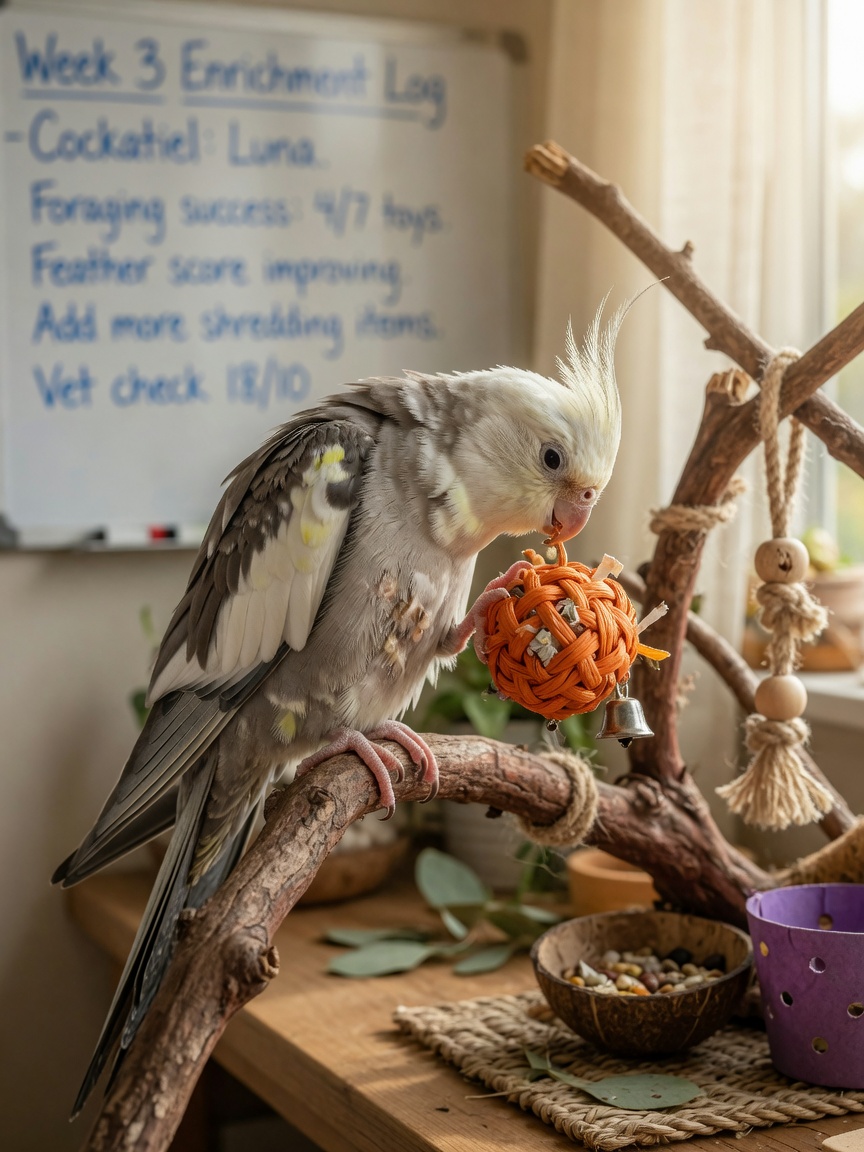
Feather destructive behaviour (FDB) — which includes feather plucking, chewing, and barbering — is one of the most complex and frustrating problems in companion bird medicine. It is not a single condition but a symptom with a wide range of potential underlying causes.
Medical Versus Psychological Causes
Before assuming FDB is behavioural, it is essential to rule out medical causes. These include bacterial or fungal skin infections, external parasites, psittacosis, liver disease, nutritional deficiencies, and hormonal imbalances. An avian vet should conduct a thorough physical examination, blood panel, and skin assessment before any behavioural intervention is considered.
If medical causes are excluded, psychological and environmental factors should be explored. Cockatiels are highly social birds and can develop FDB in response to boredom, inadequate sleep, chronic stress, a lack of foraging opportunity, or significant changes in their environment. Cockatiels that are overly bonded to a single person may also pluck when separated from them.
Management Strategies
There is no universal fix for FDB, and treatment often involves a combination of approaches. These may include:
- Increasing environmental enrichment — foraging toys, varied perches, and regular out-of-cage time
- Ensuring a minimum of 10–12 hours of uninterrupted sleep in a darkened, quiet environment
- Shifting from a seed-heavy diet to a nutritionally complete pelleted base
- Gentle modification of the bird-owner relationship to reduce over-dependence
- In some cases, veterinary prescription of anti-anxiety medication as part of a broader management plan
Building a Health-Focused Routine for Your Cockatiel
Cockatiels benefit enormously from structured daily care. Weighing your bird weekly, inspecting feathers and droppings during handling, and maintaining a stable routine all support early problem detection. An annual avian vet check is strongly recommended, and any bird showing signs of illness should not be left to see whether symptoms resolve on their own.
The conditions outlined above — psittacosis, egg binding, and feather destructive behaviour — are all manageable with the right knowledge and timely professional support. Your vet is your most important partner in keeping your cockatiel well.