

Chicken vs Salmon as Protein Source in Dog Food: Which Is Better?
Walk down any pet food aisle and you will find chicken and salmon competing for space on nearly every bag and tin. Both are marketed as premium protein sources, both appear in vet-recommended diets, and both have genuine nutritional merit. But if you are trying to decide which one belongs in your dog's bowl, the answer depends on more than marketing.
Why Protein Source Matters in Dog Food
Dogs are omnivores with a strong physiological lean towards animal protein. Protein provides the amino acids that build muscle, support immune function, regulate hormones, and maintain healthy skin and coat. The quality of a protein source is measured not just by its raw content but by its digestibility and amino acid profile — specifically whether it delivers all ten essential amino acids dogs cannot synthesise on their own.
Both chicken and salmon meet this requirement, but they get there differently.
Chicken: The Reliable Staple
Chicken is the most widely used protein in commercial dog food for good reason. It is highly digestible, broadly palatable, and provides an excellent leucine content, which is the amino acid most directly linked to muscle protein synthesis. Research consistently shows digestibility rates above 85 per cent for cooked chicken in dogs, which compares favourably with most other animal proteins.
Chicken is also a dependable source of B vitamins, particularly niacin and B6, as well as phosphorus and selenium. It tends to be lower in fat than red meats, making it appropriate for dogs prone to weight gain or pancreatitis when balanced correctly in a complete diet.
The one significant drawback of chicken is its prevalence in allergy discussions. Chicken is among the most common food allergens in dogs — not because it is inherently allergenic, but because it is so widely fed from puppyhood. Dogs develop food sensitivities through repeated exposure to the same proteins over time, and chicken's ubiquity means many dogs have encountered it in virtually every food they have ever eaten.
Salmon: The Omega-3 Advantage
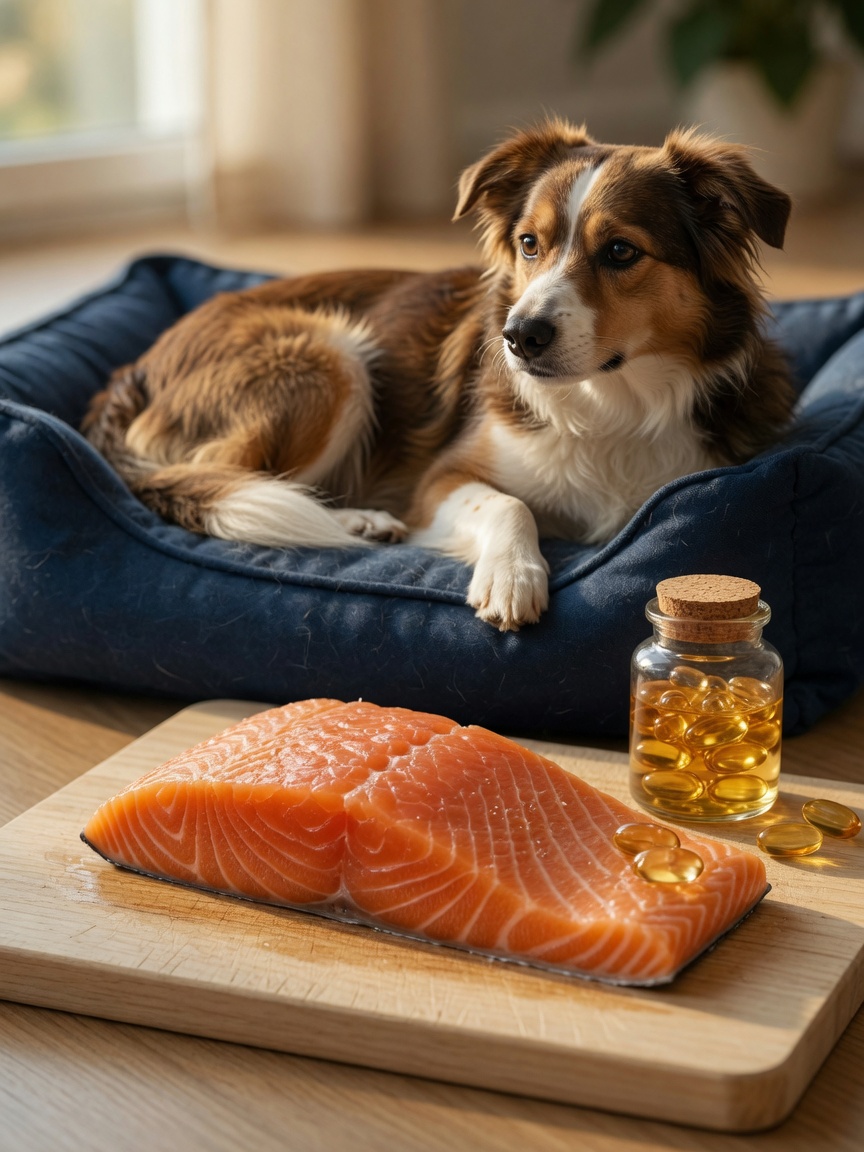
Salmon brings something chicken simply cannot match: a substantial natural source of long-chain omega-3 fatty acids, specifically EPA (eicosapentaenoic acid) and DHA (docosahexaenoic acid). These are the active forms of omega-3 that dogs can use directly, unlike the ALA found in plant-based sources such as flaxseed, which dogs convert only poorly.
EPA and DHA have well-documented anti-inflammatory effects. Studies in dogs have linked omega-3 supplementation from fish sources to improvements in coat quality, reduced joint inflammation in dogs with osteoarthritis, support for cognitive function in ageing dogs, and better outcomes in dogs with certain heart and kidney conditions. A chicken-based diet, unless supplemented separately, provides very little EPA or DHA.
Salmon also tends to be a novel protein for many dogs, making it a useful option in elimination diets when a chicken sensitivity is suspected. Its amino acid profile is complete and its digestibility is comparable to chicken when properly processed.
The downsides of salmon in dog food relate mainly to sourcing and sustainability. Wild-caught salmon is nutritionally superior to farmed salmon, which can have a less favourable omega-3 to omega-6 ratio depending on what the fish are fed. Heavy metal contamination — particularly mercury — is a concern with some fish species, though salmon is generally considered lower risk than larger predatory fish. Always look for clearly labelled, responsibly sourced salmon in pet food.
Comparing the Nutritional Profiles
- Protein digestibility: Both score well, typically 83 to 92 per cent in dogs
- Omega-3 fatty acids: Salmon is significantly higher in EPA and DHA
- Omega-6 fatty acids: Chicken (particularly chicken fat) is higher
- B vitamins: Both are good sources; chicken edges ahead on niacin
- Allergen risk: Chicken carries a higher historical sensitisation risk
- Cost and availability: Chicken is more affordable and consistent in quality
Which Dog Benefits From Which Protein?
For most healthy adult dogs without known sensitivities, a high-quality chicken-based diet is entirely adequate and well-supported by the evidence. It is cost-effective, palatable, and digestible. If the diet is formulated to include a fish oil supplement or another omega-3 source, the main nutritional gap is closed.
Salmon becomes the more logical choice for dogs with suspected chicken allergies or intolerances, dogs with inflammatory conditions such as arthritis or skin disease where omega-3 intake is therapeutically relevant, and older dogs where cognitive and joint support is a priority. Puppies also benefit from DHA for brain and retinal development, which is why many premium puppy foods include salmon or fish oil alongside their primary protein.
Some of the best commercial diets on the market use both proteins in combination, cycling between chicken and salmon or blending them to capture the strengths of each. Rotation feeding — deliberately alternating protein sources over time — is a strategy favoured by many holistic vets as a way to reduce sensitisation risk while broadening nutritional coverage.
What to Look for on the Label
Regardless of which protein you choose, the ingredient list matters. "Chicken" or "salmon" listed as the first ingredient means the whole, fresh form is used by weight before cooking. "Chicken meal" or "salmon meal" refers to a dried, concentrated form that is actually higher in protein by weight than fresh meat — both are acceptable. Avoid products that rely heavily on by-product meals of unclear origin or list multiple unnamed fish species without specification.
Neither chicken nor salmon is universally superior. The better protein for your dog is the one that suits their health status, their history of sensitivities, and the overall formulation of the diet they are eating.