
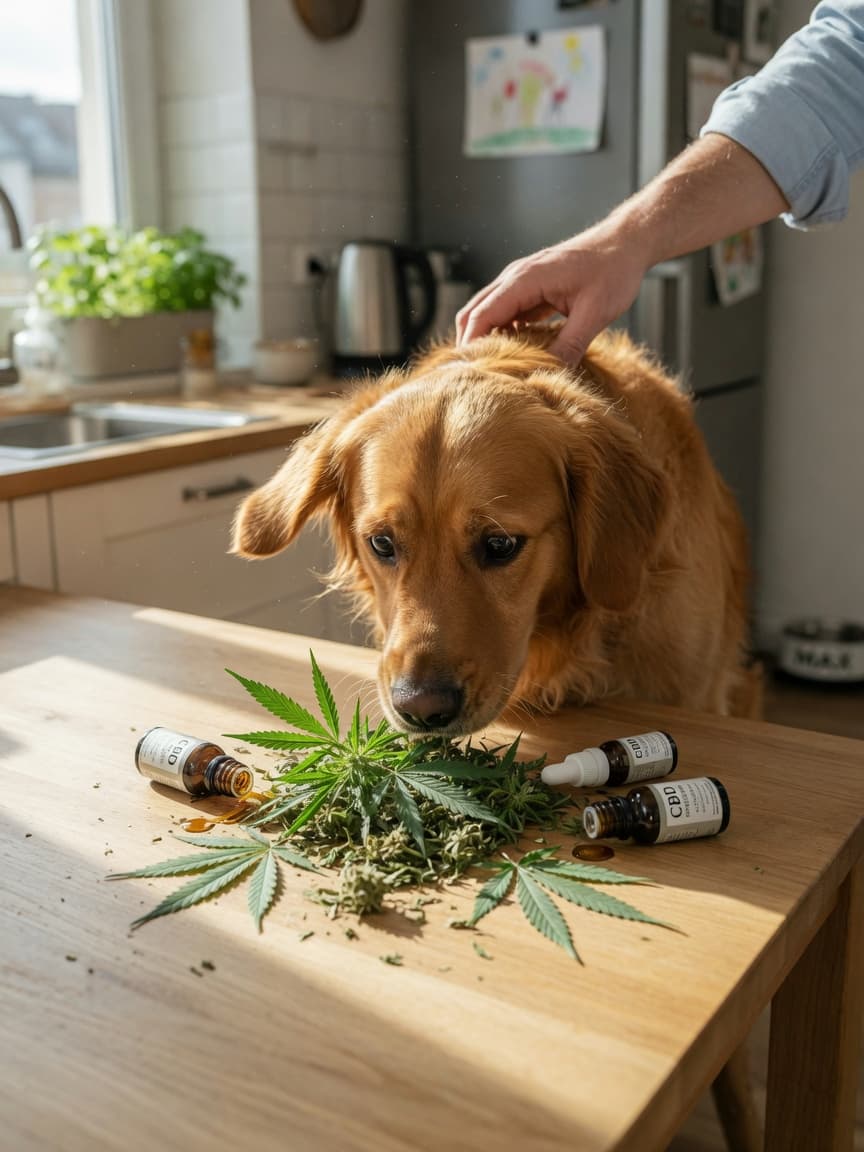
Cannabis and Pets: THC Toxicity vs CBD Research
Cannabis is now legal for recreational or medicinal use in a growing number of countries, and as it becomes more common in homes, it is also becoming more common in veterinary emergency rooms. At the same time, CBD products marketed specifically for pets have flooded the market, claiming to help with everything from anxiety to arthritis. These two facts together create a great deal of confusion for pet owners trying to understand what is safe, what is not, and what the science actually says.
Understanding the Cannabis Plant
Cannabis contains over a hundred active compounds called cannabinoids. Two are of particular relevance here. Tetrahydrocannabinol (THC) is the psychoactive compound responsible for the "high" associated with recreational cannabis use. Cannabidiol (CBD) is a non-psychoactive cannabinoid that has attracted significant research interest for its potential therapeutic properties.
Hemp is a variety of the cannabis plant bred to contain very low levels of THC — typically below 0.2% under EU regulations and 0.3% in the United States. Most CBD products derived from hemp will contain only trace amounts of THC, which matters significantly when we talk about safety in animals.
THC Toxicity in Dogs and Cats
Dogs and cats are far more sensitive to THC than humans. This is because they have a higher density of cannabinoid receptors in their brains, which means the same dose that produces a mild effect in a person can cause serious distress in an animal.
THC toxicity in pets typically occurs through accidental ingestion — eating cannabis plant material, edibles, or concentrated cannabis products. Clinical signs usually appear within thirty minutes to two hours and can include:
- Loss of coordination and stumbling
- Dilated pupils and glassy eyes
- Dribbling and excessive drooling
- Vomiting
- Lethargy or unresponsiveness
- Tremors or seizures in severe cases
- Urinary incontinence
Most cases of THC toxicity in pets are not fatal, but they are distressing and can be dangerous, particularly if the animal has ingested an edible that also contains other toxic ingredients such as chocolate or xylitol. Treatment is largely supportive — keeping the animal calm, warm, and monitored while the THC clears their system, with intravenous fluids if needed.
If you suspect your pet has ingested cannabis, contact your vet immediately. Do not delay out of embarrassment about the source of the poisoning — veterinarians are not in a position to report you, and prompt treatment can make a significant difference to your pet's recovery.
The Rise of CBD Products for Pets
CBD products for pets — oils, treats, capsules — have become a substantial commercial market. The claims made for them are often sweeping: reduced anxiety, better sleep, pain relief, anti-inflammatory effects, seizure control. But what does the evidence actually look like?
The honest answer is that the research is still maturing. A 2019 study published in Frontiers in Veterinary Science found that CBD oil at 2mg per kilogram of body weight twice daily produced significant improvements in pain scores and mobility in dogs with osteoarthritis, with no observable adverse effects. This was a randomised, placebo-controlled trial, which gives it more weight than anecdotal reports.
Studies in dogs with epilepsy have produced more mixed results. A 2019 trial at Colorado State University found that 89% of dogs receiving CBD experienced a reduction in seizure frequency, though the overall effect size was modest and the study population was small. Further trials are ongoing.
Research into CBD for anxiety in dogs — one of the most commonly cited reasons owners give for using it — is still limited. Most available data comes from owner-reported outcomes rather than objective behavioural measures, which makes it difficult to separate genuine therapeutic effects from placebo responses by proxy.
Safety Concerns With CBD Products
CBD itself appears to be well-tolerated in dogs at appropriate doses, but the product landscape is problematic. Third-party testing of pet CBD products has repeatedly revealed that many contain either more or less CBD than stated on the label, and some contain detectable levels of THC that exceed safe thresholds for animals.
In the UK, CBD products for pets currently occupy a legal grey area. The Veterinary Medicines Directorate classifies CBD as a veterinary medicine when used therapeutically, which means most commercially available products are technically unlicensed. This does not automatically make them unsafe, but it does mean they are not subject to the same quality controls as licensed medicines.
Liver enzyme elevations have been noted in some dogs given higher doses of CBD, which means baseline and monitoring blood tests are advisable for pets on long-term use.
How to Approach This With Your Vet
- Be open with your vet if you are already giving your pet a CBD product — it can interact with other medications, particularly those metabolised by the liver
- Ask for a product that has been third-party tested, with a certificate of analysis confirming THC levels
- Start at the lowest recommended dose and monitor for changes in appetite, digestion, or behaviour
- Do not substitute CBD for a prescribed medication without veterinary guidance
The distinction between THC and CBD is not merely technical — it is the difference between an accidental poisoning and a potentially useful therapeutic tool. Treating them as separate subjects, rather than conflating all cannabis-derived products together, is essential for making informed decisions about your pet's health.