
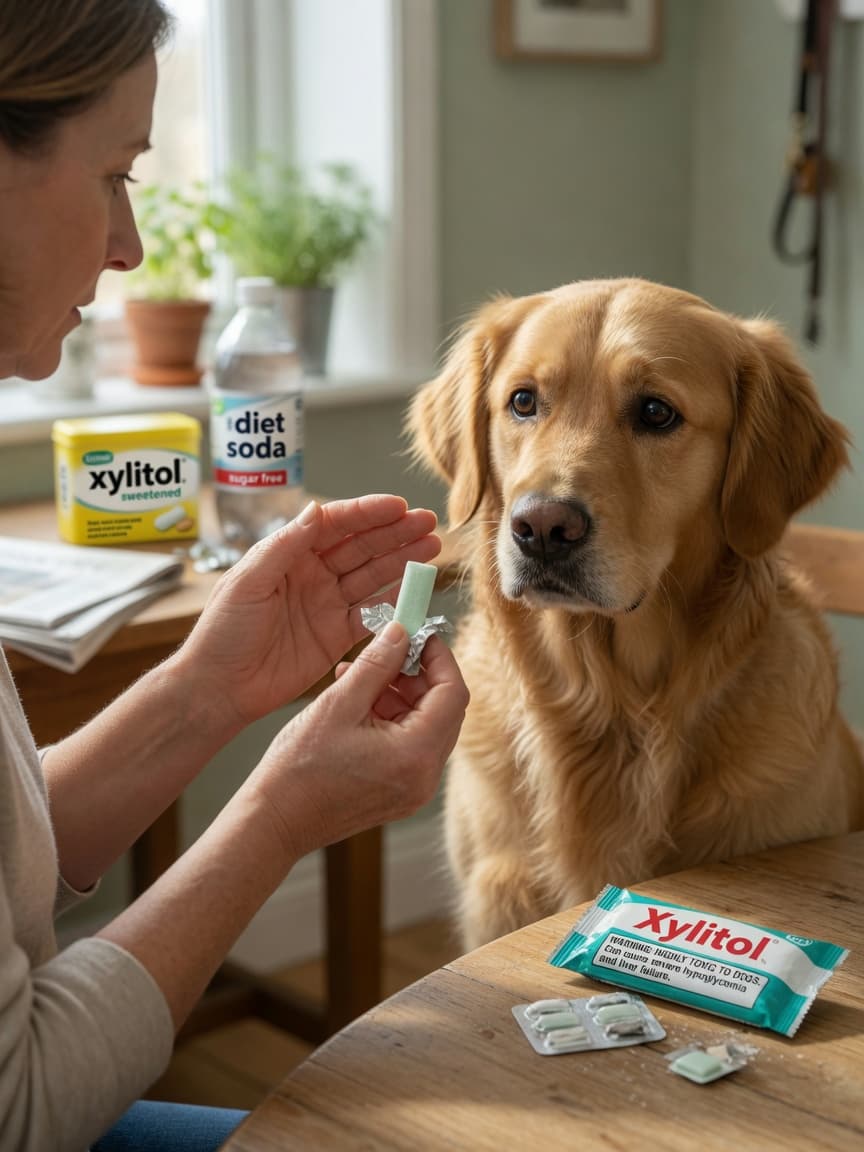
Can dogs eat xylitol?
No — xylitol is toxic to dogs and must never be fed to them under any circumstances. Even small amounts of xylitol can cause serious, life-threatening illness or death in dogs. If you suspect your dog has consumed xylitol, you must contact your veterinary surgery or poison control immediately.
What is xylitol?
Xylitol is a sugar alcohol commonly used as a sweetener in many human foods and products. It appears in sugar-free sweets, chewing gums, baked goods, peanut butter, toothpaste, and mouthwash. Because it has fewer calories than sugar and doesn't cause tooth decay, it's increasingly popular in products marketed as "healthy" or "diet" alternatives. This widespread use means xylitol is present in many household items, making accidental poisoning a genuine risk for dog owners.
Why is xylitol toxic to dogs?
Dogs metabolise xylitol very differently from humans. When a dog ingests xylitol, their body mistakes it for glucose and rapidly releases insulin from the pancreas. This causes blood sugar levels to drop dangerously fast — a condition called hypoglycaemia. Additionally, xylitol can damage the liver, potentially causing acute liver failure. The combination of severe hypoglycaemia and liver damage makes xylitol poisoning extremely dangerous.
How much xylitol is dangerous?
Even relatively small amounts can be harmful. The toxic dose depends on your dog's weight, but poisoning can occur from as little as one or two sugar-free sweets or a small spoonful of sugar-free peanut butter in some cases. Larger amounts significantly increase the risk of severe liver damage. Because the dangerous dose varies and the effects are serious, any consumption of xylitol should be treated as a veterinary emergency.
Symptoms of xylitol poisoning in dogs
Signs of xylitol toxicity can appear within 30 minutes of ingestion, though symptoms may develop over several hours. Early signs of hypoglycaemia include:
• Vomiting
• Loss of coordination and weakness
• Trembling or seizures
• Lethargy or collapse
• Rapid or irregular heartbeat
• Restlessness or anxiety
If your dog has consumed xylitol, do not wait for symptoms to appear. Contact your veterinary surgery or animal poison control immediately, even if your dog seems well. The window for effective treatment is short, and early intervention can be life-saving.
What to do if your dog eats xylitol
Act immediately. Call your veterinary surgery straight away or contact the Animal Poison Control Centre (APCC) or your local poison information service. Have the following information ready:
• Your dog's weight
• What product your dog consumed
• The approximate amount consumed
• When it was consumed
• Your dog's current symptoms, if any
Your vet may induce vomiting if the xylitol was eaten very recently, or provide supportive care including intravenous fluids, glucose monitoring, and liver function tests. Do not attempt home treatment or wait to see if symptoms develop — professional medical intervention is essential.
Preventing xylitol poisoning
The best protection is prevention. Check ingredient labels on sugar-free products before bringing them into your home, particularly sugar-free sweets, baked goods, nut butters, and dental products. Keep these items well out of your dog's reach, stored in closed cupboards rather than on countertops. Be especially vigilant during festive periods when sugar-free treats are more common. If you're unsure whether a product contains xylitol, assume it might and keep it away from your dog.
Summary
Xylitol is toxic to dogs and poses a serious, potentially fatal risk. Never intentionally give xylitol-containing products to your dog, and be vigilant about preventing accidental access to household items containing this sweetener. If your dog consumes xylitol, seek veterinary help immediately. Swift action can make the difference between recovery and tragedy.