
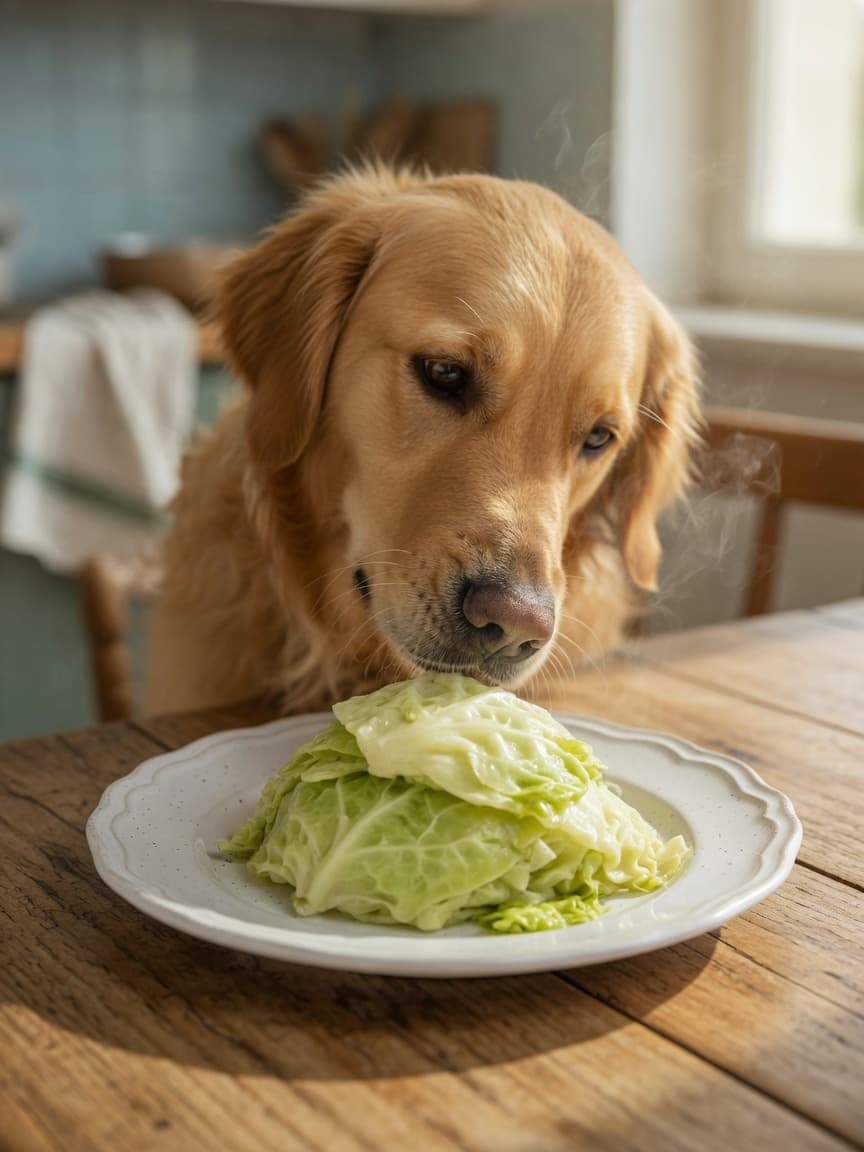
Can Dogs Eat Cabbage?
Yes, dogs can eat cabbage in moderation. Plain, cooked cabbage is generally safe for most dogs and can even offer some nutritional benefits. However, it should only be offered as an occasional treat rather than a regular part of their diet or a meal replacement.
Is Cabbage Safe for Dogs?
Cabbage is non-toxic to dogs, making it a reasonable vegetable choice for a safe snack. Unlike some foods that are genuinely dangerous to canine health, cabbage poses no serious toxicity risk when given appropriately. That said, "safe" doesn't mean "essential," and there are important guidelines to follow.
Nutritional Benefits
Cabbage contains vitamins C and K, fibre, and antioxidants that can support overall canine health. The fibre content may aid digestion, and the antioxidants can contribute to cellular health. For a dog already eating a complete and balanced diet, these added nutrients are a modest bonus rather than a necessity.
How Much Cabbage Can Dogs Have?
Moderation is key. Cabbage should make up no more than 5–10% of your dog's daily caloric intake. For most dogs, this means offering just a small handful of cooked cabbage a few times per week, if at all. Larger dogs can tolerate slightly larger portions than smaller breeds, but the principle remains the same: treat it as an occasional snack, not a dietary staple.
How to Serve Cabbage Safely
Cooked is best. Always serve cabbage cooked rather than raw. Cooking makes it softer and easier to digest, reducing the risk of upset stomach or intestinal irritation. Simply steam or boil plain cabbage without adding salt, oil, garlic, onions, or any seasonings.
Keep it plain. Never add butter, salt, garlic, or onions to cabbage before giving it to your dog. Garlic and onions are toxic to dogs and can damage their red blood cells. Even small amounts of these ingredients pose a genuine risk.
Cut into manageable pieces. Chop the cooked cabbage into small, bite-sized pieces to prevent choking hazards, particularly for smaller dogs or those who gulp their food without chewing.
Cool before serving. Always allow cooked cabbage to cool completely before offering it to your dog.
Potential Caveats
Raw cabbage can be difficult for some dogs to digest and may cause bloating or gas, particularly if given in large quantities. This is another reason to serve it cooked and in small amounts.
Dogs with certain health conditions, such as thyroid issues, should have cabbage limited or avoided altogether, as it contains compounds that can interfere with iodine absorption. If your dog has a pre-existing medical condition, consult your vet before introducing cabbage.
Some dogs may simply have sensitive stomachs and react poorly to any new food. If you're introducing cabbage for the first time, start with a very small amount and monitor your dog for signs of digestive upset, such as vomiting, diarrhoea, or unusual letharness.
What About Other Pets?
Cats are obligate carnivores and have minimal nutritional need for vegetables. While a tiny piece of plain, cooked cabbage is unlikely to harm a cat, it offers little to no benefit and should never be encouraged. Rabbits, by contrast, can eat small amounts of leafy green cabbage regularly as part of their varied diet.
The Bottom Line
Cabbage is a safe, non-toxic vegetable that can be offered to dogs as an occasional treat when prepared correctly—cooked, plain, and in small portions. It's neither necessary nor harmful when given in moderation. If your dog enjoys it and shows no signs of digestive upset, there's no reason to avoid it entirely. However, it should never replace a complete, balanced commercial or veterinary-approved diet.
As always, if you have concerns about your dog's diet or notice any adverse reactions to new foods, contact your veterinary surgeon for personalised advice.