
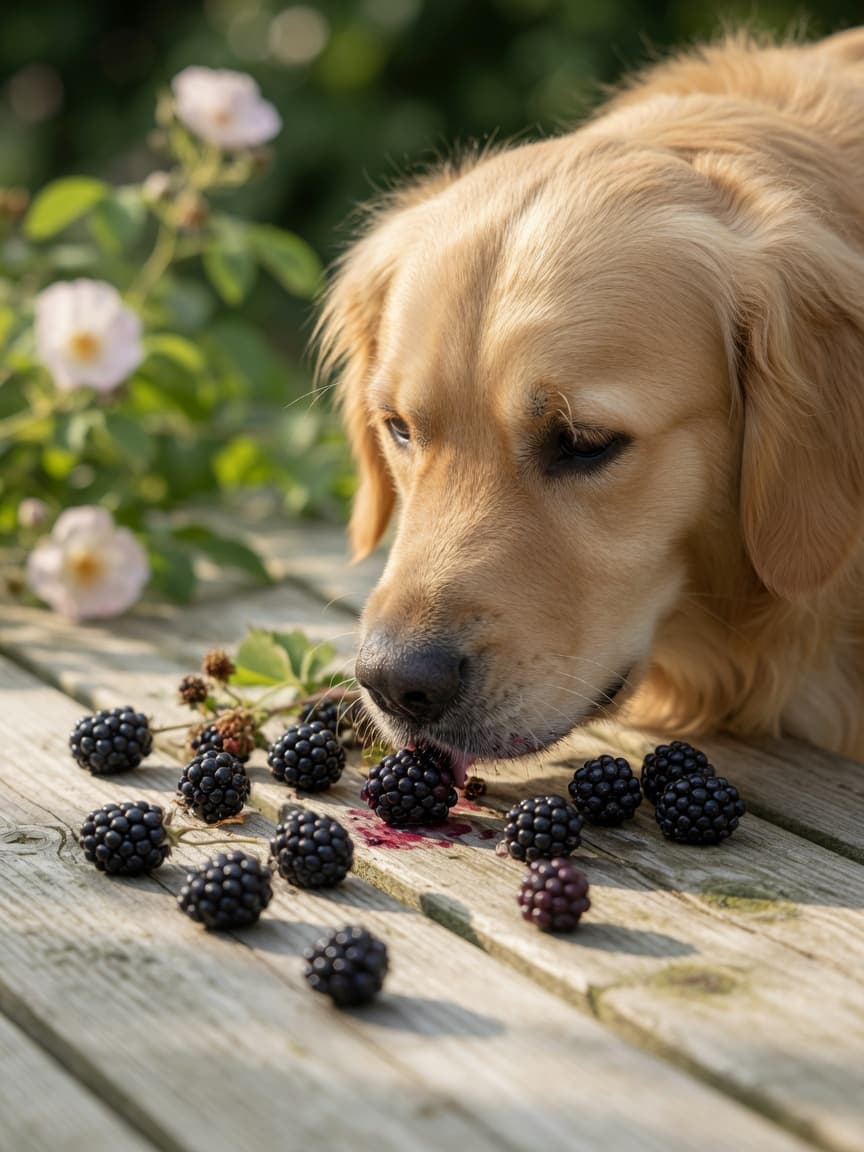
Can Dogs Eat Blackberries?
Yes, dogs can eat blackberries in moderation. These small dark berries are generally safe for your canine companion and can make a refreshing, healthy occasional treat. However, like all treats, blackberries should only be offered sparingly and should never replace a balanced, complete dog food diet.
Nutritional Benefits of Blackberries
Blackberries contain several nutrients that can be beneficial for dogs when given occasionally. They are rich in vitamin C, which supports immune function, and vitamin K, which plays a role in blood clotting and bone health. These berries also provide fibre, which can aid digestive health, and contain antioxidants that help protect cells from damage.
The low calorie content of blackberries makes them a better choice than many commercial dog treats, particularly if your dog is overweight or on a weight management plan. They're also free from artificial sweeteners, colours, and preservatives—assuming you're offering fresh berries.
How Much Can Your Dog Have?
Moderation is key when offering blackberries to your dog. A few berries as an occasional treat a couple of times per week is appropriate for most dogs. The exact amount depends on your dog's size; a small dog might enjoy just 2 or 3 berries, whilst a larger breed could have a small handful. Remember that treats, including fruits, should make up no more than 10 percent of your dog's daily calorie intake.
If your dog has never eaten blackberries before, introduce them gradually and in small quantities to monitor for any digestive upset or allergic reactions.
How to Serve Blackberries Safely
When offering blackberries to your dog, always wash them thoroughly under running water to remove any dirt, pesticide residue, or bacteria. Serve them fresh and raw—avoid blackberries preserved in syrup or those mixed with added sugars, as these are unsuitable for dogs.
You can offer blackberries whole for most dogs, as they're soft enough to chew easily. However, if your dog tends to swallow treats without chewing, or if you have a very small dog, you might consider cutting the berries in half to reduce choking risk.
Some owners freeze blackberries to create a cooling treat on warm days, which many dogs enjoy. This can also slow down consumption slightly, making the treat last longer.
Potential Concerns and Caveats
Whilst blackberries are generally safe, there are a few considerations to keep in mind. The fibre content, whilst beneficial in small amounts, could cause digestive upset if your dog eats too many berries at once. Symptoms might include mild diarrhoea or constipation.
Dogs with certain health conditions should check with their veterinarian before eating blackberries. For example, dogs with diabetes should have their fruit intake monitored, as blackberries do contain natural sugars. Similarly, dogs taking blood thinners or with clotting disorders should consume blackberries only under veterinary guidance, given their vitamin K content.
If your dog has a sensitive stomach or a history of gastrointestinal problems, introduce blackberries very cautiously and monitor for adverse reactions. Some individual dogs may have difficulty tolerating certain fruits regardless of how safe they are for the general dog population.
What About Cats?
If you have cats as well as dogs in your household, you may wonder whether they can share this treat. Cats are obligate carnivores, meaning they have nutritional requirements very different from dogs. Whilst blackberries are non-toxic to cats, they offer little nutritional value and cats typically show little interest in them. It's best to stick to cat-appropriate treats for your feline companions.
Summary
Blackberries can be a safe and nutritious occasional treat for dogs, offering vitamin C, fibre, and antioxidants without excessive calories. Serve them fresh, washed, and in small quantities, and always ensure they don't replace your dog's regular balanced diet. If you have any concerns about your individual dog's health or dietary needs, discuss introducing new foods with your veterinarian.