
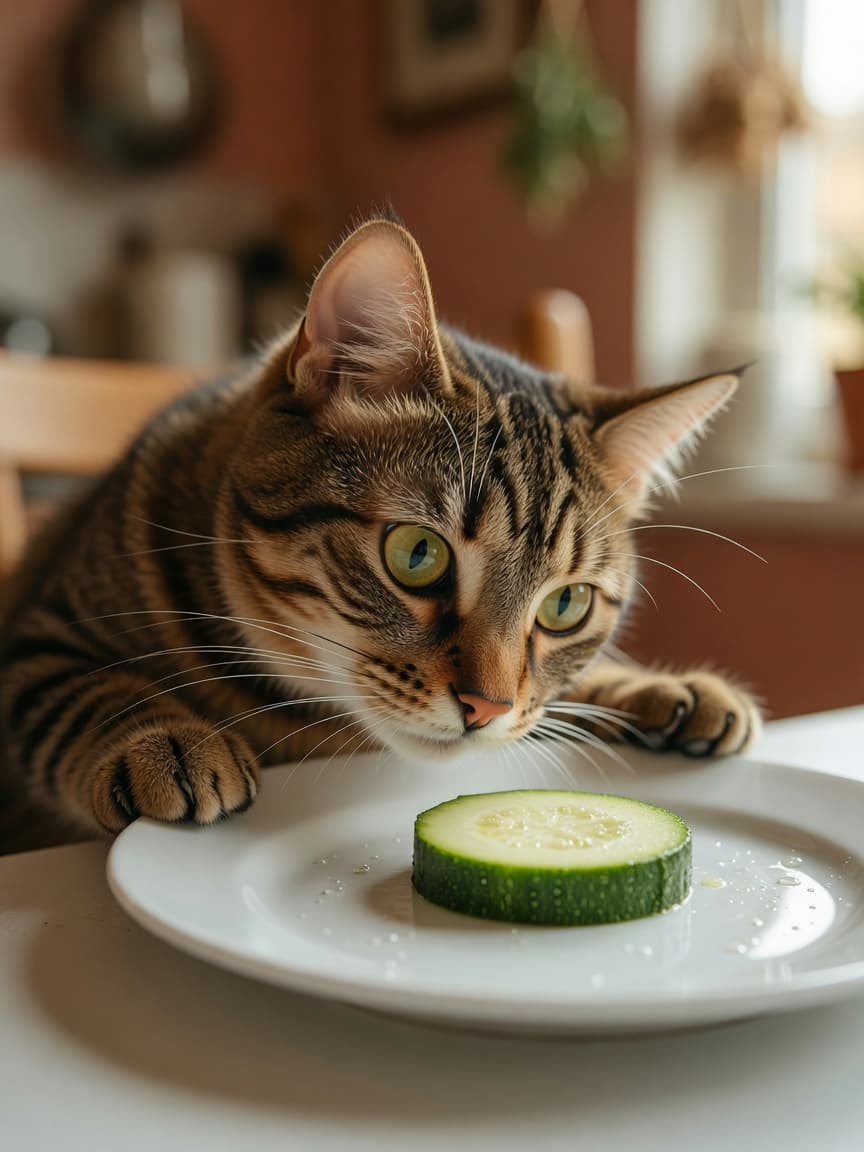
Can cats eat zucchini?
Yes, cats can eat zucchini in moderation as an occasional treat. Zucchini is generally safe for cats and is unlikely to cause harm when offered properly. However, because cats are obligate carnivores, zucchini should never replace their regular protein-based diet and should only be given occasionally, not as a daily food.
Is zucchini good for cats?
Whilst zucchini isn't essential to your cat's diet, it does offer some minor nutritional benefits. Zucchini is low in calories, contains a small amount of vitamins (including vitamin C and potassium), and has a high water content. This moisture can be helpful for cats, particularly those who don't drink enough water throughout the day.
Some owners find that offering small amounts of zucchini can be a useful way to add variety to their cat's diet or to provide a low-calorie treat option. For cats that are overweight or those on a calorie-restricted diet, zucchini can be a sensible alternative to higher-calorie treats.
The importance of your cat's obligate carnivore diet
It's crucial to remember that cats are obligate carnivores. This means they require nutrients that are found primarily in animal protein, such as taurine, which is essential for heart and eye health. Vegetables like zucchini do not contain sufficient taurine or other nutrients that cats need to thrive. Offering zucchini as a treat is fine, but it should never replace meat or be used as a meal component.
Your cat's main diet should always consist of high-quality commercial cat food or, if you feed a homemade diet, one that has been properly formulated by a veterinary nutritionist.
How much zucchini can you give your cat?
If you decide to offer zucchini, keep portions very small. A piece no larger than a thumbnail or a few small cubes is appropriate. Zucchini should be offered only occasionally—perhaps once or twice a week at most—rather than as a regular daily treat.
Introduce zucchini gradually, as with any new food. Start with just a tiny piece to monitor how your cat responds and to ensure it doesn't upset their stomach.
How to prepare zucchini safely for cats
Always prepare zucchini properly before offering it to your cat. Raw zucchini is safe, but you should wash it thoroughly under running water to remove any dirt or pesticides. Cut it into small, bite-sized pieces to prevent choking risk.
Cooked zucchini is also safe and may be easier for your cat to digest. You can steam or boil plain zucchini without adding salt, butter, oil, or any seasonings. Never offer zucchini that has been cooked with garlic, onions, or excessive salt, as these can be harmful to cats.
Avoid offering zucchini from processed sources, such as canned zucchini in brine or zucchini prepared with other ingredients. Stick to plain, fresh zucchini prepared simply.
Potential concerns and when to avoid zucchini
Whilst zucchini is safe for most cats, there are a few situations where you should avoid it. If your cat has a sensitive digestive system or a history of gastrointestinal issues, introduce new foods cautiously and consult your vet before offering zucchini.
Some cats may not be interested in vegetables at all, and that's perfectly normal. Never force your cat to eat zucchini if they're not keen on it. The goal is to offer it only if your cat shows interest and if you believe it will be beneficial.
If your cat eats a large quantity of zucchini or experiences vomiting, diarrhoea, or loss of appetite after consuming it, stop offering it and contact your veterinary surgeon.
The bottom line
Zucchini is a safe, low-calorie treat that can occasionally be offered to your cat in small amounts. It poses no toxicity risk and may provide minor nutritional benefits, particularly as a hydrating treat. However, it should never form a significant part of your cat's diet or replace their essential meat-based nutrition.
If you have any concerns about your cat's diet or are unsure whether zucchini is appropriate for your individual cat, always consult your veterinary surgeon.