
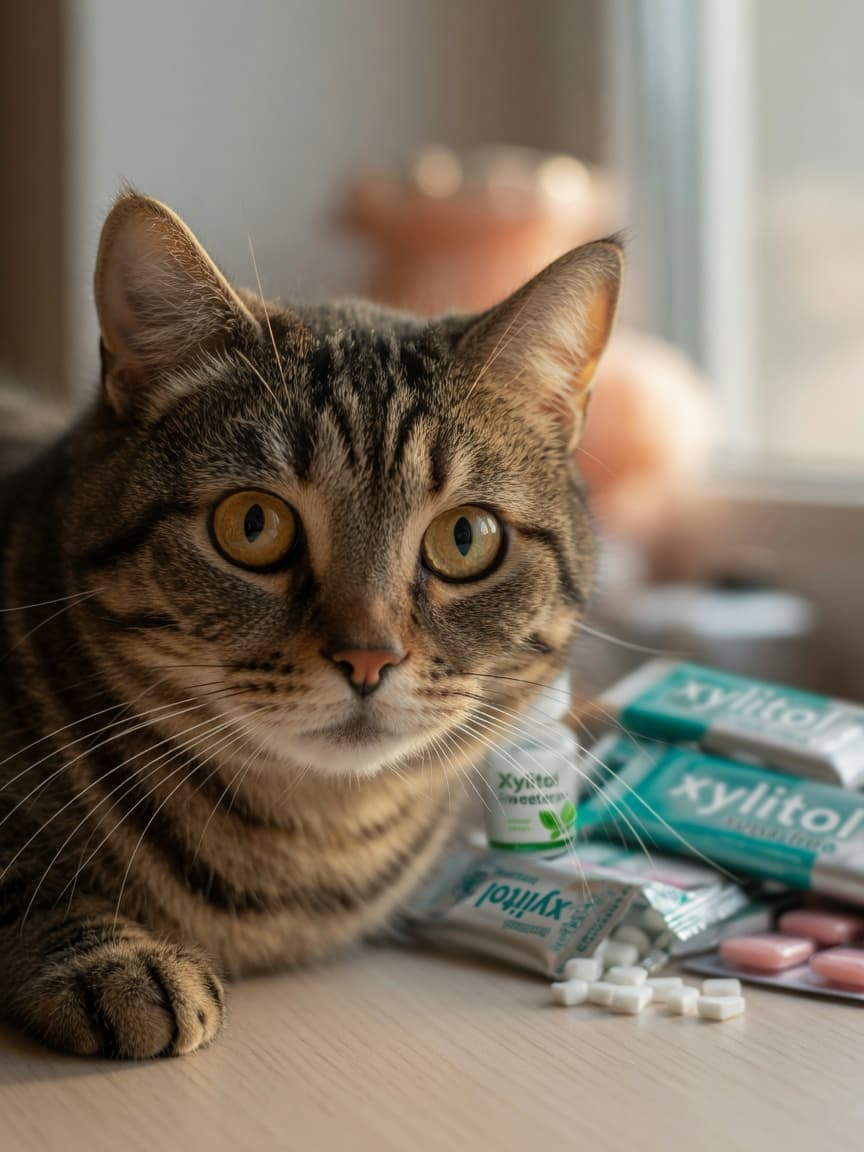
Can cats eat xylitol?
No — xylitol is toxic to cats and must never be fed to them under any circumstances. Xylitol is a sugar substitute commonly found in sugar-free products, and it can cause serious illness or even death in felines. If your cat has consumed xylitol, you must contact your veterinarian or an animal poison control centre immediately.
What is xylitol?
Xylitol is an artificial sweetener used in many sugar-free human foods and products. You'll commonly find it in sugar-free chewing gum, mints, baked goods, peanut butter, toothpaste, and some medicines. Because it's a "natural-sounding" ingredient, many people assume it's safe for pets, but this assumption is dangerously wrong.
Why is xylitol toxic to cats?
Whilst xylitol affects dogs more dramatically than cats, it is still genuinely toxic to felines. When cats ingest xylitol, it interferes with their liver function and can cause rapid drops in blood sugar levels (hypoglycaemia). This toxic effect occurs because xylitol triggers the release of insulin in the cat's body, causing blood glucose to plummet dangerously.
Additionally, xylitol can damage liver cells directly, potentially leading to liver failure. Cats are obligate carnivores whose bodies are designed to process meat-based diets, making them particularly vulnerable to toxins that affect metabolic pathways. Their livers cannot process xylitol safely, and even small amounts can cause harm.
Symptoms of xylitol poisoning in cats
The signs of xylitol toxicity may develop quickly or over several hours, depending on the amount consumed. Watch for the following symptoms:
Vomiting and diarrhoea are often early signs. Your cat may seem lethargic or unusually drowsy. You might notice trembling, weakness, or loss of coordination. In severe cases, seizures can occur. Some cats experience abdominal pain and may refuse to eat. As liver damage progresses, you may notice yellowing of the gums, eyes, or skin (jaundice), dark urine, or pale gums.
Hypoglycaemia symptoms include restlessness, rapid heartbeat, confusion, and collapse. Because these signs can develop rapidly, any suspicion of xylitol ingestion requires immediate veterinary attention — do not wait to see if symptoms develop.
What to do if your cat eats xylitol
If you know or suspect your cat has consumed xylitol, contact your veterinarian or animal poison control centre right away. Time is critical with toxin cases. Have the following information ready:
The name and amount of the product your cat consumed, the time of ingestion (or your best estimate), and your cat's weight. Do not induce vomiting unless instructed to do so by a veterinary professional, as this can sometimes cause additional harm.
Your vet may recommend monitoring, blood tests to check liver function and blood glucose levels, or supportive care such as intravenous fluids and glucose supplementation. Early treatment significantly improves outcomes, so never delay seeking help because you're unsure whether the amount was "significant enough."
Preventing xylitol poisoning
The best protection is prevention. Check ingredient labels on all sugar-free products before bringing them into your home. This includes sugar-free gum, mints, baked goods, peanut butter, and oral hygiene products. Keep these items in cupboards or drawers where your cat cannot access them.
Be especially careful with products marketed as "healthy" or "diabetic-friendly" for humans, as these are more likely to contain xylitol. If visitors come to your home, politely mention that you have a cat and ask them to keep their bags and snacks secure.
Educate family members, especially children, about the danger. A curious kitten investigating a dropped piece of sugar-free gum could ingest enough xylitol to cause serious harm.
Summary
Xylitol is toxic to cats and should never be given to them intentionally or allowed as accidental exposure. Even small amounts can cause liver damage and dangerous drops in blood sugar. If you suspect your cat has eaten xylitol, contact a veterinarian or poison control centre without delay. With prompt treatment, many cats recover, but waiting can be fatal.