
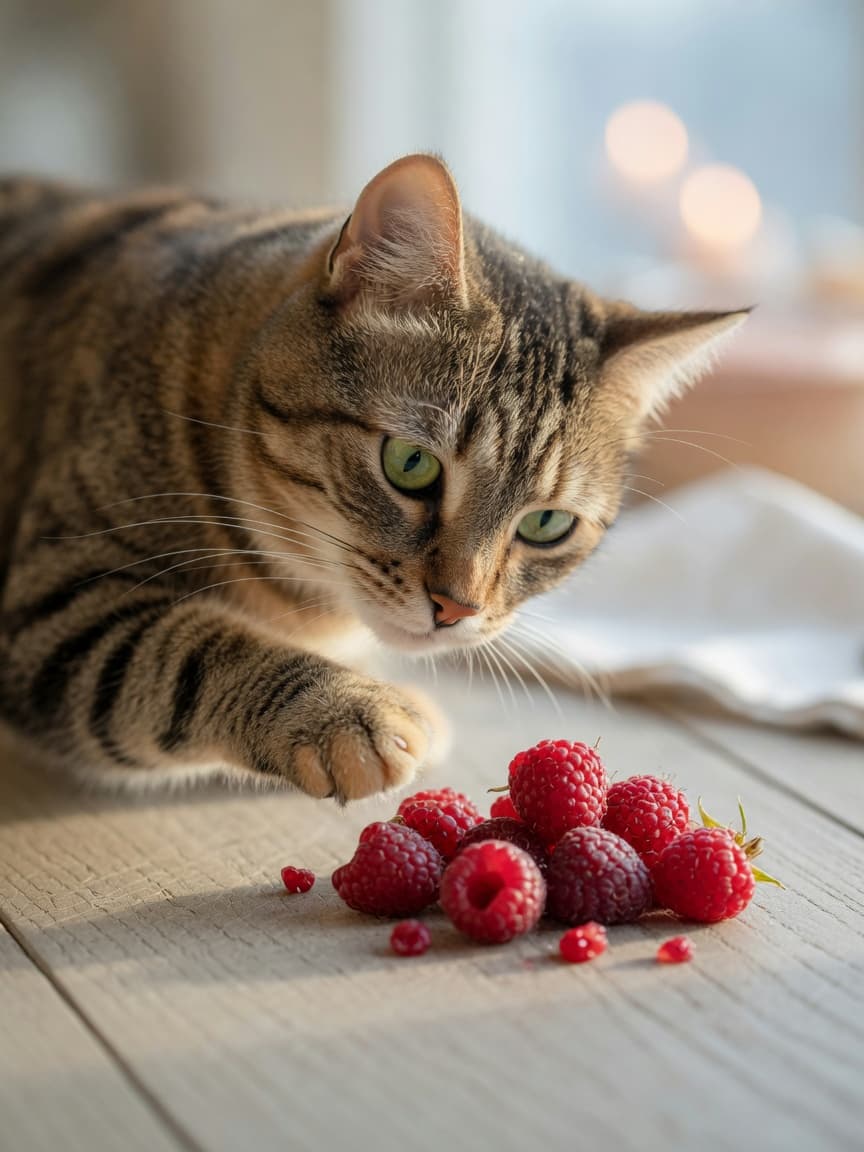
Can cats eat raspberries?
Yes, cats can eat raspberries in moderation. These small red berries are generally safe for felines and can be offered as an occasional treat. However, because cats are obligate carnivores—meaning they thrive on a diet primarily composed of meat—raspberries should never form part of their regular meals or nutritional routine.
Are raspberries safe for cats?
Raspberries are not toxic to cats, which is the first good news. Unlike some fruits and foods that pose genuine dangers to feline health, raspberries don't contain compounds that will poison your cat. They're free from the harmful substances found in foods like grapes, raisins, chocolate, and xylitol-containing products.
That said, "safe" doesn't automatically mean "beneficial" for your particular cat. Individual felines may have varying tolerances and preferences. Some cats will show no interest whatsoever in raspberries, whilst others might enjoy them as a curiosity. The key is offering them appropriately and watching for any digestive upset.
Why might raspberries be good for cats?
Raspberries contain several compounds that offer minor nutritional value. They're rich in vitamin C, which supports immune function, and they contain antioxidants that help combat cellular damage. These berries are also low in calories and sugar compared to many other fruits, making them a relatively gentle treat option.
Additionally, raspberries have a high water content, which can contribute to your cat's daily fluid intake—particularly useful if your cat isn't a keen drinker. For cats prone to constipation, the fibre in raspberries might offer gentle digestive support, though this benefit is modest.
However, it's worth emphasising that cats derive most of their essential nutrients from meat-based diets. They don't require fruits or vegetables to stay healthy. Any nutritional benefit from raspberries is supplementary at best.
How many raspberries can a cat eat?
Moderation is crucial. A sensible guideline is to offer only one or two raspberries per serving, perhaps once or twice per week at most. This keeps raspberries firmly in "occasional treat" territory rather than allowing them to become a regular food item.
Your cat's age, weight, and overall health status should influence portion size. Kittens, elderly cats, and those with existing health conditions should be given even smaller amounts or avoided altogether. Always consult your veterinary surgeon if you're uncertain whether raspberries suit your individual cat's health profile.
How to serve raspberries safely to your cat
Preparation is straightforward. Always wash raspberries thoroughly under running water to remove pesticides and dirt. Serve them at room temperature, and offer them whole or lightly mashed, depending on your cat's preference and ability to chew.
Never add sugar, honey, or any sweeteners. Don't cook the raspberries or include them in desserts or baked goods meant for human consumption, as these products often contain ingredients toxic to cats.
Remove any uneaten raspberries from your cat's feeding area within a couple of hours to prevent spoilage and bacterial growth. Store fresh raspberries in the refrigerator and use them within a few days.
What to watch for
Most cats tolerate raspberries without problems, but some may experience mild digestive upset, including loose stools or vomiting, particularly if they eat too much. This is usually temporary and not serious, but if symptoms persist or worsen, contact your vet.
Some cats may show allergic reactions, though this is rare. Signs include itching, swelling around the mouth or face, or difficulty breathing. Seek immediate veterinary attention if you notice these symptoms.
The bottom line
Raspberries are safe for cats as an occasional treat offered in tiny portions. They pose no toxic risk and may provide minor nutritional benefit. However, they should never replace your cat's meat-based diet or form a significant part of their daily food intake. When in doubt, check with your veterinary surgeon before introducing any new food to your cat's routine. Most cats thrive perfectly well on a species-appropriate diet without the addition of fruits or berries.