
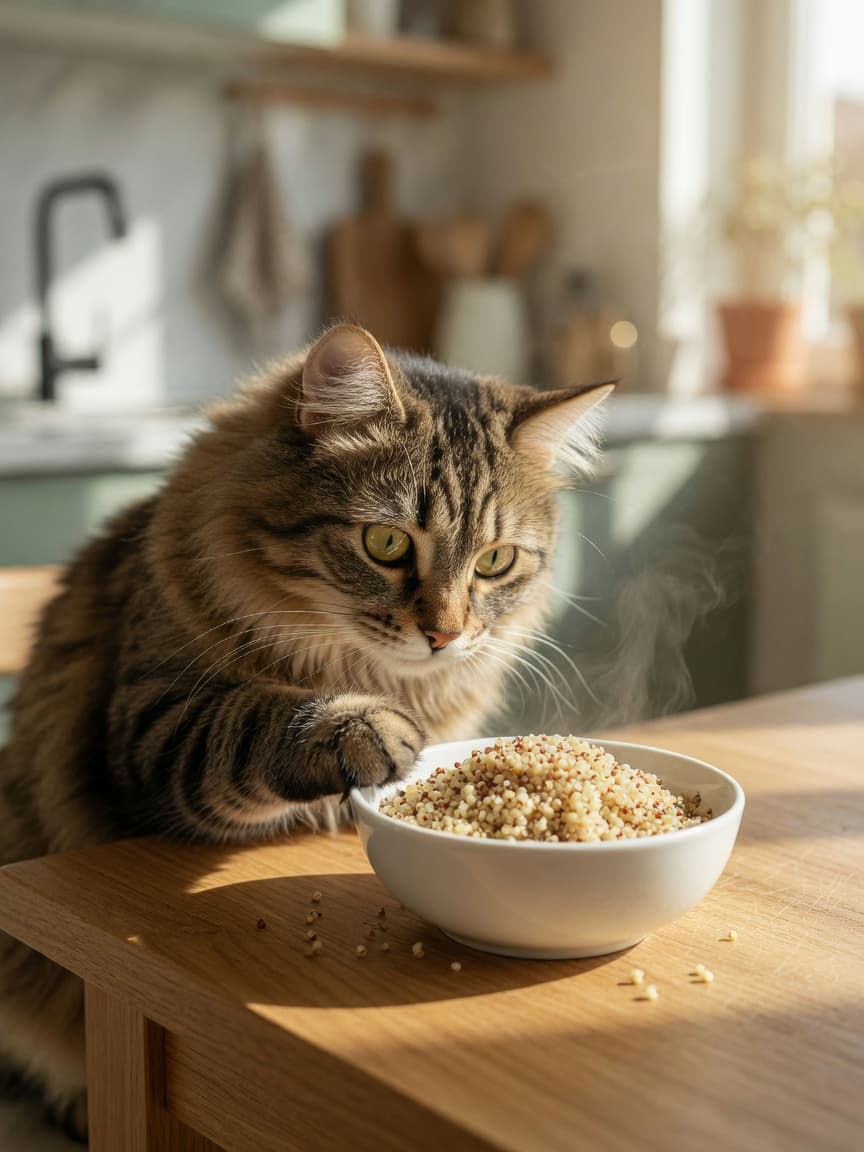
Can Cats Eat Quinoa?
Yes, cats can eat quinoa in moderation as an occasional treat. However, it should never replace their regular cat food or form a significant part of their diet. Quinoa is not toxic to cats, but it's important to understand why cats need a different nutritional approach than humans do.
Understanding Your Cat's Dietary Needs
Cats are obligate carnivores, meaning their bodies are designed to obtain essential nutrients primarily from meat. Unlike humans, cats require high levels of animal protein and specific amino acids—particularly taurine—which they cannot produce themselves. Their digestive systems have evolved to process and thrive on a meat-based diet, not plant-based foods.
This is a crucial point when considering any grain or seed for your cat. Whilst quinoa is technically safe, it doesn't provide the nutrients your cat actually needs for optimal health. Think of it more like a curiosity than a nutritional addition to their diet.
What Is Quinoa?
Quinoa is a seed from South America that's often treated as a grain in cooking. It's high in protein compared to other plant-based foods and contains all nine essential amino acids that humans require. It also provides fibre, magnesium, and other minerals. For people, it's considered a nutritious superfood, but cats have very different requirements.
The Potential Benefits
If your cat does eat a small amount of cooked quinoa, there are minimal nutritional benefits. The protein in quinoa is plant-based and lacks some of the amino acids cats specifically need. However, the fibre content might theoretically support digestion in small amounts, though cats typically get sufficient fibre from quality commercial cat foods.
Some cat owners offer small portions of quinoa simply as a low-calorie snack or occasional treat if their cat shows interest in it—nothing more.
How to Serve Quinoa Safely
If you decide to give your cat quinoa as an occasional treat, preparation is straightforward and important:
Cook it properly: Always serve quinoa that is thoroughly cooked and cooled. Raw or undercooked quinoa is harder to digest and provides no benefit.
Keep portions tiny: A teaspoon or two at most, once in a while. This should represent a very small percentage of your cat's daily calorie intake.
Serve it plain: Never add salt, spices, oils, or seasonings. Many common flavourings are harmful to cats. Garlic and onion, for example, are toxic.
Offer it alone: Present quinoa by itself, not mixed into other foods where you might accidentally include something harmful.
Important Caveats
Not all cats will be interested in quinoa, and that's completely normal and healthy. Never force your cat to eat anything unfamiliar or unappetising to them.
Some cats may experience mild digestive upset from plant-based foods, even in small amounts. If your cat vomits, has diarrhoea, or seems unwell after eating quinoa, avoid offering it again and consult your veterinarian if symptoms persist.
Additionally, if your cat has any existing health conditions—particularly kidney disease, diabetes, or digestive disorders—discuss any dietary additions with your vet before offering them.
What Your Cat Really Needs
The vast majority of your cat's diet should consist of high-quality commercial cat food formulated to meet feline nutritional requirements. Whether you choose wet food, dry food, or a combination, ensure it lists a named meat source as the primary ingredient and is nutritionally complete and balanced.
Treats—including any human foods like quinoa—should make up no more than 10 per cent of your cat's daily calorie intake. The remaining 90 per cent should come from their regular cat food.
The Bottom Line
Quinoa is safe for cats to eat occasionally in small, plain, cooked portions. However, it offers little nutritional value for your feline friend and should never be considered a health supplement or meal replacement. Your cat's health and longevity depend on a diet designed specifically for obligate carnivores. If you're concerned about your cat's nutrition or want to explore safe treat options, speak with your veterinarian for personalised guidance.