
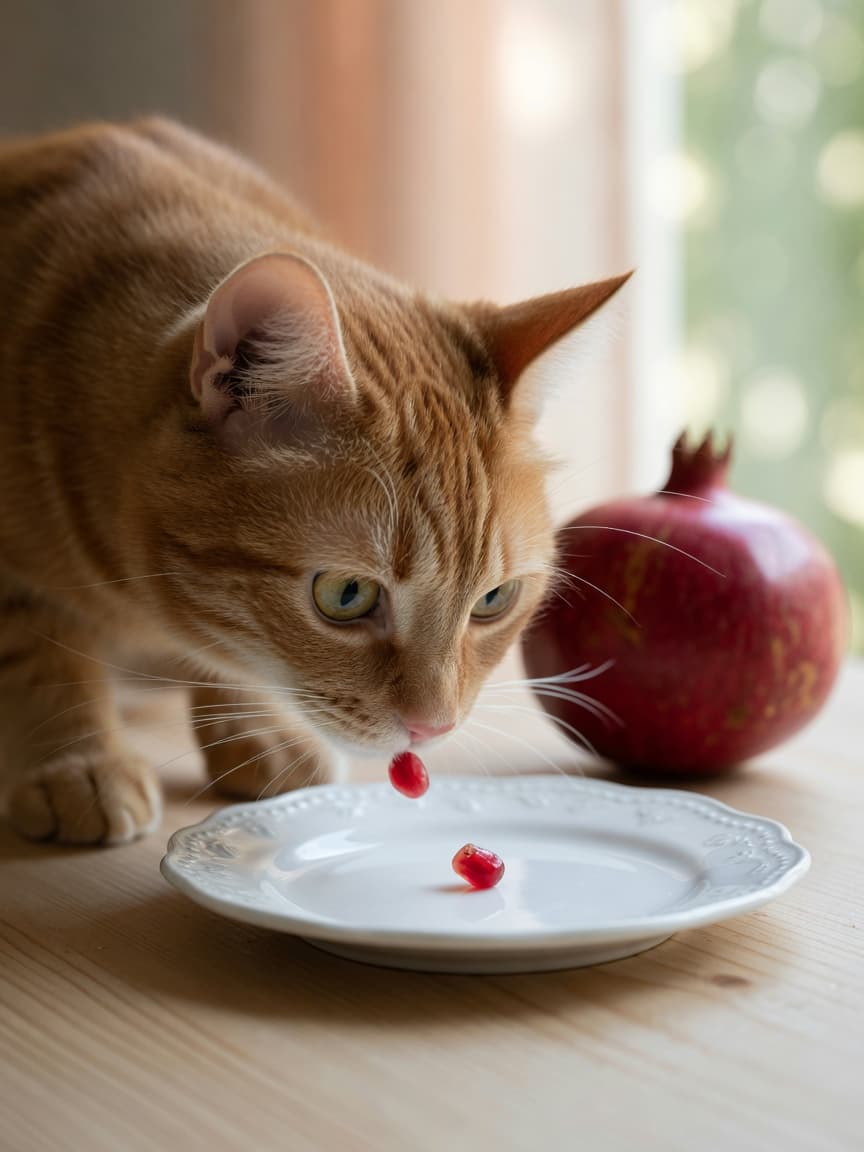
Can cats eat pomegranate?
Yes, cats can eat pomegranate in moderation as an occasional treat. Pomegranate is generally safe for cats and is not toxic to them. However, because cats are obligate carnivores with specific dietary needs, pomegranate should only be offered occasionally and in small amounts, never as a meal replacement or regular part of their diet.
Why might you give your cat pomegranate?
Pomegranate contains several compounds that can offer mild health benefits. The fruit is rich in antioxidants, which support overall cellular health, and contains vitamin C, which boosts immune function. These nutrients can be beneficial for cats just as they are for humans, though cats obtain most of these compounds more effectively from meat-based sources.
Many cat owners are curious about sharing human foods with their pets, and pomegranate is a reasonable choice compared to many other fruits and vegetables. If your cat shows interest in a small taste, there's no need for alarm—it's a safe option to explore.
How much pomegranate can your cat have?
Moderation is the key word here. A small piece of pomegranate flesh—roughly the size of a pea or smaller—is an appropriate occasional treat. This might be offered just once or twice per month rather than weekly. Your cat's main nutrition should come from a balanced, feline-appropriate diet based on high-quality meat proteins.
Pomegranate should never replace any portion of your cat's regular meals or make up more than about 5 per cent of their total daily calorie intake. Treats, including pomegranate, should be factored into your cat's overall daily calorie allowance to prevent weight gain.
How to serve pomegranate safely to your cat
Preparation matters when offering any human food to your cat. Always remove the pith (the white bitter part beneath the skin) before offering any pomegranate to your pet. The arils—the juicy seed pods inside—are the part to offer.
Give your cat just a single aril or a small piece of the flesh. Remove any large seeds if possible, as whole seeds could present a choking hazard for cats with enthusiastic eating styles. Some owners prefer to offer just a tiny drop of pomegranate juice diluted with water, though whole fruit is generally preferable to juice because it contains more fibre.
Observe your cat after offering pomegranate for the first time. Most cats will tolerate it without issue, but every animal is unique, and some may experience mild digestive upset. If your cat shows no adverse reaction after 24 hours, occasional future offerings are safe.
Important considerations for cat owners
Cats are obligate carnivores, meaning they require nutrients found primarily in meat. Unlike humans or even dogs, cats cannot synthesise certain essential amino acids from plant-based foods. Whilst a small pomegranate treat won't harm this nutritional balance, it's important to remember that fruits and vegetables should never form a significant part of your cat's diet.
Some cats may simply refuse fruit altogether, and that's perfectly normal feline behaviour. Don't feel obligated to introduce pomegranate or other fruits to your pet. A high-quality commercial cat food or a veterinarian-approved homemade diet will provide all the nutrients your cat needs.
Avoid offering pomegranate juice in anything but tiny quantities, as juice is high in natural sugars and lacks the fibre of whole fruit. Never give your cat pomegranate molasses or any pomegranate products containing added sugars or artificial ingredients.
When to contact your vet
If your cat accidentally consumes a large quantity of pomegranate and shows signs of digestive upset—such as vomiting, diarrhoea, or loss of appetite—contact your veterinarian. Whilst pomegranate itself is not toxic, excessive consumption could cause temporary gastrointestinal discomfort.
As always, consult your vet before introducing any new foods to your cat's diet, especially if your cat has existing health conditions, digestive sensitivities, or is taking medications.
In summary, pomegranate is a safe occasional treat for cats. Keep portions tiny, offer infrequently, and ensure your cat's primary nutrition comes from appropriate feline food sources.