
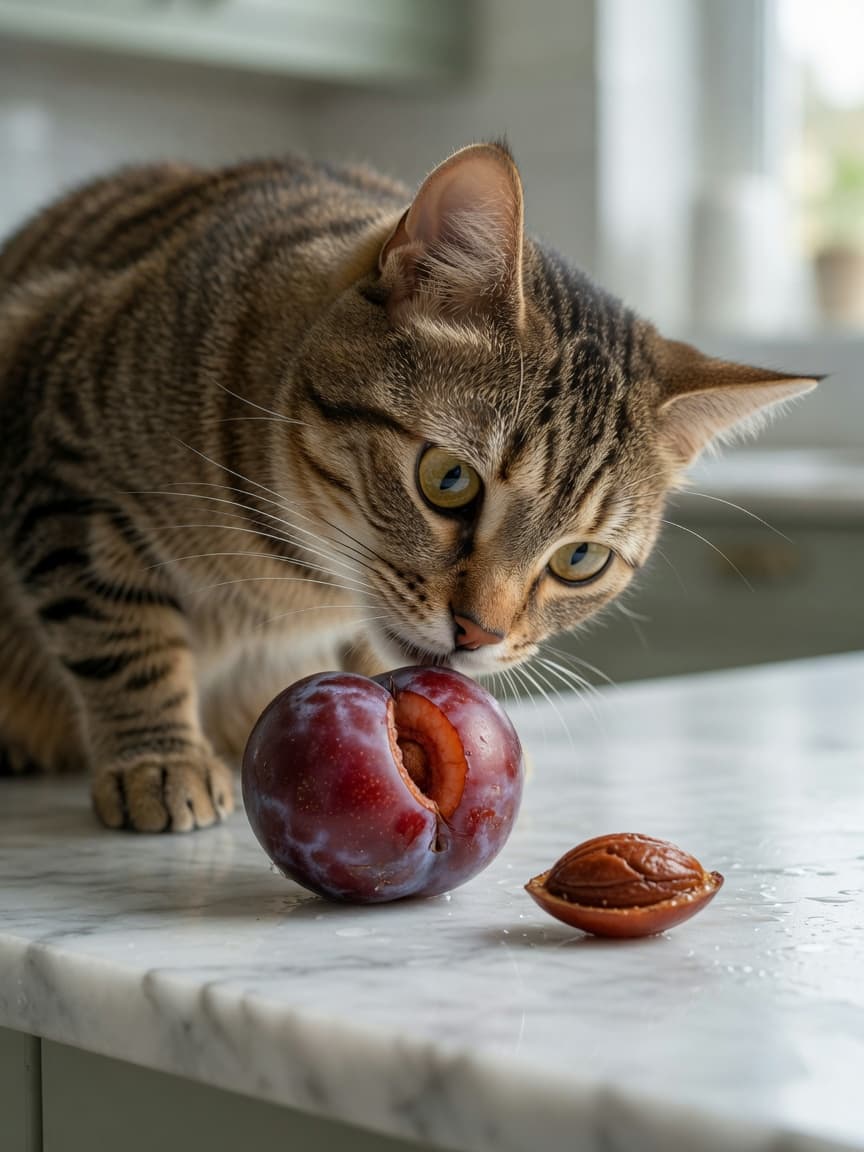
Can cats eat plums?
The simple answer is: cats can eat small amounts of plum flesh, but it requires caution. While the fleshy part of a ripe plum is not toxic to cats, there are several important risks to be aware of before offering any to your feline friend.
Why caution is needed
Cats are obligate carnivores, meaning their digestive systems are designed primarily for meat. Fruits like plums are not a natural part of their diet, and their bodies lack certain enzymes to process plant materials efficiently. This can lead to digestive upset even when the food itself isn't poisonous.
The main concern with plums is their sugar content. Cats don't taste sweetness the way humans do, but consuming high-sugar foods can contribute to weight gain and dental problems over time. Additionally, the stone (pit) inside a plum is a serious hazard. Plum pits contain cyanogenic compounds that are toxic to cats, and they also pose a choking and intestinal blockage risk if swallowed.
Some cats may also experience stomach upset, diarrhoea, or vomiting if they eat plum flesh, particularly if they're not used to fruit. The fruit's natural fibre and acid content can be irritating to sensitive feline digestive systems.
Safe preparation and portion size
If you decide to offer plum to your cat, strict preparation is essential. Remove the pit entirely and discard it safely where your cat cannot access it. Offer only the flesh, and keep the portion very small—a piece no larger than a thumbnail is sufficient. Serve it plain, with no added sugar, seasoning, or cooking. Most cats will have no interest in fruit anyway, so don't be surprised if your cat simply walks away.
Plum should only be an occasional treat, and only for cats with no existing health conditions. Once or twice a month at most would be reasonable, if your cat shows interest.
Which cats should avoid plums entirely
Certain cats should not eat plums under any circumstances:
- Kittens and senior cats, whose digestive systems are more vulnerable
- Cats with a history of digestive issues, diarrhoea, or vomiting
- Cats with diabetes or obesity, due to the sugar content
- Cats taking medication for kidney or digestive conditions
- Any cat with a known sensitivity to fruit or plant matter
If you're unsure whether plum is appropriate for your cat, consult your veterinarian before offering any.
Warning signs to watch for
If your cat has eaten plum flesh (without the pit), monitor them closely for the following signs over the next 24 to 48 hours:
- Vomiting or retching
- Diarrhoea or constipation
- Loss of appetite
- Lethargy or unusual behaviour
- Abdominal pain or obvious discomfort
If your cat has swallowed a plum pit or a large piece, or if they show any of these signs after eating plum, contact your veterinarian promptly. Blockages can be serious and may require urgent treatment.
Better alternatives
Rather than offering plum, there are safer treats you can give your cat. Most feline-friendly options are protein-based, such as small amounts of cooked chicken, turkey, or fish—far more aligned with your cat's natural nutritional needs. If you want to offer something different, ask your vet about commercial cat treats designed specifically for feline digestion.
The bottom line
While the flesh of a ripe plum is not toxic to cats, the risks—choking hazards, digestive upset, sugar content, and the dangerously toxic pit—mean it is not a recommended treat. If your cat has already eaten a small piece of plum flesh by accident, don't panic, but monitor them carefully. For their health and safety, it's best to stick with feline-appropriate foods and treats instead.