
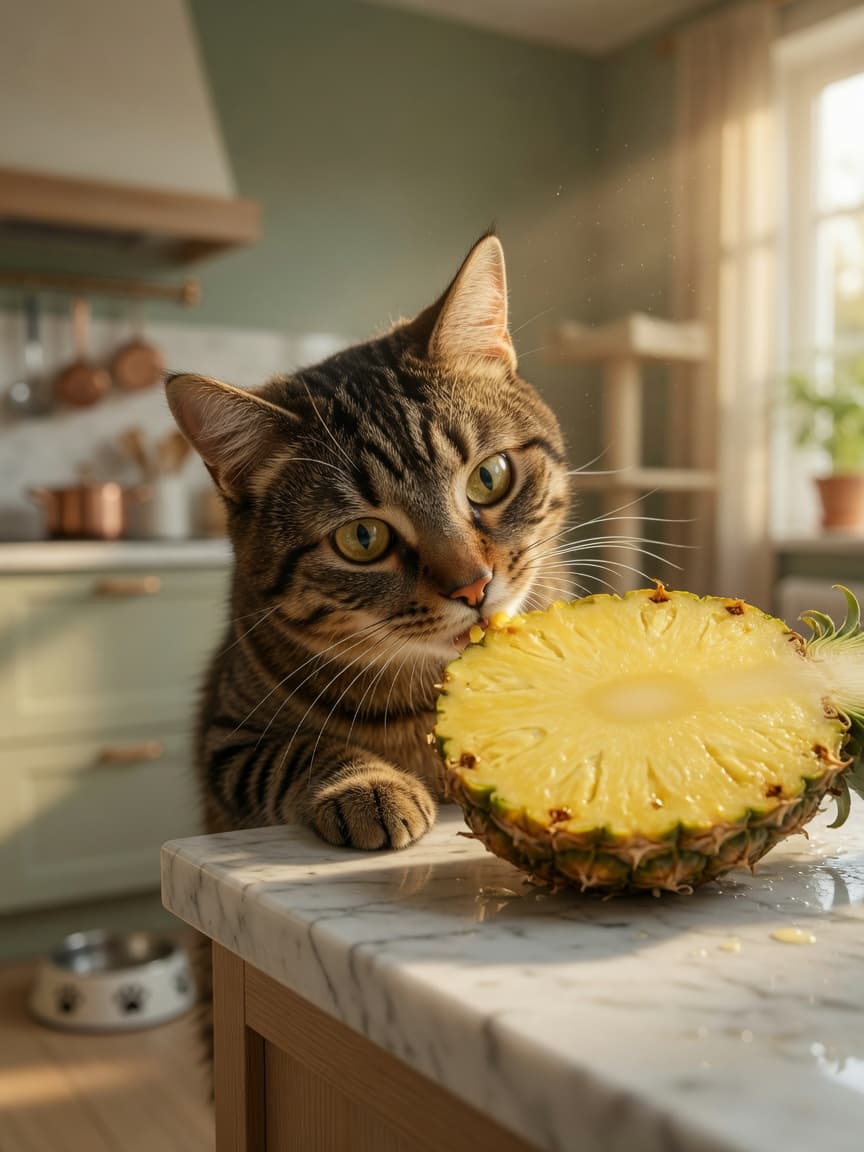
Can cats eat pineapple?
Yes, cats can eat pineapple in moderation as an occasional treat. However, it should never replace their regular diet, and there are several important things you should know before offering any to your feline friend.
Is pineapple safe for cats?
Pineapple is generally safe for healthy cats when given in small amounts. It is not toxic and does not contain compounds that are poisonous to cats. However, being an obligate carnivore, your cat's digestive system is designed primarily to process meat, not fruits. This means that whilst pineapple won't harm your cat, it offers limited nutritional value to them.
Why might cats enjoy pineapple?
Some cats are attracted to pineapple because of its sweet flavour and juicy texture. The natural sugars can make it an appealing novelty snack. That said, many cats show little interest in fruit altogether, as their taste receptors are not well-equipped to detect sweetness the way humans' are. If your cat ignores pineapple, that is completely normal and nothing to worry about.
Potential benefits of pineapple
Pineapple contains vitamin C, bromelain (a digestive enzyme), and fibre, all of which have some health benefits. However, cats produce their own vitamin C and do not need dietary sources the way humans do. The bromelain in pineapple may have mild digestive properties, but there is no evidence that cats require or significantly benefit from it. Any fibre in pineapple might help with digestion in very small amounts, but your cat's regular diet should already contain appropriate amounts for their needs.
How much pineapple can your cat have?
If you decide to offer pineapple to your cat, keep it to small amounts as an occasional treat. A piece the size of your cat's paw pad, offered once or twice a month, is a reasonable guideline. Pineapple should never make up more than 5-10% of your cat's daily calorie intake. Since cats are obligate carnivores, their diet should be primarily protein-based, with treats and other foods playing only a minor role.
How to safely serve pineapple to your cat
Always remove the tough, spiky skin and the fibrous core, as these pose choking hazards and are difficult for cats to digest. Serve only the soft, flesh part of the fruit. Fresh pineapple is preferable to tinned varieties, as tinned pineapple often contains added sugars that are unnecessary for your cat. Ensure any piece you offer is small enough that your cat cannot choke on it, and supervise them whilst they eat it.
When to avoid giving pineapple to your cat
Do not give pineapple to cats with sensitive digestive systems or those prone to stomach upset. If your cat has diabetes, obesity, or other metabolic conditions, check with your veterinary surgeon before introducing any new foods, including fruit. Cats with dental problems may also struggle with pineapple's texture. Additionally, if your cat is already on a strictly controlled diet for medical reasons, pineapple should be avoided entirely unless approved by your vet.
Signs of digestive upset
If your cat eats pineapple and experiences vomiting, diarrhoea, or loss of appetite, discontinue offering it immediately and contact your veterinary surgeon if symptoms persist. Some cats may have individual sensitivities to tropical fruits, even if pineapple is generally safe.
The bottom line
Pineapple is safe for most healthy cats in small, occasional amounts. However, it offers little nutritional benefit to your obligate carnivore and should never become a regular part of their diet. If your cat shows interest in pineapple, a tiny piece offered rarely is unlikely to cause harm. Always prioritise your cat's primary diet of high-quality commercial cat food or a balanced homemade diet recommended by your veterinary surgeon. When in doubt, ask your vet before introducing new foods.