
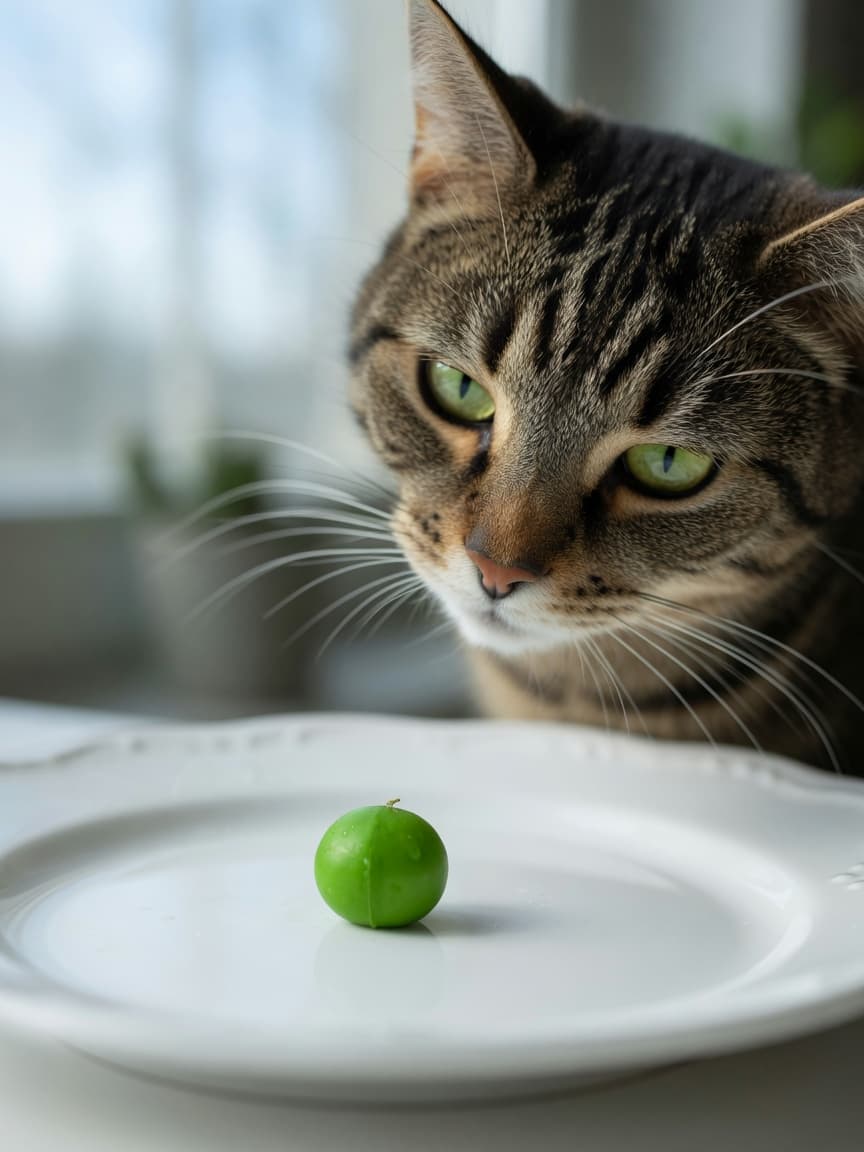
Can cats eat peas?
Yes, cats can eat peas in moderation. Peas are generally safe for cats as an occasional treat, though they should never replace meat-based meals. Since cats are obligate carnivores, their nutritional needs centre on animal protein, but small amounts of cooked peas can be offered safely as part of a varied diet.
Why peas can be a safe treat
Peas contain several nutrients that are not harmful to cats, including vitamin C, vitamin K, and fibre. They are also low in calories and fat, making them a reasonable choice if you want to offer your cat something beyond their regular food. Some cats may even enjoy the texture and slight sweetness of peas, which can make treat time more interesting.
Because peas are plant-based, they don't provide the complete amino acid profile that cats require, but a small amount as a treat poses no nutritional risk when your cat's main diet is balanced and meat-focused.
How much is safe?
Treats, including peas, should make up no more than 10 per cent of your cat's daily calorie intake. For most adult cats, this means just a few peas offered once or twice weekly is appropriate. Kittens, senior cats, and those with underlying health conditions should have treats limited further, and you should always consult your vet before introducing new foods to these cats.
Avoid giving large portions, as too many peas could cause digestive upset or contribute unnecessary bulk to your cat's diet.
How to serve peas safely
Cook them first. Always serve peas cooked and cooled. Raw peas are harder to digest and pose a choking risk. Boiling or steaming peas until soft is the safest preparation method.
Keep them plain. Never add salt, garlic, onion, or any seasoning. These additions can be harmful to cats. A plain, cooked pea is all your cat needs.
Check the size. Offer peas whole or lightly mashed, depending on your cat's size and chewing ability. Smaller cats or those prone to gulping may do better with halved peas to reduce choking risk.
Remove the pod. If using fresh peas in pods, always remove the pea from the shell before serving. Pods can be a choking hazard and are difficult for cats to digest.
Frozen peas are fine. Frozen peas that have been thawed and warmed are a convenient option and just as safe as fresh ones.
Things to watch for
Most healthy cats tolerate peas well, but digestive sensitivity varies. After offering peas for the first time, monitor your cat for vomiting, diarrhoea, or constipation over the next 24 hours. If any of these occur, discontinue peas and contact your vet.
Cats with certain health conditions, such as diabetes or kidney disease, may need their treat intake carefully controlled. Always ask your vet before introducing new foods if your cat has any medical conditions or takes prescribed medication.
Some cats simply won't be interested in peas, and that's perfectly normal. You don't need to persuade a reluctant cat to eat vegetables—their nutritional needs are met through a good-quality, meat-based cat food.
Better treat alternatives
While peas are safe, they're not the most nutritionally valuable treat for a carnivorous cat. Small pieces of cooked chicken, turkey, or fish offer much more species-appropriate nutrition and are usually more appealing. If you want to offer variety, meat-based treats are generally a better choice than vegetables.
The bottom line
Peas can safely be given to cats as an occasional treat in small amounts, provided they're cooked, unseasoned, and served plain. They're not essential to your cat's diet, but they can be a harmless way to introduce treat variety if your cat shows interest. Always prioritise meat-based nutrition and consult your vet if you're unsure whether peas or any other new food is appropriate for your individual cat.